
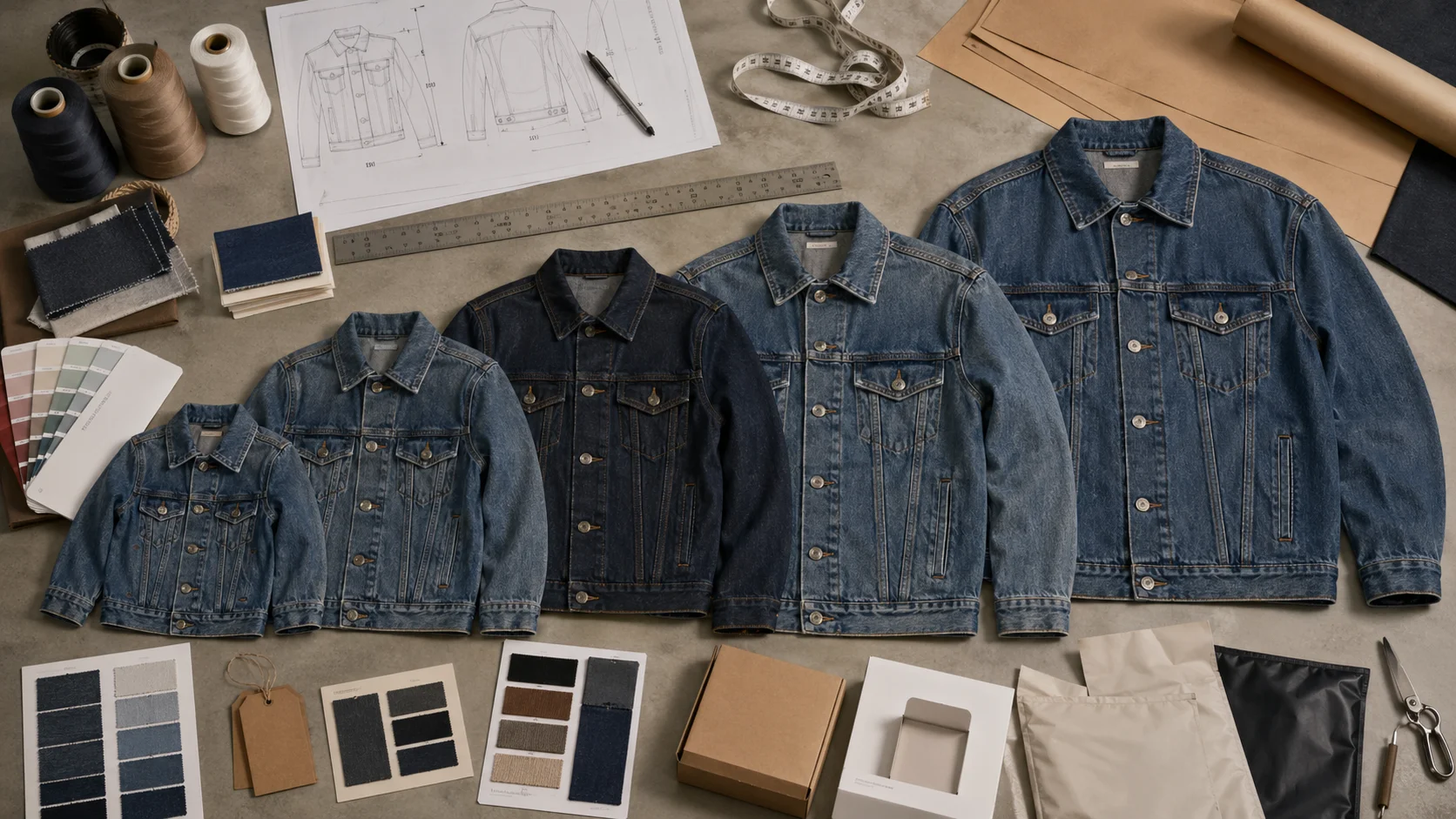
A detailed outline explaining what a cut and sew manufacturer means, how the process works, which production steps are included, and what apparel buyers should ask before placing an order.
Cut and Sew Manufacturer Meaning for Apparel Buyers - Fabrikn production reference
For apparel buyers, the phrase cut and sew manufacturer refers to a factory that produces garments by cutting fabric into pattern pieces and sewing those pieces into finished clothing. In practical sourcing terms, this means the manufacturer is not just decorating a blank item. It is building the garment structure itself.
That distinction matters. A cut and sew supplier typically works from a tech pack, pattern, measurement chart, approved fabric, and trim list. The factory then handles key steps such as marker making, fabric spreading, cutting, stitching, finishing, pressing, labeling, packing, and sometimes sourcing materials as part of a full-package service.
When buyers ask, what does cut and sew manufacturer mean, the shortest answer is this: it means a production partner that makes custom garments from raw materials or fabric rolls rather than simply printing or embroidering ready-made blanks.
In the Clothing Manufacturer category, this is one of the most important terms to understand because it affects product development cost, MOQ, timeline, quality control method, and how much customization is realistically possible.
A buyer choosing cut and sew is usually looking for more control over fit, construction, fabric weight, wash performance, branding details, and silhouette. That control can produce a stronger product. It also creates more decisions, more approvals, and more production risk if specifications are unclear.
For brands that want help navigating product development and production structure, it is worth reviewing a manufacturer’s service scope before requesting a quote. A broad overview of factory support options can be found at /services/.
Many buyers confuse cut and sew with any kind of garment production. The term is broader than screen printing, but more specific than general apparel sourcing. The difference becomes clearer when compared with common supply models.
Blank garment decoration uses ready-made T-shirts, hoodies, polos, or sweatpants purchased from a stock brand or wholesale supplier. The factory or decorator then adds a print, embroidery, heat transfer, or private label element.
That approach is faster and often cheaper for small runs. It is also limited. Buyers cannot fully control body shape, stitch count, seam placement, fabric blend, shrinkage tolerance, or construction details because the base garment already exists.
Cut and sew, by contrast, starts with fabric and patterns. That allows a custom fit and finish. It also increases development time and minimums.
CMT stands for cut, make, and trim. In many markets, CMT factories focus on assembly after the buyer supplies most materials and production instructions. Some people use CMT and cut and sew interchangeably, but the commercial setup can be different.
A cut and sew manufacturer may operate as:
The label alone does not tell a buyer how much the factory will handle. That is why purchase teams should confirm exactly what is included in pricing.
Full package production usually means the manufacturer manages most steps from development through finished goods. A full-package supplier may still be a cut and sew manufacturer because the garments are custom cut and assembled. The difference is scope.
Some factories only sew what the buyer sends. Others can source jersey, fleece, woven fabric, rib, zippers, care labels, hangtags, poly bags, and cartons, then manage approvals and bulk output.
Buyers should not assume “cut and sew” automatically includes sourcing, pattern development, grading, testing, or shipping support. Those services need to be confirmed line by line.
A reliable understanding of the process helps buyers ask better questions and compare vendors on real production capacity rather than sales language.
This stage turns the idea into a workable production specification. Typical inputs include sketches, reference samples, fabric preferences, branding requirements, and target price range.
At this stage, the factory or pattern team may prepare:
If the tech pack is weak, development becomes expensive later. Most avoidable production mistakes begin here, not on the sewing line.
Patterns define the shape of the garment components. Grading expands that base size into a full size set. For buyers, pattern accuracy is critical because even good sewing cannot fix a flawed block.
A factory may create a first pattern from a tech pack, clone an existing sample for fit reference, or adjust a standard block. Each path has tradeoffs. Starting from a standard block is faster but may not deliver the brand’s intended fit. Starting from a fresh pattern offers control but increases development rounds.
Cut and sew production depends heavily on material consistency. Fabric composition, GSM, width, shrinkage, colorfastness, pilling resistance, and recovery all affect the finished garment.
Common apparel fabric considerations include:
Trim selection matters just as much. Zipper quality, snap strength, drawcord finish, elastic recovery, label placement, and packaging specification all affect buyer complaints later.
Sampling is where many apparel timelines slip. A typical path may include:
Buyers should expect written comments at each round. Verbal approval is not enough. If sleeve pitch, neck drop, inseam tolerance, or chest grading is not documented, the bulk run may not match expectations.
Once the sample is approved, the factory prepares markers to optimize fabric use and maintain pattern placement. Cutting quality influences garment symmetry, panel alignment, and sewing accuracy.
Poor cutting discipline can cause twisted side seams, mismatched stripes, uneven plackets, or inconsistent leg shape across sizes. These are not minor cosmetic issues. They often lead to full-carton rejection if the defect rate is high.
This is the most visible step, but not the only critical one. Buyers should pay attention to stitch type, SPI consistency, seam allowance control, reinforcement points, bartacks, thread shade matching, and operator handling for stretch fabrics.
A cut and sew factory may use overlock, flatlock, coverstitch, lockstitch, binding, taping, and topstitch operations depending on the garment category. The right machinery matters, especially for activewear, underwear, structured wovens, and heavyweight fleece.
After sewing, garments may go through trimming, pressing, washing, measurement checking, metal detection where applicable, labeling, folding, bagging, and carton packing.
This step is often underestimated by new buyers. A garment can be sewn correctly but still fail on presentation due to poor pressing, incorrect labeling, mixed sizes in cartons, bad folding, stain issues, or missing barcode stickers.
Even strong factories need clear buyer input. The more customized the garment, the less the manufacturer can safely assume.
Most cut and sew projects require some combination of the following:
Buyers with incomplete information can still place an inquiry, but quote accuracy will be limited. A factory may price low to stay competitive and then revise upward once actual fabric usage, construction complexity, and trim requirements become clear.
That is a common sourcing problem. Early quotes are only useful if both sides are working from the same specification level.
Cut and sew manufacturing is especially suitable for brands that need distinctive product construction rather than simple logo placement.
Typical product categories include:
If the product relies on fit, silhouette, wash, or material identity, cut and sew is usually the right path. If the product is a basic promotional shirt needed fast in small volume, stock blanks may be more efficient.
That is the key tradeoff. Cut and sew offers product ownership. It demands more planning.
Many buyers researching what does cut and sew manufacturer mean are really trying to understand cost and feasibility. Those questions are valid because cut and sew production is not a one-price model.
MOQ varies by product complexity, fabric source, and whether the factory is developing a custom pattern. As a broad market guide:
Production Type Typical MOQ Range Buyer Note Simple knit basics 100 to 300 pieces per style/color Possible when fabric is in-stock or easy to source Custom fleece sets 200 to 500 pieces per style/color MOQ often depends on dye lot and rib matching Woven garments 300 to 800 pieces per style/color Higher due to fabric setup and construction steps Complex outerwear or technical apparel 500+ pieces per style/color Special trims and testing may push minimums higherThese are not fixed rules. Some suppliers accept smaller runs with a price premium. Others require higher minimums because their cutting room and line setup are built for scale.
Sampling is rarely free for true cut and sew work. Buyers should expect separate charges for pattern making, fit sampling, fabric sourcing for sample yardage, and courier cost. If multiple revisions are needed, cost increases accordingly.
A low sample quote is not always a positive sign. In some cases, it indicates the factory has not fully priced development effort and may try to recover margin in bulk production.
Lead time depends on more than sewing capacity. Common drivers include:
A rough sourcing benchmark is that sample development may take several weeks, while bulk production often takes another several weeks after final approval and material readiness. That estimate can shift quickly if custom fabric must be knitted, dyed, brushed, enzyme washed, or performance tested.
Buyers should be cautious with factories that promise very short lead times before reviewing the BOM and construction details. Speed claims are easy to make early and difficult to defend once approvals begin.
A cut and sew manufacturer can produce excellent garments, but the process contains more variables than blank decoration. Buyers should inspect the risk points that matter most.
Fit failures usually come from pattern issues, grading errors, or poor cutting control. A sample may look right in one size and still perform badly across the full size range if the grade rules are weak.
Common issues include shrinkage beyond allowance, shade variation between lots, pilling, skewing, poor recovery, and dye migration. Knit garments are especially vulnerable if the fabric is not tested or relaxed properly before cutting.
Watch for open seams, skipped stitches, puckering, uneven topstitching, twisting side seams, collar imbalance, and weak stress-point reinforcement. These issues often increase during rush production.
Misplaced labels, wrong zipper pulls, poor embroidery execution, heat-transfer peeling, and incorrect packaging are common final inspection failures. These defects are frustrating because they usually appear after most manufacturing cost has already been spent.
This is one of the biggest commercial risks. Buyers should confirm that the pre-production sample reflects the actual bulk fabric, trims, measurement tolerance, wash treatment, and print method. If PP approval is based on substitute materials, it loses much of its value.
Practical buying rule: if a detail is important enough to sell the garment, it is important enough to approve in writing before bulk starts.
Choosing the right supplier is less about marketing claims and more about process clarity. Buyers should ask direct operational questions.
The answers reveal how mature the supplier’s process is. Buyers do not need perfect language from a factory contact. They do need specific and consistent information.
Strong sourcing programs rely on documented approvals, not assumptions. Useful checkpoints include:
If a buyer is still comparing potential partners, background information and company positioning can usually be reviewed before a formal inquiry. One starting point is /about-us/.
For most serious apparel programs, the best cut and sew manufacturer is not the one offering the lowest quote on day one. It is usually the one that identifies specification gaps early, explains MOQ logic clearly, and pushes for sample approval discipline before bulk commitment.
A cheap quote from a vague supplier often becomes an expensive order. A slightly higher quote from a structured supplier can protect margin by reducing remakes, delays, and claim risk.
Cut and sew manufacturing makes sense when a brand wants meaningful control over its product. That includes fit, fabric identity, seam construction, finishing detail, and private label presentation.
It is a strong choice when:
It may be less suitable when:
There is no universal right model. The best sourcing choice depends on the product goal, price target, and how much development complexity the buyer is prepared to manage.
So, what does cut and sew manufacturer mean in plain buying language? It means a garment producer that builds apparel from fabric and components into a custom finished product. That usually includes cutting pattern pieces, sewing construction seams, finishing the garment, and sometimes sourcing all supporting materials.
For apparel buyers, this model offers stronger control over fit, quality, branding, and product identity than stock blank decoration. The tradeoff is higher development involvement, more approvals, and a greater need for disciplined specifications.
The buying decision should be made with realistic expectations. MOQ is usually higher than blank programs. Sampling is more technical. Lead times depend heavily on fabric and trim readiness. Inspection should focus on fit, fabric performance, sewing consistency, and final presentation.
Buyers who treat cut and sew as a structured manufacturing process rather than a simple purchase order are far more likely to get consistent results. Clear tech packs, written approvals, practical MOQ planning, and honest lead-time discussions are what turn a custom apparel concept into a scalable product.
For brands ready to move from idea to development discussion, the next practical step is a detailed inquiry with product specifications, target quantities, and timeline requirements. That can be started through /contact-us/.
Get a free quote from Fabrikn — your trusted B2B clothing manufacturer with 10+ years of experience. MOQ as low as 200 pieces.
Get a Free Quote →A cut and sew manufacturer is a factory that makes garments by cutting fabric into pattern pieces and sewing those pieces into finished apparel. This differs from decorating stock blank garments because the garment itself is custom produced.
For a clothing brand, it means working with a supplier that can help produce custom garments with specific fit, fabric, construction, and branding details. It usually involves more development work than buying ready-made blanks.
In many cases, yes. Cut and sew usually costs more because it involves pattern development, custom fabric or trim decisions, sample rounds, cutting, and more detailed quality control. The value is greater product control and differentiation.
Typical MOQ can range from around 100 to 300 pieces per style/color for simpler knit items and go much higher for woven, technical, or outerwear products. The exact minimum depends on fabric sourcing, complexity, and factory setup.
Buyers should ideally provide a tech pack, measurement chart, bill of materials, artwork files, color references, size breakdown, and target order quantity. A reference sample is also helpful when fit is important.
Lead time depends on sampling rounds, fabric availability, trim sourcing, wash processes, and factory capacity. Development can take several weeks, and bulk production often requires several more after all materials and approvals are complete.
The main risks include fit inconsistency, fabric performance problems, construction defects, trim errors, and bulk production not matching the approved sample. These risks are reduced through good tech packs, clear approvals, and solid inspection checkpoints.
A buyer should choose cut and sew when custom fit, fabric quality, garment construction, and private label details matter to the product strategy. It is most useful for brands building long-term product identity rather than short-run promotional items.