
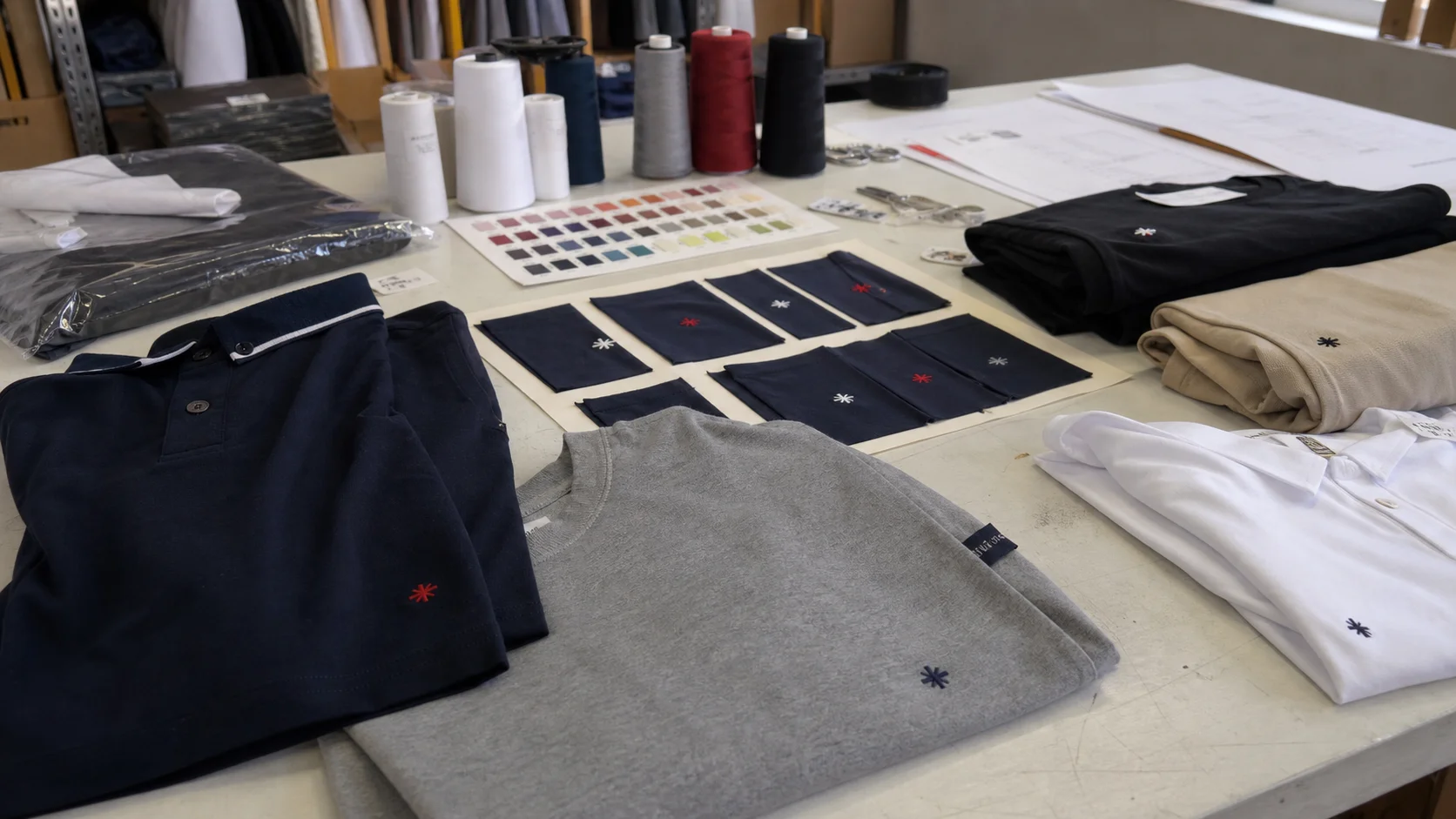
A focused outline for resort buyers sourcing OEM chef coats with embroidery, covering fabric, branding placement, kitchen durability, and production...
OEM Chef Coat Embroidery Factory for Resort Buyers - Fabrikn production reference
Resort culinary uniforms sit in a demanding category. They need to look polished in open kitchens, buffet lines, specialty restaurants, banquet operations, and back-of-house production areas. At the same time, they must handle repeated industrial laundering, heat exposure, frequent movement, and long shifts. For buyers sourcing chef outerwear at scale, an OEM chef coat embroidery factory is not just a decoration vendor. It is a production partner responsible for fit consistency, brand presentation, fabric durability, and replenishment reliability.
The phrase oem chef coats embroidery factory for resort culinary staffwear covers a more technical sourcing scope than many buyers expect. Resort groups often need coordinated programs across executive chefs, sous chefs, line cooks, pastry teams, show kitchen staff, and culinary supervisors. One property may want sharp white coats with tonal embroidery for fine dining, while another may need black lightweight coats for poolside kitchens or tropical destinations. A factory serving this niche must be able to manage uniform branding without losing sight of garment performance.
Embroidery is often treated as a simple logo application. In chef coats, that assumption can create avoidable problems. Dense embroidery on the chest can pucker light fabric. Metallic threads may not tolerate aggressive wash conditions. Name personalization can complicate size balancing and reorder flexibility. Placement errors are highly visible because chef coats typically use clean front panels with minimal visual distractions. Buyers need a factory that understands embroidery as part of the garment engineering process, not as an afterthought.
For resort purchasing teams, the best sourcing outcome usually comes from aligning four priorities early: garment use case, brand image, wash environment, and reorder strategy. Factories that can translate those requirements into fabric specs, embroidery files, sewing standards, and inspection checkpoints are better suited for hospitality programs. Buyers exploring tailored manufacturing support can review broader production capabilities through /services/ and assess supplier background at /about-us/.
A qualified OEM factory for resort chef coats should offer more than cut-and-sew capacity. Buyers should expect technical development support, sourcing options for core fabrics and trims, embroidery digitizing coordination, labeling customization, packing control, and repeat-order consistency. In this category, the production line has to balance apparel manufacturing with uniform program discipline.
At a practical level, resort buyers should look for the following capabilities:
Many resort programs also require outerwear consistency across multiple uniform categories. The chef coat may need to visually align with steward jackets, front-of-house service jackets, or branded culinary aprons. That makes color matching and logo standardization important. White garments are especially unforgiving. Thread shade variation, fabric opacity issues, or inconsistent topstitching can quickly reduce the perceived quality of the entire uniform program.
OEM manufacturing also matters because many resorts do not want off-the-shelf sizing, generic silhouettes, or stock logo placement. They may need longer coat lengths for executive presentation, venting panels for humid climates, or women’s fits that do not simply grade down from men’s blocks. These details are difficult to solve through trading companies that lack direct technical control.
Chef coats belong in a functional outerwear segment, even when the look is refined. Fabric selection shapes comfort, lifespan, embroidery performance, and laundering results. Resort buyers should define the wear environment before approving material.
For most resort culinary staffwear, polyester-cotton blends remain the safest commercial choice. They generally offer better color retention, shape stability, and service life than 100% cotton in heavy wash cycles. Cotton-rich fabric can still work well for visible leadership roles or lighter-duty culinary environments, but buyers should confirm shrinkage tolerance and ironing expectations in advance.
Good chef coat construction is rarely flashy. It shows up in seam stability, panel balance, collar shape retention, and closure reliability. Buyers should review seam types and reinforcement in stress areas such as armholes, side vents, pockets, and front plackets. Double-needle topstitching, bartacks where needed, and clean inside finishing can improve service life.
Ventilation is another important point. Mesh underarm panels or back yokes can improve comfort in hot kitchens, but they introduce sourcing and color-matching complexity. If the resort requires a crisp luxury appearance, visible mesh panels may not suit front-facing culinary roles. A cleaner solution is often lighter-weight body fabric combined with strategic pattern shaping.
Opacity should not be overlooked, especially for white coats. Fabric that feels comfortable in hand can become too transparent under bright banquet lighting or open-kitchen conditions. Buyers should assess garments under realistic lighting and confirm whether undershirts are part of the wear standard.
Embroidery is usually the most visible branding element on a chef coat. Resort buyers commonly request chest logos, sleeve logos, collar text, personal names, job titles, or property identifiers. These features need disciplined control because decoration errors are difficult to hide and expensive to rework.
Dense designs can distort lightweight fabric. Fine lettering may fill in after repeated laundering if the digitizing is not adjusted for thread spread. Tonal embroidery on white coats can look elegant, but only if the thread shade remains visible enough for branding. Metallic or specialty threads may suit occasional presentation pieces, yet they are often a poor choice for daily-use culinary garments due to abrasion and wash wear.
Placement tolerances should be written into the tech pack. A resort logo sitting too close to the placket or chest seam can look noticeably off-center once the coat is worn. Sleeve embroidery also needs careful orientation, particularly if different sizes shift panel proportions. Buyers should ask to approve both a digitized logo sew-out and a fully assembled pre-production sample with final placement.
Backing and stabilizer choices matter as much as the visible stitching. Incorrect backing can leave the chest panel stiff, scratchy, or wavy after washing. This is a common issue on lighter chef coat fabrications. The better factories test embroidery on the exact approved shell fabric before bulk production starts.
Sampling is where resort buyers can prevent most bulk-order problems. A structured development process is especially important when embroidery, personalized naming, and property-specific branding are involved.
Resort buyers often move too quickly from visual approval to bulk launch. That is risky in uniform programs because the coat must function across many body types and job roles. A sharp sample in one medium size does not guarantee a stable fit in larger sizes or women’s size runs. Size-set review is worth the time, especially for staffwear issued across multiple departments.
Sample comments should be specific. Instead of asking for a “better fit,” buyers should note whether the issue is chest ease, sleeve pitch, coat length, collar height, cuff opening, or side vent depth. The same precision applies to embroidery. Comments should cover placement measurements, thread colors by code if available, and whether names or titles are mandatory across all units.
Approval discipline also matters. If the resort team changes logo size after the pre-production sample, the factory may need to redo digitizing, panel markers, and cost calculations. That can affect lead time and increase the chance of inconsistency between early and later batches.
MOQ expectations in OEM chef coat manufacturing vary by fabric sourcing model, customization level, and decoration complexity. Buyers should be cautious of blanket promises without specification context.
Very low MOQs can be possible when the factory uses available greige or stock fabric and keeps trims simple. The tradeoff is reduced control over exact material continuity for long-term repeat orders. For resort groups planning rolling replenishment, stable core fabric availability may matter more than hitting the lowest opening MOQ.
A practical planning range for customized chef coats is often several weeks from final approval to shipment, with sampling and fabric confirmation happening before that. More complex programs with multiple logos, women’s and men’s blocks, or custom fabrics can extend longer. Buyers should separate sample lead time from bulk lead time when comparing suppliers.
Reorder strategy deserves equal attention. Resorts frequently assume a factory can replenish single sizes on demand. In reality, replenishment economics depend on whether the fabric, thread, labels, and trims remain open and whether the factory accepts small repeat embroidery runs. It is often smarter to place an opening order with a controlled overage in core sizes rather than rely on fragmented urgent top-ups.
Chef coat production has several failure points that can slip through a general apparel inspection if the checklist is too basic. Resort buyers should insist on inspection criteria that reflect the actual use case.
Wash testing should be addressed early, not after bulk production. A coat that looks clean at final inspection may twist, shrink, or show embroidery distortion after laundering. Resorts using industrial laundry systems should share those conditions where possible, including temperature exposure and finishing methods. Not every factory will replicate full commercial laundry conditions, but the sourcing discussion should account for them.
Packing accuracy is another overlooked risk. Multi-property orders often require exact breakdowns by role, size, and logo version. A shipment can pass garment inspection and still create operational problems if cartons are packed without clear separation. Barcode labels, ratio packing lists, and carton marking standards are often worth specifying in the purchase order.
Third-party final inspection may be appropriate for larger programs, but it works best when the buyer provides a detailed quality manual or inspection checklist. General AQL review alone may not catch role-specific embroidery errors or presentation issues relevant to resort uniforms.
Price comparisons in chef coat sourcing can be misleading if buyers do not break down what is actually included. Two quotations may look close on paper while covering very different material and process assumptions.
A low unit price can become expensive if the coat loses shape quickly, needs heavy ironing, or creates reorder inconsistencies. On the other side, over-specifying premium details for all staff tiers may not be the best use of budget. Many resorts benefit from a tiered approach: more refined fabric and embroidery for visible leadership roles, and a durable simplified version for high-turnover back-of-house use, while keeping the overall visual language consistent.
Embroidery is a frequent area for hidden cost creep. A small logo with clean digitizing is usually manageable. Once buyers add names, titles, multilingual text, sleeve branding, and special thread colors, unit costs rise and production coordination becomes slower. The purchasing decision should weigh whether every decorative element supports operational value or only visual preference.
The most reliable chef coat programs are not always the cheapest quotation. They are the programs where material, branding, and replenishment assumptions are clear before bulk production starts.
Choosing a factory for resort culinary staffwear is less about broad apparel capacity and more about process discipline. Buyers need a partner that can manage repeatability. A polished first sample means little if the factory cannot hold logo placement, fit grading, and packing accuracy across bulk production and reorders.
Useful screening questions include:
Buyers should also assess communication quality. Factories that ask practical questions about laundering, climate, fabric hand feel, logo usage, and reorder forecasts usually understand the category better than suppliers that respond only with fast pricing. Resort procurement often involves operations, branding, and HR or uniform management teams. A factory used to this kind of coordination is usually easier to work with over the life of the program.
Documentation matters as much as conversation. Tech packs should define measurements, tolerances, fabric specs, thread details, label artwork, placement diagrams, packing instructions, and inspection points. If the project includes multiple resort properties, a style matrix can help prevent confusion between logo versions and wearer groups.
For buyers ready to move from concept to sourcing discussion, the next step is typically sharing artwork, target quantities, size ratio estimates, and expected delivery windows. Production consultation can start through /contact-us/. A structured OEM process gives resort buyers more control over image, wear life, and replenishment planning than trying to assemble the program piecemeal through generic stock uniform channels.
In practical purchasing terms, the right OEM chef coat embroidery factory should help reduce risk in five areas: fit, branding, wash performance, delivery timing, and reorder continuity. If a supplier cannot explain those areas clearly, the price advantage may not hold up once the program is live.
Get a free quote from Fabrikn — your trusted B2B clothing manufacturer with 10+ years of experience. MOQ as low as 200 pieces.
Get a Free Quote →Typical MOQ often starts around 100 to 300 pieces for stock fabric programs with basic customization. Custom-dyed fabric, multiple logo versions, or more specialized trims can push MOQ higher, often into the 300 to 800 piece range or above. The exact level depends on fabric sourcing, style complexity, and embroidery variation.
Bulk lead time depends on fabric availability, sample approval speed, trim sourcing, embroidery strike-off confirmation, and factory capacity. Customized programs usually require several weeks after final approval, while more complex developments may take longer. Buyers should separate sample development time from bulk production time when planning launches.
Polyester-cotton blends are often the safest choice for most resort operations because they balance durability, appearance retention, and laundering practicality. Cotton-rich options can feel more premium, but they may wrinkle more and require closer shrinkage control. The best choice depends on climate, brand image, and laundry conditions.
The main risks include puckering, inaccurate placement, poor small-text legibility, thread color mismatch, and backing that makes the garment stiff or uncomfortable. These problems are easier to catch during strike-off and pre-production sampling than after bulk production begins.
Name embroidery can improve presentation and role identification, but it adds cost and complicates inventory management. Personalized garments are harder to reassign and can create reorder inefficiencies. Many buyers reserve names for executive or guest-facing culinary roles and keep core staff garments logo-based for flexibility.
A pre-production sample confirms the final combination of fabric, trims, sizing, construction, embroidery placement, labels, and packaging. It is the closest check to bulk reality. Approving bulk without this step increases the chance of preventable issues in fit, branding accuracy, or finishing.