
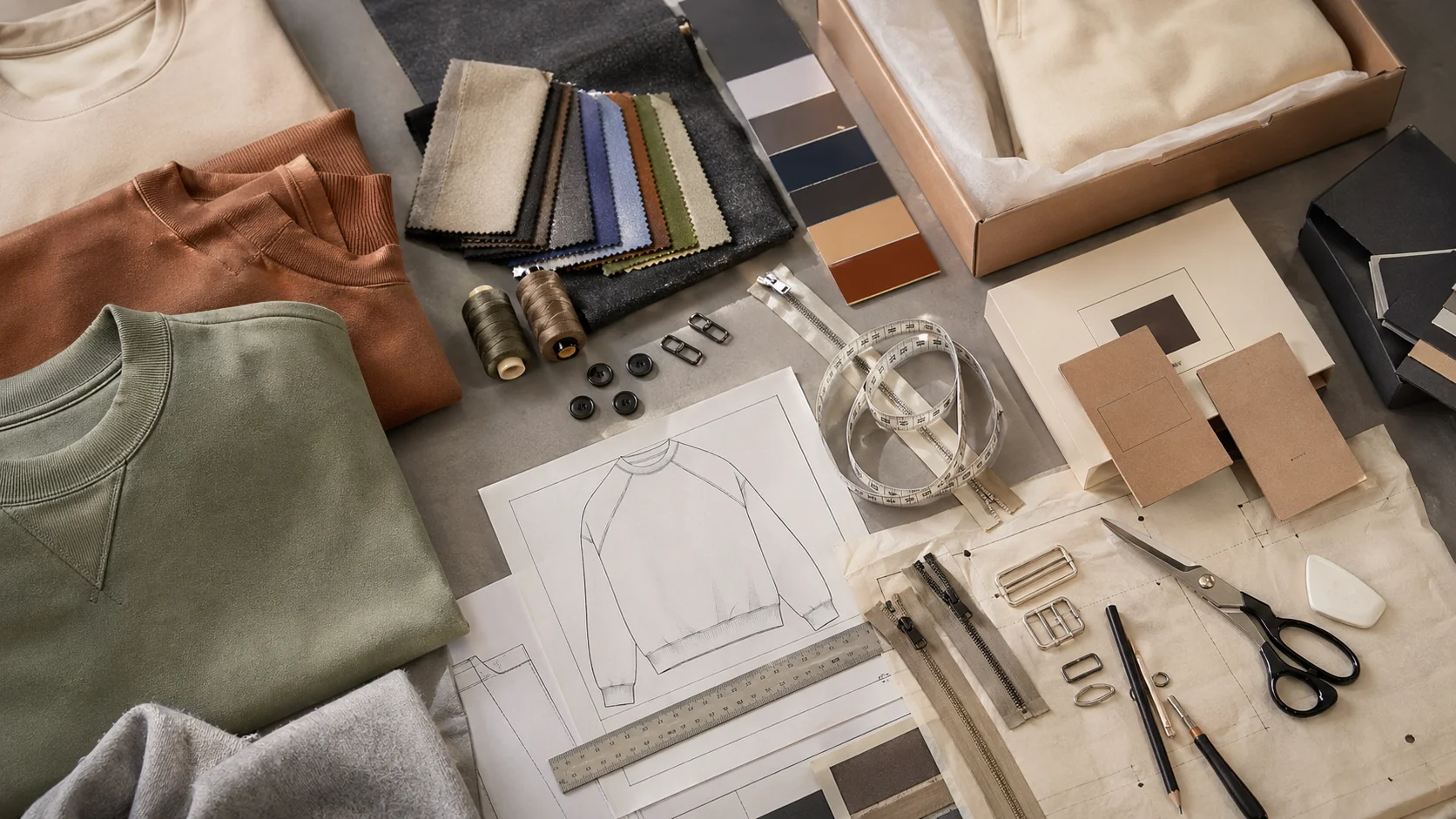
Private Label Clothing Launch Pricing Tiers compared by sample evidence, fabric or trim specs, MOQ, AQL terms, cost lines, delivery timing, and rework...
Fast answer: Private Label Clothing Launch Pricing Tiers: Material, Print, MOQ, and QC Terms should be judged by production evidence, not by a generic sourcing promise. The buyer needs sample proof, cost breakdowns, QC checkpoints, and delivery buffers in writing.
Ask for recent sample photos, measurement tolerances, fabric or print test assumptions, decoration test notes, packing examples, and a named inspection checkpoint. These details show whether the team can repeat an approved sample at bulk volume.
Separate garment cost, decoration, labels, packaging, sampling, testing, freight, and rush charges. Clear cost lines make it easier to reduce colorways, adjust size depth, or reserve more time for sampling.
Launching a private label clothing brand is exciting, but the real challenge is not just making great products. It is building a product line that can actually sell profitably. Many first-time brands focus too heavily on style and forget the financial structure behind the collection. Without a clear pricing tier strategy, a launch can look polished on paper and still fail to generate enough margin to support marketing, inventory replenishment, and future growth.
The smartest private label launches are built around pricing tiers. This means your collection includes products at different price points, each serving a specific role in the customer journey and in your profit plan. Some items attract entry-level buyers. Others create healthy margins. A few may serve as brand heroes that improve perception and drive upsells. When structured correctly, these tiers help you balance affordability, profitability, and brand identity.
In this guide, we will break down how to structure private label clothing launch pricing tiers, how to choose products for each tier, and how to price your first line for long-term success. Whether you are launching a new DTC brand, wholesale line, or boutique label, this framework will help you build a stronger and more sustainable collection.
Pricing tiers are important because not every product in your line should do the same job. In a private label clothing collection, some items need to be accessible to win first-time buyers, while others need to protect your margins. If every item is priced the same way, your line can become too flat and predictable. Worse, you may end up with products that are either too expensive for the target market or too cheap to support your business.
A tiered structure helps you:
For new brands, pricing tiers also reduce risk. Instead of relying on one product to carry the whole launch, you spread the business model across a carefully designed assortment. If one category underperforms, another can still help maintain overall profitability.
At Fabrikn, we often see new labels succeed when their first line is planned with both product and pricing strategy in mind. If you are still shaping your launch assortment, it can help to review your manufacturing options early through our services page so your pricing is aligned with real production costs from the start.
Before you assign price points, define the role each product will play in your launch. A strong first line usually includes a mix of core basics, mid-tier volume products, and one or two premium pieces that elevate the brand.
Start by asking these questions:
Once those answers are clear, you can map your collection into three core pricing tiers. This structure is flexible, but it often works well for private label apparel launches because it lets you cover different consumer behaviors while maintaining a coherent brand story.
A good launch line is usually not too broad. Too many products can create inventory risk and dilute the budget. Instead, focus on a small, intentional assortment. For example, a seven to twelve SKU launch might include a few entry items, a few mid-tier bestsellers, and one or two premium products. The goal is not volume alone. The goal is profitable clarity.
Tier 1 products are your easiest entry point for customers. These are typically the most accessible items in your launch, designed to reduce friction and encourage first purchases. In clothing, this often includes basics such as tees, tanks, socks, loungewear essentials, or simple accessories depending on the brand category.
The purpose of this tier is not to maximize margin per unit. Instead, these products can help you:
Tier 1 items should still be profitable. “Entry-level” does not mean bargain basement. It means strategically priced to feel approachable while preserving a workable margin. For private label clothing, a well-made basic can be one of the most powerful products in the entire line because it tends to sell in volume and can establish trust early.
Keep the design simple, the fabric dependable, and the fit consistent. Since this tier often serves as a brand introduction, quality matters more than complexity. Buyers will forgive a lack of decoration more easily than they will forgive poor construction or inconsistent sizing.
When setting the price, calculate a target gross margin that leaves room for platform fees, packaging, shipping subsidies, and promotions. Many brands make the mistake of pricing entry items too low to “look competitive.” In reality, the product should be competitive and healthy for your business.
Tier 2 is usually the engine of your launch. These are the products that offer stronger perceived value, better margins, and a more distinctive brand identity. They may be elevated basics, improved materials, special washes, more detailed construction, or a better fit profile than your entry-tier products.
This tier is important because it often represents the sweet spot for customer willingness to pay. Buyers who like your brand but are not ready for premium pricing are likely to convert here. From a business perspective, these products can also provide the margin cushion needed to absorb marketing costs and operational variability.
Examples of Tier 2 private label apparel may include:
Tier 2 should be designed to feel like the natural step up from Tier 1. The customer should understand why it costs more. That difference could come from fabric weight, finishing, fit, functionality, or aesthetic value. If the upgrade is not obvious, the higher price will be difficult to justify.
For many new brands, this is where the first line earns its profit. If Tier 1 drives discovery, Tier 2 drives financial performance. A strong launch usually includes enough of these items to create a core sales base.
Tier 3 products are your premium pieces. These may be the most expensive items in your line, but they also help define the brand and improve overall perception. In some cases, these are limited edition products or standout styles that demonstrate the best of your design and manufacturing capabilities.
Premium products are valuable because they can do more than generate direct margin. They can:
A common mistake is assuming premium means “more expensive for the sake of it.” In reality, premium pricing must be tied to visible or felt value. That value may come from superior fabric, advanced construction, signature details, limited availability, or a more elevated brand story.
For private label clothing, these hero products can be extremely useful in a first launch because they give the brand a top-end reference point. Even if fewer units sell, the presence of premium items can raise the perceived worth of the entire collection. Just make sure your supply chain can deliver the quality consistently. Customers who pay more are less forgiving.
Before you assign final retail prices, you need a clear cost structure. Private label clothing pricing should be based on total landed cost, not just the factory quote. If you ignore hidden costs, your margin calculations will be inaccurate and your launch may underperform financially.
Your costing framework should include:
Once you know your total landed cost, you can work backward from your target retail price. Many apparel brands use margin targets in the 60% to 70% range for direct-to-consumer products, though the right target depends on your category, channel mix, and brand positioning. Wholesale requires a different math model because your margin structure must support retailer pricing expectations.
A simple way to think about it is this: if your landed cost is too close to your intended retail price, the product is not ready for launch. You need enough spread between cost and retail to absorb markdowns, promotions, and the operational realities of apparel sales.
For brands unsure about product development and cost alignment, it can be helpful to learn more about our company values and production approach on our about us page.
Retail pricing should reflect market position, not just cost-plus math. A private label clothing brand can only charge what its audience believes the product is worth in comparison to alternatives. That is why pricing strategy must blend cost analysis, competitive research, and brand positioning.
Here are the main approaches to consider:
For a launch, tiered pricing is often the best approach because it gives structure to the assortment. Your entry-level products should be easy to understand. Your mid-tier products should feel like the best balance of value and margin. Your premium items should justify a higher price through quality or exclusivity.
It is also wise to protect your pricing ladder. If the gap between tiers is too small, customers may simply choose the cheaper item. If the gap is too large, the higher tier may look inaccessible. A logical progression helps guide buying behavior and makes the assortment feel intentional.
For example, a basic tee may sit at a lower entry price, a heavyweight version at a moderate step up, and a premium limited-run version at the top. The actual prices will vary by market, but the structure should always make sense to the customer.
Many new private label brands make the same pricing mistakes. Avoiding them can dramatically improve your chances of a successful launch.
Another common mistake is designing the collection before the pricing strategy. When that happens, the brand may fall in love with products that cannot be sold profitably. Instead, build the line in the reverse order: define your target market, set your pricing bands, and then design products that fit those bands.
Here is a simple example of how a first launch might be organized using three pricing tiers. This is not a universal formula, but it shows how the structure works in practice.
In this setup, the lower tier brings in new customers, the middle tier drives most revenue, and the premium tier strengthens the brand story while improving average order value. Together, the tiers create a balanced collection rather than a random assortment.
If you are planning your first line and want support turning this strategy into a manufacturable product range, you can contact us here to discuss development, sampling, and launch planning.
Your manufacturer should be a strategic partner in pricing, not just a production vendor. The earlier you involve them, the better they can help you align fabric choices, construction methods, minimum order quantities, and target prices.
A good manufacturer can help you:
Private label brands often get into trouble when they choose products first and ask about cost later. That approach usually forces difficult tradeoffs after the design is already locked. Instead, work from the economics outward. Define your target retail range, margin expectation, and market position first, then develop styles that fit the model.
That is the advantage of working with a manufacturing partner that understands both product development and brand strategy. A strong supplier relationship can help your launch move from creative idea to profitable collection much faster.
Get a free quote from Fabrikn — your trusted B2B clothing manufacturer with 10+ years of experience. MOQ as low as 200 pieces.
Get a Free Quote →Private label clothing launch pricing tiers are a structured way of pricing your first product line into different levels, such as entry, mid-tier, and premium. Each tier serves a different purpose in attracting customers, protecting margins, and building brand value.
Most new brands do well with three tiers. That is enough to create variety without making the assortment too complicated. A three-tier structure also helps you guide customers through different price points naturally.
No. They should be accessible and competitive, but not so cheap that they damage your margin or brand perception. Your goal is to create a healthy business, not just the lowest price.
Premium products should justify their price through visible quality, stronger materials, better construction, limited availability, or a compelling brand story. If customers cannot see why the item costs more, the price may be too high.
Target margins vary by channel and category, but direct-to-consumer brands often aim for strong gross margins that leave room for fulfillment, marketing, and returns. The exact target should be based on your total landed cost and business model.
Yes. A good manufacturer can help you estimate unit costs, adjust product details to fit your budget, and build a line that supports your intended retail prices. This is especially important for first-time launches.