
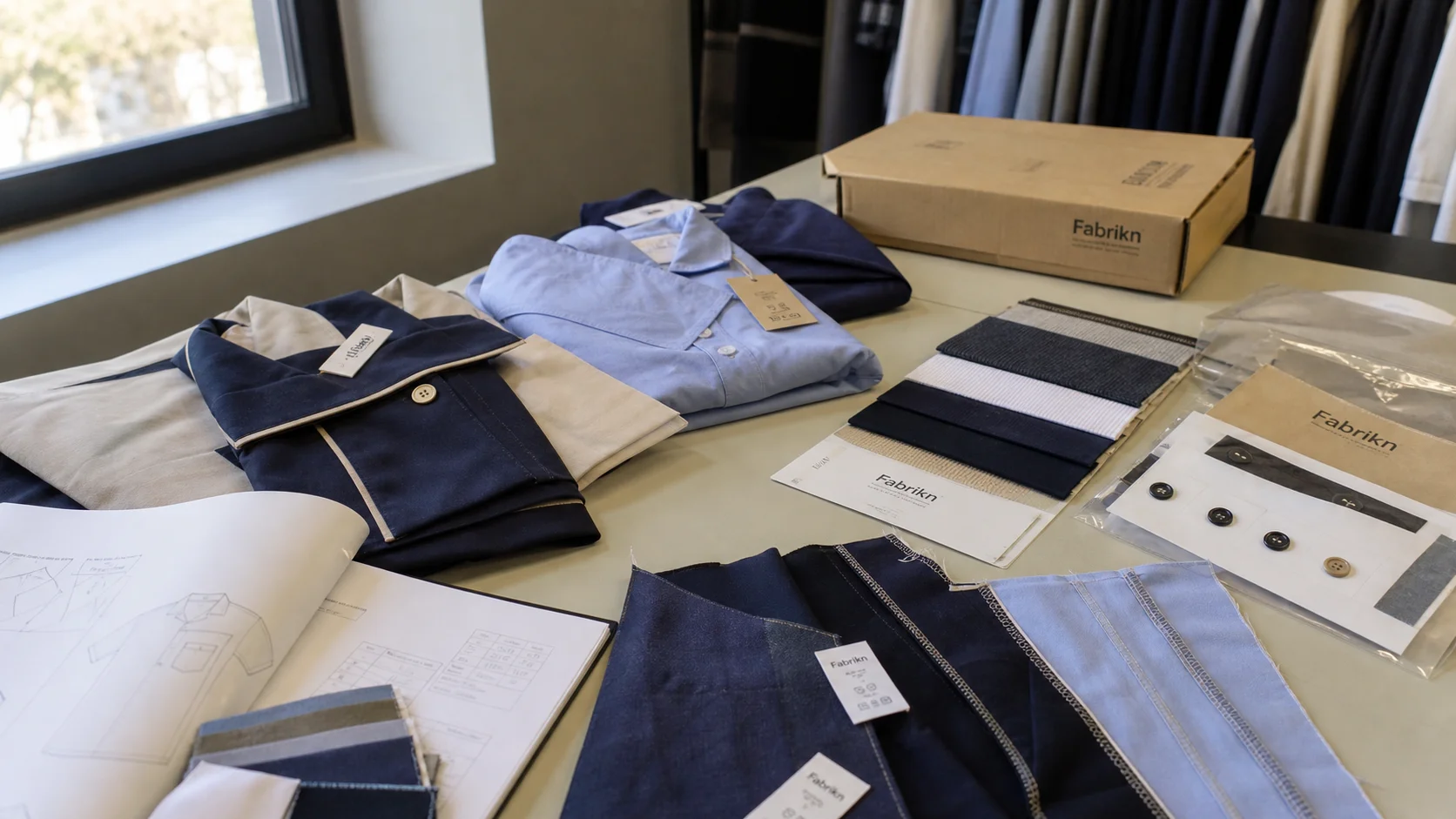
A focused outline for retailers planning private label jacket launches with screen printing, covering garment selection, print specifications, strike-offs, compliance details, costing, and launch-readiness factors tied directly to jacket production.
Private Label Screen Printed Jackets for Brand Launches - Fabrikn production reference
Private label jackets screen printing for retailer brand launches is a practical category when a new label needs visible branding, better perceived value, and a product that carries higher ticket potential than a basic tee. Jackets give a launch collection structure. They also create more room for brand storytelling through fabric choice, trims, labels, packaging, and decoration placement.
For many retailers, screen printed jackets sit in a useful middle ground. They are more premium than entry-level promotional garments, but they are still easier to scale than highly technical outerwear with complex seam sealing, membrane lamination, or performance testing requirements. That matters when a new brand is trying to balance margin, speed, and presentation.
Screen printing is often overlooked in jackets because buyers assume embroidery or patches are safer. That is not always true. On the right shell fabric, with the right ink system and curing controls, screen printing can produce clean logos, bold graphics, back prints, sleeve hits, and branded artwork with lower unit cost than many stitched options. It also supports a broad visual range, from understated one-color chest logos to larger statement graphics built for launch campaigns.
The key point is that jacket printing has less tolerance for mistakes than knit T-shirt printing. Fabric coating, water resistance, panel seams, lining construction, and heat sensitivity all affect results. A retailer planning a brand launch should not buy printed jackets as if they were standard cotton basics. The sourcing process needs tighter specifications, realistic MOQ planning, and disciplined sample approvals.
Brands looking for custom production support usually start by reviewing a supplier’s capabilities across development, manufacturing, and finishing. A useful starting point is a service overview such as https://fabrikn.com/services/, then moving into technical discussion once the target jacket style, decoration method, and launch quantity are clear.
Private label jackets are not just blank outerwear with a printed logo added at the end. In a retail launch context, private label usually means the jacket is built or customized for the retailer’s brand identity rather than resold under a generic manufacturer name.
That can include several levels of customization:
For a brand launch, the commercial decision is whether to use a near-stock body with limited customization or develop a more brand-specific jacket from the start. A near-stock approach generally reduces development time and MOQ pressure. A custom body improves differentiation but increases sampling rounds, trim sourcing complexity, and delivery risk.
Retailers launching a first collection often do best with one of two paths. The first is a proven silhouette such as a coach jacket, lightweight bomber, zip windbreaker, or work jacket with private labels and controlled graphic printing. The second is a core body with one or two customized features that make the item look proprietary without pushing development too far.
This is where purchasing judgment matters. A launch jacket should look intentional, not over-engineered. If the garment tries to carry too many new elements at once, delays usually show up in fabric approval, trim matching, or print testing.
Screen printing on jackets can perform well, but only on suitable constructions. The method works best when the shell surface is stable enough to accept ink consistently and the print area is not broken by bulky seams, flap pockets, elastic gathers, or heavy coatings.
Common jacket types that are often compatible with screen printing include:
Print placement usually works best on flatter zones:
The main technical concern is fabric chemistry. Nylon, polyester, poly-cotton, and coated shells all react differently to ink adhesion, curing temperature, and migration risk. A water-resistant coating may improve garment performance but reduce print reliability. A lightweight shell may print sharply but show heat marks if the curing process is not controlled well.
Buyers should ask clear questions about the intended print system:
A large graphic on a heavyweight cotton canvas jacket is a different job from a small chest logo on a thin polyester windbreaker. Treating them as equivalent usually causes problems later in production.
Quote requests for private label jackets are often too vague. That slows sourcing and produces prices that are not reliable enough for launch planning. A supplier cannot quote accurately if the buyer only sends a logo and a rough style reference.
Before requesting quotes, retailers should lock down the basics:
Even a basic tech pack improves quote quality. It does not need to be perfect, but it should show the construction intent. If the retailer does not have a fully developed spec pack, a sourcing partner can often help convert a concept into production-ready details. That discussion usually goes faster if the buyer shares target benchmarks early.
Useful jacket specifications commonly include:
The more tailored the jacket, the more likely MOQ requirements will rise. A fully custom dyed shell with custom trims and multiple print placements is a different factory commitment than a black stock-body coach jacket with one screen print.
Sample approval is where many launch calendars begin to drift. The reason is simple: jackets combine fit, material, trim, and print variables in one garment, so a single revision often affects several cost and timing points.
A cautious sampling path for private label screen printed jackets usually includes these stages:
Print strike-offs matter more than many buyers expect. A logo that looks correct on a digital mockup can fail on actual outerwear because the shell texture, coating, or color changes the appearance. White or bright inks may need underbase adjustments. Fine lines may fill in. Registration can drift if the fabric moves during printing. These are not rare issues.
Retailers should avoid approving only from screen images. Physical approvals are safer for outerwear, especially when the brand launch depends on a hero jacket style. If in-person review is not practical, then detailed photo and video approval should be paired with measured specs, print size confirmation, and written sign-off on color tolerances.
Approval checkpoints should cover both garment and print:
A supplier contact page such as https://fabrikn.com/contact-us/ is often the best place to start a structured sampling discussion, especially when buyers need to compare decoration options against launch timing.
MOQ for private label jackets screen printing for retailer brand launches varies widely based on how custom the product is. Buyers should expect the lowest MOQ on simpler bodies using standard materials and limited private labeling. Fully customized shells, linings, and trims usually require higher commitments.
Typical commercial ranges often look like this:
Project Type Typical MOQ Range Notes Near-stock body with private labels and 1 print 100-300 pcs per style/color Most practical for small launches Custom jacket body with standard trims 300-600 pcs per style/color Depends on fabric availability and size ratio Fully custom fabric, trims, labels, and multiple prints 500-1000+ pcs per style/color Higher risk if brand demand is untestedThese are not fixed rules. They are common planning ranges. Factories may also set minimum fabric consumption levels, trim MOQs, or color minimums that affect the true order threshold.
Screen printing cost is usually influenced by:
One-color chest branding is generally efficient. Large front-and-back graphics with sleeve prints and specialty inks can move the item out of a launch-friendly cost zone quickly. That does not mean the design is wrong. It means the retailer should compare decoration impact against margin, sell-through assumptions, and reorder confidence.
The smartest cost decision is not always the cheapest one. A better shell fabric with a cleaner one-color print may launch more effectively than a lower-grade jacket overloaded with decoration. Customers notice fabric hand feel and fit immediately. They do not always reward extra print complexity enough to cover the cost.
Lead time for private label printed jackets depends on development status, fabric sourcing, trim lead times, factory line capacity, and printing schedule. Retailers planning a launch should build timelines backward from the go-live date rather than from the moment the PO is issued.
A typical timeline may include:
This means a realistic launch calendar can easily extend beyond two months, and often longer for custom jackets. Shorter schedules are possible if the body, fabric, and decoration method have already been proven. First-time developments rarely move that smoothly.
Retailers should ask whether printing happens in-line with sewing, after sewing, or through an outside decoration process. Each route affects scheduling and quality control. Post-sewing printing on finished jackets can be efficient, but only if the garment can be loaded and registered properly on press equipment.
There is also a simple capacity issue. Jackets are seasonal, and seasonal capacity gets tight. If the launch is tied to autumn or holiday delivery, booking late often leaves buyers choosing between higher cost, compromised specs, or delayed shipment.
Early alignment on launch dates gives the supplier room to plan fabric sourcing and decoration windows properly. Buyers who need help evaluating manufacturing timing and launch feasibility often review company background first, then move into project scoping through pages such as https://fabrikn.com/about-us/.
Jacket printing failures are expensive because the garment value is higher and rework is harder. A flawed T-shirt print may be inconvenient. A flawed jacket print can wipe out margin on a launch capsule.
Common risks include:
Inspection should not focus only on measurement and general sewing. It should include decoration-specific checks. That is especially important for retailer launches where branded appearance drives first customer impressions.
Useful inspection points include:
If the jacket uses water-resistant or coated fabric, buyers should confirm whether printing affects the intended performance level in the decorated zone. Some compromise is normal, but it should be understood before approval rather than discovered after launch.
The best preventive step is simple: do not separate garment approval from print approval. They are one product. Treating them as separate workstreams often leads to missed risk.
Retailers sourcing private label jackets for a launch should look beyond whether a supplier says yes to screen printing. The better question is whether the supplier can manage the full combination of outerwear construction, labeling, decoration, quality control, and schedule discipline.
Key evaluation points include:
A supplier that pushes every idea through without caution is not always the safest option. For brand launches, candid technical feedback is valuable. If a large back print is likely to fail on a coated nylon shell, it is better to hear that before the sample stage eats the calendar.
Retail buyers should also compare launch goals honestly. If the first drop is meant to validate demand, then lower MOQ and faster delivery may matter more than developing a highly customized shell. If the launch is backed by firm distribution and marketing spend, deeper customization may be justified.
That is the real tradeoff: differentiation versus execution risk. A well-made, commercially priced jacket with disciplined branding usually outperforms an overbuilt concept that misses delivery or arrives with avoidable quality issues.
Private label screen printed jackets can be strong launch products for retailers because they combine brand visibility, better margin potential, and broad styling flexibility. They work especially well when the brand needs a hero item that feels more substantial than a basic jersey piece.
The opportunity is real, but the buying process needs more discipline than many first launches expect. Jacket shell selection, print method, MOQ structure, sample approvals, and inspection controls all shape the final result. Screen printing is not automatically the cheapest or easiest option, yet it can be one of the most effective when matched to the right garment construction.
For most retailers, the safest path is to start with a proven jacket silhouette, keep the print architecture commercially sensible, and push customization where customers notice it most: fit, fabric hand feel, labels, and clean branding execution. That approach reduces development friction while still giving the launch collection a private label identity that feels deliberate.
In practical sourcing terms, the best private label jackets screen printing for retailer brand launches comes from balancing ambition with manufacturing reality. Buyers who control specs early, approve samples carefully, and choose suppliers with real outerwear and decoration coordination are far more likely to launch on time and with fewer costly surprises.
Get a free quote from Fabrikn — your trusted B2B clothing manufacturer with 10+ years of experience. MOQ as low as 200 pieces.
Get a Free Quote →For simpler programs using a standard body with private labels and one print, MOQ often starts around 100 to 300 pieces per style or color. More customized jackets commonly move into the 300 to 600 piece range, while fully custom developments can require 500 pieces or more depending on fabric and trim minimums.
It can be, provided the shell fabric and ink system are compatible. Durability depends on adhesion, curing temperature, coating type, and how the jacket will be used and cleaned. Print testing on actual bulk-intent fabric is the safest approach before production approval.
Cotton twill, canvas, and some stable polyester or nylon shells are generally easier than heavily coated, very slick, or highly heat-sensitive fabrics. Each fabric still needs testing because finishing treatments can change print behavior significantly.
If the style is custom and the print needs testing, the full development and production cycle can easily take 8 to 16 weeks or longer, excluding transit. Timelines depend on sample revisions, material sourcing, capacity, and the number of approval stages.
That depends on the design, shell fabric, and target price. Embroidery offers texture and perceived durability, but it can add bulk and cost. Screen printing is often better for bold graphics and lower per-unit decoration cost, especially when the print area is large and the fabric accepts ink reliably.
The most common mistake is approving a concept without validating the print on actual jacket fabric. Outerwear materials behave differently from basic knit garments, so skipping print tests and physical sample review creates avoidable quality and delivery risk.