
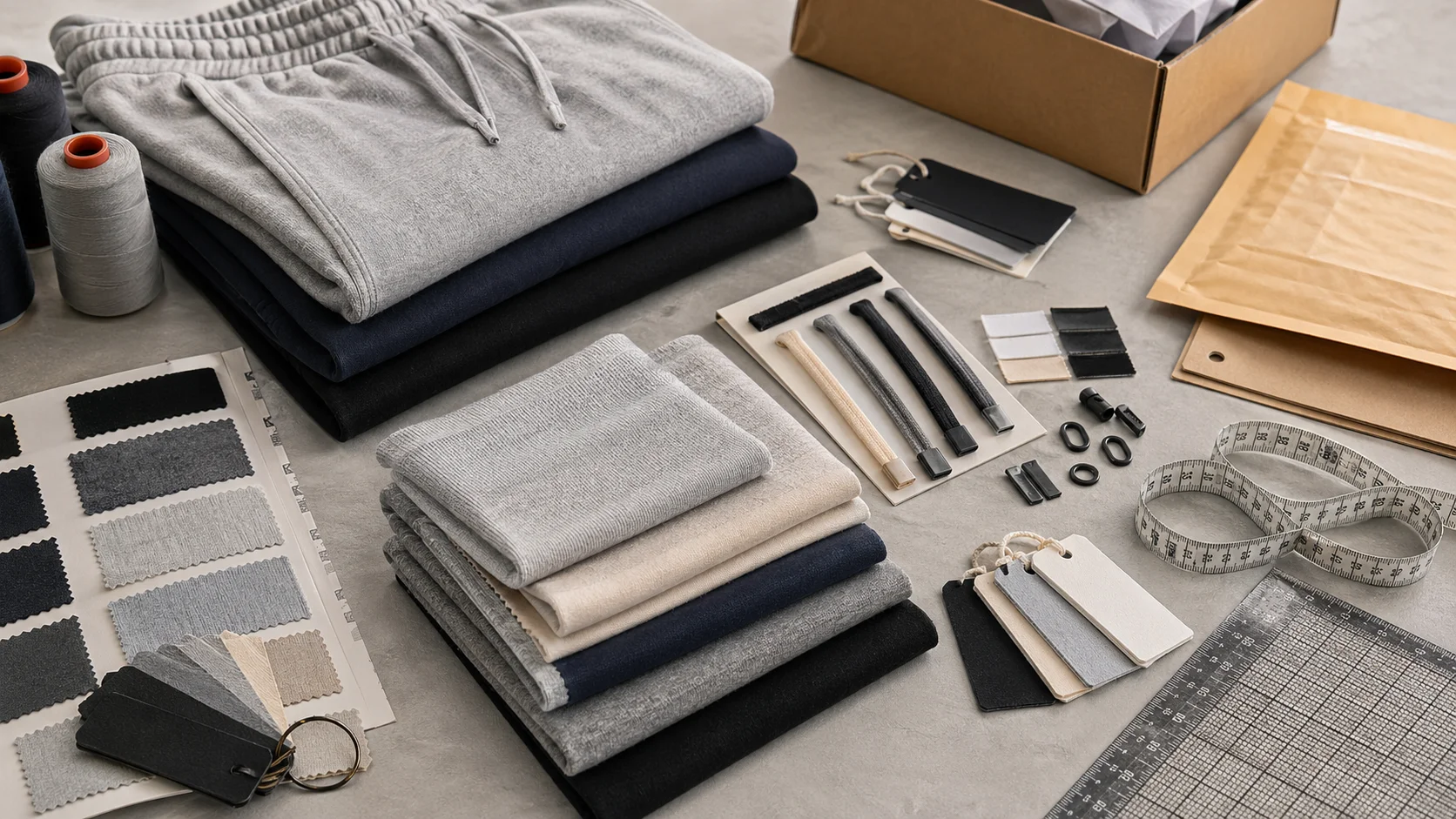
B2B Apparel Sourcing Due Diligence Checklist with checks for samples, fit, MOQ, QC evidence, pricing terms, and delivery risk.
Fast answer: B2B Apparel Sourcing Due Diligence Checklist: A Practical should be judged by production evidence, not by a generic sourcing promise. The buyer needs sample proof, cost breakdowns, QC checkpoints, and delivery buffers in writing.
Ask for recent sample photos, measurement tolerances, fabric or print test assumptions, decoration test notes, packing examples, and a named inspection checkpoint. These details show whether the team can repeat an approved sample at bulk volume.
Separate garment cost, decoration, labels, packaging, sampling, testing, freight, and rush charges. When every cost line is visible, it becomes easier to reduce colorways, adjust size depth, or reserve more time for sampling.
Choosing the right apparel supplier is one of the most important decisions a B2B buyer can make. Whether you are sourcing uniforms, corporate wear, fashion basics, promotional apparel, or private-label garments, the supplier you select affects product quality, delivery performance, compliance risk, margin, and customer satisfaction. A low price can look attractive on paper, but if the factory misses deadlines, delivers inconsistent quality, or fails to meet compliance standards, the hidden costs can quickly outweigh the savings.
That is why a structured b2b apparel sourcing due diligence checklist is essential. Due diligence helps procurement teams, brand owners, wholesalers, and retail buyers verify that a supplier is financially stable, operationally capable, ethically compliant, and technically able to meet production requirements. In a category where product complexity, lead times, and quality expectations can vary widely, a checklist creates consistency and reduces the chance of making an expensive mistake.
This guide provides a practical framework for evaluating apparel suppliers before you place an order. It is designed for business buyers who need a safer, more repeatable sourcing process. You can use it whether you are onboarding a new factory, comparing multiple vendors, or auditing an existing supplier relationship. If you are looking for manufacturing support, you can also explore our services to understand how we help businesses source and produce apparel with greater confidence.
Apparel sourcing is different from buying standard commodities. Garments involve fabric selection, grading, pattern development, trims, labeling, sewing quality, size consistency, packaging, and logistics. A supplier may be excellent at one product category and weak in another. A factory that produces simple T-shirts at scale may not be suitable for technical outerwear, fashion-led collections, or certified workwear.
Due diligence reduces uncertainty by validating the supplier across several dimensions. First, it helps determine whether the factory is real, registered, and operating transparently. Second, it shows whether the supplier has the equipment, workforce, and systems needed to deliver your order. Third, it identifies whether the supplier follows labor, environmental, and product safety standards relevant to your market. Finally, it clarifies commercial terms so that pricing, payment, sampling, production timelines, and after-sales expectations are aligned.
For B2B buyers, this is not just a risk-management exercise. It is a way to protect brand reputation. End buyers and business clients notice late deliveries, poor stitching, inconsistent sizing, weak packaging, and compliance issues. Strong sourcing due diligence supports better vendor selection, smoother production, and fewer costly surprises.
Start with the basics: confirm that the supplier is a legally registered business. Ask for the company registration number, business license, tax identification details, and factory address. Check whether the name on the quotation matches the name on the registration documents. If the supplier is a trading company rather than a manufacturer, make sure this is clearly disclosed.
You should also confirm who owns the business and whether the factory site actually exists. A genuine supplier should be willing to share verifiable documentation and answer straightforward questions about ownership, operations, and business structure. If anything feels unclear, treat it as a warning sign.
Not every apparel supplier can produce every type of garment. Review the supplier’s product categories, monthly capacity, machinery list, production lines, and workforce size. Ask which items they make most often and what order volumes they handle best. If your project requires specialized finishing, embroidery, printing, bonding, waterproof construction, or advanced stitching, verify that the supplier has proven experience in those areas.
Request images or videos of the production floor, or arrange a site visit if possible. A capable factory should be able to explain its workflow, from cutting and sewing to finishing and packing. Look for evidence that the team understands quality control at each stage.
One of the most common mistakes in apparel sourcing is assuming a general clothing supplier can make everything equally well. Instead, look for specialization. A supplier focused on knitwear, for example, may not be the best choice for structured jackets or tailored uniforms. Similarly, a promotional apparel supplier may not have the same expertise as a fashion manufacturer.
Ask for examples of products similar to yours. Request case studies, client references, or photos of finished garments. The more closely the supplier’s current production matches your needs, the lower the execution risk.
Sampling is where many sourcing problems become visible. A professional supplier should have a clear process for tech packs, material sourcing, pattern development, proto samples, fit samples, and pre-production samples. They should also be able to discuss revision timelines and sample approval steps.
Evaluate how they respond to technical instructions. Do they ask intelligent questions about measurements, stitching details, packaging, and fabric performance? Or do they give vague answers and move quickly to pricing? A thoughtful sampling process is often a sign of a more disciplined factory.
Quality should be built into the supplier’s process, not inspected only at the end. Ask whether they conduct inline inspections, final inspections, and random audits. Find out who approves first pieces, how defects are recorded, and what corrective action process they use when a problem appears.
It is also useful to understand whether the supplier follows standard quality measurement methods. For example, ask about AQL inspection, measurement tolerances, fabric shade control, shrinkage testing, colorfastness checks, and seam strength testing where relevant. A supplier with a strong quality system will be able to explain these steps clearly.
Fabric and trim quality strongly influence garment performance. Request information on where materials come from, whether mills are approved, and whether the supplier can trace key inputs. If your product requires organic cotton, recycled polyester, certified wool, or other controlled inputs, ask for documentation and certificates.
Also check how the supplier manages material substitutions. A dependable factory should not change fabric or trims without written approval. This is especially important for private-label and branded apparel, where consistency matters across every production run.
B2B apparel buyers increasingly need suppliers who meet compliance requirements. Depending on your market and customer expectations, you may need social compliance audits, environmental certifications, fiber content verification, or product safety documentation.
Ask for copies of any relevant certifications and verify that they are current. Common examples may include factory audit reports, ISO standards, OEKO-TEX, GOTS, GRS, BSCI, SEDEX, or local regulatory approvals. Do not assume a supplier is compliant simply because they claim to be. Always request documentation and check that the scope matches your product and market.
Ethical sourcing is now a core business requirement, not a nice-to-have. Ask about working hours, wage practices, age verification, health and safety standards, grievance processes, and subcontracting rules. If the supplier uses third-party labor or multiple production sites, confirm that those locations are also compliant.
Ethical due diligence is especially important for brands selling into regulated or reputation-sensitive markets. A supplier that cannot explain labor practices clearly may expose your business to serious risk, even if the product quality is acceptable.
A supplier may appear capable but still face financial weakness that affects continuity. Where possible, review credit references, payment history, years in business, customer concentration, and signs of rapid unstable growth. You do not necessarily need a full financial audit, but you should be alert to signs of distress, such as inconsistent communication, frequent price changes, or delayed sample delivery.
If your order is large or strategic, consider requesting more formal financial evidence. A stable supplier is more likely to invest in staff, equipment, and raw materials without interruption.
Ask for realistic lead times for sampling, material purchasing, production, inspection, and shipping. Be careful with suppliers who promise unusually fast turnaround without explaining capacity. Reliable factories usually provide detailed timelines and explain what might affect them.
Lead time risk is a major issue in apparel sourcing because delays can affect seasonal launches, retail promotions, and contract deliverables. Make sure the supplier’s timeline reflects actual workflow, not just optimistic sales promises.
Minimum order quantity, unit pricing, and payment terms should all be clear before development starts. Compare quotations carefully and make sure the pricing basis is identical across suppliers. For example, check whether quotes include fabric, trims, labels, packing, inspection, and freight or whether those are extra.
Beware of unusually low pricing that omits important components. The cheapest quote is not always the best value if it hides quality compromises or additional charges. Equally, payment terms should be commercially reasonable and aligned with the level of trust and order size.
Strong communication is often a proxy for operational discipline. During early discussions, observe how quickly the supplier replies, how clearly they answer questions, and whether they keep records of specifications and decisions. Good suppliers are organized, transparent, and responsive.
Pay attention to language precision. If a supplier frequently avoids direct answers, changes details without explanation, or struggles to confirm simple specifications, that may indicate future coordination problems. Clear written communication is essential in apparel development because even small misunderstandings can lead to expensive rework.
References are one of the best ways to validate performance. Ask for customers in similar markets, product categories, or order volumes. If references cannot be shared due to confidentiality, request anonymized case studies, export records, or examples of previous production.
Review finished goods photos carefully, and if possible, request physical samples from prior orders. For high-value relationships, a short supplier interview with an existing client can reveal more than any brochure or quotation.
Even a strong garment factory can fail if it cannot manage shipping correctly. Confirm whether the supplier has export experience, understands customs documentation, and works with reliable freight partners. Ask who is responsible for packing lists, commercial invoices, HS codes, and shipment tracking.
This step matters because apparel orders often move across borders and involve multiple handlers. A supplier with weak export coordination may create avoidable delays, extra costs, or compliance issues at destination.
Before placing an order, ensure key business terms are written into a contract or purchase order. These should include product specifications, approved samples, tolerances, delivery schedule, inspection standards, defect handling, payment milestones, ownership of molds or designs, confidentiality, and dispute resolution.
Contract clarity protects both sides. It reduces the chance of misunderstandings and gives you a basis for corrective action if the supplier does not perform as agreed. In apparel sourcing, verbal promises are rarely enough.
During supplier evaluation, certain warning signs should prompt deeper investigation or immediate caution. These include refusal to share business registration documents, inconsistent product claims, no factory address, poor-quality sample handling, vague pricing, pressure to pay quickly, or unwillingness to discuss compliance.
Other red flags include a lack of product specialization, repeated changes in contact person, unprofessional communication, and promises that sound too good to be true. A supplier that avoids detailed technical discussion may be hiding weaknesses in production capability. If you encounter several red flags at once, it is often better to walk away than to take unnecessary risk.
A scoring system turns due diligence into a practical decision tool. Create a simple matrix with categories such as legal verification, manufacturing capability, product specialization, quality control, compliance, communication, pricing transparency, lead time reliability, and logistics support. Assign each category a score from one to five, then apply a weighting based on what matters most for your order.
For example, if you are sourcing certified workwear for a regulated client, compliance and quality may carry more weight than price. If you are sourcing promotional T-shirts at scale, capacity and lead time might be the most important. The goal is not to find the cheapest supplier; it is to identify the supplier with the strongest overall fit.
You can also use a simple pass-fail gate for critical items. If a supplier cannot prove registration, cannot meet compliance requirements, or cannot produce a satisfactory pre-production sample, they should not move forward regardless of their score in other categories.
One common mistake is relying too heavily on price. Low cost can be useful, but it should never replace capability verification. Another mistake is skipping sample testing and assuming the first production order will match expectations automatically. In apparel, sample quality is one of the best indicators of production discipline.
Buyers also sometimes fail to compare like for like. One supplier may include trims and packaging in the quote while another does not. Some buyers overlook compliance documentation until late in the process, when it becomes expensive to fix. Others start production before key details are approved in writing.
A disciplined sourcing process prevents these mistakes. It creates a clear path from initial enquiry to final shipment and helps your team make decisions with better evidence.
The best way to improve sourcing outcomes is to make due diligence part of your standard operating process. Start with a supplier intake form. Then request registration documents, capability details, compliance evidence, sample development information, and reference checks. Next, evaluate the supplier against a scoring matrix. Finally, complete sample approval and contract review before confirming production.
Where possible, combine desktop checks with physical verification. Factory visits, video calls, third-party audits, and independent inspections all add confidence. For larger or recurring orders, consider supplier re-evaluation on a regular basis to ensure performance remains strong over time.
If you need help identifying the right production partner, our team can support you with sourcing discussions, product planning, and manufacturing guidance. Learn more on our about us page, or reach out through our contact us page to discuss your project.
At Fabrikn, we understand that B2B apparel sourcing is about more than finding a factory. It is about building a dependable supply chain that supports your business goals. We work with buyers who need practical guidance on development, production planning, material selection, and supplier communication. Our approach is focused on clarity, consistency, and long-term value.
Whether you are launching a new apparel line, expanding a uniform program, or searching for a more reliable manufacturing partner, we aim to make sourcing easier and safer. By combining product expertise with responsive communication and structured production support, we help reduce uncertainty at every stage of the process.
Get a free quote from Fabrikn — your trusted B2B clothing manufacturer with 10+ years of experience. MOQ as low as 200 pieces.
Get a Free Quote →A B2B apparel sourcing due diligence checklist is a structured set of checks used to evaluate clothing suppliers before placing an order. It covers legal verification, manufacturing capability, quality control, compliance, communication, pricing, lead times, and logistics.
Due diligence helps buyers reduce the risk of quality failures, late deliveries, compliance issues, hidden costs, and supplier unreliability. It makes supplier selection more objective and protects your business reputation.
Common documents include business registration, factory license, tax details, certifications, audit reports, product photos, sample references, and, where relevant, compliance and testing records.
A trustworthy supplier provides verifiable documentation, communicates clearly, shares relevant production details, supports sampling properly, and answers compliance questions transparently. References and factory verification also help.
Not automatically. The lowest price may exclude important services or hide quality and compliance risks. It is better to compare total value, not price alone.
Yes. Fabrikn supports B2B buyers with apparel manufacturing guidance and production services. You can explore our services or get in touch via contact us to discuss your needs.