
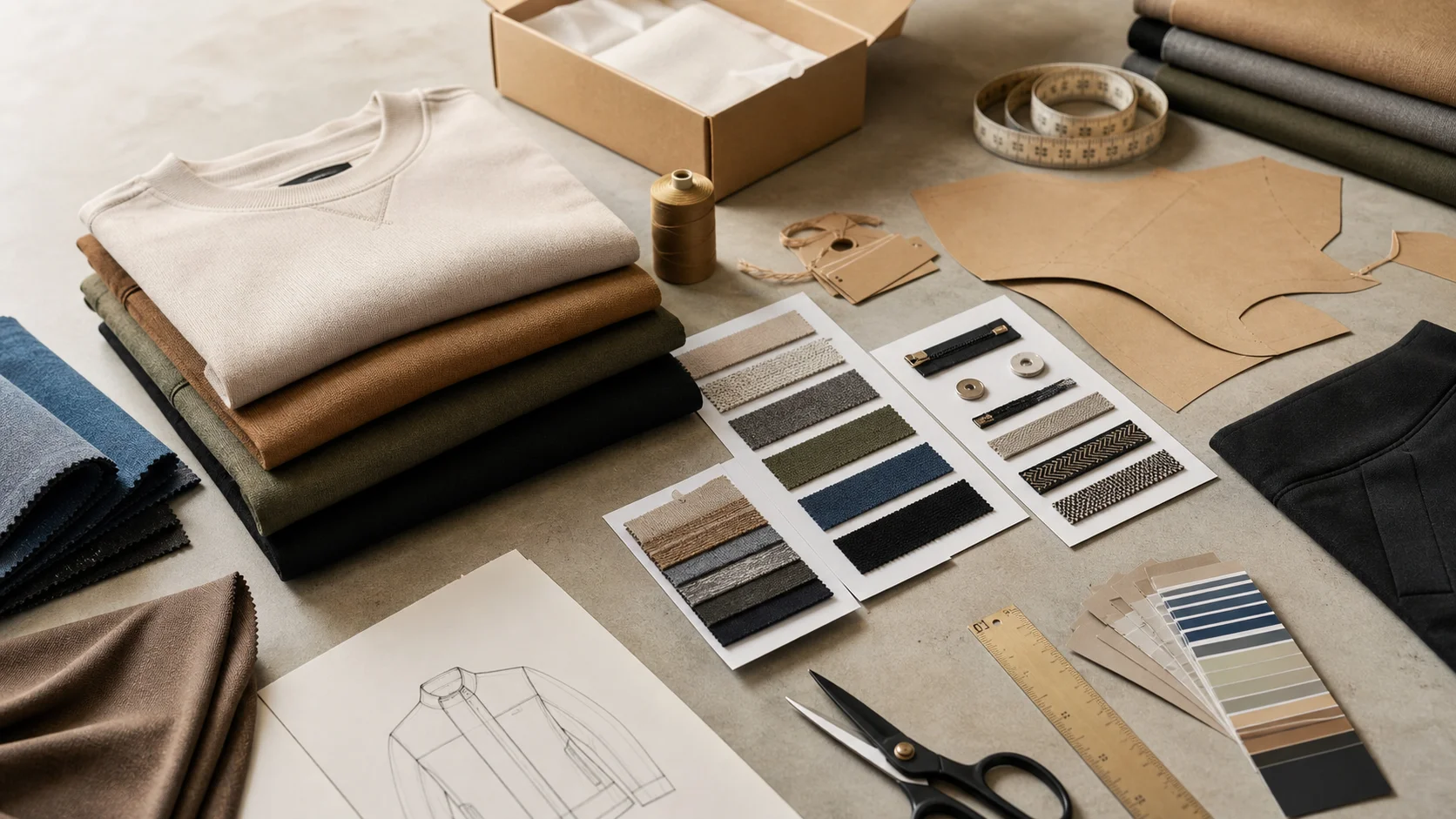
Bulk Apparel Procurement Checklist for Purchasing Managers with checks for samples, fit, MOQ, QC evidence, pricing terms, and delivery risk.
Fast answer: Bulk Apparel Procurement Checklist for Purchasing Managers should be judged by production evidence, not by a generic sourcing promise. The buyer needs sample proof, cost breakdowns, QC checkpoints, and delivery buffers in writing.
Ask for recent sample photos, measurement tolerances, fabric or print test assumptions, decoration test notes, packing examples, and a named inspection checkpoint. These details show whether the team can repeat an approved sample at bulk volume.
Separate garment cost, decoration, labels, packaging, sampling, testing, freight, and rush charges. When every cost line is visible, it becomes easier to reduce colorways, adjust size depth, or reserve more time for sampling.
Bulk apparel procurement can be one of the most profitable and most complex parts of a purchasing manager’s role. Whether you are sourcing uniforms, private label clothing, promotional apparel, or seasonal collections, success depends on more than just finding a low unit price. You need a repeatable process that protects quality, controls risk, keeps timelines on track, and aligns every purchase with your organization’s goals.
This bulk apparel procurement checklist for purchasing managers is designed to help you move from reactive buying to strategic sourcing. It covers the full process from defining requirements and evaluating suppliers to managing production, quality control, logistics, and post-delivery review. If your team is responsible for sourcing large apparel orders, this guide can help you make better decisions, reduce costly errors, and build stronger supplier relationships.
Bulk apparel procurement involves multiple moving parts: fabric selection, sizing, trims, branding, quality standards, production schedules, shipping requirements, and compliance checks. Even a small oversight can lead to delayed deliveries, inconsistent product quality, budget overruns, or inventory issues.
For purchasing managers, a checklist creates consistency and accountability. It helps teams standardize the sourcing process, compare suppliers fairly, and ensure nothing is missed before purchase orders are approved. A structured approach is especially important when ordering at scale because the financial impact of errors grows with order size.
A strong procurement checklist also improves communication across departments. Marketing may need branded apparel for a campaign, HR may need uniforms for a new location, and operations may need durable workwear for frontline staff. By using one procurement framework, you can align each stakeholder’s needs with supplier capabilities and business objectives.
The first step in any bulk apparel procurement checklist for purchasing managers is to define exactly what you need. Vague specifications often lead to disappointing results, especially when sourcing from a new supplier or manufacturing across borders.
Once the core requirements are documented, translate them into a product specification sheet. This becomes the foundation for supplier discussions, sample approval, and production instructions.
If your organization needs custom product development or large-scale sourcing support, explore Fabrikn’s services page to understand how a manufacturing partner can help streamline the process.
Before you engage suppliers, establish realistic expectations for cost, minimum order quantities, and production timelines. These three variables often determine whether a project is feasible.
Minimum order quantity, or MOQ, is especially important in apparel manufacturing. A supplier may quote attractive pricing, but if the MOQ is higher than your actual demand, the project may become too expensive or create inventory risk. Purchasing managers should compare MOQ against forecasted demand, seasonality, and storage capacity.
Lead time should include more than just production. Factor in sample approval, revisions, material sourcing, manufacturing, inspection, and shipping. If the apparel is needed for a campaign launch, retail season, or uniform rollout, build in buffer time for delays.
Supplier selection is one of the most critical decisions in bulk apparel procurement. A low quote is not enough if the supplier cannot maintain quality, communicate reliably, or meet deadlines.
Purchasing managers should create a shortlist of suppliers that meet both technical and commercial criteria. If possible, request factory photos, audit reports, or virtual tours to get a more complete picture of the supplier’s operations.
For companies that want to learn more about the team and manufacturing approach behind a supplier relationship, Fabrikn’s about us page is a useful starting point.
Once you have a shortlist of qualified suppliers, request formal quotes based on the same specification sheet. This ensures an apples-to-apples comparison and reduces the risk of hidden assumptions.
When comparing quotes, look beyond the base unit price. The true cost of procurement includes sampling, MOQs, freight, customs, testing, and potential quality risk. A supplier with a slightly higher quote may offer better communication, stronger production control, and fewer mistakes, ultimately saving money.
Ask each supplier to clarify what is included and excluded. Some quotes may appear lower because they omit packaging, label setup, or freight. Purchasing managers should always compare landed cost rather than just factory cost.
Sampling is where the procurement process becomes tangible. Samples allow you to confirm fabric feel, fit, workmanship, color, logo placement, and overall product quality before mass production starts.
Review samples against your original specification sheet and involve relevant stakeholders such as brand managers, operations leads, or merchandising teams. Document every approval and every revision request in writing. This avoids confusion once production begins.
If changes are needed, be precise. Instead of saying “make it better,” specify what should change: sleeve length, collar structure, fabric weight, print size, or stitch density. Detailed feedback reduces the chance of misinterpretation and rework.
Even after sample approval, purchasing managers should verify that the supplier has the capacity and materials to complete the order on time. Apparel production can be affected by raw material availability, machine scheduling, labor capacity, and seasonal demand.
A reliable supplier should be able to explain how the order will move through each production stage. Purchasing managers should also identify what happens if there is a delay in raw material sourcing or if a sample revision affects the schedule.
Good production planning reduces surprises and improves your ability to coordinate inventory, distribution, and launch plans across the business.
Quality control is essential in bulk apparel procurement because defects multiply at scale. A small issue in stitching, sizing, labeling, or packaging can result in large financial losses if not caught early.
Define acceptable quality levels and tolerances before production begins. For example, you may require exact logo placement, specific measurement tolerances, or zero tolerance for certain defects. This should be communicated clearly to the supplier and documented in the purchase agreement.
Where possible, use third-party inspection services or internal quality teams to validate the shipment before it leaves the factory. Early detection is far less expensive than handling returns or product recalls after delivery.
Depending on your market and product category, apparel procurement may involve regulatory, ethical, or brand compliance requirements. These can include fiber content labeling, country of origin statements, restricted substances compliance, labor standards, and packaging rules.
Purchasing managers should coordinate with legal, compliance, or customs teams when necessary. Missing or inaccurate paperwork can delay customs clearance and disrupt delivery schedules. In some cases, the wrong label or documentation can create serious legal exposure.
Logistics can make or break a bulk apparel procurement project. Once the goods are produced, they still need to be packaged, transported, cleared through customs, and delivered to the correct destination in usable condition.
Packaging is often overlooked, but it matters greatly in apparel. Proper packaging protects garments during transit, improves presentation, and supports downstream operations such as retail display or distribution to multiple sites.
Purchasing managers should also consider whether the supplier can split shipments, drop-ship, or support warehouse labeling if needed. These capabilities can simplify internal logistics and reduce handling costs.
The procurement process does not end when the shipment arrives. Post-delivery review is where purchasing managers can measure supplier performance, identify recurring issues, and improve future sourcing decisions.
Document supplier performance using a scorecard or internal review form. Track metrics such as on-time delivery rate, defect rate, communication quality, and problem resolution speed. This information becomes invaluable when deciding whether to reorder or switch suppliers.
Continuous improvement is a major advantage of disciplined procurement. The more you learn from each order, the stronger your sourcing process becomes.
Even experienced purchasing teams can make avoidable mistakes during bulk apparel sourcing. Recognizing them early helps you avoid expensive setbacks.
These mistakes are often the result of pressure to move quickly. However, in bulk apparel procurement, speed without structure usually creates more problems later. A checklist helps reduce these risks by forcing the team to verify each important detail before moving forward.
To improve results over time, purchasing managers should treat apparel procurement as a strategic function rather than a transactional task.
Purchasing managers who adopt these habits often find that sourcing becomes faster, more predictable, and less risky. Over time, better procurement processes can improve margins, reduce waste, and support stronger brand consistency.
At Fabrikn, we understand that bulk apparel procurement is about more than placing an order. It is about ensuring the right product is delivered at the right time, in the right quality, and with the right business outcome. As a B2B clothing manufacturer, we work with organizations that need dependable production support, clear communication, and scalable solutions.
Whether you are sourcing custom uniforms, branded merchandise, or private label apparel, we can help you move from concept to production with greater confidence. Learn more about our capabilities on the services page, explore our company background on the about us page, or reach out directly through our contact us page to discuss your next project.
Get a free quote from Fabrikn — your trusted B2B clothing manufacturer with 10+ years of experience. MOQ as low as 200 pieces.
Get a Free Quote →Bulk apparel procurement is the process of sourcing large quantities of clothing for business use, such as uniforms, retail programs, promotions, events, or private label sales. It typically involves supplier selection, sampling, production management, quality control, and logistics.
A checklist helps purchasing managers manage complexity, reduce errors, compare suppliers consistently, and ensure all critical details are reviewed before purchase orders are approved. It improves control over quality, cost, and timelines.
A bulk apparel RFQ should include product specifications, quantities, size breakdown, decoration requirements, packaging instructions, destination, and timeline. The more detailed the RFQ, the more accurate the supplier quote will be.
Compare total landed cost rather than unit price alone. Include sampling, customization, freight, duties, testing, packaging, and any hidden fees. Also evaluate supplier reliability, quality systems, and communication.
One of the most common mistakes is choosing a supplier based only on the lowest price. This can lead to quality issues, delays, and unexpected costs that make the order more expensive overall.
Use detailed specifications, review samples carefully, define quality tolerances, and conduct inspections during production and before shipment. Clear written approvals are also essential.
Yes. Fabrikn works with businesses that need reliable manufacturing support for bulk apparel. You can learn more about our offerings on the services page or contact our team directly through the contact us page.