
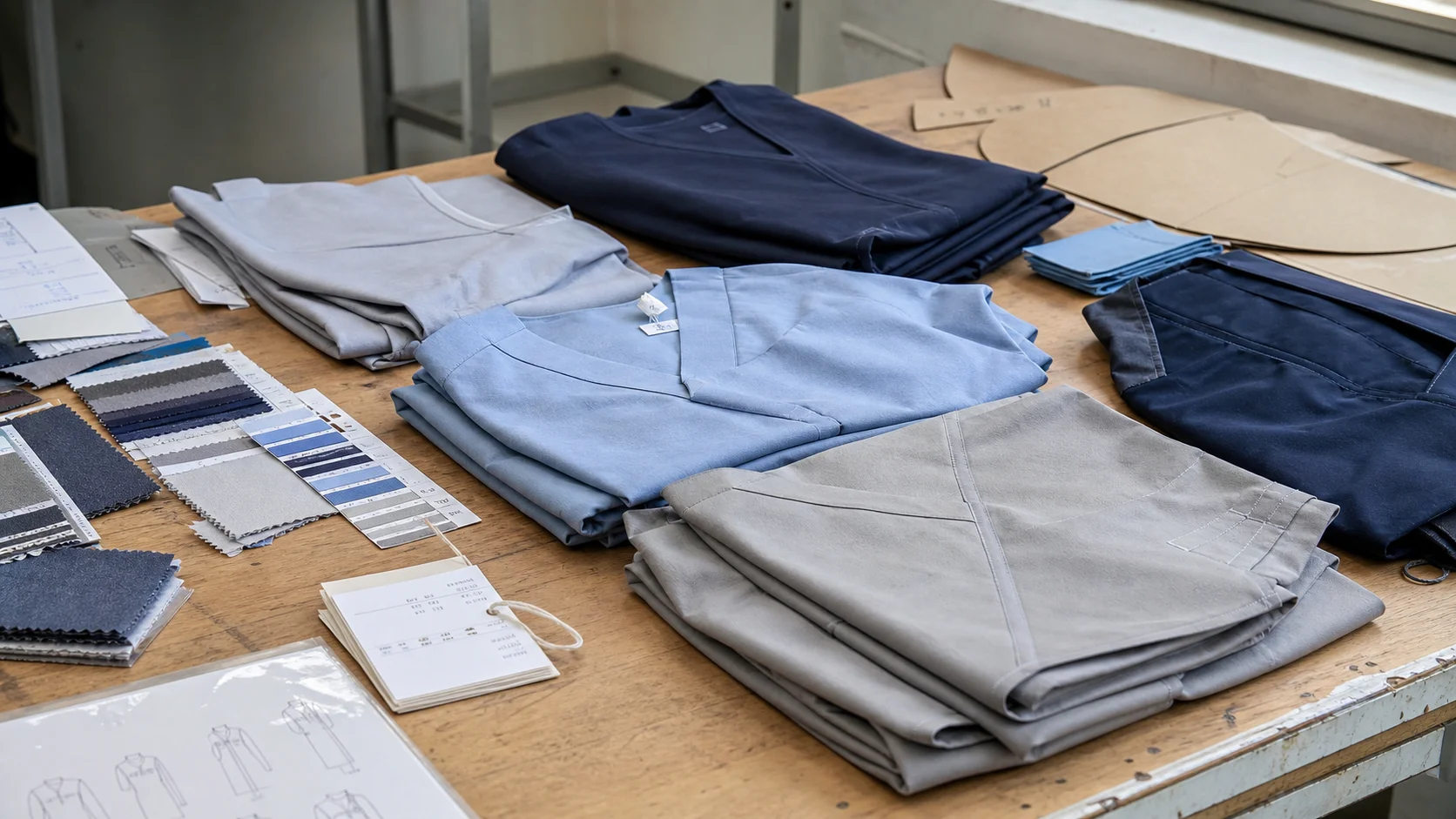
A practical SEO outline for healthcare uniform retailers sourcing bulk scrubs through cut and sew production, covering fabric specs, fit blocks, trim...
Bulk Scrubs Cut and Sew Sourcing for Retailers - Fabrikn production reference
Bulk scrubs cut and sew sourcing is a practical route for healthcare uniform retailers that need consistent fits, repeatable sizing, and product differentiation beyond basic stock programs. In cut and sew, the garment is built from custom pattern pieces rather than simply decorated or modified after purchase. That matters when retailers want control over pocket placement, fabric handfeel, stretch recovery, reinforcement, branding, and size grading across multiple SKUs.
For retail buyers, the appeal is straightforward. Cut and sew allows a scrub program to be shaped around the customer segment: entry-level value sets, mid-market everyday uniforms, or higher-spec lines with performance fabric and sharper tailoring. The tradeoff is equally clear. More control means more sampling, more specification work, and a higher risk of delays if the tech pack is vague or the fabric approval process drifts.
Fabrikn’s services page is a reasonable starting point for retailers comparing development support, manufacturing scope, and sourcing coordination. The right supplier relationship should reduce rework, not add layers of interpretation.
Healthcare uniform customers are less tolerant of poor fit than many buyers assume. A scrub top that pulls at the shoulders, a pant with unstable waistband recovery, or pockets that distort after washing will return complaints quickly. Cut and sew sourcing helps retailers manage those issues at the design stage instead of trying to correct them through packaging claims or merchandising language.
There is also a commercial advantage. Uniform retailers compete on assortment clarity, replenishment reliability, and perceived value. A private-label or exclusive cut and sew scrub program can support stronger margin than a generic resale model, provided the retailer can keep size curves stable and minimize quality disputes. The product has to feel practical, not fashionable for its own sake.
Custom scrubs also make it easier to align with channel needs. Hospital procurement, online retail, and specialty workwear stores do not buy the same way. A retailer selling to individual professionals may need softer fabric and more style variation. A retailer serving group accounts may prioritize color consistency, repeat orders, and long-run availability. Cut and sew gives room for those differences, but only if the sourcing brief is disciplined.
The fastest way to lose time in scrubs development is to start sourcing before the product is defined. Retailers should lock the basics early:
A complete spec reduces ambiguity during sampling and bulk production. Missing details invite assumptions, and assumptions are expensive. If the retailer cares about a specific fabric drape or a compressive feel for the pant, that needs to be stated in measurable terms where possible. GSM, fiber blend, and stretch direction are not decorative details; they shape wearability and return rates.
Buyers should also define the fit block early. Scrubs often fail when the size chart is borrowed from another category without adjustment. A men’s top block built too close to casual knitwear can produce a loose, sloppy line. A women’s pant block that ignores seated comfort or thigh movement can create immediate complaint risk in real work use.
MOQ for bulk cut and sew scrubs varies by supplier capability, fabric sourcing method, and the number of colors or sizes in the range. A practical planning band for many programs is roughly 300 to 1,000 pieces per colorway or style, with higher thresholds when custom fabric development or specialty trims are involved. Smaller first runs may be possible, but the unit cost is usually less favorable and the supplier may resist complexity.
The sample process should be treated as a gate, not a formality. Retailers usually need at least three checkpoints:
Each approval round should be documented with comments that are specific enough to act on. “Sleeve feels short” is weak feedback. “Increase sleeve length by 1.25 cm and reduce elbow taper for motion comfort” is usable. When approvals are vague, bulk production tends to drift and nobody can trace where the decision was made.
Retailers should also ask how fit corrections are handled. Some suppliers can revise patterns internally and resample quickly. Others rely on external pattern support and move more slowly. The difference matters when a launch window is tied to seasonal buying or a new account opening.
Scrubs are judged in daily wear, not in a showroom. Fabric choice should balance durability, comfort, wash performance, and cost. Common options include poly/rayon/spandex blends, polyester-rich performance knits, and cotton-rich programs where handfeel is prioritized over speed of drying. Retailers need to decide whether the line is built for softness, stretch recovery, stain resistance, or price competitiveness. Trying to maximize all four usually produces compromise.
Here are the main sourcing tradeoffs:
Trim choices also deserve attention. Drawcord tips, zipper quality, elastic grade, label material, and thread specification all affect the final result. Cheap trim can undermine an otherwise solid program. Pockets that use weak reinforcement or inconsistent bartacks tend to fail early, especially in high-motion roles. Retailers should ask for trim datasheets and insist that the bulk replacement spec matches the sample approval spec exactly.
Construction details are equally important. Clean seams, consistent stitch density, and balanced topstitching improve both appearance and durability. In scrubs, the most common construction problems are skipped stitches, uneven pocket alignment, twisted leg seams, and poor seam allowance control. Those issues are not cosmetic only. They can affect comfort, resale value, and customer trust.
Lead time in cut and sew sourcing depends on more than sewing capacity. Fabric development, lab dips, trim sourcing, sample revisions, and inspection scheduling all affect the calendar. A retailer that expects a simple six-week turnaround on a custom scrub line is likely underestimating the process.
A realistic sourcing timeline often looks like this:
Dependencies can extend the schedule. If a supplier is waiting on custom dyed fabric, production will not truly begin even if sewing capacity is available. If label or packaging artwork changes late, the pack-out process can become a bottleneck. Retailers should build in buffer time for first orders and avoid announcing launch dates before production has passed the approval gate.
Back-to-back replenishment programs are easier to manage once the fit and materials are locked. The first buy is the hardest. Later orders benefit from proven specs, but only if the retailer keeps the same pattern base and does not make unnecessary changes between runs.
Scrubs may look simple, but quality failure points are numerous. The usual problems are not dramatic defects. They are small inconsistencies that add up across a retail program: shade variation, inconsistent sizing, weak pockets, twisted seams, and poor wash performance.
Retailers should pay close attention to these inspection risks:
A proper inspection plan usually includes inline checks, midline checks, and final random inspection. AQL standards are common in apparel, but the exact level should match the product risk and buyer tolerance. A low-cost program may accept a broader defect band than a premium private-label line, though basic safety and durability issues should never be negotiated away.
Retailers should treat sample approval as a product definition tool, not proof of bulk quality. Bulk production can still drift if the supplier changes fabric lots, trim sources, or sewing teams without clear control.
Wash testing matters. Scrubs spend long hours under movement and frequent laundering. A garment that looks acceptable after one fitting may fail after repeated laundering if shrinkage, seam torque, or color fade are not controlled. Retailers should ask for test results where available and define their own acceptance standards before the first bulk order.
The best supplier is not always the cheapest one. For bulk scrubs cut and sew sourcing, the supplier should be evaluated on development discipline, communication, pattern stability, quality consistency, and willingness to work from a clear technical brief.
Useful evaluation questions include:
Retailers should also judge responsiveness. Slow answers during sampling usually become slower answers during production. A supplier that communicates clearly on constraints is often more reliable than one that promises everything upfront. The goal is not to be impressed. The goal is to reduce execution risk.
Fabrikn’s about us page can help buyers understand the company’s positioning and operating approach before opening a sourcing conversation. That kind of basic context is worth checking early, especially when the program depends on repeatable production rather than one-off fashion work.
For retailers, sourcing is not only about product quality. Margin depends on landed cost, payment terms, freight structure, defect handling, and reorder stability. A scrub program that looks attractive on unit price may be expensive after sampling, air freight, delayed launches, or quality rework are added.
The commercial points worth clarifying early are:
Retail buyers should also ask whether the supplier can hold the same fabric and trim for reorder continuity. A lower opening price loses value quickly if the second order needs a different shade match or a substituted zipper. In healthcare uniforms, consistency is often more valuable than chasing the lowest opening quote.
A good sourcing model protects the retailer from hidden rework. When a supplier is clear on minimums, tolerances, and production limits, the relationship becomes easier to scale. That is especially important for teamwear and activewear adjacent programs, where buyers expect practical performance and steady replenishment.
Before issuing a purchase order, retailers should confirm the following:
Retailers that work through this list tend to avoid the common traps: vague fit expectations, last-minute fabric substitutions, and avoidable inspection disputes. The process is slower than buying a finished generic style, but the commercial return is usually better when the product is meant to support a stable retail assortment.
For a direct inquiry or project discussion, contact us early in the development cycle. The earlier the spec is clarified, the easier it is to keep cost, fit, and delivery aligned.
Get a free quote from Fabrikn — your trusted B2B clothing manufacturer with 10+ years of experience. MOQ as low as 200 pieces.
Get a Free Quote →It is the process of developing and manufacturing scrub tops and pants from custom pattern pieces in bulk, rather than buying finished stock garments. Retailers use it when they need specific fit, fabric, branding, or construction control.
Many programs start around 300 to 1,000 pieces per style or colorway, though the actual minimum depends on fabric, trim, and supplier setup. Custom materials usually push the minimum higher.
Most retail programs need at least a proto sample, a fit sample, and a pre-production or size-set sample. More rounds may be needed if the fit or fabric is not approved quickly.
There is no single best option. Poly/rayon/spandex blends are common because they balance comfort, stretch, and durability. The right choice depends on the retailer’s target price point and wear expectations.
Common risks include shade variation, sizing inconsistency, weak pocket construction, seam failure, and shrinkage after washing. These issues should be checked before bulk approval, not after delivery.
After approvals, bulk production often takes 30 to 60 days, but the full timeline can be longer when sampling, fabric sourcing, and inspection are included. Custom programs need buffer time.