
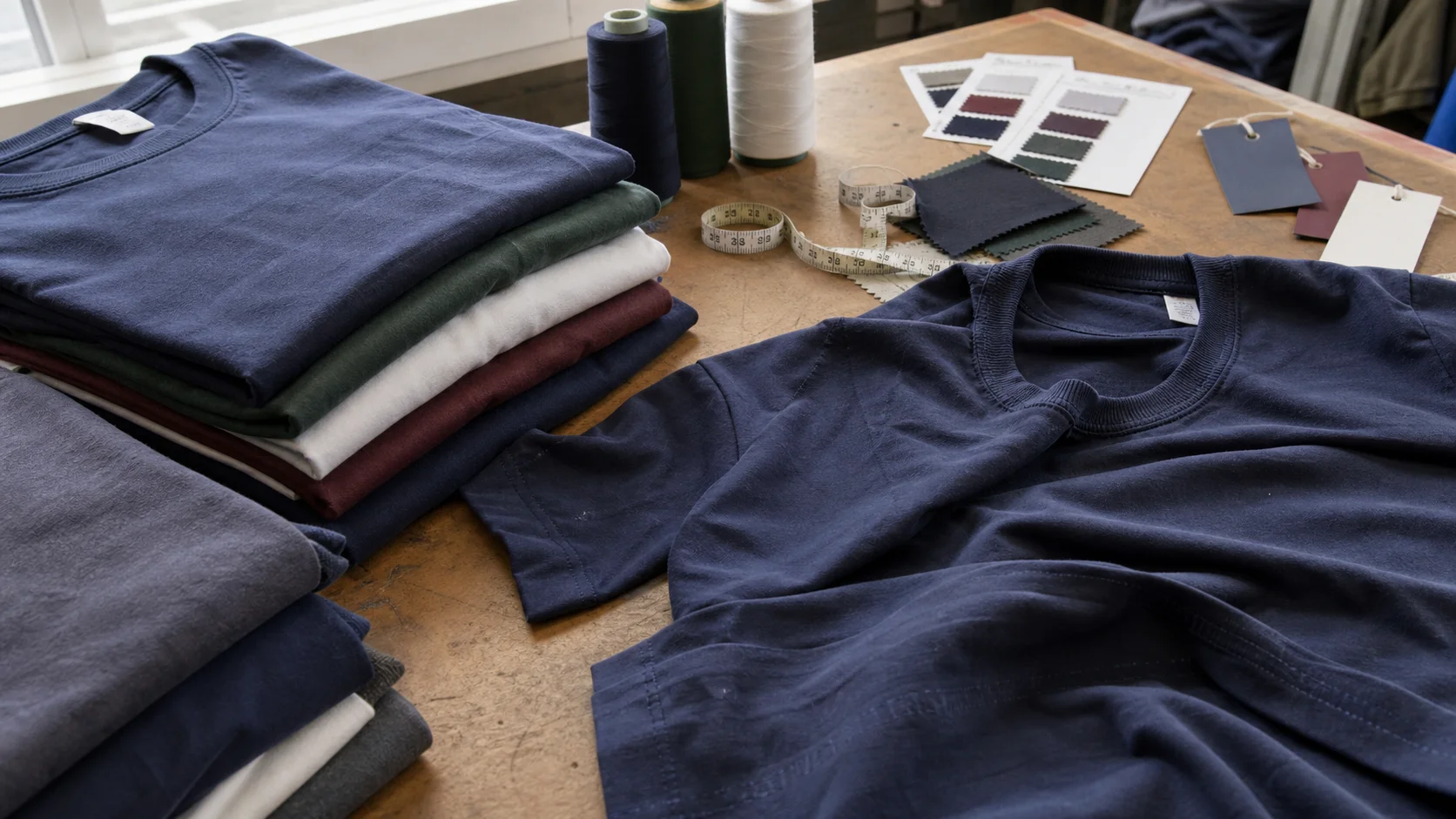
An SEO-focused outline for a 2500-word article on how corporate buyers verify uniform safety, performance, labeling, and decoration compliance before...
Compliance Testing for Corporate Uniforms Buyers - Fabrikn production reference
Compliance testing for corporate uniforms is the process of verifying that garments meet the required legal, safety, quality, and brand-specification standards before bulk production and shipment. In procurement terms, it is the proof that a uniform is not only visually correct, but also suitable for its intended use, its wearer, and the market where it will be sold or issued.
For corporate buyers, the word compliance covers a wider field than many teams expect. It can include fiber content accuracy, colorfastness, shrinkage, seam strength, print durability, flammability, restricted substances, dimensional tolerances, label accuracy, and washing performance. When uniforms carry decoration such as embroidery, screen print, heat transfer, sublimation, or patch application, the testing scope should extend to the decorated areas as well.
Uniform programs often sit in a gray zone between apparel production and workplace equipment procurement. That is where mistakes happen. A shirt can pass visual approval and still fail after washing, or a printed logo can look acceptable on day one and crack after a few laundering cycles. Buyers need a compliance plan that fits the garment type, the end use, and the decoration method, not a generic checklist copied from a different category.
Late testing is expensive testing. If a defect appears after bulk production starts, the buyer is usually forced into a difficult choice: accept a compromised shipment, rework the goods, or delay rollout. In corporate procurement, all three outcomes cost money and credibility.
Uniform failures also create operational problems that are rarely visible in the purchase order. A poor wash result can create inconsistent employee presentation across locations. A weak seam can cause premature wear in high-movement roles. Incorrect labeling can trigger customs delays or regulatory exposure. A decoration failure can turn a brand rollout into a replacement project.
Buyers should treat compliance testing as part of the sourcing decision, not as a final inspection checkbox. The important question is not only whether the supplier can make the garment, but whether the supplier can make it repeatedly to spec, with supporting evidence.
For teams building a structured supplier shortlist, it helps to start with the supplier’s quality and service approach. Fabrikn’s services page is a useful place to align the procurement scope with the production and testing support being offered. A supplier that understands compliance early can usually reduce the risk of rework later.
Buyers should confirm that the garment matches the declared composition. A cotton-rich polo, for example, should not vary materially from the approved spec without notice. Composition affects comfort, shrinkage, decoration adhesion, wash behavior, and sometimes regulatory labeling. For blended fabrics, the acceptable tolerance should be written into the tech pack or purchase agreement.
Uniforms are worn repeatedly and washed frequently. Shrinkage testing should cover body length, sleeve length, width, and any critical fit points. A common working tolerance in apparel programs is around 3% to 5% shrinkage depending on fabric type and use case, but the right threshold depends on the garment and how the uniform is worn. A polo for office staff has different risk than a cotton drill trouser for maintenance teams.
Color retention matters for brand consistency as well as appearance after laundering. Buyers should ask for wash, rub, perspiration, and lightfastness testing where relevant. Dark colors, bright reds, and heavily dyed fabrics deserve closer review. A garment can look acceptable on a one-time sample and still bleed, crock, or fade under normal use.
Corporate uniforms are not fashion pieces; they are repeat-use garments. Stitch density, seam allowance, reinforcement points, bartacks, and thread quality all affect longevity. Buyers should inspect stress points such as side seams, armholes, crotch seams, pocket openings, and placket attachments. Weak construction often appears first in high-movement roles or after repeated industrial laundering.
Uniform programs fail when the fit is inconsistent across size runs. Size grading should be checked against agreed measurement specs, with acceptable tolerances clearly stated. Buyers should request pre-production samples across key sizes when the program is broad or the fit is sensitive. A single fit sample rarely tells the whole story.
Labels must match the actual fiber content, country of origin requirements, care instructions, and brand instructions. Care labels should reflect the tested wash method, not an optimistic guess. If a garment requires cold wash only, or cannot tolerate tumble drying, that limitation must be visible to the end user and supported by test evidence.
Corporate buyers, especially those supplying international offices or public-facing staff, should verify restricted substance compliance where applicable. This may include azo dyes, formaldehyde, heavy metals, phthalates, or other chemical restrictions depending on market and use. Printed uniforms and coated trims are often higher-risk than plain dyed garments because more chemistry is involved in the final product.
Some uniforms need workplace-specific testing beyond standard apparel quality. Hospitality, industrial maintenance, logistics, food service, healthcare, and utility programs may require flammability, antimicrobial claims validation, high-visibility performance, or special hygiene standards. Buyers should not assume a standard commercial shirt can be used in a regulated environment without verification.
This category matters because decoration can become the weak point even when the base garment is acceptable. Printed or decorated uniforms need testing that reflects the decoration method, substrate, and wash cycle.
Screen-printed logos should be checked for adhesion, cracking, peeling, color consistency, and wash durability. Ink selection matters. A plastisol print may perform differently from a water-based system. Large solids, fine text, and multi-color registration all add risk. Buyers should confirm whether the print will be tested on the exact fabric blend and color chosen for bulk production.
Embroidery is durable, but it changes the garment structure. Dense stitching can distort lightweight fabrics, pucker around logos, or weaken areas with tight needle penetrations. Testing should cover wash stability, thread colorfastness, backing compatibility, and visual distortion after laundering. The buyer should also check whether the embroidery placement interferes with comfort, pocket use, or layering.
Heat-applied graphics can perform well when the transfer system matches the fabric and curing process. Poor adhesion, edge lift, or gloss change are common risks. Uniforms with stretch content or textured surfaces need closer validation. Buyers should require wash testing and confirm the decoration can survive the intended laundering frequency.
Sublimation is usually strongest on polyester-based fabrics, but color accuracy and hand feel must still be checked. The print should not shift under heat, and the base fabric must be suitable for the intended application. Because the decoration is integrated into the fiber surface, verification should focus on artwork fidelity, hue consistency, and long-wear performance.
Applied badges, woven labels, and mixed-decoration systems create more failure points than a single decoration method. Buyers should examine attachment strength, edge lift, thread compatibility, and wash performance across the full assembly. Mixed decoration is often where cheap shortcuts show up first.
The practical point is simple: decoration testing must be tied to the garment and not handled as a separate artwork approval only. A logo that looks correct on screen may still fail once it is placed on a real shirt, washed, and worn in a corporate setting.
A disciplined procurement process reduces surprises. The sequence below is usually more effective than trying to “inspect quality” at the end.
Start with the use case. Office wear, hospitality, frontline retail, light industrial, and executive apparel do not share the same testing burden. Define the market, wash frequency, decoration method, size range, and any mandatory certifications or legal standards. Put that into the tech pack or sourcing brief.
Do not approve production from a single sample size alone unless the order is small and the fit risk is low. A proto sample shows construction and decoration placement. A size set exposes grading issues. For many programs, the buyer should ask for at least the core sizes first, then approve full production only after fit is confirmed.
Fabric weight, yarn composition, finish, stretch recovery, thread type, buttons, zippers, elastic, labels, and packaging all affect compliance. A fabric substitution can change shrinkage or print adhesion even if the color is unchanged. Trim approvals matter more than many buyers expect, especially when trims interact with wash temperature or brand presentation.
Before bulk cut, buyers should ask for test reports or lab evidence where relevant. In smaller programs, in-house test records may be enough if the supplier is credible and the garment is low risk. For larger or regulated orders, independent third-party testing is worth the time. Typical sample approval cycles can take 7 to 21 days depending on artwork revisions, lab turnaround, and shipping time.
A pre-production sample, made with bulk fabric, bulk trims, and final decoration methods, is a better control point than a showroom sample. This is where buyers catch color drift, decoration placement issues, and construction variations before volume is committed.
Inline inspection, final random inspection, and shipment review each have a place. High-volume corporate uniform orders often justify a stronger inspection plan, especially when the program has multiple sizes, logos, or colorways. Inspection should include measurements, visual defects, stitching, decoration alignment, labeling, and carton marking.
Uniform programs are rarely one-off projects. Once the first order is approved, the buyer should keep the sample, test reports, color standards, and measurement sheet as the release reference for reorders. This is where many teams lose control. A reorder without a locked reference often drifts in shade, fit, or logo placement.
One common mistake is approving based on appearance alone. A sharp-looking sample can still fail shrinkage or decoration durability. Another is under-specifying the garment because the buyer assumes the supplier “knows what corporate uniforms need.” That assumption usually ends in revisions.
Buyers also underestimate the effect of decoration on timing. Embroidery digitizing, print screen setup, transfer approvals, and artwork corrections can add days or weeks to the schedule. If the garment must also pass lab testing, the timeline extends further. Lead time depends on fabric availability, trim sourcing, testing scope, and whether approvals arrive on time.
MOQ can be another source of friction. Typical MOQ ranges for corporate uniforms vary widely: simple stocked programs may start around 100 to 300 pieces per style or color, while custom cut-and-sew decorated programs may require 300 to 1,000 pieces or more, especially when multiple sizes or colors are involved. Buyers should not assume the quoted MOQ includes every size, every color, and every decoration method without checking the conditions.
Some programs fail because the buyer changes one component after approval. A different thread, a new label, a cheaper transfer, or a substitute fabric can force retesting. Small changes are not small when compliance is involved.
Corporate procurement should ask for evidence that can be checked, not general promises. The useful documents depend on the product, but the following are common:
When the procurement team needs supplier-side clarification, the most efficient move is a direct conversation before the order is released. Fabrikn’s contact-us page is the obvious place to start that process. Early questions are cheaper than late corrections.
Teams that are still qualifying a supplier should also review the company background and production scope. A page like about-us helps buyers understand whether the supplier is set up for custom uniform programs, decoration work, and compliance-heavy orders.
Get a free quote from Fabrikn — your trusted B2B clothing manufacturer with 10+ years of experience. MOQ as low as 200 pieces.
Get a Free Quote →At minimum, buyers should confirm fabric composition, shrinkage, colorfastness, construction quality, decoration durability, and label accuracy. Programs with workplace exposure, special laundering, or regulated use need more than the minimum.
Yes. Decoration changes performance. Printing, embroidery, transfers, and patches can each create failure risks that the base fabric alone will not reveal.
For standard uniform programs, sample approval often takes 7 to 21 days, depending on revisions, shipping, and lab testing. Complex decoration or multiple fit rounds can extend that timeline.
There is no single standard, but many custom uniform programs start around 100 to 300 pieces per style or color. More complex decorated orders often sit in the 300 to 1,000 piece range or higher.
Unapproved fabric substitutions, weak decoration durability, poor size grading, incorrect labeling, and late changes to trims or artwork are among the most common causes of failure.
Self-testing can be acceptable for lower-risk programs if the supplier is credible and the scope is narrow. For larger, regulated, or high-visibility programs, third-party verification is the safer route.
Compliance testing for corporate uniforms is less about bureaucracy and more about control. Buyers who define the spec early, test the decorated garment in its final form, and keep clear approval records usually avoid the expensive surprises that derail uniform programs. That is the practical standard worth using in corporate procurement.