
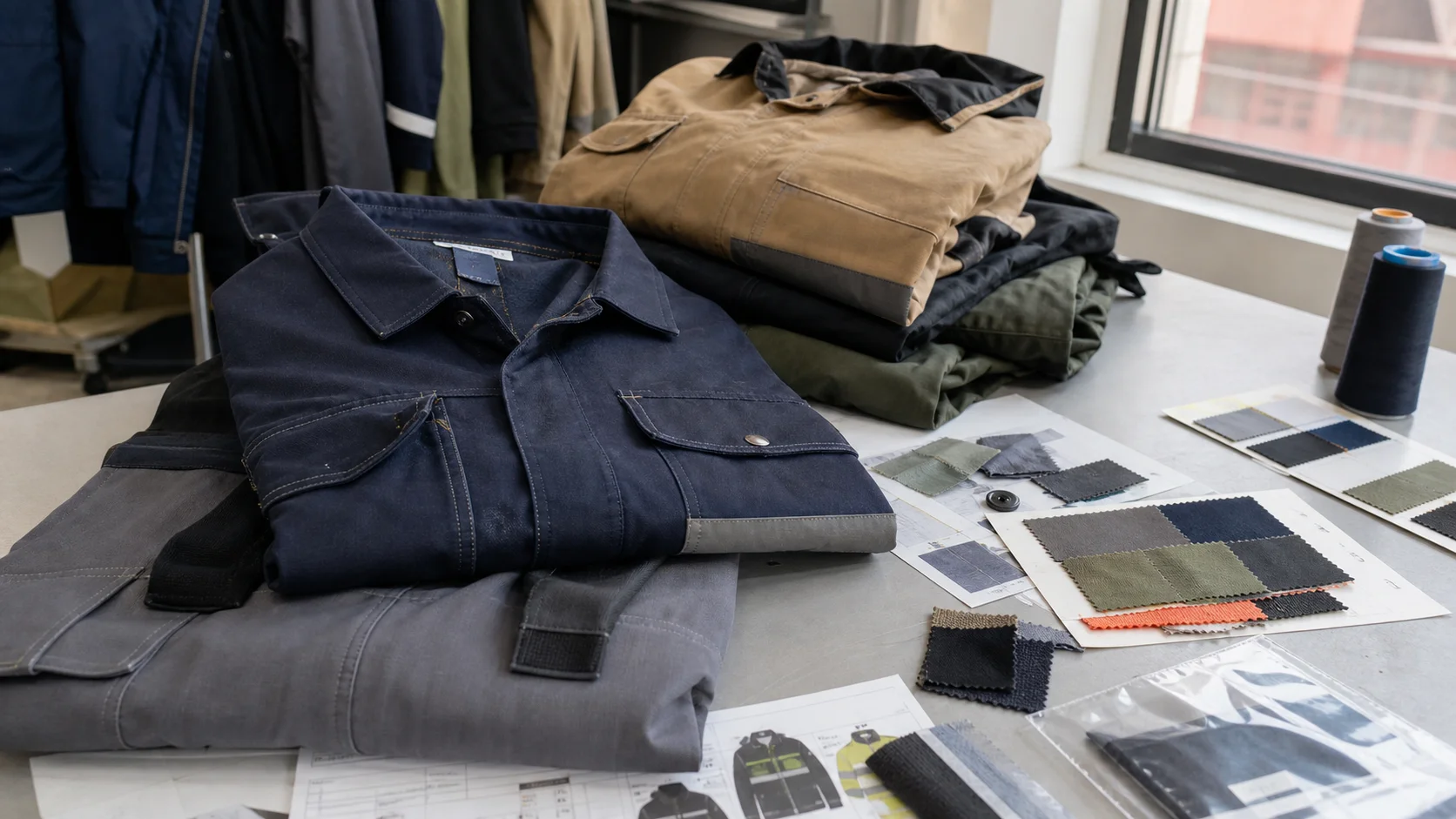
A product-specific outline for school athletics buyers evaluating bulk tracksuits with colorfastness testing, focused on fabric performance, decoration durability, compliance, and ordering decisions.
Bulk Tracksuits With Colorfastness Testing for Buyers - Fabrikn production reference
For school athletics buyers, bulk tracksuits are not just a uniform purchase. They are a durability decision, a branding decision, and a budget control decision. In the school environment, tracksuits are exposed to repeated laundering, friction from daily wear, outdoor practice conditions, and regular storage in shared locker spaces. When color performance is weak, problems show up quickly: fading panels, dye transfer onto lighter sections, uneven shades between repeat orders, and complaints from staff, students, or parents.
That is why colorfastness testing deserves a central place in any bulk tracksuit sourcing program. Buyers responsible for school teams, PE departments, academies, and district-level sports purchasing cannot rely on appearance at the sample stage alone. A tracksuit can look sharp in a showroom or approval photo and still fail after a few wash cycles. The real test is whether the garment keeps its color under practical use conditions.
In the outerwear and athletic apparel segment, tracksuits often combine knit polyester, brushed tricot, interlock, fleece-backed fabric, contrast piping, rib trims, zipper tapes, printed logos, and sometimes mesh lining. Every component creates a possible point of color variation or dye instability. Serious buyers should ask for fabric testing data, sample wash assessments, and a clear production control process before confirming volume.
Suppliers that understand institutional apparel usually build testing into their development path. If you are reviewing sourcing options, it helps to look at the supplier’s production support and quality workflow through pages such as services and to confirm communication channels early through contact us. That step will not replace technical due diligence, but it helps establish whether the supplier is set up for structured bulk programs rather than one-off trading.
School athletics buyers tend to evaluate tracksuits differently from fashion retailers. The decision is rarely based on trend alone. The stronger purchasing framework usually includes consistency, wash durability, sizing coverage, reorder reliability, and clear compliance with approved school colors.
In practical terms, buyers usually care about the following:
Colorfastness sits inside nearly all of these priorities. If fabric fades too fast, brand colors look off. If contrast stripes bleed, the garment looks poorly made even when stitching is acceptable. If repeat orders come from a different dye lot without control standards, teams end up wearing visibly different shades in the same season.
This is where many buyers make a costly mistake. They focus heavily on price per set and decoration cost, but not enough on color performance specifications. That approach may reduce initial unit cost while increasing replacement rates, complaint handling, and mid-season emergency reorders. For schools, the cheaper option on paper can become the more expensive option in use.
Colorfastness testing is not one single test. It is a group of assessments that measure how well dyed or printed material holds color under different conditions. For school tracksuits, buyers should not assume every supplier runs the same test set automatically. The exact test plan should be confirmed in writing.
Common test areas include:
For polyester school tracksuits, washing and rubbing tests are usually the first priority. Polyester often performs well when dyeing is controlled properly, but low-cost programs can still run into issues with unstable shades, poor fixation, or migration from deep navy, black, red, or maroon components. Those shades deserve more caution because dark saturated colors are where failures often become visible fastest.
Buyers should also ask what grading system is used in the test report. Many labs report ratings on a scale such as 1 to 5, where higher scores indicate stronger performance. The target grade depends on the end use, fabric type, and buyer standard. The key point is not to memorize a single ideal number for every case. The key point is to align acceptable thresholds before bulk production starts.
Purchasing judgment: if a supplier only says “fabric is tested” without specifying test type, result level, component coverage, or whether the report applies to the exact bulk fabric, treat that as incomplete information rather than proof of performance.
Tracksuit colorfastness is shaped long before final inspection. It begins with the material specification. Buyers do not need to micromanage mill chemistry, but they should understand which construction and trim choices affect the risk profile.
Most school tracksuits are made in one of the following constructions:
Pure polyester is common because it offers decent durability, easier care, and stable athletic performance at scale. It also supports teamwear styling well. Still, polyester is not automatically risk-free. Deep shades on polyester can show migration issues, especially when combined with white panels, light piping, or heat-transfer branding.
Several tracksuit parts can weaken overall color reliability even if the shell fabric performs adequately:
For that reason, buyers should request a component list in addition to the base fabric spec. A good tech pack or quotation sheet should identify fiber content, gsm tolerance, brushing or finishing details, trim color references, zipper type, print method, embroidery details, and expected care instructions.
If the buyer does not define these points early, the supplier may fill the gaps with the nearest available option. That keeps the quotation moving, but it increases the odds of approval disputes later.
A disciplined approval path matters as much as the final test report. For school athletics programs, the safest route is to treat tracksuits as a controlled bulk program rather than a quick custom order.
A typical process looks like this:
Lab dip approval is often overlooked by inexperienced buyers. That is a mistake, especially for school branding. A digital mockup cannot control dye results. Physical swatch approval remains the more dependable method when shade accuracy matters.
Pre-production samples are also important because they test the real material package, not just the silhouette. If the proto sample uses substitute fabric or available trims, it may help with design confirmation but not with final color risk. Buyers should ask directly whether the submitted sample is made in actual bulk-intended fabric.
Suppliers with established development systems usually explain this process clearly. Reviewing a company background page such as about us can help buyers understand whether the business is positioned around organized manufacturing support, though technical verification still needs to happen at order level.
MOQ for bulk tracksuits varies by fabric program, customization level, and whether stock materials are used. For school athletics buyers, the following ranges are common enough to use as planning reference:
Order Type Typical MOQ Range Notes Basic stock-color tracksuits 100 to 300 sets Lower MOQ possible when using available fabric colors and standard trims Custom school colors with logo decoration 300 to 800 sets MOQ rises when fabric must be dyed to shade or trims are custom matched Multi-style or district-wide programs 800+ sets Better cost efficiency, but approvals and planning become more importantLead time also depends on the production path. A straightforward stock-supported order may move faster than a fully custom color program requiring dyeing, trim development, testing, and multiple approvals.
As a rough guide:
Buyers should be cautious with promises that sound too fast for the complexity involved. Short lead times are possible, but they often depend on simplified styling, in-stock materials, reduced testing scope, or relaxed approval control. If colorfastness testing is a serious requirement, it must be built into the calendar instead of squeezed in after bulk starts.
Bulk tracksuits for school athletics can fail in ways that are not obvious during early development. The main risks are usually manageable, but only when buyers know where to look.
Even approved colors can drift between dye lots. This becomes a visible problem when jackets and pants are produced at different times or when replenishment orders are placed later in the year. Buyers who expect repeat ordering should ask whether shade bands, retained swatches, or lot controls are used.
Tracksuits with white stripes, side panels, or mesh inserts are more exposed to dye transfer risk. Deep navy with white is a classic school look, but it demands better process discipline than a single dark solid garment.
Sometimes the fabric keeps its color reasonably well while the logo cracks, peels, or fades first. That creates a poor overall impression and can force replacement despite acceptable garment construction.
Zippers, rib, drawcords, and piping can all miss the body color if trim sourcing is rushed. A near match may be tolerated in low-risk casualwear. In school uniform programs, it often becomes a complaint point.
If inspection focuses only on measurements and stitching, color problems can move through unnoticed. Color evaluation should include panel comparison, trim comparison, wash assessment where relevant, and packing checks under suitable lighting conditions.
Purchasing judgment: the highest-risk combination for many school buyers is a low-price quote, dark custom color, white contrast styling, urgent delivery date, and no pre-production sample. That mix creates avoidable claim exposure.
Choosing a supplier for bulk tracksuits with colorfastness requirements should go beyond price comparison. Buyers should evaluate the supplier’s control points and communication discipline.
Useful questions include:
Buyers should also check whether communication is structured. A supplier that documents approvals, revises comments clearly, and confirms specifications in writing is usually easier to manage than one that relies on scattered message threads and verbal assumptions.
One practical approach is to compare quotations not only by unit price, but by what each offer includes. A cheaper price may exclude testing, omit pre-production sampling, use stock trims that only approximate school colors, or assume higher tolerance on variation. A more complete quote can look expensive until those omissions are visible.
Colorfastness testing and tighter color control do affect cost. Buyers should expect that. The real question is whether the added control is justified by the use case. For school athletics, the answer is often yes, especially where garments are high-visibility, repeatedly laundered, and expected to last across a season or academic year.
Areas that can influence cost include:
Still, buyers do not need maximum specification on every order. The better approach is to match control level to program value. A varsity or district-wide identity program usually justifies deeper testing and tighter shade control. A short-term event tracksuit may not need the same level of investment if appearance life is limited.
There is also a tradeoff between MOQ and customization. Lower MOQ programs often rely on stock fabrics and standard trims, which can reduce color precision. Higher MOQ orders usually create more room for custom-matched colors and controlled component development. Neither route is universally better. The right choice depends on budget, timeline, and how strict the school identity requirements are.
Bulk tracksuits with colorfastness testing are a smart sourcing priority for school athletics buyers because color performance is one of the first quality issues end users notice. A tracksuit that fades, bleeds, or loses logo clarity too early will create complaints regardless of how competitive the initial price looked.
The safer buying approach is straightforward: define the fabric and trim specification clearly, require physical color approval, confirm what tests will be run, review pre-production samples made in actual bulk materials, and build realistic lead time around those controls. Buyers who take that route usually reduce claim risk and improve reorder consistency.
In practical sourcing terms, colorfastness testing is not a luxury add-on. For many school sports programs, it is part of basic purchasing discipline. When the uniform needs to survive repeated wear, washing, and public use while still representing school colors accurately, testing becomes a budget protection tool as much as a quality tool.
Get a free quote from Fabrikn — your trusted B2B clothing manufacturer with 10+ years of experience. MOQ as low as 200 pieces.
Get a Free Quote →It refers to how well the fabric, trims, and decoration hold color during washing, rubbing, perspiration, and normal wear. For school buyers, strong colorfastness helps prevent fading, bleeding, and mismatched appearance across teams.
Many suppliers work within a range of about 100 to 300 sets for simpler stock-supported programs and roughly 300 to 800 sets for more customized color and branding programs. The exact MOQ depends on fabric sourcing, trim customization, and style complexity.
100% polyester tricot and polyester interlock are common because they balance durability, ease of care, and athletic use. Brushed-back polyester is also used for colder conditions. Fabric choice should be matched to climate, wear frequency, and school budget.
No. Buyers should also review prints, rib trims, zipper tapes, piping, and any contrast panels that could affect visual consistency. A tracksuit can fail in use even when the main body fabric performs acceptably.
After approvals, many orders take around 30 to 60 days for production, though timing depends on sampling rounds, custom dyeing, test requirements, and seasonal factory loading. Shipping time needs to be added separately.
They can be. Deep navy, black, maroon, and red often need tighter dye control, especially when paired with white or light contrast sections. These combinations deserve extra attention during sampling and test review.
Not in every case, but it is often a sensible safeguard for institutional orders where durability claims matter. At minimum, buyers should confirm what testing is being done, by whom, and whether it applies to the actual bulk material.
Many focus too heavily on the lowest unit price and not enough on approval controls, testing scope, and trim consistency. That often leads to higher replacement cost and more disputes after delivery.