
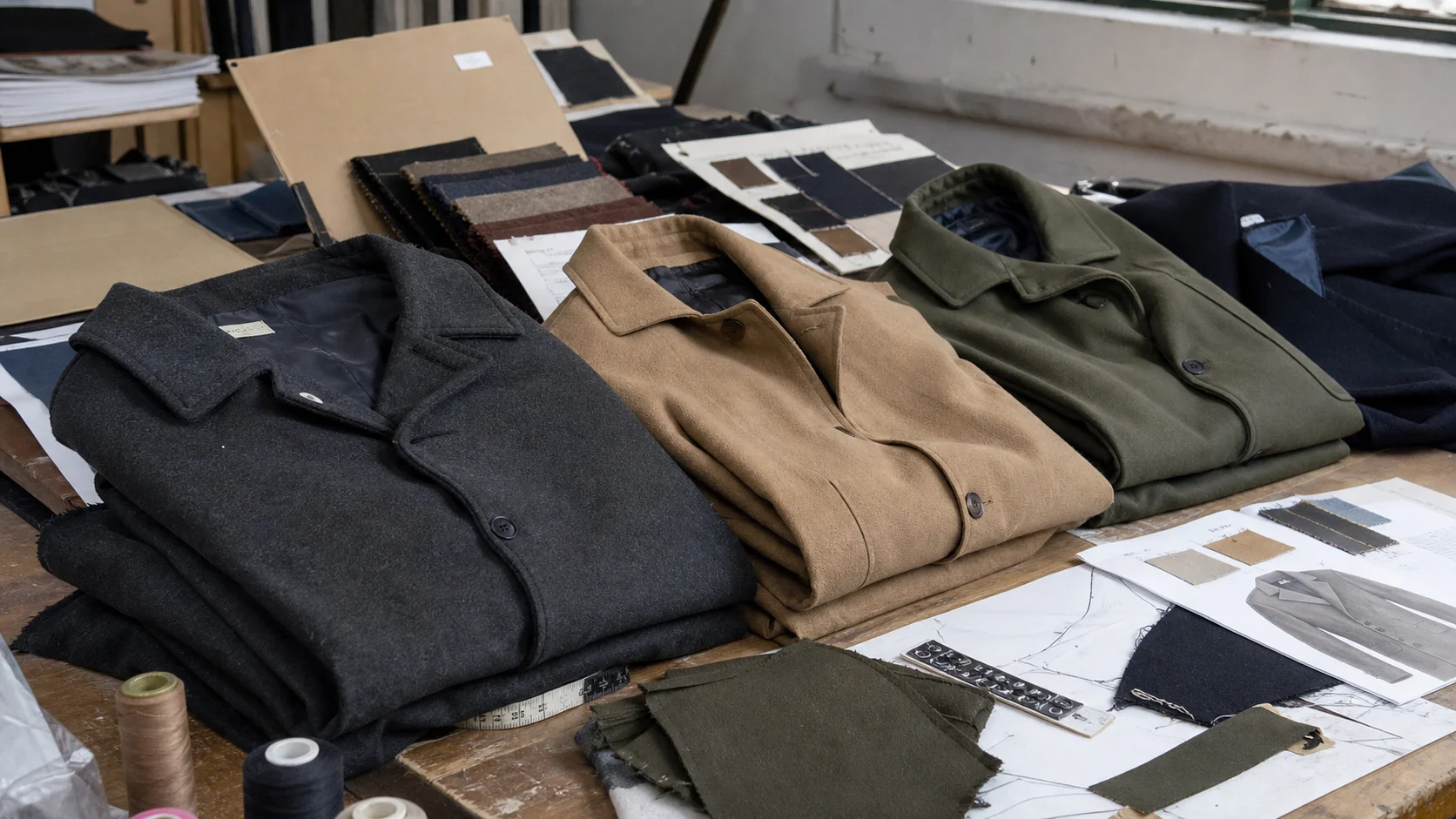
A focused outline for a 2500-word SEO article on how OEM chef coat fabric testing supports distributor chefwear programs, with product-specific sections on performance standards, decoration compatibility, wash durability, and production approval workflows.
OEM Chef Coat Fabric Testing for Buyers - Fabrikn production reference
For distributor chefwear programs, fabric testing is not a technical side issue. It is one of the main controls that determines whether an OEM chef coat line performs well in kitchens, survives repeated laundering, and remains stable enough for decoration and brand presentation. Buyers sourcing OEM chef coats for resale, uniform distribution, hospitality groups, or private-label chefwear programs need to treat fabric testing as a purchasing decision tool, not just a compliance checkbox.
Chef coats operate in a demanding use environment. They face heat, frequent washing, food staining, chemical exposure from detergents, pressing, and repeated wear. That means a fabric that looks acceptable on a sample hanger can still fail after only a few wash cycles if the yarn quality, weave balance, dyeing process, or finishing are not properly controlled. In distributor programs, these failures get multiplied across many end users, which turns a fabric issue into a returns issue, a logo-quality issue, and eventually a margin issue.
Buyers managing OEM chefwear programs also need to think beyond the base cloth. The category often sits under decoration and printing requirements because many distributor programs need embroidery, screen printing, heat transfer, woven labels, name tapes, and branded trims. Fabric testing has to confirm whether the garment body can support those applications without puckering, shade distortion, print cracking, adhesive failure, or unacceptable hand-feel changes.
A practical sourcing approach is to define the fabric standard first, then confirm wash performance, colorfastness, shrinkage, appearance retention, and decoration compatibility before bulk cutting begins. That sequence is more reliable than approving a garment based on appearance alone. Buyers who want a stable private-label development path should build testing checkpoints into every program stage, from fabric booking through pre-production and final inspection. If you are comparing OEM capabilities, it also helps to review a supplier’s broader development process and support structure through pages such as /services/ and company background at /about-us/.
The first buying mistake in chefwear is treating “poly-cotton twill” or “100% cotton drill” as a sufficient specification. It is not. Those labels are too broad to protect a distributor program. A proper OEM chef coat fabric brief should cover fiber content tolerance, fabric construction, weight, finish, expected shrinkage, color standard, laundering expectation, and intended decoration method.
Most chef coat programs fall into a few common fabric directions:
Each option has tradeoffs. Polyester-rich blends usually perform better in repeated laundering and resist wrinkling more effectively, but they can behave differently under high-heat decoration and may feel less premium for some end markets. Cotton-rich fabrics generally feel better at first touch and often support strong branding stories, yet they need tighter shrinkage control and more careful wash testing. If the distributor program targets commercial laundries rather than home wash, that distinction becomes even more important.
Before confirming bulk, buyers should ask for the following minimum fabric details:
That level of detail helps prevent a common OEM issue: the approved proto is made in one fabric lot, while bulk uses a technically similar but performance-different lot. In chefwear, that difference can show up as chest logo puckering, sleeve twist, placket bubbling, or collar edge distortion after wash.
Testing requirements should reflect how the garment will actually be sold and used. Not every distributor chefwear program needs a laboratory-heavy protocol, but most need a disciplined baseline. The key is to prioritize tests that directly affect resale performance and brand consistency.
Fiber content confirmation is basic, but it matters. If a program is sold as 65/35 poly-cotton and the actual ratio drifts too far, the garment may react differently in decoration, pressing, washing, and moisture management. Fiber composition also affects claims on labels and product data sheets. Buyers should request content verification at least at development stage and, for larger runs, consider random confirmation on bulk lots.
Weight variation changes both hand-feel and performance. A chef coat that was approved at 190 GSM may feel flimsy at 170 GSM or too heavy and hot at 220 GSM. Construction balance matters as well. Twill lines that become too loose can snag more easily and may shift under embroidery. For standard chef coats, many programs work within roughly 180 to 245 GSM depending on market level, climate, and garment styling.
Shrinkage is one of the biggest risk points in OEM chef coats. It affects body length, sleeve length, collar fit, placket stability, and logo placement. Cotton-rich fabrics are more exposed, but blends are not exempt. Buyers should define wash test conditions clearly: water temperature, cycle type, tumble or line dry, and number of cycles. A one-wash shrinkage result is useful, but a multi-cycle test often gives a more realistic view for hospitality uniforms.
As a practical benchmark, many buyers look for tighter control than the generic commercial standard, especially on length and width balance. If the program includes graded size continuity, excessive shrinkage creates reordering problems because later repeats may not match the first shipment’s fit.
Chef coats are washed frequently, often with stronger detergents than casual apparel. Poor colorfastness leads to fading, shade loss at seams and edges, and mismatched replacement orders. White chef coats have their own issue set, including yellowing or dullness after laundering and finishing. Black and navy programs require extra caution because even acceptable lab results can still show visual change quickly in real use.
Dark trims, contrast panels, piping, and dyed body fabrics should be checked for dry and wet rubbing. Crocking becomes a bigger concern if the product includes aprons, dark cuff panels, or contrast details that contact lighter garments. Perspiration testing is also relevant when coats are worn in hot kitchen environments for long shifts.
Chef coats are functional work garments. They need to hold up around armholes, side seams, sleeve plackets, pockets, and front closures. A fabric can pass visual approval yet still be too weak for repeated strain if the yarn count or construction is not appropriate. Tear strength and seam performance should be considered especially for lighter-weight programs designed to feel more modern or breathable.
Pilling is not always the first test buyers ask for in chefwear, but it deserves attention in cotton-rich blends, brushed surfaces, or mechanical stretch fabrics. Pilling on the front chest area can make a branded uniform line look old faster than expected. Surface appearance after wash is just as important. Twill skew, panel torque, and fuzzy surface bloom can all reduce perceived quality.
Some distributor programs sell on “easy care” or “minimal ironing” claims. Those claims should be supported by actual wash and appearance testing. Polyester-rich chef coat fabrics generally perform better here, though the tradeoff can be a less natural hand. Buyers need to decide whether the program is positioned around premium touch, easy maintenance, or an acceptable middle ground.
Because this topic sits under decoration and printing, buyers should pay close attention to how the chef coat fabric behaves once branding is applied. A garment body can test well on standard physical properties and still fail when embroidered or heat-pressed. This is where distributor programs often run into hidden costs.
Embroidery is common for chef names, restaurant logos, school crests, and distributor branding. Fabric testing should examine whether the base cloth is stable enough to carry stitching density without puckering. Lightweight fabrics, looser weaves, and heavily softened finishes usually present more risk. Buyers should review stitch count, backing type, logo placement, and post-wash appearance, not just the look of a fresh sample.
Good practice is to test embroidery on the actual approved bulk fabric, not an early development substitute. Even small fabric finish changes can alter how the needle penetrates and how the fabric recovers around the design.
Screen printing is less common than embroidery on classic chef coats, but it is used in promotional culinary uniforms, school programs, launch collections, and casual branded chefwear. The main questions are ink adhesion, hand feel, crack resistance after wash, and color accuracy on dark grounds. Heavier twills can take print well, but the textured surface may affect fine detail. Softened or chemically finished fabrics may need extra testing for print adhesion.
Heat transfer applications are attractive for small-batch personalization, but buyers should not assume every chef coat fabric supports them equally. Polyester-rich blends may react to heat differently than cotton-rich fabrics. Surface glazing, press marks, adhesive bleed, or outline shadowing can become visible, especially on darker shades. If the distributor program depends on fast-turn personalization, heat transfer testing should include wash durability and visual review after multiple cycles.
Woven badges, direct embroidery, printed neck labels, satin care labels, and detachable name systems can all interact differently with the fabric. In chefwear, collar and chest placements get repeated flexing and washing. Buyers should check edge fray risk, stitch tension impact, and any distortion around attachment points. Decorative trims that look premium on first review can become liabilities if they curl or bleed in commercial laundering.
If program development includes several branding options across the same garment platform, the safest route is to test each decoration method separately rather than assuming one approval covers all. Buyers planning a private-label collection can usually save time by aligning the testing sequence with the supplier’s development workflow through /services/ and clarifying technical expectations early via /contact-us/.
Sample approval should move in stages. Many OEM problems happen because buyers approve styling and fit, but never fully lock the fabric and decoration performance standard. For chef coats, a disciplined approval flow reduces bulk surprises.
A practical sequence often looks like this:
Buyers should insist that the pre-production sample reflects the actual production recipe: shell fabric lot type, interlining, thread ticket, button or snap quality, label construction, and decoration placement. If the collar stand uses fusible reinforcement, wash testing should be done on that exact build. Delamination and bubbling often appear only after laundering.
Purchasing judgment: if a supplier resists providing a wash-tested pre-production sample for a chef coat program with recurring uniform use, that is a meaningful risk signal. It usually means the fabric performance has not been controlled tightly enough to predict bulk behavior with confidence.
MOQ and lead time for OEM chef coats depend heavily on whether the buyer is using stock fabric, custom-dyed fabric, or a fully custom construction with branded trims and decoration. There is no single rule, but a few ranges are common in the market.
Those are working ranges, not guarantees. A lower MOQ may be possible if the fabric is already booked, the colors are standard, or the styling is simplified. The tradeoff is usually a narrower choice set. Buyers wanting exact shade control, custom-weight fabric, or proprietary performance finishing should expect longer lead times and firmer minimums.
Lead time is shaped by several dependencies:
For planning purposes, buyers should assume that custom OEM chef coat programs need enough time for development, testing, revisions, and production rather than only sewing time. Rushed schedules usually push risk downstream into bulk quality. If the program is highly price-sensitive, the buying team needs to decide where they can accept simplification. Stock fabric shortens time but limits uniqueness. Custom fabric improves brand control but raises commitment. Lower-cost fabric may meet a target landed price, but if it shrinks, pills, or destabilizes decoration, the true cost rises later through claims and replacements.
Final inspection for chef coats should cover more than measurement and general workmanship. Distributor programs often fail in repeat orders because the first lot was checked only visually. Fabric-related risk points deserve special attention.
One practical challenge in chefwear is that some problems do not show up until after washing. For that reason, many buyers include a wash-evaluation component in pre-production approval and sometimes in inline or final audit sampling. Even a small controlled wash check can reveal issues that a tabletop inspection misses.
Buyers should also be careful with white garments. White chef coats often hide construction issues during quick review but show problems later through seam puckering, collar bubbling, or differential panel shrinkage. Dark colors create the opposite problem: they reveal crocking, fade, and press marks more readily. Fabric testing needs to be aligned with the actual color assortment, not just a single base style.
For distributor chefwear programs, the most effective approach is to set a simple but firm decision checklist before placing the bulk order.
Control Point What to Confirm Why It Matters Fabric Specification Fiber content, weight, weave, finish, color standard Prevents substitution and performance drift Shrinkage Wash test method and result tolerance Protects fit consistency and reorder continuity Colorfastness Wash, rubbing, and perspiration performance Reduces fading, staining, and claims risk Decoration Testing Embroidery, print, or transfer on actual fabric Avoids puckering, adhesion failure, and distortion Pre-Production Sample Actual bulk-ready fabric, trims, and branding Locks the production standard Inspection Plan Visual, measurement, and wash-related review points Catches fabric-related faults before shipmentBuyers who stay disciplined on these points usually make better tradeoffs. Not every program needs the most premium fabric or the longest testing matrix. The real goal is fit-for-purpose control. A value-priced distributor line can still succeed if the specification is realistic and the testing is aligned with the end use. A premium private-label chef coat can still disappoint if the brand focuses on styling and ignores wash durability.
In short, the right question is not “Was the sample approved?” The better question is “Was the fabric proven under the actual conditions this chef coat program will face?” That shift in buying logic tends to separate stable OEM programs from programs that generate recurring quality disputes.
For buyers building or refining distributor chefwear programs, it helps to compare technical support, development workflow, and communication process early. General company information is available at /about-us/, while direct inquiry for project-specific requirements can go through /contact-us/.
Get a free quote from Fabrikn — your trusted B2B clothing manufacturer with 10+ years of experience. MOQ as low as 200 pieces.
Get a Free Quote →Shrinkage and dimensional stability are usually the most important because they affect fit, logo placement, and reorder consistency. In practice, buyers should review shrinkage together with colorfastness and decoration compatibility rather than relying on one test alone.
They are often better for easy care, shape retention, and repeated laundering. 100% cotton can offer a more natural hand and premium feel, but it usually carries more shrinkage and appearance-retention risk. The better choice depends on the end market and laundry conditions.
Bulk fabric is the safer standard. Early samples are useful for design review, but embroidery behavior can change with fabric weight, finish, and lot variation. A pre-production approval on actual production fabric reduces risk substantially.
Many programs begin around 300 to 800 pieces for stock-supported developments and around 800 to 1500 pieces for custom fabric or color programs. Actual MOQ depends on fabric source, trim customization, and decoration complexity.
Use a clear fabric specification, require wash-related testing, approve decoration on actual fabric, and review a true pre-production sample before bulk cutting. Those steps cost time upfront but usually reduce claims, replacements, and inconsistent repeat orders later.