
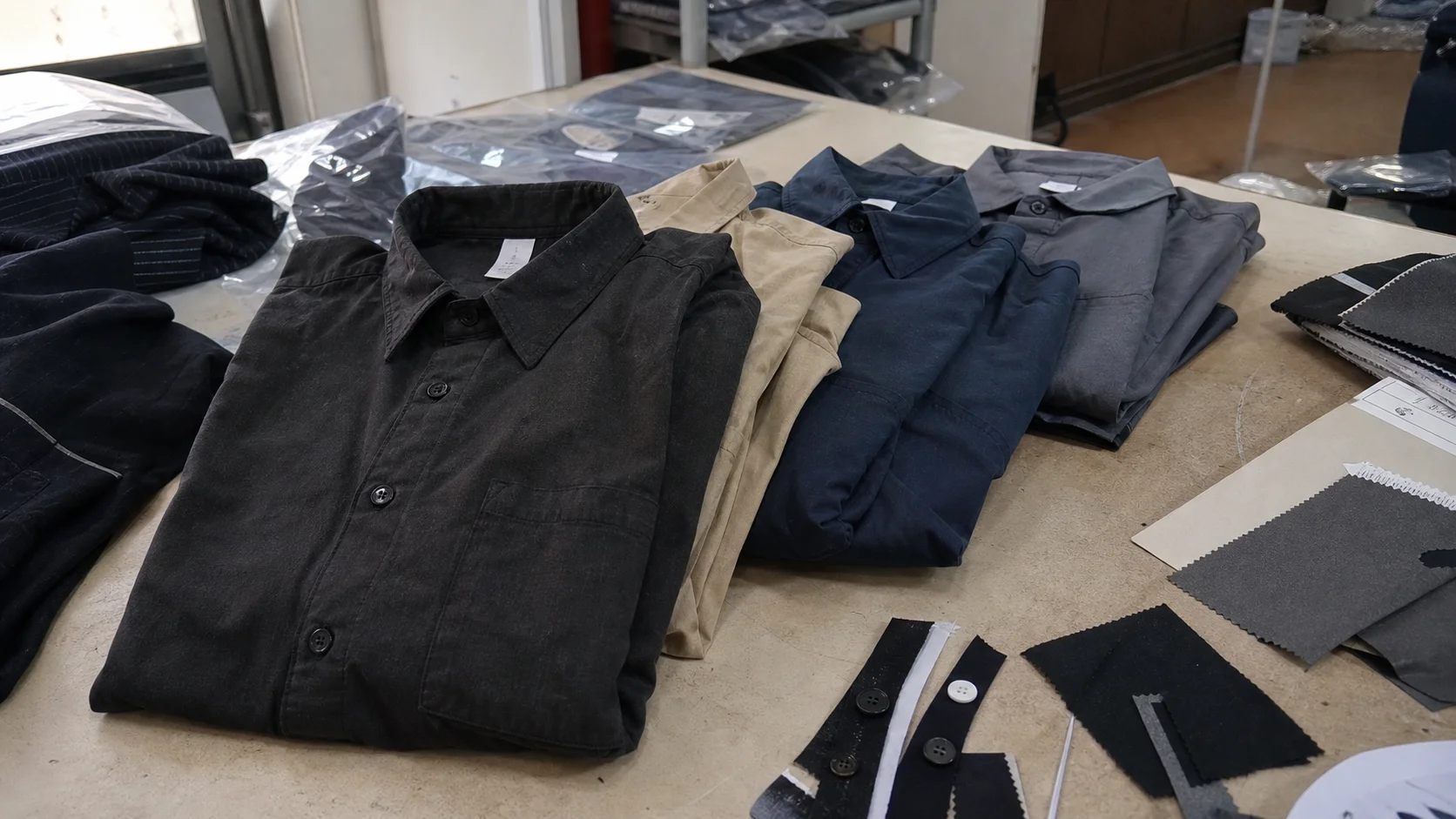
A practical look at choosing woven shirt styles, embroidery placements, and production specs that make restaurant uniforms look sharp, wear well, and stay...
Bulk Woven Shirts with Custom Embroidery for Restaurants - Decoration & Printing manufacturing guide
Category: Decoration & Printing
Bulk woven shirts with custom embroidery are a practical uniform option for restaurants that want a sharper front-of-house look without moving into full formalwear. Woven fabric holds its shape better than most knits, so collars sit cleaner, plackets stay neater, and the shirt reads as intentional from the host stand to the dining room. Embroidery adds branding that stays in place through repeated wear and laundering, which is exactly what restaurant uniforms need.
The main buying advantage is control. When the shirt body, logo placement, and size run are approved together, it is easier to keep hosts, servers, managers, and bar staff looking consistent across the floor. Bulk production also makes it simpler to keep the same color, the same stitch file, and the same garment spec across reorder cycles. The caution is fit: woven shirts do not hide bad grading, and a shirt that feels fine on a hanger can pull, twist, or shrink in service if the spec is not tested first.
Woven shirts sit between polos and dress shirts. They look more finished than a knit, but they do not need the full formality of office wear. That middle ground works well in restaurants where the uniform has to look polished at the door, then still move comfortably through service, bussing, and back-of-house handoffs.
Embroidery is a strong fit for that use case because the decoration is built into the garment instead of sitting on top of it. Chest logos, sleeve marks, names, and small back-neck marks usually hold up well when the shirt is washed often and rotated through the schedule. For buyers, that matters more than appearance alone. A uniform only works if it still looks presentable after the first few weeks on the floor.
There are limits to keep in mind. A dense logo on a thin shirt can feel stiff, and a compact logo can lose clarity if the stitches are too tight for the fabric. Restaurants usually get the best result when the shirt weight, stitch count, and logo size are planned together instead of treated as separate decisions.
The fabric choice affects appearance, comfort, wash behavior, and embroidery quality. For restaurant uniforms, the most common woven options are cotton, cotton-poly blends, polyester, and performance wovens. Each has a different balance of breathability, wrinkle resistance, and maintenance.
Cotton woven shirts have a natural hand feel and can look especially good in guest-facing roles. The tradeoff is care. Cotton wrinkles more easily than blends and can shrink if the finish is not controlled. If cotton is the target, ask for the fabric spec, the shrinkage expectation, and whether the shirt is pre-shrunk or otherwise finished for repeat laundering.
Cotton-poly blends are often the easiest place to start for restaurant programs. They tend to wrinkle less, dry faster, and carry a lower maintenance burden than higher-end cotton shirting. The blend ratio still matters. A 60/40 or 65/35 construction may feel very different from a softer cotton-heavy blend, so buyers should review the actual hand feel instead of assuming all blends behave the same way.
Polyester woven shirts can be useful where quick drying and shape retention matter more than a soft natural hand. Some performance fabrics add moisture management, stain resistance, or mechanical stretch. Those features can help in busy service environments, but they should be checked against the laundering method the restaurant actually uses. A finish that looks good in a sample can change after repeated commercial washing.
Fabric weight should match the job. Very light cloth can show embroidery backing and is more likely to pucker around a logo. Midweight fabric usually gives a cleaner result for chest embroidery and repeated wash cycles. Finishes such as wrinkle resistance, easy care, or stain release can be useful, but they can also change the fabric hand and the final price, so they should be reviewed as part of the quote, not after approval.
Construction matters too. Collar shape, cuff style, placket type, darts, and hem finish all affect how the shirt reads in service. A modern dining room often looks better with a cleaner collar and fewer visual details. A more traditional room may want a sharper point collar and a closer fit. The shirt should match the restaurant concept, not the supplier's default pattern.
For bulk restaurant uniforms, the best fabric is the one that keeps its shape, accepts embroidery cleanly, and still looks acceptable after commercial washing. The softest sample is not always the right order choice.
Embroidery looks straightforward until the logo is digitized and stitched onto woven fabric. Final quality depends on logo size, stitch density, thread selection, backing, and placement. A clean art file is a starting point, not the finished answer. The shirt still has to carry the stitch count without distortion.
Left chest placement is the most common choice for restaurant uniforms because it is visible without taking over the shirt. It works well for names, initials, small logos, and role identifiers. Sleeve embroidery can add subtle branding. Center-back placement is more visible, but it can feel too promotional in a dining room unless the concept is built for it. Placement should be checked across the actual size run, since a mark that fits a medium can crowd a small size or look too small on an XXL.
Polyester thread is widely used because it is durable and color stable. Rayon can give a softer sheen, but polyester is usually the safer choice for uniforms that are washed often. Stitch density has to match the fabric weight. Too many stitches in a small area can cause puckering, especially on lighter shirts. A good supplier should be able to adjust density and simplify small detail instead of forcing the exact same logo into every fabric type.
Backing does more than hold the design in place. It affects hand feel, flatness, and how the embroidery behaves after washing. Lightweight woven shirts usually need stabilizer support to keep the logo clean. Tear-away, cut-away, and specialty backings may all be used depending on the shirt and the logo. If the backing is wrong, the result can be rough, raised, or twisted after laundering, which is a common source of hidden quality issues in lower quotes.
Many restaurants add employee names, titles, or role markers. That can help guests identify staff, especially in service-heavy settings. It also adds complexity. Name lists need to be locked before production starts, and buyers should decide whether names go directly on the shirt or through a secondary system such as badges. Direct embroidery usually looks cleaner. Secondary options are easier when turnover is high.
Bulk woven shirts usually come with a minimum order quantity. Many suppliers quote MOQs in the low hundreds per style and color, while more customized programs may need a larger commitment. The exact number depends on the fabric, the size run, the level of embroidery, and whether the shirt starts from an existing pattern or needs new development.
Sampling should be part of the purchase process whenever fit or decoration matters. A basic approval path usually includes a proto sample, a logo stitch-out or embroidery strike-off, and then a pre-production sample in the final fabric and trim combination. The stitch-out checks the logo file, size, thread color, and density. The full sample checks how the shirt fits, how the collar sits, and how the embroidery interacts with the fabric.
Before approving a bulk run, a buyer should confirm three things:
If a supplier wants to skip the pre-production sample, the order risk goes up. Restaurant uniforms do not leave much room for correction once the bulk run starts, because the shirts have to land on time and match the staff rollout. A little extra approval time is usually cheaper than remaking a full size set.
Lead time for bulk woven shirts depends on what is already available and what still needs to be built. A stock shirt with a simple embroidery placement moves faster than a fully custom program. The biggest timing drivers are fabric availability, logo digitizing, sample approval, size breakdowns, and whether the order includes names or multiple decoration locations.
Custom fabrics and special finishes usually slow the order down. So do art changes after sampling starts. If the restaurant is still deciding on thread color, logo size, or placement, the timeline can stretch quickly. Buyers who want a clean rollout should settle the brand details before the first sample goes out, then keep the approval chain short enough that the order does not sit waiting for feedback.
Shipment method also affects the calendar. Air freight can shorten transit, but it usually raises landed cost. Ocean freight can be more efficient for larger orders, but it needs more planning. The right choice depends on how much time the opening, seasonal reset, or staff change actually allows.
Restaurant programs work better when the shirt spec matches the role. Hosts often need a cleaner, more polished profile. Servers need mobility through the shoulders and elbows. Managers may need a version that reads slightly more formal. The same shirt body can work across roles, but only if the fit and styling are chosen with that use in mind.
Buyers should look closely at shoulder width, sleeve length, chest ease, and hem length. If the shirt is too tight, it will pull when staff reach for trays or lean over tables. If it is too loose, it can look untidy and create snag points. A graded size set is useful because the shirt needs to look balanced on both small and larger sizes, not just on the sample size.
Construction details should match the service environment. Some teams prefer a button-down collar because it stays in place through a shift. Others want a cleaner collar with a slightly more elevated profile. Roll tab sleeves, darts, and curved hems can all change the final look. The best choice is the one that matches the restaurant's pace and the way the staff actually moves.
Bulk orders are usually won or lost in the details. A shirt can look good in a photo and still fail in service if the collar collapses, the embroidery puckers, or the size run is inconsistent. Quality checks should focus on the points that are hardest to fix later.
Useful checks include:
Fit and decoration should be reviewed together. A shirt that passes the embroidery check but fails the shoulder fit still creates a problem for the floor team. The same is true for a well-fitting shirt with a poor logo result. In restaurant uniforms, both pieces have to work at the same time.
Pricing is shaped by more than the shirt body. Fabric type, embroidery stitch count, number of placement locations, personalization, packaging, sampling, and freight all affect the final cost. A simple shirt with one chest logo is a very different order from a program that includes names, multiple roles, and special finishing.
Fabric choice is one of the largest levers. Cotton-heavy options often cost more than basic blends. Performance finishes can also add expense. Embroidery complexity matters as well, because dense logos and extra placements take more machine time. If the goal is to control cost, it is usually better to simplify the decoration before dropping quality from the fabric or the construction.
There is also a tradeoff between upfront price and long-term wear. A cheaper shirt that fades, shrinks, or puckers early can create replacement spending that was not in the original quote. For restaurant buyers, the better question is not only what the shirt costs at purchase, but what it costs to keep the team looking consistent over time.
Before sending a purchase order, make sure the supplier has the information needed to quote the shirt accurately:
If the order is tied to an opening or a relaunch, keep the approval chain tight. Delays usually start with unclear art, late fit feedback, or a size run that was not confirmed early enough. The cleaner the inputs, the fewer surprises in production.
Get a free quote from Fabrikn — your trusted B2B clothing manufacturer with 10+ years of experience. MOQ as low as 200 pieces.
Get a Free Quote →They are better when the goal is a cleaner, more elevated look. Polos can be easier to wear, but woven shirts usually look sharper in front-of-house roles and carry embroidery in a more structured way.
Left chest is the most common choice because it is visible and restrained. Sleeve or back-neck branding can work too, but they should be used when they fit the restaurant's visual style, not just because there is extra space.
No. A host shirt and a back-of-house shirt may need different fabric weights or finishes. The right choice depends on how each team uses the shirt during service and how the laundry cycle is handled.
Ask for the stitch-out, the pre-production sample, the size breakdown, and confirmation of the final fabric spec. If the shirt has names or multiple decoration locations, those should be locked before the bulk run starts.
If the uniform has to survive weekly laundering and still look right at the host stand, the safest order is the one that gets sampled on the real fabric with the real logo before production is released.