
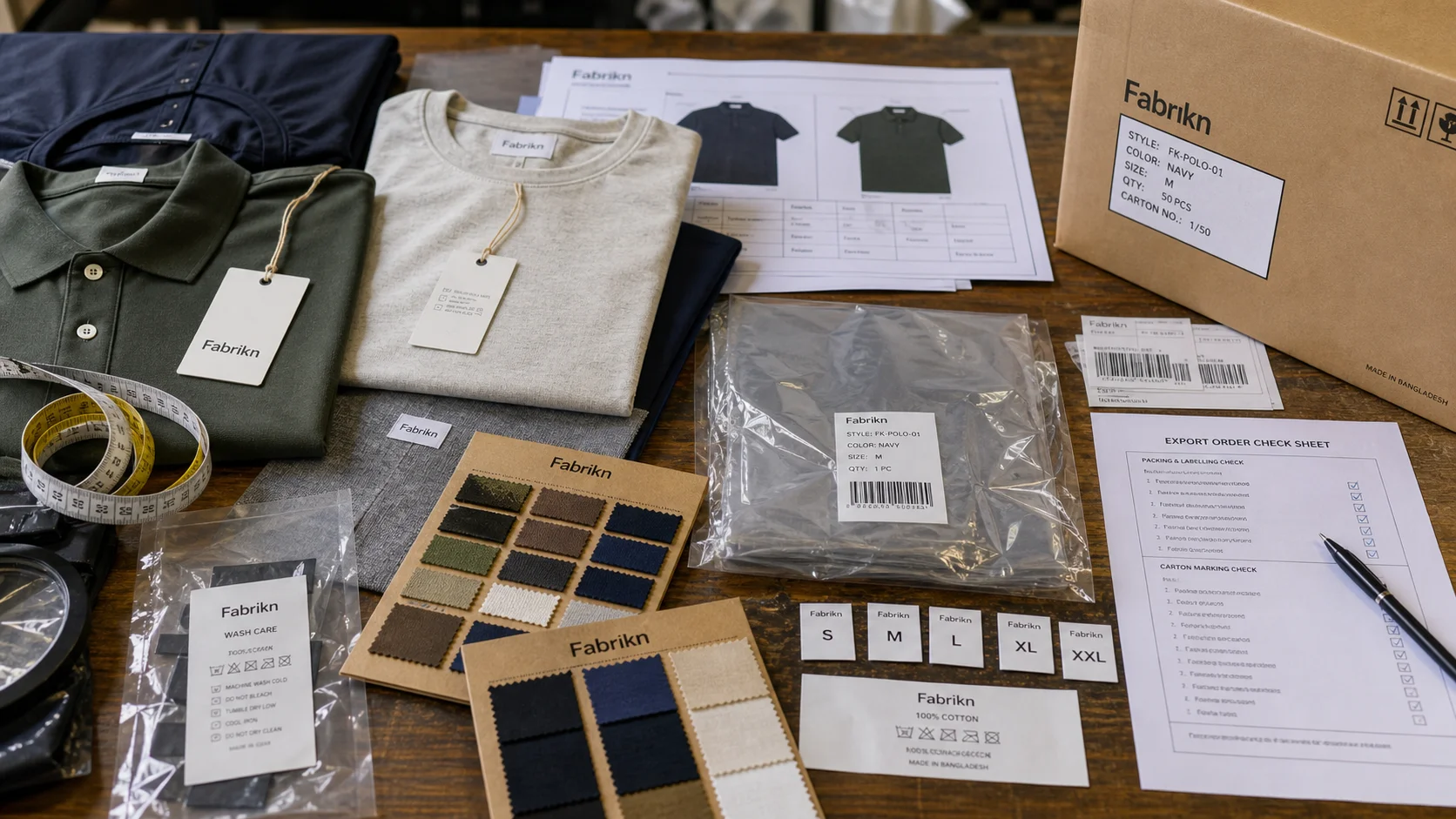
Calculate Apparel Production Lead Time compared by sample evidence, fabric or trim specs, MOQ, AQL terms, cost lines, delivery timing, and rework...
Fast answer: Calculate Apparel Production Lead Time: Sample Evidence, MOQ, Capacity, and Rework Terms should be judged by production evidence, not by a generic sourcing promise. The buyer needs sample proof, cost breakdowns, QC checkpoints, and delivery buffers in writing.
Ask for recent sample photos, measurement tolerances, fabric or print test assumptions, decoration test notes, packing examples, and a named inspection checkpoint. These details show whether the team can repeat an approved sample at bulk volume.
Separate garment cost, decoration, labels, packaging, sampling, testing, freight, and rush charges. Clear cost lines make it easier to reduce colorways, adjust size depth, or reserve more time for sampling.
Apparel production lead time is the backbone of responsive clothing manufacturing. Understanding how to calculate lead time accurately allows brands to plan launches, manage inventory, align marketing campaigns, and keep stakeholders informed. As a sophisticated clothing manufacturer, Fabrikn delivers transparency and reliability by establishing clear communication around lead time expectations. This guide walks you through every aspect of determining apparel production lead time, from initial design brief through final quality checks and delivery.
Whether you are a new fashion brand or an established retail operation, grasping the nuances of lead time ensures you can anticipate potential delays, reduce unnecessary buffer, and minimize the risk of late shipments. We will break down the entire process, identify the components that influence lead time, offer practical calculation steps, and highlight tools that make forecasting faster and more accurate.
Lead time in the apparel industry represents the total elapsed time from the moment an order is placed with a manufacturer to the moment finished garments reach the customer or distribution facility. It encompasses several distinct phases such as product development, sourcing, production, finishing, and delivery. Each phase contributes to the overall duration, and cutting any one component too tightly could result in bottlenecks.
Understanding these phases is the first step toward calculating realistic lead times. Each segment can vary depending on order size, complexity, supplier relationships, and external conditions such as customs clearance or transportation challenges.
Calculating lead time requires a systematic approach. The goal is to gather precise data for each phase and then sum those durations, while incorporating contingency buffers for unforeseen events. Below is a step-by-step method because accuracy begins with data.
Start by clarifying the order specifications, including the number of styles, colorways, sizes, and quantities. This preparation prevents scope creep and ensures the manufacturing team understands the level of effort required. Alongside design requirements, identify whether any special treatments, such as embroidery or wash effects, demand extra time.
List each phase of the manufacturing process with estimated durations. For example, sample approval might take seven days, fabric sourcing another ten days, production thirty days, and logistics seven days. Document these durations in a spreadsheet or project management tool to visualize the entire journey.
Review past orders to understand realistic times for similar products. Historical data is invaluable because it accounts for the factory’s actual capacity, seasonal shifts, and common delays. Use Fabrikn’s extensive manufacturing experience to benchmark your current project against proven timelines.
Consider potential external constraints such as supplier material lead times, customs, holidays, or peak shipping seasons. It is often wise to add cushion days for these variables, especially for complex or high-value garments. You want to avoid surprises when facing external supply chain disruptions.
Add the durations of each phase to arrive at the total base lead time. Then, include buffer time—usually 10-20% extra, depending on risk tolerance. Buffers provide breathing room without undermining your promise to the customer.
Share the calculated lead time with your stakeholders, including brand partners, sourcing teams, and logistics managers. Transparency builds trust and allows for coordinated planning across departments.
Several variables can materially affect apparel production lead times. Manufacturers should actively monitor these elements to manage expectations and reduce unforeseen delays.
Lead time for fabrics, trims, labels, and accessories directly influences production. Unavailable or custom-dyed materials may take weeks or months to arrive. Building relationships with reliable suppliers and utilizing pre-approved materials can significantly reduce wait times.
More complex designs, such as those requiring multiple components, specialty finishes, or intricate stitching, inherently take longer to produce. Conversely, simpler garments are faster. Segmenting orders by complexity during planning helps allocate appropriate time for each line item.
Peak production seasons like holiday preparation or new collection launches can strain factory capacity. Lead times may extend if your order coincides with peak demand. Align your order calendar with the factory’s schedule and communicate early to secure slots.
Thorough inspections, testing, and rework processes are essential to meet brand standards. While these quality checks add to lead time, they prevent costly rejections later. Incorporate QA checkpoints comfortably within your timeline rather than squeezing them into the end.
Lead time doesn’t end when garments leave the factory. Transportation, custom clearance, and final delivery all contribute. Choose shipping methods based on deadlines—air freight may be faster but costlier, while ocean freight takes longer but suits larger volumes.
Certain markets require regulatory approvals, documentation, or certifications. These miscellaneous steps can add several days to lead time. Understand compliance requirements in advance to avoid last-minute hiccups.
Improving lead time begins with intentional process refinement. Implementing best practices ensures you can deliver consistent estimates and keep production flowing efficiently.
Clear communication between design teams, sourcing managers, and the manufacturer eliminates misalignment. Share tech packs early, confirm lead time expectations, and provide timely feedback during development.
Instead of relying solely on order-by-order planning, develop rolling forecasts that combine projected demand with confirmed orders. This approach helps factories prepare capacity and plan labor well in advance.
Standardization reduces sourcing time. Work with pre-approved suppliers and maintain a library of materials with flags for availability. This strategy enables quicker decision-making during new orders.
Pre-production samples are critical for catching issues before mass production. Allocate enough time for sample iteration yet avoid repeated rounds by ensuring tech packs are accurate and comprehensive from the start.
Track each phase against target timelines. If the fabric isn’t ready on schedule, adjust downstream activities early. A visual timeline or Gantt chart shared with the team can help monitor progress and address delays proactively.
Working with a partner like Fabrikn ensures that lead times, bottlenecks, and production updates are communicated clearly. Reliability and transparency in the supply chain reduce the risk of surprises and increase operational agility. Visit our services page to learn how our production capabilities align with your lead time expectations.
The right tools can streamline lead time forecasting and reduce dependency on manual tracking. Here are essential solutions manufacturers and brands should consider using.
Toolsets like Asana, Monday.com, or Trello help map out each phase. Assign deadlines, monitor progress, and update stakeholders instantly. Visual boards with color-coded statuses reveal the real-time health of your timeline.
Enterprise Resource Planning (ERP) and Product Lifecycle Management (PLM) tools integrate order details, procurement data, and production schedules. These systems aggregate information automatically, making lead time calculations more accurate. Choose platforms that can tie design data with factory timelines.
Not every company needs complex software. Shared spreadsheets with formulas can track cumulative lead times. Include macros or conditional formatting to flag delayed tasks. Shared dashboards keep teams synchronized without additional meetings.
Platforms that offer visibility into materials, logistics, and compliance—like SupplyStack or FourKites—help anticipate delays outside the factory. These tools alert stakeholders of potential disruptions so you can adjust lead times proactively.
Let us walk through a practical calculation to illustrate how the total lead time comes together. Suppose you are producing a capsule collection of five garments with mixed components and a total order of 2,500 units.
Total base lead time: 66 days. To account for unforeseen setbacks, add a buffer of 10%, which equals an additional 7 days, bringing the total expected lead time to 73 days. Communicate this 73-day timeline to buyers, while making it clear that internal staging may happen sooner once materials are secured.
Adjust the calculation if sample approval takes longer or if you book expedited freight. Use actual metrics from previous orders to fine-tune the buffer. This method ensures you never promise less than your supply chain can deliver.
Accurate lead time calculation is a strategic advantage for modern clothing manufacturers. By dissecting every phase—development, sourcing, manufacturing, finishing, and delivery—teams gain clarity and confidence in planning product launches and fulfilling retailer expectations.
Follow the outlined steps: define the order scope, log historical data, identify bottlenecks, and factor in external dependencies. Utilize best practices such as streamlined material sourcing, proactive communication, and robust project management to shave days off your timeline without sacrificing quality. Lead time transparency builds credibility and allows partners to plan inventory, marketing, and logistics with certainty.
At Fabrikn, we are committed to helping brands navigate the complexities of production scheduling and delivering on lead time commitments. Learn more about our capabilities on the services page or reach out directly via our contact us portal for a personalized consultation. Discover why so many apparel brands choose Fabrikn for reliable supply chain management and quality manufacturing.
Get a free quote from Fabrikn — your trusted B2B clothing manufacturer with 10+ years of experience. MOQ as low as 200 pieces.
Get a Free Quote →A strong brief makes the supplier's job narrower and the quote more reliable. For calculate apparel production lead time, include the target customer, sales channel, expected order quantity, size range, decoration needs, packaging requirements, and delivery market. Then call out the details most likely to affect the result, especially calendar buffer, sample owner, and revision limit.
The brief should also explain what cannot change. Some brands care most about hand feel, some about price, some about launch timing, and some about retail compliance. When those priorities are not written down, suppliers tend to optimize for whatever is easiest to quote. Clear priorities help the factory make better tradeoffs before the first sample is cut or printed.
Ask the supplier to respond with assumptions, not just a price. A useful reply states MOQ, sample route, production capacity, inspection plan, packing method, and freight handoff. If the answer is vague, the project may still work, but it needs a tighter pre-production stage before money and calendar pressure build up.
The best time to catch problems is before the pre-production sample is approved. Check measurements, color, placement, material behavior, shrinkage, construction, labels, and packaging in the same review instead of approving each item in isolation. Many bulk issues are not caused by one dramatic mistake; they come from several small unchecked assumptions.
For calculate apparel production lead time, pay special attention to sign-off date, launch channel, and freight handoff. These details often look minor in an email but become expensive once cutting, printing, sewing, packing, or shipping begins. A simple checklist with owner, due date, and approval status keeps the brand team and factory aligned.
Bulk production should not start until the supplier can explain how the approved sample becomes a repeatable production standard. That means reference sample storage, line instructions, inline checks, final inspection, and defect handling. A factory that can describe this process clearly is usually safer than one that only promises speed.
Price differences are useful only when the quotes cover the same work. Compare sample cost, material source, trims, decoration, packaging, testing, inspection, and freight assumptions. A low unit price can become expensive if it excludes items the brand needs before launch.
Timeline promises deserve the same scrutiny. Ask what happens if the first sample needs revision, whether materials are in stock, when the production slot is reserved, and how export packing is handled. The most reliable supplier is often the one that gives a realistic calendar instead of the fastest optimistic answer.
Leverage historical performance data to determine buffer length. A 10-20% buffer is standard, but adjust based on factors such as material reliability, production complexity, and external disruptions. If you frequently face delays, gradually increase the buffer until timelines become consistently achievable.
Yes. Focus on streamlining design approvals, pre-approving materials, and improving communication across teams. Implementing pre-production audits and reducing sample revision rounds also saves time. Just avoid compressing QA and finishing steps—they ensure the final product meets standards.
Expedited shipping shortens the logistics phase but adds cost. When calculating lead time, subtract the difference in transit duration while considering how the urgency affects other phases. Ensure the factory can accommodate faster shipping timelines without rushing production.
Fabrikn provides transparent scheduling, frequent updates, and a collaborative approach to managing lead time. From planning to production and logistics, our team acts as an extension of your sourcing department. Explore more about how we help clients on our about us page.
Review lead times each season or whenever you introduce a significant change in product complexity, order size, or supplier partnerships. Regular recalibration prevents outdated assumptions and keeps your delivery promises accurate.