
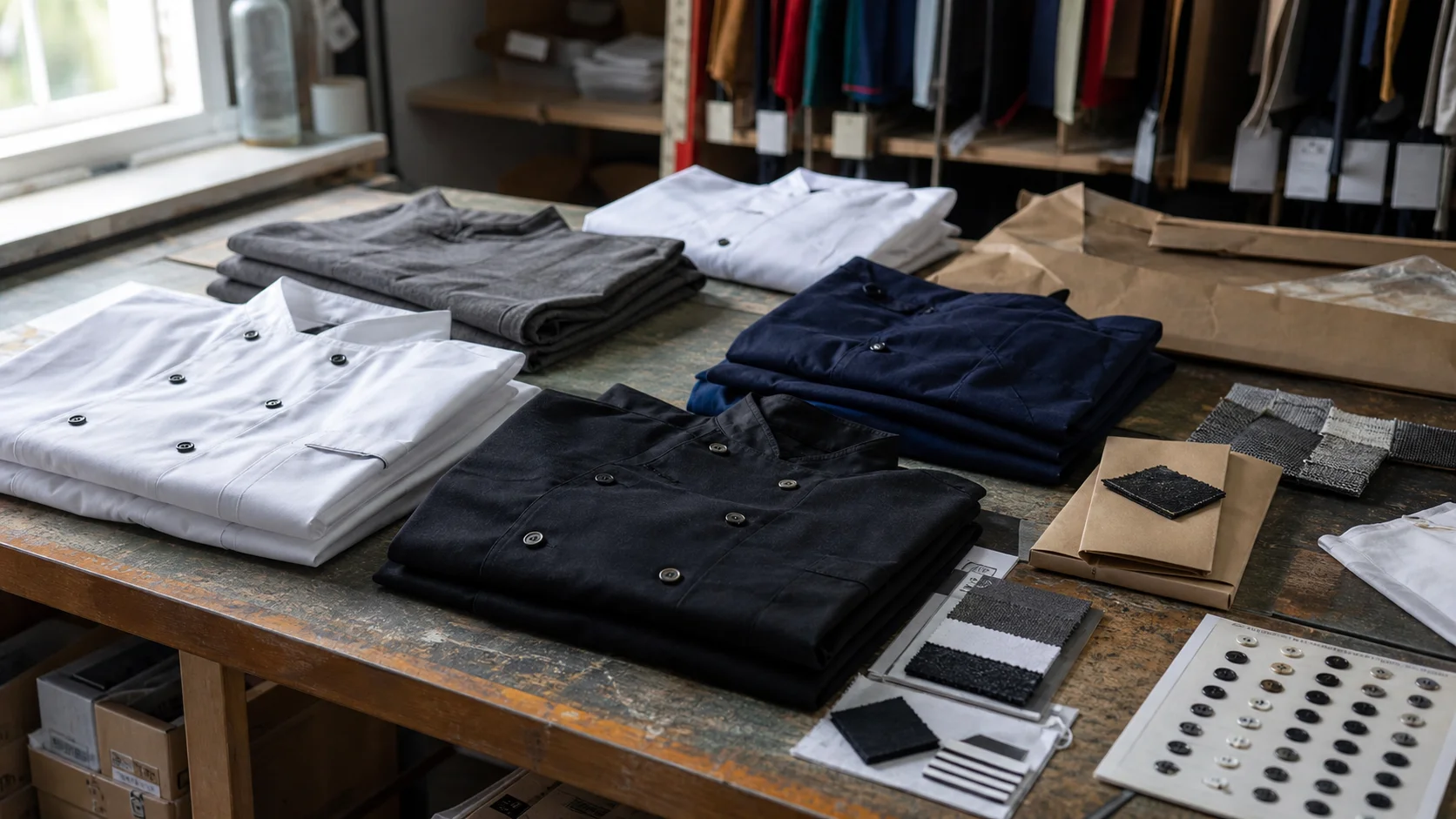
A product-focused outline for sourcing chef coats wholesale, covering fabric choices, construction details, customization options, sizing, durability, and...
Chef Coats Wholesale: Buyer's Guide - Custom Clothing manufacturing guide
If you are sourcing chef coats wholesale for a restaurant group, hotel, catering business, or uniform distributor, the buying decision is rarely just about price. Fit, fabric performance, wash durability, decoration method, and order reliability all matter. A low quote can become expensive if shrinkage, fading, button failure, or inconsistent sizing starts driving returns and replacements.
This guide is written for buyers comparing a chef coats wholesale supplier for custom clothing programs. It covers practical sourcing points: fabric specs, trim options, sample approval, MOQ expectations, production lead times, inspection risks, and how to judge whether a supplier can support repeat orders without quality drift.
Chef coats are more than uniform tops. They are daily-wear work garments designed to support hygiene, comfort, brand presentation, and protection in hot kitchen environments. In wholesale sourcing, the product has to satisfy both the end user and the operator. That means the coat must be functional under heat and movement, yet still look consistent across a team.
Wholesale buying is usually driven by one or more of these needs:
For a chef coats wholesale supplier, the real value is not just stitching a garment. It is producing a repeatable product with stable sizing, controlled color match, and reliable finishing. That is where careful spec setting makes a difference.
Wholesale chef coat programs are used by a broad set of buyers, but the buying priorities differ.
These buyers usually want consistent branding, comfort, and wash durability. They may prioritize a classic double-breasted look, short or long sleeve options, and embroidery placement for logos or names.
Catering teams often need garments that travel well and hold up to frequent laundering. Breathability and stain resistance tend to matter more than decorative details.
Distributors usually care about size range coverage, consistent replenishment, and colorfastness across repeat runs. If the supplier cannot reproduce earlier batches reliably, resale becomes risky.
These buyers often need custom patterns, private labeling, packaging, and tighter control over trims and branding. The supplier’s sample process and communication discipline become critical here.
Fabric selection is one of the first sourcing decisions, and it directly affects comfort, laundering performance, and price. Chef coats are commonly made from cotton, polyester-cotton blends, or performance fabrics with added stretch or moisture control.
Cotton is breathable and comfortable, especially in hot kitchens. It can feel softer against the skin and is often preferred in premium hospitality programs. The tradeoff is higher shrinkage risk and longer drying time unless the fabric has been pre-shrunk or specially finished.
Blends are a common wholesale choice because they balance comfort, durability, and wrinkle resistance. A typical range might be 65/35 poly-cotton or 80/20 poly-cotton, depending on the target hand feel and price point. These fabrics usually hold shape better than pure cotton, and they are easier to maintain in commercial laundry settings.
Some chef coats use added spandex or mechanical stretch panels in high-movement areas such as the back, shoulders, or side panels. This can improve mobility during long shifts. The tradeoff is higher fabric cost and a narrower supplier base.
Fabric weight is often overlooked. Too light, and the coat may feel flimsy or become transparent in certain colors. Too heavy, and the wearer may feel overheated. Many buyers land in a middle range suited to commercial use, but the right weight depends on climate, kitchen temperature, and laundering frequency.
Ask the supplier for the following fabric details before approving a quote:
A low garment price does not mean a low landed cost. If the fabric shrinks, fades, or pills after a few wash cycles, the replacement bill usually arrives later.
In chef coats, construction quality is visible in the details. Buyers should look beyond the front view and inspect seam consistency, reinforcements, and finishing. The coat may look acceptable on a hanger but fail after repeated laundering if the build is weak.
Look for even stitch density, secure seam finishing, and clean topstitching. Areas under stress, such as the armhole, pocket mouth, and button placket, should be reinforced. If the supplier cannot explain how these points are built, that is a warning sign.
Buttons remain common because they support the classic chef coat look, but snap closures are increasingly used for convenience. Fabric-covered buttons can improve appearance, yet they may be slower to replace if damaged. Metal snaps can be durable, but they must be corrosion-resistant and properly secured. Poor trim quality is a frequent source of claims in bulk orders.
Wholesale buyers should ask about seam allowances and grading rules. If the size scale is not controlled, the fit can drift between production runs. This is one reason to request a size spec sheet and compare sample measurements against the approved chart.
Custom clothing buyers often need more than a standard white coat. A capable chef coats wholesale supplier should offer branding and design flexibility without sacrificing production consistency.
Common options include embroidery, woven labels, heat transfer, and printed branding in limited cases. Embroidery is usually preferred for chef coats because it looks durable and professional. It does add cost and can affect comfort if the stitch count is heavy.
Some hospitality programs add names or roles on the chest or sleeve. This can help with internal identification, but it complicates order handling. Personalized garments are harder to reassign across teams, so buyers should decide whether the added customization is worth the operational tradeoff.
White remains the most common chef coat color, but black, grey, navy, and two-tone combinations are widely used. Color choices should be approved against actual fabric swatches, not only digital images. Screen color can be misleading, especially on dark shades.
Private label programs may require custom neck labels, size stickers, barcodes, hang tags, or folded polybag packing. Each addition raises setup complexity. If your order is time-sensitive, keep packaging requirements as simple as possible unless branding needs justify the extra steps.
If you are setting up a custom program, it can help to review the supplier’s capabilities on services before requesting samples. For direct discussion about specifications, the contact page is the most practical starting point.
Minimum order quantity depends on the fabric, decoration method, size range, and level of customization. In chef coat sourcing, a typical MOQ can range from 50 to 300 pieces per style for custom production, though some suppliers may accept lower test orders with higher unit pricing. Private label programs and complex fabric runs often require higher commitments.
Buyers should not ask only for MOQ by style. Ask for MOQ by:
This matters because a supplier may quote a low MOQ for a standard white coat, yet require a much larger run for custom fabric dyeing or specialty trims. A realistic order plan should also include a buffer for sample shrinkage, replacement stock, and size exchange demand.
Chef coat orders usually need a balanced size mix. If the buyer does not provide a realistic size ratio, the shipment can be overloaded with smaller sizes or oversized inventory that sits unused. That is a practical costing issue, not just a warehouse issue.
Sampling is where many wholesale purchases succeed or fail. A supplier can quote well and still miss the mark on fit, finishing, or decoration quality if the sample process is rushed.
Buyers should insist that the approved sample reflects the exact fabric, closure, and decoration intended for bulk production. A sample made from substitute materials is useful only as a rough fit reference.
Keep approval records in writing. Verbal confirmation is not enough if there is a later dispute about measurements or finish. For buyers who are still comparing suppliers, the company profile at about us may help clarify capabilities, though technical documents and samples should still drive the final decision.
Wholesale lead times vary, but a reasonable planning range is often 30 to 60 days after sample approval for standard orders. Custom fabrics, embroidery-heavy programs, or complex labeling can extend that timeline. Buyers should expect the schedule to depend on several variables.
A supplier that promises an unusually short timeline should be questioned carefully. Fast production is possible for simple stock-based programs, but custom wholesale orders often require more time than buyers expect. Rushing the schedule usually increases the risk of measurement errors or missed finishing details.
Hospitality purchasing often spikes around new openings, holiday periods, and event seasons. If your business operates in one of those windows, place orders earlier than usual. Factory capacity and freight space can tighten quickly.
Inspection is not optional when ordering chef coats in bulk. The product may appear straightforward, but small defects multiply across a large order and create avoidable cost.
Buyers should check size measurements against tolerance limits, inspect seam quality, verify logo placement, and review packing lists against purchase order details. If the order includes mixed sizes, confirm carton labeling and barcode accuracy. In multi-style orders, style mix-ups are common when product codes are not handled carefully.
Chef coats face harsher wash cycles than many other apparel categories. If the fabric is not suitable for repeated industrial laundering, the product may fail early. Ask the supplier whether the fabric has been tested for shrinkage, colorfastness, and seam durability under high-heat washing and drying conditions.
When a uniform item is expected to survive repeated wash cycles, the supplier’s finishing process matters as much as the fabric itself.
Choosing a chef coats wholesale supplier is about consistency, communication, and production control. Price matters, but it should not outrank technical reliability.
A dependable supplier should respond with practical detail, not vague assurances. Look for clear answers on construction methods, material options, production lead times, and inspection stages. Good suppliers also explain tradeoffs. If a recommendation sounds too perfect, it may not be realistic.
If you are building a long-term apparel program, supplier responsiveness matters almost as much as unit cost. A good production partner will help you avoid preventable revisions and quality disputes before bulk cutting starts.
Chef coat pricing is shaped by fabric choice, garment complexity, decoration, and order volume. Buyers often focus on the unit price and overlook the hidden drivers that change landed cost.
Simple constructions generally cost less than highly segmented or heavily decorated garments. A good approach is to protect the core performance items first: stable fabric, strong seams, and reliable sizing. Decorations and secondary features can be adjusted later if needed.
Standardizing one or two core styles across an organization often reduces cost more effectively than negotiating a small discount on a fragmented order. Fewer style variations mean less complexity in sampling, inventory, and reordering.
Repeat orders are where a supplier proves its value. For chef coats, the challenge is keeping the second and third production runs aligned with the original approved sample.
Maintain a simple record of the approved fabric spec, thread color, logo file, size chart, packing instructions, and final sample photos. Without a control file, order history can become unreliable after staff changes or seasonal resets.
If the supplier suggests a fabric substitute, new trim source, or altered finishing method, request written approval before production proceeds. Even small changes can affect shrinkage, feel, and appearance.
For ongoing programs, it is wise to leave space for reorder quantities and replacement units. A small reserve can prevent rush orders and help cover returns, size swaps, or onboarding of new staff.
The right chef coat is not always the most expensive one, and the cheapest quote is rarely the best value. Buyers should prioritize a balanced spec: breathable but durable fabric, controlled sizing, secure trims, and a supplier that can reproduce the same standard on repeat orders.
If your program is custom, the approval process should be disciplined. If it is stock-based, the supplier should still be able to confirm fabric consistency and packing accuracy. In both cases, the best wholesale purchase is the one that stays usable after repeated kitchen wear and commercial laundering.
For buyers who want a broader view of apparel production support, the services page offers a useful starting point, and contact us is the direct route for quoting and specification discussion.
Get a free quote from Fabrikn — your trusted B2B clothing manufacturer with 10+ years of experience. MOQ as low as 200 pieces.
Get a Free Quote →Typical MOQ ranges from 50 to 300 pieces per style for custom production, though it depends on fabric, decoration, and packaging requirements. Specialty materials or private label requests can push the minimum higher.
There is no single best option. Cotton is breathable, poly-cotton blends are durable and easier to maintain, and stretch fabrics improve mobility. The best choice depends on climate, laundry method, and budget.
For standard custom orders, lead time often runs 30 to 60 days after sample approval. Fabric sourcing, embroidery, and peak-season demand can extend the timeline.
Yes. Sample approval is essential for checking fit, color, construction, and logo placement. Bulk production should not start until the approved sample and specs are confirmed in writing.
Check measurements, seam quality, closure strength, logo placement, color consistency, and packing accuracy. If the coats will face commercial laundry, ask about shrinkage and colorfastness as well.
Yes. Embroidery is the most common branding method, and some suppliers also support labels, patches, or printed elements. Name personalization is possible, but it can complicate reordering and inventory management.
Many buyers focus only on unit price and skip the technical checks. In wholesale chef coat sourcing, poor fabric performance or weak construction can cost more than the initial savings.