
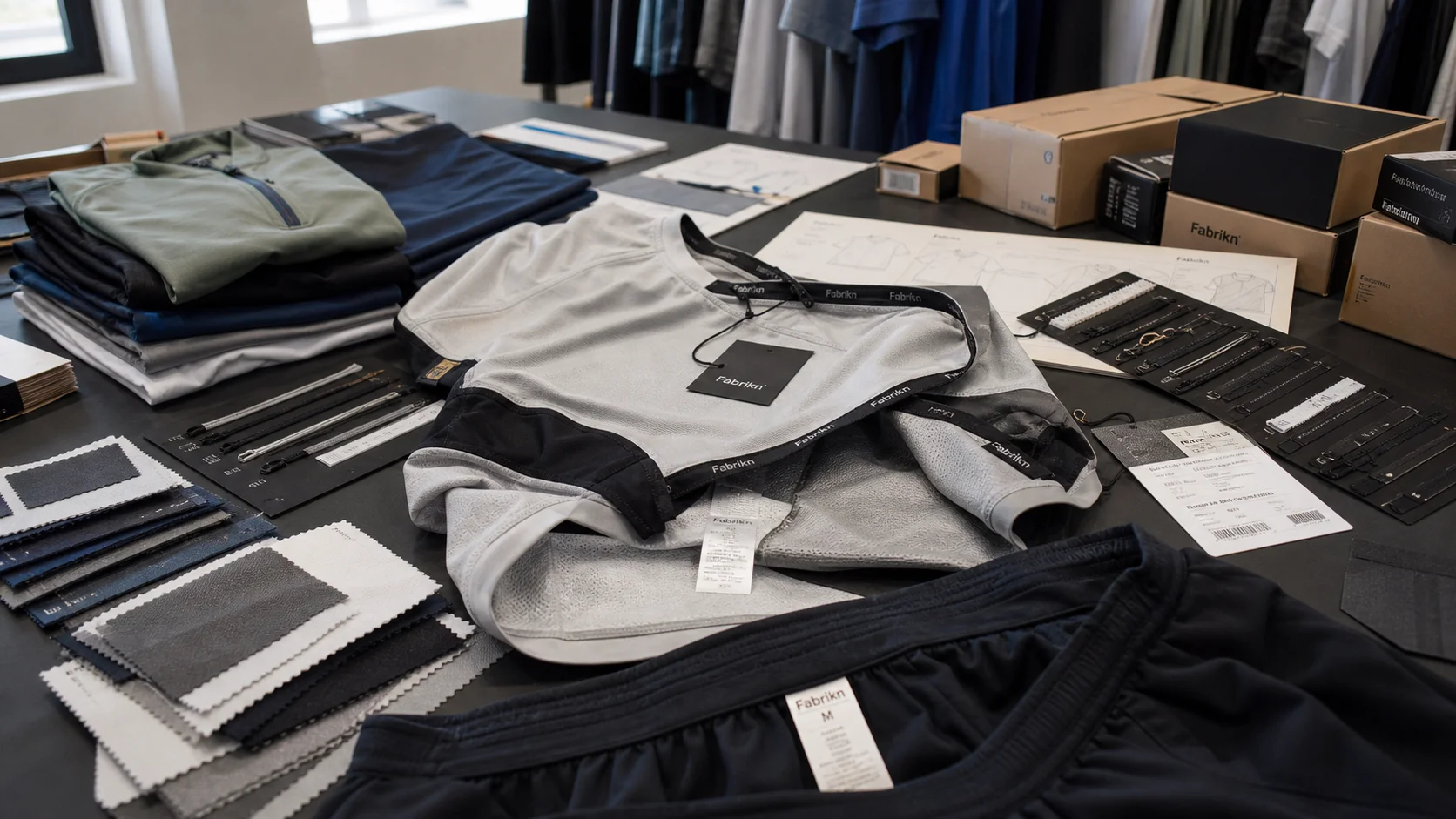
A practical outline for sourcing zippers, drawcords, elastic, labels, and reflective trim for OEM tracksuit programs, with attention to performance,...
OEM Tracksuit Trim Sourcing for Brand Programs - Fabrikn production reference
Trim sourcing is where many OEM tracksuit programs win or lose consistency. Fabric gets the attention, but trims decide how the garment wears, how it presents on the rail, and how stable production stays once the order moves beyond samples. For sportswear brand programs, trim decisions affect fit retention, wash performance, branding clarity, production speed, and cost control.
This matters most in private label apparel, where the buyer is balancing brand identity with repeatable factory output. A good trim package keeps a tracksuit looking premium without making production fragile. A weak one creates shade variation, broken zips, loose drawcord ends, puckered seams, and avoidable inspection failures.
In an OEM tracksuit program, trims include every non-fabric component that supports construction, branding, closure, adjustability, and finish. That usually means zippers, zipper pulls, cord ends, elastic, drawcords, labels, woven patches, heat transfers, printed neck labels, eyelets, snap components where used, sewing thread, and packaging elements tied to the garment spec.
Some buyers treat trims as a late-stage detail. That is a mistake. Trim choices influence pattern allowance, sewing method, machine setup, and the final inspection standard. A factory can produce a clean sample in one trim combination and struggle with bulk if the replacement trim differs in thickness, coating, or dimensional stability.
For brand programs, the trim pack should be treated as part of the product architecture, not decoration. The more styles you plan to repeat across seasons, the more important it becomes to lock trims early and keep them consistent unless there is a deliberate product update.
Tracksuits are judged quickly. The customer notices the front zipper action, waistband recovery, cuff shape, logo placement, and whether the garment feels polished. Trims drive much of that first impression. A matte nylon zipper with stable tape can look disciplined and premium. A flimsy zipper with uneven teeth spacing can make the whole set feel lower grade even when the fabric is acceptable.
Durability is another factor. Sportswear is washed often, stretched repeatedly, and exposed to sweat, detergents, and friction. Trim failure is rarely subtle. A snapped drawcord tip or a peeling transfer can generate returns faster than a slow fabric fade. Trim choice should be based on use case, not just the low line-item cost.
In OEM tracksuit sourcing, the cheapest trim is often the most expensive decision by the time it reaches bulk quality control.
Zippers are usually the most important functional trim on a tracksuit jacket or top. Common options include nylon coil zippers for flexibility, molded plastic zippers for sport utility, and occasionally metal zippers where fashion positioning justifies the weight and cost. Coil zippers are often the safer choice for stretch-friendly sportswear because they run smoothly and tolerate curved applications better.
Key specifications should include zipper size, tape width, tooth style, slider type, locking function, puller finish, tape color, and whether the zipper must be auto-lock or semi-lock. For brand programs, branded pullers are common, but they add tool cost and lead time. A custom puller can be worthwhile for repeat orders. For a one-off or early test run, a standard puller is usually the more sensible choice.
Elastic is used in waistbands, cuffs, and sometimes hem structures. Its recovery rate matters more than the nominal width. Weak elastic can lose tension after a few washes, which changes garment shape and creates a poor handfeel. Typical widths range from 2 cm to 5 cm depending on the design, though the right dimension depends on the pattern and target fit.
Buyers should ask for stretch and recovery data, especially if the garment will be sold into active wear or schoolwear channels. Some factories can source elastic with acceptable appearance but uneven recovery from lot to lot. That is a hidden risk if replenishment orders are expected.
Drawcords affect both usability and appearance. Round cords, flat cords, and jacquard-branded cords each create a different product feel. Cord ends can be heat-sealed, tipped with metal or plastic aglets, or sewn closed depending on the look and price point. Cord length should be specified with tolerance, not left to factory preference.
If the tracksuit is for youthwear or certain regulated markets, safety requirements may limit cord style, length, or placement. That has to be checked before the artwork and pattern are frozen. Late changes here can force a remake of labels, tunnels, or stitching logic.
Brand programs often use woven main labels, size labels, care labels, heat transfer neck prints, sleeve badges, silicone patches, embroidered patches, or rubber logos. Each option behaves differently in wash, cost, and production speed. Woven labels are stable and familiar. Heat transfers can look cleaner and reduce itch, but adhesive and application parameters need care. Patches give a stronger brand statement, though they may create stiffness.
A practical sourcing view is simple: choose the fewest branding methods that still deliver the intended identity. The more branding trims you stack into one garment, the greater the chance of alignment problems and inspection variation.
Thread is a trim, even though it is often treated as background material. Thread choice affects seam strength, needle heating, color consistency, and seam appearance. Polyester core-spun thread is common in sportswear because it gives a good balance of strength and sewability. Thread ticket size should match fabric weight and seam stress. Overspecifying thread can create puckering or bulky seams.
Hangtags, polybags, barcode stickers, size stickers, and carton markings are part of the sourcing plan for many brand programs. They do not change garment performance, but they affect launch readiness, retail compliance, and warehouse efficiency. Packaging specs should be approved alongside garment trims so the factory can stage the full order cleanly.
Good trim sourcing starts with measurable requirements. Vague direction such as “premium zipper” or “good elastic” is not enough. A factory needs to know what must be stable, what can vary, and what has to match an approved standard.
For zippers, specify size, type, tape composition, color reference, puller shape, branding method, and testing requirements. For labels, define the weave, cut style, backing, size, and placement. For drawcords, define material, diameter or width, end finish, and colorfastness expectations. For elastics, define width, stretch range, recovery, and shrink behavior after wash.
When a brand program has recurring styles, trim specs should be written into a trim sheet or tech pack with a controlled reference system. Samples are useful only when the approved sample is traceable and the same trim code can be reordered. If the sample is approved but the trim is not documented properly, the bulk order may drift within one production cycle.
MOQ varies by trim type and customization level. Stock zippers, standard elastic, and basic labels can often be sourced in relatively small quantities, sometimes starting around 300 to 1,000 pieces depending on supplier and specification. Custom pullers, custom-woven labels, silicone patches, and branded hardware usually carry higher MOQs, often 1,000 to 5,000 pieces or more. Some suppliers can support lower volumes, but pricing usually rises quickly.
Sampling should move in stages. First comes the trim reference or swatch. Then the garment sample using the intended trims. After that, a salesman sample or size set may be needed if the trim affects construction. For branded trims, the artwork approval and physical sample approval should both be signed off before bulk. A nice-looking sample is not enough if the actual trim code, color tolerance, or finish is not locked.
Brand programs usually benefit from a simple approval sequence:
Each step reduces surprises. Skipping one may save a few days, but it often costs more in rework later. The best time to be strict is before bulk trim purchase, not after the factory has already committed stock.
Trim lead time depends on complexity and whether the item is stocked, semi-custom, or fully custom. Standard trims may be available quickly if the supplier has material on hand. Custom zippers, branded pullers, unique labels, and specialty patches can take several weeks, sometimes longer if tooling or artwork approval is involved. Lead time also depends on material availability, dye lot scheduling, and whether the supplier is managing outside coating, weaving, or molding work.
Tracksuit production schedules are often driven by the slowest trim, not the fabric. That is why trim sourcing needs to start early. A factory may be ready to cut fabric while a puller mold is still waiting for sign-off. Once that happens, the entire calendar slips. The same problem appears when replacement trim is ordered after an approval change. A small design adjustment can have an outsized impact on timing.
Buyers should build in time for inspection and re-approval if bulk trim lots differ from the sample. A good production plan assumes that at least one trim item will need a second check before the order is cleared.
Trim issues show up in ways that are easy to miss during early review. A zipper may function in hand but skip or snag after repeated use. Elastic may look fine but fail recovery after laundering. Heat transfer logos may pass initial placement inspection and then peel at the corners after application heat varies from line to line. These are classic sportswear quality traps.
Common inspection risks include:
A pre-shipment inspection should check not only appearance but also function. Zippers need open-close cycling. Elastic should be checked for stretch and return. Labels and transfers need adhesion and wash-resistance review where relevant. Trims are often approved as objects, then fail as systems once they are sewn into the garment.
Trim cost is not only about unit price. It is about total order stability. A lower-cost zipper that causes sewing stoppages or returns can cost more than a mid-grade alternative. A custom badge may help brand recognition, but it can slow sampling and raise MOQ. A premium woven label may improve presentation, yet a clean heat transfer might be better for a lightweight performance track jacket.
The right choice depends on program goals. For mass replenishment, a robust stock trim is often the smarter decision. For a premium capsule or retail-led launch, custom trim may be justified if it supports brand perception and the order size can absorb tooling and approval overhead.
Trim Choice Typical Benefit Typical Tradeoff Stock zipper Fast sourcing, lower MOQ Less brand differentiation Custom puller Stronger branding Tooling cost and longer lead time Woven label Reliable and durable Can feel less minimal than print Heat transfer logo Clean finish, lower bulk Application quality must be controlled Silicone patch Distinctive retail look Higher cost and stiffness riskPrivate label apparel programs work best when trim approval is disciplined and boring. That is a good thing. The process should be explicit, documented, and hard to reinterpret. A single approved reference pack should include trim codes, color references, placement measurements, artwork files, testing notes, and packing requirements.
When styles are repeated across seasons, keep the trim library controlled. Do not assume the supplier will automatically source the same version next season. Manufacturing supply chains change, and even a familiar trim can shift in handfeel or shade. Reconfirm critical items before each reorder, especially custom pieces and branding trims.
For brands managing several tracksuit SKUs, the practical approach is to standardize as much as possible. Use common zipper families, common label constructions, and limited colorways where the range allows it. That reduces sourcing friction and improves bulk consistency. Differentiation should be reserved for the trims that are actually visible and commercially important.
The right trim package is usually not the fanciest one. It is the one the factory can source repeatedly, the line can sew cleanly, and the customer can use without frustration. That is especially true for OEM tracksuits, where buyers often want retail polish, athletic function, and commercial pricing in the same order.
A sensible sourcing strategy is to standardize the invisible items, then spend selectively on the visible ones. Put budget into the zipper, the main branding point, and the trim details that define the silhouette. Keep the rest efficient. This is how brand programs protect margin without making the product look generic.
For teams building or refining a private label sportswear line, trim sourcing should sit alongside fabric development, not after it. The earlier the trim package is defined, the fewer technical disputes appear in sampling, and the easier the bulk order is to control.
For more on apparel program support, see our services, learn more on the about page, or use the contact page to discuss sourcing requirements.
Get a free quote from Fabrikn — your trusted B2B clothing manufacturer with 10+ years of experience. MOQ as low as 200 pieces.
Get a Free Quote →The zipper is often the most critical functional trim on a tracksuit top or jacket. It affects usability, appearance, and failure risk. Branding trims matter too, but zipper performance is usually the first thing buyers should control.
Stock trims can sometimes be sourced at a few hundred to around 1,000 pieces. Custom pullers, branded patches, and woven labels often move into the 1,000 to 5,000 piece range or higher. Exact MOQ depends on the supplier and the level of customization.
Trim sourcing should start during tech pack development, before bulk fabric purchase if possible. Custom trims may take several weeks. Waiting until the garment sample is nearly approved can delay production.
Yes. Trim approval and garment sample approval should both be documented. A garment can look acceptable in sample form even if the trim lot differs later in bulk.
The main risks are color variation, dimensional inconsistency, weak adhesive, poor zipper function, elastic recovery failure, and branding misplacement. These problems often appear at bulk or after wash testing.
It can, and that is often the better commercial choice. Shared trims reduce complexity and improve replenishment reliability. The spec still needs to be checked against each style’s pattern, construction, and fit requirements.