
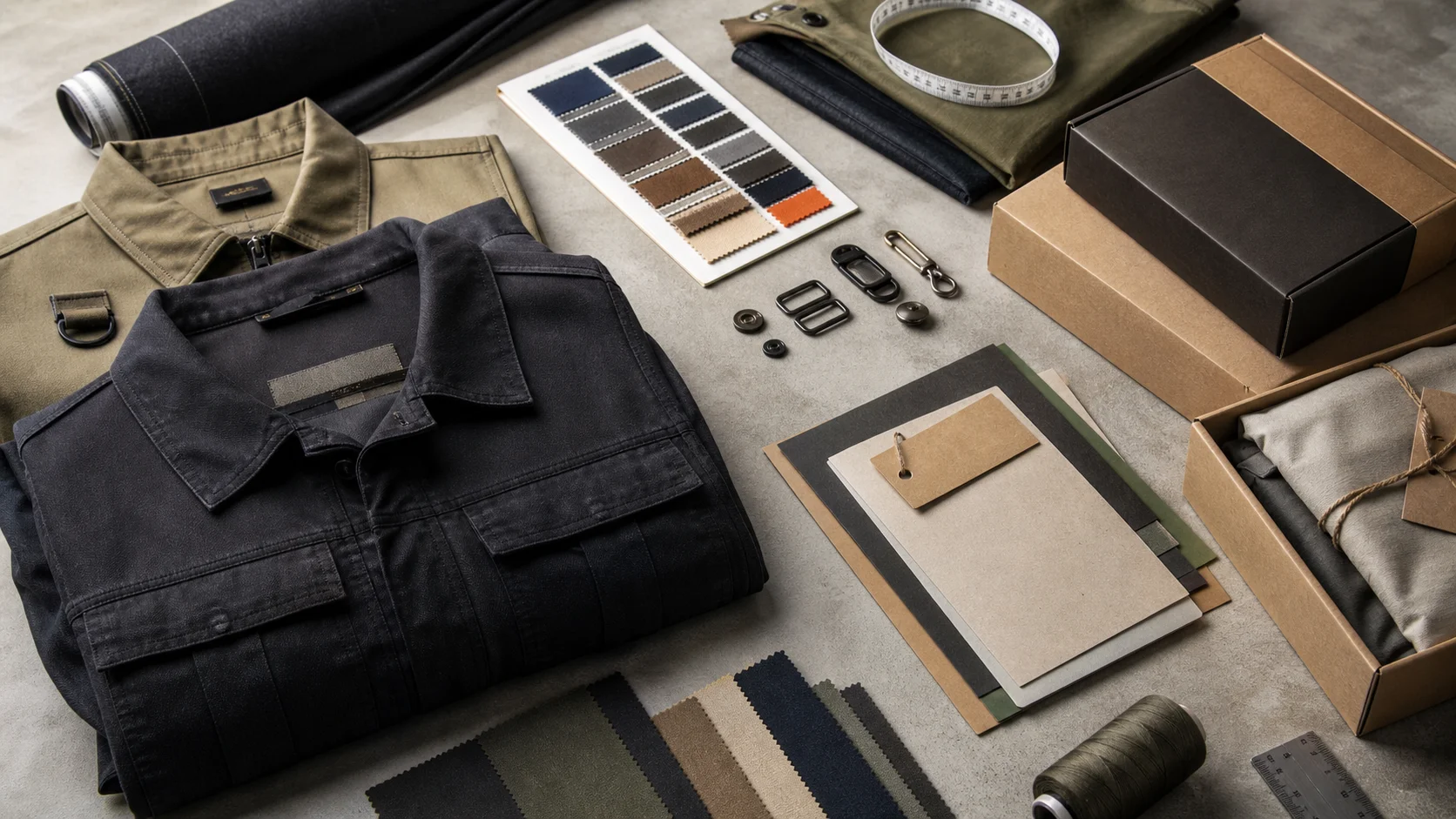
Custom Clothing Production for Merch Drops compared by sample evidence, fabric or trim specs, MOQ, AQL terms, cost lines, delivery timing, and rework...
Fast answer: Custom Clothing Production for Merch Drops: Sample Evidence, MOQ, Capacity, and Rework Terms should be judged by production evidence, not by a generic sourcing promise. The buyer needs sample proof, cost breakdowns, QC checkpoints, and delivery buffers in writing.
Ask for recent sample photos, measurement tolerances, fabric or print test assumptions, decoration test notes, packing examples, and a named inspection checkpoint. These details show whether the team can repeat an approved sample at bulk volume.
Separate garment cost, decoration, labels, packaging, sampling, testing, freight, and rush charges. Clear cost lines make it easier to reduce colorways, adjust size depth, or reserve more time for sampling.
Custom clothing production for merch drops has become one of the most effective ways for creators, brands, startups, and communities to launch limited-edition apparel with strong demand and fast sell-through. But success takes more than a good design. It depends on production quality, inventory planning, material selection, branding consistency, and a reliable manufacturing partner who can deliver on time. In my experience, that last part is where a lot of drops either shine or quietly fall apart (usually right when everyone is counting on the launch date). A well-run factory in Guangzhou, Dhaka, Ho Chi Minh City, or Istanbul can make a huge difference because lead times, minimum order quantities, and finishing capabilities vary a lot by region.
This guide breaks down everything you need to know about custom clothing production for merch drops, from the early planning stage to final fulfillment. You’ll learn how to choose the right garments, build a production timeline, avoid common mistakes, and create merch that stands out in a crowded market. If you’re looking for a dependable manufacturing partner, you can also explore our services or learn more about our team on the about us page. What does a typical merch drop look like in production terms? Sample development often takes 7-12 business days, bulk production usually takes 18-22 business days for repeat styles, and unit costs frequently land around $2.50-4.00 per unit at 500 MOQ for basic printed T-shirts depending on fabric, print count, and trim complexity.
Custom clothing production for merch drops is the process of designing, manufacturing, and delivering apparel for a limited-time release. A merch drop is usually a planned launch of branded items such as T-shirts, hoodies, sweatshirts, caps, jackets, tote bags, or sets of apparel offered in a short window or limited quantity.
The “custom clothing production” part means the garments are made specifically for your brand, design, audience, and quality requirements. Instead of buying generic blank items and adding a logo later, you create merchandise that reflects your identity from the start. This can include custom fabric selection, cut and sew construction, custom labeling, printing, embroidery, packaging, and more. I have seen factories where that extra mile is treated like a bonus, and honestly, that’s where you end up with merch that just feels forgettable. A strong factory will usually offer knit and woven programs, automated cutting, and finishing lines with overlock, coverstitch, and flatlock machines for apparel that needs a more refined handfeel.
Merch drops are especially popular because they create urgency. When customers know an item is limited, they are more likely to buy quickly. That means your production needs to be tightly planned so you can meet demand without overproducing. For example, a small artist drop might start at 300-500 units, while a growing streetwear label may test 1,000-3,000 units across multiple colorways.
Merch drops are effective because they combine scarcity, storytelling, and community engagement. Instead of launching a large permanent collection, you release a curated set of products that feels special and timely. This strategy works across many industries, including streetwear, fitness, music, gaming, lifestyle brands, and online creators.
Here are some reasons merch drops continue to grow in popularity:
Scarcity creates demand: Limited quantities encourage faster purchase decisions.
Brand hype builds engagement: Drops generate anticipation before launch day.
Lower inventory risk: Smaller runs help reduce unsold stock.
Better storytelling: Each drop can reflect a campaign, season, event, or message.
Stronger community connection: Customers feel like they are part of something exclusive.
For many brands, merch drops also create repeatable marketing opportunities. Each new launch gives you a reason to send email campaigns, post on social media, collaborate with influencers, and re-engage your audience. This approach works better because it gives your team a clean deadline and gives customers a reason to pay attention (instead of just scrolling past another “new collection” post). In production terms, a well-timed drop often means locking in fabric booking 2-3 weeks in advance, approving lab dips for color accuracy, and using a clear buy plan so your factory can cut efficiently with lower waste.
The first production decision is selecting the right garments. Your choice should match your audience, price point, design style, and intended use. Not all merch items are created equal, and the best-performing product for a drop is often the one that aligns most closely with your brand identity.
Custom T-shirts: The most common and versatile option for drops, usually 180-220 GSM combed cotton or 240 GSM oversized cotton for a premium handfeel.
Hoodies and sweatshirts: Ideal for premium streetwear or colder seasons, often built in 320-500 GSM brushed fleece with ribbed cuffs and double-needle topstitching.
Oversized tees: Popular with fashion-forward and youth-focused brands, especially in garment-dyed cotton or heavy jersey.
Joggers and shorts: Great for athleisure, lifestyle, and fitness merch, typically using French terry, interlock, or polyester-spandex blends.
Caps and beanies: Useful add-on items for small-batch launches, often produced with structured buckram, embroidery backing, and metal adjusters.
Tote bags: Low-risk, high-utility products for event or artist drops, commonly made from 12-16 oz canvas or recycled cotton.
Fabric weight: Heavier fabric often feels more premium, especially for hoodies and tees.
Fit and silhouette: Standard, relaxed, boxy, oversized, and cropped fits appeal to different audiences.
Color palette: Choose colors that match your branding and printing method.
Durability: Merch should hold up after washing and repeated wear.
Target price: Make sure garment cost supports your retail pricing and margin goals.
If you are unsure which garments are best for your brand, a manufacturing partner can help you evaluate options based on your market and launch goals. You can also contact us to discuss product development support. For example, a standard blank hoodie in a 500-unit run might price around $11.00-18.00 per unit at FOB depending on GSM and embellishment, while a premium cut-and-sew hoodie with appliqué, woven labels, and custom zipper pulls may be closer to $20.00-35.00 per unit.
Different production methods create different results. The right choice depends on your design complexity, budget, order volume, and desired finish.
Screen printing is one of the most common methods for merch drops. It delivers vibrant colors, strong durability, and a clean look, especially on cotton tees and hoodies. It works best for bold graphics, text, and simple color setups. Many factories use automatic carousel screen-printing machines, flash cure units, and conveyor dryers to maintain consistency across 500-5,000 piece runs.
Embroidery adds a premium, textured finish to hats, sweatshirts, jackets, and small logo placements. It is often used for elevated branding rather than full artwork. Typical production uses multi-head embroidery machines with 12-15 needles, and stitch counts can range from 5,000 to 20,000 stitches depending on logo size and density.
Direct-to-garment printing is suitable for detailed, colorful designs and smaller production runs. It is a flexible option when you need high-resolution graphics on cotton apparel. DTG works best on pre-treated 100% cotton garments and requires pretreatment machines, heat presses, and careful curing to lock in washfastness.
These methods are often used for certain specialty applications, names, numbers, or short-run customization. They can be helpful for niche drops but may not suit every long-term merch strategy. When used correctly, they are common for teamwear, limited event runs, and personalization at 50-300 units.
Which method should you choose first? The answer depends on your artwork, your order size, and the finish you want customers to notice immediately.
Cut and sew is the most customizable route for brands that want full control over silhouette, panels, trims, and construction. It is ideal for premium drops where fit and branding need to feel distinct. This process typically includes pattern making, sample approval, fabric sourcing, cutting, assembly, quality inspection, and finishing in a coordinated workflow that can take longer than simple embellishment programs.
A successful merch drop usually follows a clear sequence. Rushing any step can create delays, quality issues, or unexpected costs. Start with a product brief, then move into sampling, approvals, bulk production, and final shipping.
First, define your product goals. Decide what you are making, who it is for, and how much you want to spend. Next, build your tech pack, which should include measurements, fabric details, print placements, color references, label instructions, and packaging notes. Then move into sampling. Is it worth skipping samples to save time? Usually not, because samples help catch fit problems, color mismatches, and construction issues before bulk production begins.
Once your sample is approved, the factory can begin bulk planning. This stage includes fabric procurement, trim ordering, cutting schedules, printing or embroidery setup, and stitching. After production, garments go through quality control, folding, packaging, and shipping coordination. A strong partner will also help with carton packing, size breakdowns, and export documentation when needed.
Timing matters here. For most drops, the safest plan includes extra days for revisions, especially if you are working across time zones or using multiple production steps. It is always better to build a buffer than to miss your launch window by a week.
Inventory planning is one of the most important parts of merch drop production. Order too little, and you lose sales. Order too much, and you are stuck with excess stock. The best strategy is to use historical data, audience size, pre-orders, and conversion expectations to estimate demand.
Start by identifying your core product and the most likely top sizes. In many apparel drops, medium and large sizes sell fastest, while extra small and extra large can move more slowly depending on the audience. Color also affects inventory performance, since neutral tones often outsell brighter options in first runs.
For a first drop, many brands use a conservative test run rather than a large full-range order. That approach reduces risk and gives you real sales data for future releases. If you are launching with multiple products, prioritize the hero item and keep the supporting items simple.
Want to avoid dead stock? Forecast tightly, stay realistic, and treat the first drop as a learning tool.
Strong merch does not just look good. It feels consistent with the brand behind it. Your typography, artwork, garment selection, packaging, and product photography should all tell the same story. When those pieces align, the drop feels intentional and more valuable to customers.
Keep your graphics clean and readable, especially if the item will be seen quickly on social media or in a launch email. Use placement strategically: a chest print might work for subtle branding, while a large back print can create more visual impact. If you are using labels, tags, or packaging inserts, make sure they reinforce the same identity rather than introducing clutter.
Color control matters too. Fabric shades, print colors, and embroidery threads should be approved carefully before bulk production begins. A small mismatch can weaken the final product, even if the garment itself is well made. That is why swatches, strike-offs, and lab dips are worth the time.
One common mistake is underestimating lead times. Apparel production includes many moving parts, and delays can happen at every stage. Another is choosing a garment only because it is cheap, not because it fits the audience or supports the design. Cheap items often cost more in the long run when returns, complaints, or unsold inventory pile up.
Some brands also skip quality control. That is risky. A rushed drop can suffer from print defects, inconsistent sizing, poor stitching, or packaging errors. If your audience is buying limited merch, they expect a higher standard, not a compromise.
Finally, do not ignore communication. Clear approvals, revised specs, and prompt feedback keep production moving. Without that, even a good factory can end up waiting while your launch date keeps approaching.
The right manufacturer should offer more than a low quote. Look for experience with your product type, clear communication, sample support, and reliable quality control. Ask about MOQ, lead times, fabric sourcing, embellishment capabilities, and shipping options. If possible, request photos or videos of previous work, and confirm that the factory can handle your expected growth if the drop performs well.
It also helps to work with a partner that understands both production and brand strategy. A manufacturer with merch drop experience can advise on cost efficiency, material choice, and scalable planning, which saves time and reduces mistakes. If you want support from a team that handles custom apparel development end to end, you can explore our services or reach out here.
Merch drops can support SEO in surprising ways. Each launch creates new content opportunities, including product pages, landing pages, blog posts, email announcements, and social media updates. When those assets are organized around search intent, they can attract organic traffic long after the drop ends.
For example, brands can target keywords related to custom apparel, limited edition clothing, streetwear production, and branded merchandise. They can also build internal links between product pages, service pages, and educational content. Over time, this improves authority and gives search engines more context about what your brand offers.
Would you rather publish one static collection page or create a stream of high-intent content around each launch? The latter usually performs better because it keeps your site fresh and gives users more reasons to stay engaged.
Fabrikn supports brands that need custom clothing production for merch drops, from early product development to bulk manufacturing and fulfillment coordination. Whether you are launching a small creator drop or scaling a larger apparel release, we can help you move from concept to production with a clearer plan and fewer surprises.
Our team works on product selection, sampling, fabrication, branding details, and production management so you can focus on the launch itself. If you are ready to start planning, visit our services page or learn more on our about us page.
How long does merch production take? Timelines vary by product and complexity, but sample development often takes 7-12 business days and bulk production commonly takes 18-22 business days for repeat styles.
What is the best product for a first merch drop? T-shirts are usually the safest starting point because they are versatile, easy to wear, and generally simpler to produce at scale.
Can I make small batch merch? Yes. Many manufacturers support smaller runs, though MOQ, fabric availability, and customization level will affect pricing.
How do I choose the right manufacturer? Look for product experience, communication quality, sample support, and consistent quality control. Ask for details before committing.