
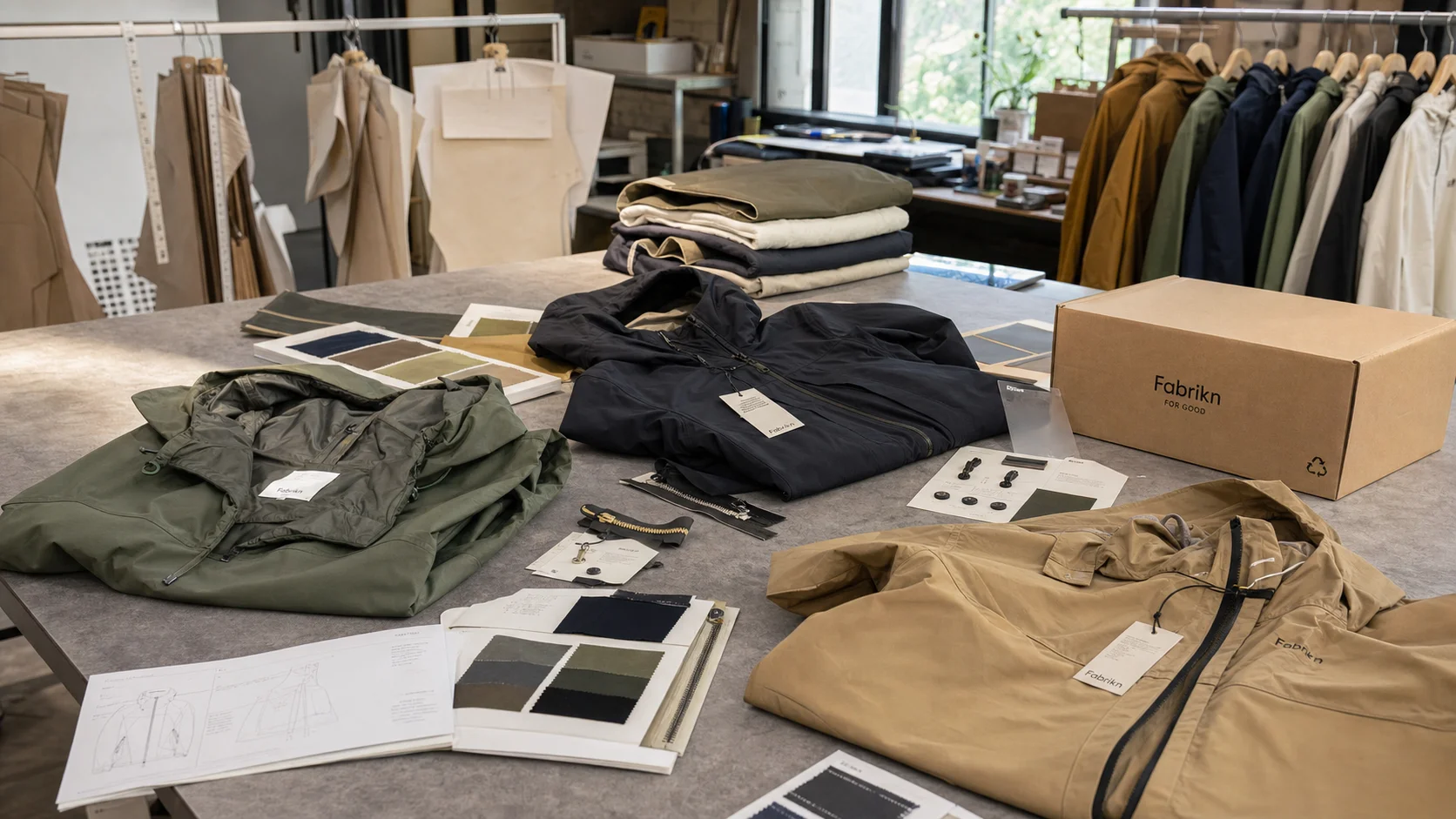
Fashion Label Paper Hang Tags with checks for samples, fit, MOQ, QC evidence, pricing terms, and delivery risk.
Fast answer: Fashion Label Paper Hang Tags: Stock, Print, Specs, and Impact should be judged by production evidence, not by a generic sourcing promise. The buyer needs sample proof, cost breakdowns, QC checkpoints, and delivery buffers in writing.
Ask for recent sample photos, measurement tolerances, fabric or print test assumptions, decoration test notes, packing examples, and a named inspection checkpoint. These details show whether the team can repeat an approved sample at bulk volume.
Separate garment cost, decoration, labels, packaging, sampling, testing, freight, and rush charges. When every cost line is visible, it becomes easier to reduce colorways, adjust size depth, or reserve more time for sampling.
A great hang tag can change a buyer’s first impression before they’ve even found the fitting room. I’ve watched it happen on retail floors from Seoul to Manchester: dense matte card, a crisp edge, and typography with restraint make a $38 tee feel considered, while flimsy stock and fuzzy print can drag a $120 sweater down to bargain-bin credibility before anyone touches the fabric. That is why custom paper hang tags for fashion labels still matter. They’re often the only physical brand touchpoint a shopper sees before a try-on, especially in multibrand stores, return-heavy e-commerce, and marketplace fulfilment.
In factory visits, the pattern has been brutally consistent. Brands that care about the tag usually care about the garment, the packing, and the warehouse handoff too. The ones that treat it as an afterthought tend to cut corners elsewhere. A tag with 350 gsm stock, a clean die-cut, and tight registration can lift perceived price tier across mass market, contemporary, and luxury segments. On a $25 basics program, even a small upgrade to textured uncoated stock can make the item read noticeably more premium. On a $300 coat, cheap gloss and thin fiberboard have the opposite effect. Fast.
Across 8 countries, what surprised me most was how often lower-priced brands outspent mid-market labels on tags. Here’s what most people miss: a brand ordering 500 pieces for a capsule or pop-up can pay $0.40 to $0.90 per tag because setup fees, short-run digital printing, and over-specified materials dominate the invoice. A mid-market label buying 50,000 tags may pay $0.08 to $0.18 per unit and still end up with a cleaner, more disciplined result. I’ve seen factories in Portugal and Vietnam quote similar-looking tags at wildly different totals simply because one brand ordered short and wanted foil, embossing, and a cotton string on top. The tag becomes a cost problem only when volume is low.
Online, the tag keeps working. It appears in product photos, sits in the box during unboxing, and often survives the return cycle with the garment. That matters because a customer returning a jacket in a folded polybag still sees the card, the barcode, and the care details before the refund lands. When I visited packing lines in Guangzhou, Istanbul, and Ho Chi Minh City, the highest-performing brands treated tags as part of clothing packaging solutions, not a throwaway accessory. The shelf version and the shipping version need to behave like the same brand, or trust slips. Usually quietly. Then all at once.
The tag’s job is simple on paper and messy in practice. It must identify the brand, carry essential garment facts, support pricing, and leave a signal of quality that feels intentional. Too much copy kills the surface. Too little wastes space. The best custom paper hang tags for fashion labels I’ve seen use a sharp hierarchy: logo first, then size and price if needed, then SKU, fiber content, care or compliance details, and finally a barcode or QR if the channel demands it.
Luxury brands usually prioritise restraint. A logo, a season code, and a small material note can be enough. Contemporary labels often need more structure: brand mark, style name, size, barcode, origin, and sometimes a sustainability claim. Value brands are more utilitarian. The tag has to do administrative work with no fuss. In category tests I’ve reviewed, shoppers notice logo placement and paper texture first, then price, then fiber content. They don’t read paragraphs. They scan shapes.
The claims need precision. If you say recycled content, state the percentage. If the paper is FSC-certified, name the paper supplier’s certification status only if it is current and traceable. If you print with soy inks, say so only when the printer can document it. The same discipline applies to uncoated stocks, which look honest but can absorb ink and soften fine type. According to Textile Exchange, sustainability claims in apparel supply chains increasingly face scrutiny from buyers and compliance teams, so loose wording is a liability. I’ve seen brands lose trust over a tag that said “eco paper” and nothing more.
Collection positioning matters more than generic brand guidelines. A performance fleece tag shouldn’t behave like a cashmere line tag. A denim tag can tolerate rougher stock, heavier fiber texture, and bolder typography. A silk blouse needs cleaner print, tighter margins, and a calmer hierarchy. If the garment is selling at $18, $48, or $180, the tag should signal that band clearly. I’ve seen private label teams save weeks of revision by aligning tags with private label clothing briefs before artwork begins.
Paper stock does most of the persuasion. Matte coated stock delivers sharp print and a polished feel, but it can read too slick for heritage or sustainable positioning. Uncoated paper feels warmer in hand and takes pencil, stamp, and letterpress-style effects better, though tiny type can bleed slightly on poor presses. Kraft paper signals utility and lower processing, but it compresses color. Cotton paper is tactile and soft, yet it usually costs 20% to 60% more than standard wood-pulp stock. Recycled paper sits in the middle: credible, often appealing, but less bright white and less uniform sheet to sheet.
I specify weight by category, not by ego. Basic tees and jersey items can usually work at 250 to 300 gsm. Denim, sweats, and knitwear hold up better at 300 to 400 gsm. Premium outerwear and tailored programs often benefit from 400 gsm or a duplex build, especially when the tag carries multiple language panels. In humid markets such as Southeast Asia, a heavier uncoated card can curl if the warehouse is warm and the carton sits too long. In colder, drier markets, that same stock stays flatter and feels better in hand.
Finishes change the perceived tier fast. Foil stamping gives immediate signal, especially gold, silver, and black foil on darker stock. Embossing and debossing add depth without adding much visual noise. Spot UV can work on contemporary streetwear tags, though it needs careful control because glare can make logos look cheaper under store lighting. Rounded corners reduce edge wear in transit, and a clean die-cut can make a 320 gsm card feel more expensive than a 450 gsm rectangle with rough trimming. The print floor tells the truth here: more finishing stages mean more scrap, more handling, and longer drying time.
Some combinations travel better than others. Recycled uncoated paper with a single-color print and a cotton string survives shipping and humidity well. Heavy foil on dark coated stock looks stunning, but it’s less forgiving in carton compression and can show scuffing after 2 or 3 distribution touches. Factory crews in India and China told me the same thing in different words: every extra finish adds a chance for rejection. The best tag is not the fanciest one. It is the one that reaches retail flat, clean, and consistent. For broader packaging alignment, I often check whether the tag can sit comfortably alongside cut and sew manufacturing outputs without making the whole presentation feel mismatched.
At 500 pieces, custom tags are expensive because setup dominates. A simple 1-color recycled paper tag with die-cut, string, and barcode can run $0.45 to $1.20 per unit depending on region and finishing. Add foil or embossing, and the range often climbs to $1.20 to $2.80. At 5,000 pieces, the same basic tag may fall to $0.12 to $0.35, while a premium foil-stamped version might land around $0.35 to $0.85. At 50,000 pieces, budget tags can drop to $0.04 to $0.10 and premium versions to roughly $0.12 to $0.28 if the artwork stays stable.
The hidden costs are predictable, which is exactly why brands keep missing them. Paper choice is one. Print colors are another. Every extra Pantone, especially on short runs, adds setup time. Finishing matters too: foil, embossing, debossing, spot UV, drilling, and round-corner cutting each change waste rates. Strings and attachments can look trivial, but waxed cotton, recycled polyester cord, black elastic loop, and custom knotted string all price differently. Packing is not free. Shipping from China, India, or Europe can swing the landed cost by 15% to 40% depending on carton size, freight mode, and whether the tags are dense enough to charge by volumetric weight.
Region changes the math. In China, high-volume print hubs often deliver the lowest per-unit cost and the fastest tooling turnaround for repeat orders. India can be strong on labor cost and flexible small-batch work, especially if the tag is tied to broader garment production. Europe tends to be pricier on labor, but smaller minimums, tighter communication, and shorter intra-EU freight can offset the gap for regional brands. I’ve seen a 5,000-piece order land cheaper from Poland than from Shenzhen once air freight and rework were included. Numbers do not care about assumptions.
For a practical framework, think in two lanes. A budget tag usually means 1 color, 300 gsm recycled or uncoated stock, standard die-cut, basic string, and carton packing. A premium tag means 2 to 4 colors, heavier stock, foil or embossing, special corners, and tighter QC. MOQ matters too. Many factories want 1,000 to 3,000 pieces minimum, while some specialty printers push 5,000 or 10,000. Emerging labels often discover that a lower MOQ with higher unit cost is still cheaper than dead stock. The cash flow wins if the capsule is real. The waste is brutal if it is not.
The production chain begins with the dieline, not the artwork. Once the size, fold, hole position, and string path are approved, prepress checks bleed, safe zones, Pantone references, barcode size, and font outlining. If the barcode is too small or the line weight is too thin, the whole job can fail at scan stage. Digital print is fastest for 300 to 2,000 pieces and can turn in 3 to 5 days. Offset print suits larger repeat runs and takes longer to plate. Specialty finishing adds another 2 to 7 days depending on queue depth.
Color proofing is the first real checkpoint. I’ve seen brands approve a warm beige on screen and receive a cool grey card in hand because the paper stock and ink density were never matched on press. Then comes cutting, drilling, foiling, or embossing. After that, the string attachment line matters more than buyers expect. A knot that sits 2 mm off-center looks careless. Carton counts matter too. A miss of even 50 tags in a 10,000-piece order can become a warehouse headache if the inbound team is trying to allocate by size and color.
Delays usually happen in three places: artwork revisions, paper shortages, and finishing queues. Paper shortages are especially common on recycled stocks with specific shade targets. I’ve watched a 12-day promise turn into 24 days because the mill did not have enough matching board. Packing format influences damage rate. Loose-packed tags in sealed polybags travel differently than shrink-wrapped bundles in inner cartons. For warehouse receiving, bundle packs of 100 or 250 pieces are faster to count than loose stacks, and they reduce corner crush during transit.
Price matters, but it is not the first filter. I look at sample consistency, color tolerance, communication speed, compliance paperwork, and how the factory handles mistakes. A supplier that answers in 2 hours during sampling and 2 days during production is already telling you something. Trading companies can be useful for small brands that need coordination across 3 or 4 inputs, but they often add margin and blur accountability. Print specialists usually give better control on paper, color, and finishing. Integrated packaging factories can be strongest when tags, boxes, and tissue need to match tightly.
Regional strengths differ. Some Chinese factories excel at speed, tool access, and finish breadth. India often gives flexibility on smaller orders and closer interaction on craft-heavy work. Europe can be strong on consistency, short lead times for regional delivery, and compliance documentation that procurement teams like to file. The choice should follow brand category, shipping geography, and reorder rhythm. A brand with monthly capsule drops needs a different supplier than a seasonal label ordering 3 times a year.
Ask direct questions. Where is the paper milled? Is recycled content verified, and by whom? Which coatings are compatible with the chosen stock? What happens if 2% of the run fails color tolerance? Can the factory replace defects without resetting MOQ? Samples should match the approved proof within a practical tolerance, not just “close enough.” Vague MOQs, unitemized quotes, and sample sheets that differ from the proof are red flags. So are factories that cannot explain whether the string is cotton, polyester, or blended.
For brands building a broader system, I prefer suppliers who can connect tags with a wider package architecture, not just print one SKU. That is where an early request a custom paper hang tag quote becomes useful, before design decisions harden. A supplier who understands your carton size, fold method, and retail route can save you money on rework and freight. I’ve seen this especially in private label clothing programs that reorder every 60 to 90 days.
Start with a tight brief. Define the brand tier, garment category, tag size, quantity, and target unit cost before anyone opens design software. Confirm whether the tag needs price, SKU, size, fiber content, QR code, or only brand identity. Then choose 2 or 3 paper options, one backup finish, and a realistic delivery window. If you send the factory a clean RFQ on day one, you cut the back-and-forth that usually burns 5 to 7 working days.
Your RFQ should include quantity, print colors, finish, string type, delivery date, destination, and carton preference. I also send the sustainability requirements in plain language: recycled percentage, FSC paper if required, soy inks if required, and any certification documents the buyer needs. That prevents last-minute arguments about what “eco” means. Align the tag with labels, cartons, and tissue so the retail presentation feels coherent. A $2.00 tag sitting beside a sloppy box is money wasted.
The thing I tell brands after 200-plus factory visits is simple: spend on stock, print clarity, and finish only where the customer can feel it in 3 seconds. Save on excess foil, oversized formats, and fancy attachments that add freight weight without adding trust. If your garment already has strong design value, the tag should support it, not shout over it. For the strongest return, invest in one excellent prototype, then scale with discipline. Order the sample, approve the proof, and lock the shipment terms before the season clock starts.
At 500 pieces, a simple recycled or uncoated tag usually costs about $0.45 to $1.20 each. If you add foil, embossing, or special stock, the price can move to $1.20 to $2.80 per tag. Setup fees dominate at this quantity.
Most buyers need a logo, size, SKU, price, fiber content, care or compliance details, and a barcode. Luxury tags often use less copy, while value tags carry more operational information. Keep claims exact and avoid vague wording like “eco paper.”
Digital print can take 3 to 5 days for small runs, while offset and specialty finishing often need 7 to 14 days. Add extra time if the paper stock is custom, recycled, or awaiting color approval. Freight can add another 3 to 10 days.
Choose based on order size, shipping route, and quality needs. China is often strongest for high-volume cost efficiency, India can suit flexible small batches, and Europe is useful for shorter regional delivery and documentation. Ask for samples before committing.
Yes, but unit cost rises at low quantities. Many factories accept 500 to 1,000 pieces if you use standard recycled stock, one or two print colors, and simple finishing. If you want FSC paper or specialty coatings, expect higher pricing and longer lead times.