
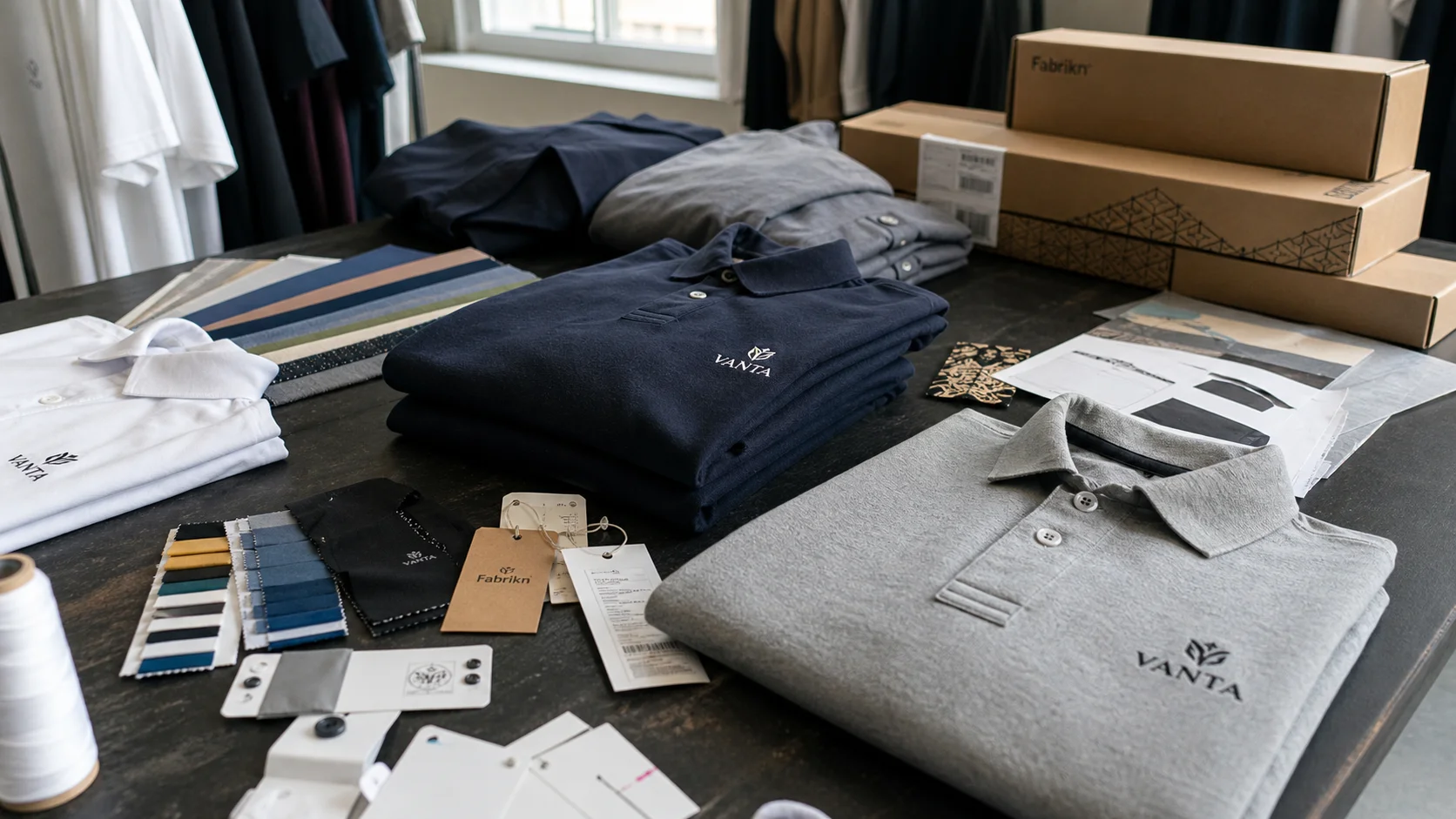
A product-specific outline for eco fitness franchises evaluating custom tracksuits with heat transfer decoration, sustainable fabrics, franchise branding, durability, and production planning.
Custom Tracksuits Heat Transfer Buying Plan - Fabrikn production reference
Custom tracksuits with heat transfer branding are a practical uniform choice for eco fitness franchise operators that need a clean look, repeatable branding, and manageable reorder structure. The challenge is not the decoration method alone. The real purchasing problem sits at the intersection of fabric composition, transfer durability, franchise-wide size consistency, sustainability claims, and lead-time discipline. In typical sourcing programs, a two-piece recycled polyester tracksuit with one chest transfer and one leg transfer commonly lands around $18.50-32.00 per set at 500-1,000 sets, while additional heat transfer placements usually add $0.35-1.20 per position depending on size, color count, and film type.
For buyers in sustainable fashion, a heat transfer program can work well when the specifications are controlled tightly. It can also create avoidable claims if logo cracking, shade mismatch, or poor adhesion appears after frequent wash-and-wear use. Fitness uniforms face more stress than casual promotional apparel. Sweat, stretch, frequent laundering, and body movement expose weak construction and weak transfer application quickly. A common minimum durability target is 25-40 domestic wash cycles at 30-40°C with no edge lifting, cracking, or visible color loss on the logo.
This buying plan is built for teams sourcing custom tracksuits heat transfer for eco fitness franchise uniforms at scale. The focus is practical: what to specify, where the tradeoffs sit, what MOQ ranges are typical, and how to reduce risk before bulk production. Buyers looking for manufacturing support often start by reviewing a supplier’s services, then compare development capability, communication quality, and production controls before moving to sampling. A useful first sourcing checkpoint is to ask whether the supplier can provide a fabric data sheet, transfer application sheet, size spec, pre-production sample, and inspection report before confirming bulk cutting.
Franchise uniform programs have a different risk profile than one-off branded merchandise. The product has to survive repeated replenishment cycles, location-by-location ordering, and visible use by staff in front of members every day. A tracksuit that looks acceptable in the first production run but drifts in color, fit, or logo placement six months later creates a franchise management problem, not just a garment problem. A practical tolerance for repeat orders is usually within Delta E 1.0-1.5 for core brand colors, plus or minus 1 cm for key garment measurements such as chest, waist, inseam, and sleeve length.
Eco positioning adds another layer. Many buyers want recycled polyester, organic cotton, lower-impact dyeing, or reduced packaging. Those goals are valid, but they need to be translated into measurable specifications. “Sustainable” is too loose to protect a purchase order. Fiber percentages, fabric weight tolerances, restricted substances compliance, packaging format, and branding method all need to be defined in the tech pack and purchase terms. Typical sourcing documents should state, for example, 92% GRS recycled polyester / 8% elastane interlock at 250 gsm, OEKO-TEX Standard 100 compliant dyeing and trims, and individual polybags replaced with recycled LDPE bags or carton bulk-packing where retail presentation is not required.
Heat transfer is often selected because it delivers sharp logos, low profile branding, and flexibility across chest, back, sleeve, and leg placements. It also avoids some embroidery-related issues such as added bulk, needle penetration on stretch fabric, and distortion on lighter knit constructions. The tradeoff is that transfer quality depends heavily on application temperature, dwell time, pressure, film chemistry, and fabric surface behavior. A typical PU transfer application window is 145-155°C for 10-15 seconds at medium-firm pressure, while silicone transfers commonly require 150-165°C for 12-18 seconds; the final setting must come from the transfer supplier’s technical sheet and be validated on the actual bulk fabric.
For franchise buyers, the safest approach is to treat heat transfer branding as a performance component, not a decorative afterthought.
Heat transfer decoration covers several methods, and buyers should not approve a program using generic language alone. A supplier may refer to PU transfer vinyl, TPU transfer, silicone transfer, reflective transfer, sublimation patch transfer, DTF transfer, or screen-printed transfer under the same general label. Each option behaves differently in wash resistance, stretch recovery, hand feel, matte versus gloss appearance, and environmental positioning. In sourcing, the buyer should request a transfer swatch card and a test press on the exact bulk fabric before signing off artwork.
For eco fitness franchise uniforms, the most common choices are:
PU and TPU options are often cost-effective and widely available, though buyers should confirm compliance and composition details instead of assuming all films meet the same environmental standard. Silicone transfers usually cost more and may require stricter application control, but they can give a more elevated franchise look when done correctly. Reflective transfers add utility, although they can become a failure point if stretch zones are not planned carefully. As a sourcing rule, avoid placing reflective or thick silicone transfers directly over high-stretch knee, elbow, and seat areas unless the supplier proves stretch recovery on a worn-test sample.
The tracksuit base matters just as much as the logo. Brushed interlock, warp-knit tricot, double knit, recycled polyester fleece-back jersey, and poly-cotton blends all react differently to heat and pressure. A transfer that bonds well on a stable polyester interlock may silver, lift, or edge-curl on a heavily brushed or textured surface. Common application equipment includes Stahls’ Hotronix, Geo Knight, Schulze, Sefa, or equivalent pneumatic heat presses; for bulk production, buyers should confirm that pressure is measured consistently rather than applied manually by guesswork.
In sustainable fashion, the buying brief should separate environmental intent from verified specification. A solid starting point for eco fitness franchise uniforms usually includes recycled or more responsibly sourced fibers, reasonable product longevity, and packaging reduction. Durability is part of sustainability. A tracksuit that fails after limited use is not a strong environmental result even if the fiber story looks good on paper. Typical certification requests include GOTS for organic cotton content, OEKO-TEX Standard 100 for harmful substance screening, and WRAP or BSCI audit status for social compliance at the cut-and-sew facility.
Common sustainability criteria buyers can request include:
There is a practical tradeoff here. High recycled content can be a strong selling point, but fabric hand feel, pilling resistance, opacity, and color consistency still need review. Buyers should avoid assuming that every recycled knit behaves the same as a conventional polyester version. In tracksuits used for front-of-house staff, appearance retention matters almost as much as sustainability messaging. Common inspection tests include gsm verification within plus or minus 5%, shade band review under D65 light, and pilling testing to ISO 12945 or ASTM D3512 where available.
A supplier’s development and sourcing scope matters because fabric and transfer decisions need to be aligned early. That is one reason buyers often review a manufacturing partner’s about page and technical scope before committing to a sample path. Before order approval, buyers should ask for copies of current OEKO-TEX, GOTS, WRAP, or BSCI documents where relevant, and should confirm whether the certification applies to the fabric mill, garment facility, or only a nominated material supplier.
The buying plan should start with the garment, not the logo. For franchise uniforms, the most stable programs usually rely on a narrow range of approved fabric constructions and trims that can be reordered with less variation. A typical set includes a zip jacket and tapered track pant, though some programs also add shorts or lightweight layering tops in matching branding language. For sourcing consistency, lock a single approved bulk fabric, one backup fabric, and one approved zipper and drawcord standard before opening orders to multiple franchise locations.
For performance-oriented franchise uniforms, common fabric options include:
Interlock and double knit are often safer for heat transfer applications because the face is smooth and consistent. Fleece-back fabrics can feel more premium in some markets, but the extra loft can complicate transfer adhesion if the logo area is not stabilized properly. A common performance spec for active staff uniforms is 4-way stretch with 8-12% elastane, shrinkage within 3% after washing, and colorfastness to washing and perspiration at grade 4 or better.
Buyers should specify seam performance expectations, especially for crotch, armhole, and pocket areas. Overlock plus coverstitch or flatlock details may be needed depending on the design. Cheap construction hidden under a strong branding concept tends to surface fast in franchise use. Common production machinery includes 4-thread overlock for joining seams, flatlock machines for low-bulk performance seams, coverstitch machines for hems, bartack machines at pocket openings and drawcord exits, and automatic spreaders or CNC cutting systems such as Lectra or Gerber where the order volume justifies tighter cutting consistency.
Approval delays often come from vague logo instructions. The buyer should lock the transfer type, artwork file, placement tolerance, application recipe, and test method before bulk production starts. Typical artwork requirements include vector AI, EPS, or PDF files with Pantone references, minimum line thickness of 0.7-1.0 mm for PU transfers, and a confirmed logo size such as 80 mm chest width or 220 mm back width. Placement tolerance is commonly plus or minus 5 mm for chest and leg logos, but franchise programs should use placement templates for repeat runs.
For most custom tracksuits heat transfer programs, buyers should confirm:
A good supplier should run a pre-production transfer trial on bulk fabric before cutting all panels. For example, a chest logo may be pressed at 150°C for 12 seconds at 4 bar pressure with a warm peel and 3-second post-press, then tested after 24 hours of curing. These numbers are typical, not universal; the final approval should follow the transfer vendor’s technical sheet and the fabric’s heat tolerance. Heat-sensitive recycled polyester can glaze or shine if pressed too hot, so a protective Teflon sheet or silicone pad is often used during application.
MOQ depends on fabric availability, color customization, trims, and transfer setup. For stock fabric with standard black, navy, charcoal, or forest green shades, typical MOQ can be 100-300 sets per color. For custom-dyed recycled polyester knit, MOQ is more commonly 500-1,000 kg of fabric, which may translate to roughly 800-1,500 tracksuit sets depending on gsm, size mix, and fabric consumption. Custom silicone logo molds may require 300-500 pieces per logo design to avoid high unit costs.
Sampling usually follows a predictable timeline. A first prototype in available fabric commonly takes 7-10 business days. A sales sample or fit sample with correct fabric and trims usually takes 10-15 business days if the fabric is in stock. A pre-production sample with final transfer, bulk fabric, size grading, trims, and packaging commonly takes 12-18 business days. Bulk production for straightforward tracksuits is typically 18-22 business days after all approvals, but custom dyeing, yarn shortage, lab dip rejection, certification documentation, or late artwork revisions can push the timeline to 30-45 business days.
Buyers should build the calendar backward from the franchise launch date. A safe plan usually allows 2 weeks for design and tech pack lock, 2-3 weeks for sampling and revisions, 1 week for final approvals and deposit processing, 4-6 weeks for bulk manufacturing and inspection, and additional freight time based on the chosen shipping mode. If uniforms must arrive before a grand opening, place reorders when inventory reaches 30-40% of forecasted demand rather than waiting for a location to run out of sizes.
Tracksuit cost is driven by fabric, construction, trims, transfer type, order quantity, and inspection requirements. As a typical sourcing range, a basic recycled polyester interlock tracksuit with two heat transfer logos may cost $18.50-24.00 per set at 1,000 sets. A heavier recycled poly-spandex double knit version with YKK zippers, zip pockets, silicone chest branding, and customized packaging may run $26.00-38.00 per set at 500-1,000 sets. Transfer-only costs can range from $0.35-0.85 for a small PU logo, $0.90-2.50 for silicone branding, and $1.20-3.50 for larger multicolor printed transfers.
Buyers often overspend in the wrong places. A premium silicone logo will not fix poor pilling resistance or a weak zipper. Likewise, certified recycled fabric loses value if the garment fails quickly because of weak seams or poor shrinkage control. The best purchasing judgment is usually to pay first for stable fabric, verified fit, zipper quality, and wash durability, then decide whether the branding upgrade is worth the added cost.
For budget control, ask the supplier to quote at several quantity breaks, such as 300, 500, 1,000, and 2,000 sets. Also request separate line items for fabric, trims, transfers, packaging, sample charges, mold charges, and inspection. This makes it easier to see whether the price increase is caused by a real material upgrade or simply by low-volume inefficiency. A common inspection cost for third-party AQL checking is $250-450 per man-day, depending on service provider and scope, and should be budgeted before bulk shipment.
The main quality risks in custom tracksuits heat transfer programs are logo lifting, cracking, fabric shine from excessive heat, color shade variation, poor zipper function, seam slippage, uneven sizing, and pilling after wear. These risks should be checked before shipment, not after franchise locations start issuing uniforms to staff. A typical final random inspection uses AQL 2.5 for major defects and AQL 4.0 for minor defects, although stricter buyers may set lower limits for visible branding issues.
Useful inspection checkpoints include:
In production, the supplier should inspect at incoming material, inline sewing, transfer application, finishing, and final packing stages. Incoming checks confirm fabric width, shade, gsm, and defects per 4-point system. Inline checks catch twisted legs, puckered zippers, and uneven topstitching before too many pieces are completed. Transfer-line checks should record machine temperature, pressure, dwell time, and peel method at the start of each batch and after operator breaks. Final inspection should compare packed goods to the approved pre-production sample, not just to a verbal order description.
A controlled rollout is safer than launching every franchise location with an untested uniform at once. Start with a pilot order for 50-100 sets across the most common staff sizes, such as XS through 3XL, and place them in 2-3 operating locations for 3-4 weeks of real wear. Ask staff to report fit, heat comfort, pocket function, zipper comfort, logo feel, and laundering results. This field feedback often catches issues that a showroom sample will not reveal.
After the pilot, freeze the approved tech pack. The tech pack should include fabric composition, gsm, color standard, size chart, grading rules, seam construction, trim codes, transfer artwork, transfer placement diagram, application recipe, packaging method, and carton marking. For franchise ordering, maintain one master size curve based on actual staff demand; a common starting ratio for unisex tracksuits is S:15%, M:30%, L:30%, XL:15%, XXL:7%, and other sizes:3%, but this should be adjusted after the first two replenishment cycles.
For rollout timing, place the main franchise order 8-10 weeks before the target in-store date when custom fabric or transfer molds are involved. If stock fabric and standard transfers are used, 5-7 weeks may be enough, but only if artwork, sizing, and certification documents are already approved. Reorder planning should be tied to a rolling forecast by location, with buffer stock for high-turnover sizes and new staff onboarding.
Supplier qualification should focus on evidence, not sales language. Before approving a custom tracksuits heat transfer supplier, ask for details that prove they can control both garment manufacturing and decoration. Typical useful questions include:
A capable supplier should answer these questions with numbers, documents, and sample evidence. If the supplier cannot identify the transfer material, cannot state the application settings, or cannot separate fabric MOQ from garment MOQ, the buyer should slow down approval. These gaps often become production problems later.
Custom tracksuits with heat transfer branding can be a strong uniform choice for eco fitness franchises when the program is specified like a performance product. The safest buying plan defines the fabric, trims, construction, transfer type, application process, certifications, testing targets, MOQ, cost structure, and inspection checkpoints before bulk production begins.
For most franchise programs, the practical path is to use a smooth recycled polyester interlock or recycled poly-spandex double knit, confirm OEKO-TEX or other relevant compliance, request GOTS documentation if organic cotton is claimed, verify WRAP or BSCI audit status where social compliance is part of the brief, and validate the heat transfer through wash and stretch testing. A typical production window is 18-22 business days after approvals for straightforward stock-fabric orders, but buyers should plan 30-45 business days when custom dyeing, transfer molds, or certification paperwork are involved.
The best result comes from treating sustainability, comfort, branding, and durability as connected specifications. When those details are locked early, franchise teams get cleaner launches, fewer reorder surprises, and uniforms that support the brand rather than creating avoidable service issues.
Get a free quote from Fabrikn — your trusted B2B clothing manufacturer with 10+ years of experience. MOQ as low as 200 pieces.
Get a Free Quote →What is a typical MOQ for custom tracksuits with heat transfer logos?For stock fabric, typical MOQ is 100-300 sets per color. For custom-dyed recycled polyester fabric, MOQ is often closer to 500-1,000 kg of fabric, which may equal roughly 800-1,500 sets depending on fabric weight and size mix.
How long does production usually take?Sampling commonly takes 10-18 business days depending on fabric and logo readiness. Bulk production is typically 18-22 business days after pre-production sample approval for stock-fabric orders, and 30-45 business days when custom dyeing, special trims, or transfer molds are required.
Which heat transfer is best for eco fitness tracksuits?PU or TPU transfers are common for cost-effective branding, while silicone transfers are often used for a premium look and stronger tactile effect. The best choice depends on fabric surface, stretch requirement, wash target, and budget.
What certifications should buyers request?Common certifications and compliance documents include OEKO-TEX Standard 100 for harmful substances, GOTS for organic cotton claims, and WRAP or BSCI for social compliance at the manufacturing facility. Buyers should confirm exactly which material or facility the certificate covers.
What quality tests matter most before shipment?The most useful checks are wash testing, transfer adhesion review, logo placement measurement, shade matching, gsm verification, seam strength, zipper function, and size measurements against the approved spec. For uniform programs, these should be checked against the approved pre-production sample before goods ship.