
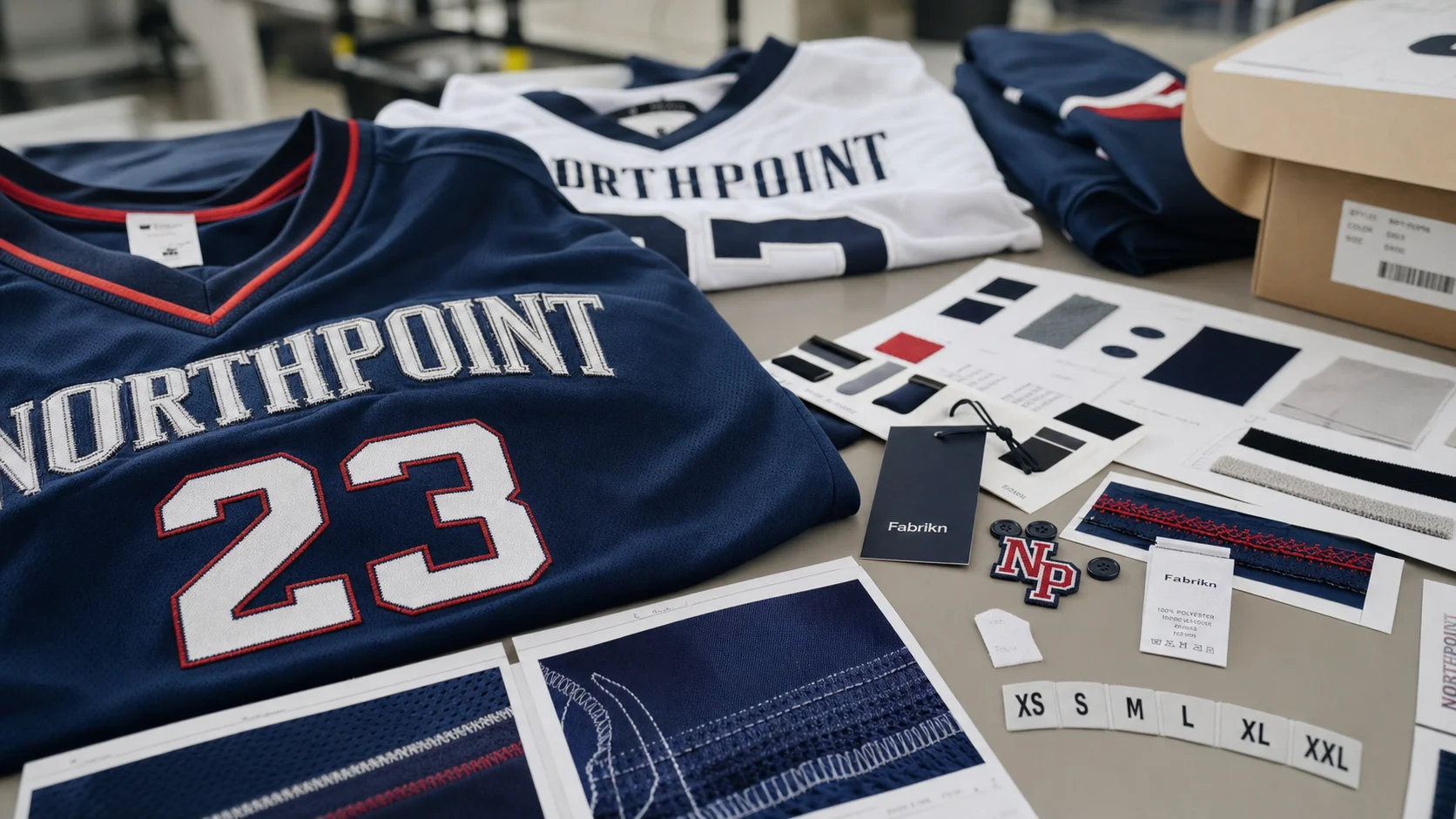
A product-specific outline for distributor teams sourcing trim packages for white label industrial coveralls, with focus on durability, compliance, branding control, and repeatable production for exclusive private label programs.
Industrial Coveralls Trim Sourcing for Brand Buyers - Fabrikn production reference
Trim sourcing is rarely the first topic raised in a white label industrial coveralls program, yet it is one of the fastest ways a distributor exclusive brand can lose margin, delay launch dates, or create field complaints. Fabric usually gets the attention. Fit gets reviewed. Color gets debated. Then the trims arrive late, fail wash testing, mismatch the base cloth, or create avoidable production substitutions.
For brand buyers managing private label apparel, trim sourcing needs the same discipline as fabric development. In industrial coveralls, trims are not decorative extras. They influence durability, wearer safety, laundering performance, branding consistency, and replenishment speed. Zippers, snaps, hook-and-loop closures, sewing threads, labels, reflective tapes, elastic, pocketing, and fusible components all affect whether a garment performs in actual work environments.
That matters even more for distributor exclusive brands. The product usually needs to hold a stable specification across repeat orders, while still hitting a commercial price that works for wholesale channels. A buyer may accept a simpler trim package for entry-level programs, but inconsistency across shipments is harder to absorb than a slightly higher opening cost. Exclusive brand programs often live or die on repeatability.
White label industrial coveralls also present a narrower sourcing window than casual apparel. Many programs run in bulk around seasonal purchasing cycles, contract supply schedules, or safetywear assortment resets. If one custom zipper puller, woven label, or reflective tape approval slips, the entire line can move off calendar. That is why trim planning should start alongside tech pack development, not after bulk fabric is booked.
For buyers evaluating suppliers, the practical question is simple: can the trim package be standardized, tested, replenished, and inspected without creating hidden risk? A capable sourcing partner should be able to explain trim alternatives, likely MOQ thresholds, color continuity issues, wash limitations, and production dependencies in clear commercial terms. Buyers looking at private label apparel services should expect trim management to be treated as a control point, not a back-office detail.
Industrial coveralls face harder use conditions than many private label garment categories. The trim package must perform under abrasion, repeated laundering, bending stress, chemical splash exposure in some applications, and frequent on-off wear cycles. A trim failure often appears before the shell fabric fails. That creates a poor quality impression even when the core garment is otherwise acceptable.
Brand buyers should also separate image trims from functional trims. A logo label can usually be corrected on a later run. A zipper that jams, a snap that corrodes, or reflective tape that peels after wash is a much more expensive problem. Functional trims deserve earlier approval and tighter controls.
In distributor exclusive brands, trims also help protect product distinction. Many white label coveralls start from similar silhouettes across multiple suppliers. Exclusive identity often comes from a controlled trim combination: branded labels, signature closure color, pocket reinforcements, contrast bartacks, custom tape placement, or a specific reflective configuration. Those details can support channel separation, but every custom element raises MOQ and lead-time pressure. The commercial judgment is to customize where it is visible or meaningful, and standardize where it does not change buying behavior.
A disciplined sourcing approach balances four priorities:
That balance is more important than chasing the lowest initial trim quote. Cheap trims often become expensive through claims, resampling, urgent airfreight, or inconsistent reorders.
Zippers are one of the highest-risk trim categories in industrial coveralls. Buyers typically choose between metal, molded plastic, and coil constructions depending on end use, wash conditions, and target price. Front closure zippers, pocket zippers, and leg opening zippers may require different specifications within the same garment.
Key points to lock down include tape composition, tooth material, slider type, auto-lock requirement, top and bottom stops, and exact length tolerance. If coveralls are intended for industrial laundering, the zipper finish and tape stability should be reviewed carefully. Decorative zipper choices that work in lifestyle apparel can underperform in workwear conditions.
Metal snaps and tack buttons can add durability, but corrosion risk and finish consistency need attention. Resin snaps may reduce corrosion concerns in some programs, though break strength must still be checked against garment stress points. Rivets can improve pocket durability, yet they may be unsuitable if the end user wants reduced surface hardware or lower scratch risk around equipment.
Hook-and-loop tape is common at cuff tabs, storm flaps, and pocket closures. Buyers should review peel strength, cycle performance, width, colorfastness, and lint buildup behavior. Lower-cost hook-and-loop can feel acceptable in hand but degrade quickly in use. That difference is often missed if approval relies only on appearance samples.
Thread is often under-specified in coveralls programs. Ticket size, fiber type, lubrication, seam compatibility, colorfastness, and heat resistance all matter. Polyester core-spun or filament polyester threads are common choices, but the best option depends on seam construction and laundering demand. Thread breakage, seam grin, puckering, and color shift can all trace back to poor thread selection rather than sewing operator error alone.
Main labels, size labels, care labels, barcode stickers, hangtags, and carton markings all fall into trim sourcing scope. For distributor exclusive brands, packaging trims matter because they affect warehouse receiving and resale presentation. A simple woven brand label may have a lower MOQ than a fully custom printed heat-transfer system. If garment interiors are exposed to heavy wash cycles, label attachment method and print durability need review.
Some industrial coveralls require reflective trims for visibility. Buyers need clarity on whether the garment is only style-driven, high-visibility inspired, or intended to meet a specific performance standard. Reflective tape width, placement, wash retention, stitch method, and certification status all affect suitability. A reflective trim that looks bright under showroom light does not automatically meet end-use expectations.
Elastic at the waist or cuffs should be specified by width, stretch ratio, recovery, fiber blend, and wash endurance. Soft elastic that feels comfortable at sample stage may lose recovery in bulk laundering. For industrial coveralls, stability usually outranks softness.
Not every trim is visible. Fusible interlinings, pocketing fabrics, knee reinforcement backing, and seam tapes can affect durability and appearance. Poor fusing selection can create bubbling after wash. Weak pocketing can fail well before the shell fabric, especially when users carry tools or hardware.
A buyer should not approve trims based on appearance alone. The right control point is a trim specification sheet tied to the coveralls tech pack. This should define material, size, construction, color standard, finish, application point, testing requirement, and approved substitute policy.
Typical trim details worth documenting include:
Color standards deserve special attention. Black trims are usually easier to standardize across repeats. Navy, charcoal, orange, and branded contrast shades are more likely to drift between lots. A distributor exclusive brand with multiple coverall colors may save time by limiting custom trim colors to one or two high-visibility brand cues and using stock-compatible support trims elsewhere.
Purchasing judgment: if a trim does not influence sell-through, field performance, or visible brand identity, it is often better kept on a stock specification than pushed into a custom development path.
MOQ planning is where many exclusive brand trim programs become inefficient. Buyers may expect garment MOQs and trim MOQs to align, but they rarely do. A coverall factory may accept 300 to 600 pieces per color for a repeatable basic style, while custom trims can require much higher commitments.
Typical market ranges, subject to material type and supplier policy, often look like this:
Trim Type Typical MOQ Range Buyer Note Stock zippers Usually aligned to garment order quantity Best for lower-risk replenishment programs Custom zipper pullers or branded sliders 1,000 to 5,000 units Useful for visible branding, but can create leftover liability Woven main labels 1,000 to 3,000 pieces per design Often manageable if size scaling is planned carefully Printed care labels 1,000 to 5,000 pieces Language or compliance changes can strand inventory Custom hook-and-loop colors 1,000 to 3,000 meters Custom colors are rarely worth it unless externally visible Reflective tape 500 to 3,000 meters Certification and width can push MOQ upward Elastic 500 to 2,000 meters Recovery performance matters more than cosmetic customizationThese ranges vary by supplier and specification, but the planning logic remains consistent. Custom trims make more sense when the buyer has forecast visibility across repeat orders, not when testing an unproven SKU. For launch programs, semi-custom or stock trims often produce a better cash-flow outcome than fully bespoke branding.
Distributor exclusive brands should also ask who owns residual trim inventory. If a custom label or zipper puller is overproduced, it should be clear whether stock is held for future orders, charged immediately, or subject to aging risk. The wrong answer can quietly inflate landed cost.
Trim approval should run in stages. Skipping steps saves a few days early and often costs weeks later.
A practical approval sequence usually includes:
Brand buyers should be strict about the pre-production sample. This is the stage where trim substitutions become visible. A proto sample made with available stock components can look acceptable, then fail to represent the actual bulk build. The pre-production sample should confirm the final zipper, label set, reflective tape, thread color, closure strength, and packaging details before cutting proceeds at scale.
For industrial coveralls, a wash test or wear simulation on the pre-production sample is often worth the extra time. That is especially true for heavy-duty laundering programs, reflective tape application, dark shade crocking risk, and elastic recovery checks. A small delay at approval stage is usually cheaper than a field failure on a distributor exclusive line.
Buyers needing support with specification alignment and production coordination often look for a partner with structured apparel sourcing oversight, since trim control touches both development and bulk execution.
Lead time for industrial coveralls is usually discussed as a garment issue, but trims can determine the real path to shipment. Bulk fabric may be ready while a custom zipper, label, or reflective tape is still pending. In that situation, sewing cannot proceed cleanly, and partial assembly can increase handling errors.
Typical trim lead-time dependencies include:
A basic stock trim package may fit inside a 45 to 75 day garment production cycle, depending on fabric readiness and capacity. A heavily customized trim package can push that cycle meaningfully longer. Some custom trims alone may need 20 to 40 days before they are factory-ready, and that is before cutting and sewing begins.
Brand buyers should ask two direct questions early. First, which trims are stock-supported and which require custom production? Second, which trim is most likely to become the critical path? The answer usually points to where the program is most fragile.
Urgent orders can sometimes be recovered through trim airfreight, but that is usually a sign of weak planning rather than a scalable operating model. Coveralls are price-sensitive products in many distribution channels. Margin disappears quickly when basic trim timing is mismanaged.
Industrial coveralls trim inspection should focus on functional risk, not only count accuracy and cosmetic review. Several recurring problems deserve attention during inline and final inspection.
Inspection planning should include trim pull tests where relevant, wash assessment on representative garments, and cross-checks between approved trim card and bulk components. A visual final inspection alone is not enough for a workwear product with repeated-use stress.
Purchasing judgment: the highest trim risk is often substitution, not obvious defect. A replaced component can pass casual visual review and still weaken the program on durability or compliance.
Not every upgrade is worth buying, and not every saving is worth taking. Industrial coveralls need a trim strategy that supports the selling channel, expected use intensity, and reorder model.
Some common tradeoffs include:
For distributor exclusive brands, the strongest buying position is usually a tiered trim strategy. Keep functional trims at dependable commercial quality. Customize a limited number of visible brand points. Avoid broad customization across hidden or low-impact components. That structure gives the line enough distinction without creating a complicated reorder burden.
Brand buyers should expect trim sourcing discussions to happen before order confirmation, not after. The supplier should be able to map each trim to its source, MOQ, testing need, lead time, and substitution risk. If those answers are vague, the program is still underdefined.
A practical sourcing checklist for white label industrial coveralls includes:
This is where a buyer can protect both margin and delivery reliability. Trim sourcing is not only a materials task. It is an operating discipline across development, purchasing, production, and quality control. Buyers preparing an exclusive workwear line can use an early sourcing review to identify which trim decisions truly add value and which ones only add friction. For project-specific discussion, the next practical step is usually a direct product review through a sourcing contact page such as Fabrikn contact us.
In private label apparel, industrial coveralls are judged in use, not in presentation alone. The trim package needs to support that reality. Buyers who standardize critical trims, control approvals carefully, and resist unnecessary customization usually end up with a stronger exclusive brand program: fewer delays, cleaner reorders, and more predictable field performance.
Get a free quote from Fabrikn — your trusted B2B clothing manufacturer with 10+ years of experience. MOQ as low as 200 pieces.
Get a Free Quote →The most critical trims are usually zippers, snaps, hook-and-loop closures, sewing thread, reflective tape where required, and reinforcement materials. These parts affect function and durability more than purely decorative branding elements.
Typical MOQs vary by trim type, but branded labels often start around 1,000 to 3,000 pieces, while custom zipper hardware or specialty trims may run from 1,000 up to 5,000 units or more. Buyers should confirm whether minimums apply per color, per design, or per order.
No. Full customization often creates excess complexity and leftover inventory risk. A better approach is to customize visible brand-defining trims and use reliable stock specifications for hidden or low-impact components.
Start trim development early, approve trim cards before bulk booking, identify critical-path trims, and require a pre-production sample using bulk-intended components. Custom hardware and reflective trims often need the closest schedule control.
Functional checks matter most: zipper operation, snap attachment strength, hook-and-loop cycle performance, wash durability, reflective trim retention, label accuracy, and color consistency. Final visual inspection alone is not enough for industrial workwear.
Substitutions usually happen بسبب stock shortages, late approvals, lead-time pressure, or weak specification control. Buyers should require approval for any trim change and compare bulk components against the approved trim card and pre-production sample.