
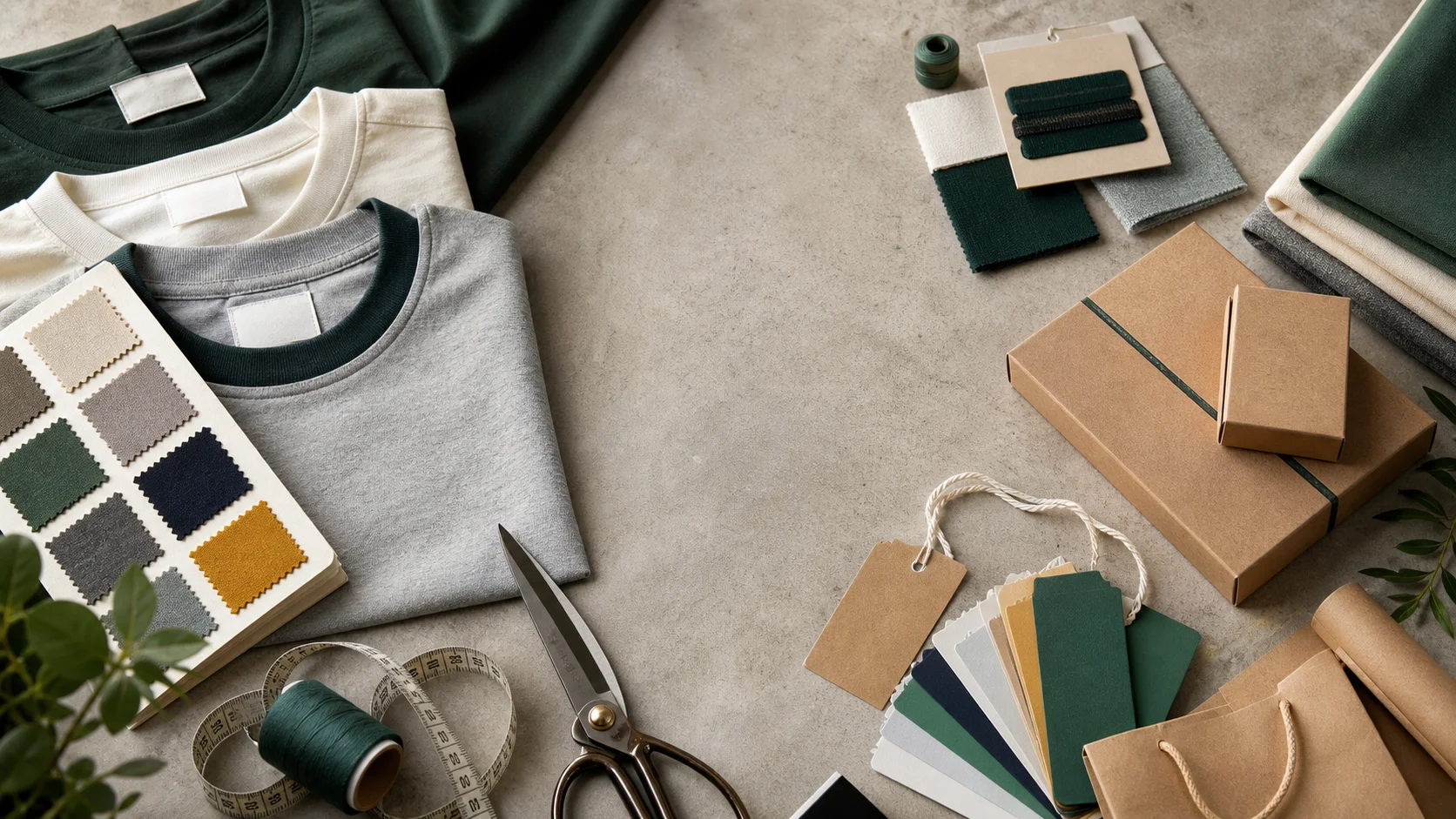
Debossed Logo Packaging for Clothing Brands with checks for samples, fit, MOQ, QC evidence, pricing terms, and delivery risk.
Fast answer: Debossed Logo Packaging for Clothing Brands: Costs, Materials should be judged by production evidence, not by a generic sourcing promise. The buyer needs sample proof, cost breakdowns, QC checkpoints, and delivery buffers in writing.
Ask for recent sample photos, measurement tolerances, fabric or print test assumptions, decoration test notes, packing examples, and a named inspection checkpoint. These details show whether the team can repeat an approved sample at bulk volume.
Separate garment cost, decoration, labels, packaging, sampling, testing, freight, and rush charges. When every cost line is visible, it becomes easier to reduce colorways, adjust size depth, or reserve more time for sampling.
The box lands before the clothes do, and that first touch can change the whole mood of an order. I watched a customer open a $78 hoodie and keep running her thumb over the lid long after the garment was out. That was the moment the brand earned its premium price. Debossed logo packaging for clothing brands has that kind of quiet authority: no shouty graphics, no desperate sparkle, just a mark that invites a second look.
Buyers notice weight, texture, edge quality, and whether the logo feels pressed in or slapped on. A deboss throws shadow and depth under the fingertips, and flat print can’t fake that without looking thin. Premium packaging can lift perceived product value by 15-30% in consumer tests, especially with apparel gift boxes and subscription orders. I’ve seen the effect show up in return comments and gifting photos, not just survey sheets.
Luxury brands understand restraint. Mid-market brands often pile on foil, spot UV, and three shades of beige because someone once called that “premium.” DTC brands do the opposite and print the life out of a mailer until it resembles a toothpaste carton. Minimalist packaging can look richer than heavily printed cartons when paper stock, pressure, and alignment are right. One crisp mark on a clean box beats six decoration layers fighting each other like unpaid interns.
I’ve burned money on both extremes. A $1.90 rigid box with bad pressure looked worse than a $0.72 folding carton with a clean blind deboss. Brutal, but true. The brand touchpoint does not care how much you spent if the logo is mushy, off-center, or crushed into pulp.
For brands selling premium basics, outerwear, or giftable sets, debossed logo packaging for clothing brands delivers quiet confidence. For brands in the middle, it is a practical way to signal quality without turning every box into a print circus. Luxury keeps the restraint. DTC gets enough texture for the unboxing to photograph well without lighting an extra $4.00 per unit on decoration nobody asked for.
The production sequence isn’t mysterious, despite how some suppliers act when they want to justify a quote. Dieline prep. Material selection. Tooling. Press setup. Sampling. Final QC. Miss any one of those, and you get a logo sitting 2 mm too high, a lid that bows, or a deboss that looks like it lost a fight with a forklift.
Paperboard, rigid box, and sleeve production each follow a slightly different path. Folding cartons use lower board weights and tighter die-cut control. Rigid boxes rely on wrap stock, greyboard, and cleaner press registration. Sleeves are simpler, which is exactly why alignment problems show up instantly; there’s nowhere to hide. When I visited factories in Guangdong and Ho Chi Minh City, plenty could produce a clean deboss on rigid board, but far fewer kept consistency on recycled materials with visible fiber content.
Regional tendencies matter. East Asian factories often quote lower unit prices at higher minimums, especially once you hit MOQ 1,000 or 3,000 pieces. Some European vendors will do shorter runs, sometimes 250 or 500 units, but you pay for it with tighter finishing tolerances and unit prices that can run 20-40% higher. Not a moral issue. Math.
Defects show up in predictable places. Weak pressure makes the logo shallow. Too-soft board collapses around the mark. Misregistered tooling shifts the deboss off center. Over-pressing crushes fibers and leaves a shiny dent instead of a clean impression. First samples usually differ from mass production by 5-10% in depth or clarity because machine pressure, humidity, and board batch all change between the sample room and the full run.
Tooling and sampling usually take 7-14 days each, and production can run 15-30 days depending on order size and finish complexity. If a supplier promises perfect samples on day two and mass production on day six, keep your wallet closed. That’s how brands end up with 4,000 boxes that look like they were stamped by a tired nephew.
Rigid board wins on structure. Coated paperboard wins on sharpness. Uncoated stock can look beautiful too, but only when the fiber structure is tight and the press depth is controlled. A 2-3 mm deep deboss on a rigid box usually reads more clearly than a shallow mark on thin board, and that matters more than whatever mood board someone made in Milan.
Price follows material. Premium rigid boxes commonly land around $1.20-$4.50 per unit at 1,000 pieces, depending on size, wrap paper, and insert complexity. Mid-tier folding cartons can sit around $0.35-$1.20. Budget mailers with a debossed sleeve or insert often stay under $0.25-$0.80 for the branded component, which helps when product margin is not fairy dust.
Sustainability changes the equation. Recycled content is good marketing and, in many cases, a real material choice. But high recycled fiber percentages can soften logo definition unless press settings are adjusted. I’ve seen 80% recycled board look noble and fuzzy at the same time. According to Textile Exchange sustainability standards and material guidance, material traceability matters when brands want credible claims. According to OEKO-TEX product safety certification, testing and verified standards can help brands reduce risk across their supply chain.
According to ISO, standardized material and quality controls matter because repeatability is the real issue, not just one pretty sample. Soft-touch lamination adds that velvety feel people love, but it can also reduce recyclability if too many layers are mixed in. Matte lamination is safer. Blind deboss works well on recycled uncoated paper when the goal is a quieter, cleaner result, while foil plus deboss is stronger visually but harder to recycle and easier to mess up if the foil plate shifts even 1 mm.
Use one primary finish and stop there if the goal is premium without waste. A clean deboss on a rigid lid, or a debossed sleeve over a plain carton, usually photographs better than three mixed effects fighting for attention. I’ve made the mistake of adding foil because “the box needed more presence.” It needed less ego.
Costs break into five buckets: tooling setup, sample charges, plates or dies, freight, and packaging assembly. That’s the full bill, not the prettified quote a manufacturer sends after trimming every inconvenient line item. Tooling for a deboss plate can cost $80-$300 depending on size and material. Samples often run $30-$120 each, and if artwork gets revised three times, expect to pay again. Apparently the logo was not “final” after all.
For 500-1,000 units, unit prices stay stubborn. A rigid debossed box may land at $1.80-$5.00 each, especially with inserts or specialty wrap. At 3,000-5,000 units, that can fall to $1.00-$2.80. At 10,000+ units, it may slide into the $0.75-$1.90 range depending on board thickness, finish, and carton complexity. Debossing is often cheaper than multi-color print plus foil, but tooling makes small runs annoying. Tiny quantities punish everyone except the quote sheet.
Domestic sourcing can cost 20-40% more per unit, but it also cuts freight time, tariff exposure, and the risk of ordering 5,000 boxes you can’t inspect before launch. I’ve paid $1,400 in air freight for packaging I should have ordered two weeks earlier. That mistake hurts because it is completely avoidable.
Hidden costs pile up fast. Rush fees can add 5-10%. Artwork revisions can add another $50-$200. Quality rejects and rework can push true landed cost up by 5-15%, sometimes more if the board arrives warped or the logo sits outside tolerance. Compare suppliers using landed cost, not factory fantasy pricing. I’ve seen a “cheap” quote become the most expensive option after freight, repacking, and one very awkward warehouse intake.
For apparel brands that also buy hangtags, polybags, or mailers, packaging should sit inside the same sourcing plan. If your team already manages clothing packaging solutions as part of the larger product line, it is easier to balance box cost against margin instead of treating every piece as a one-off surprise.
Logo scale matters more than most people think. A centered mark on the lid usually reads clean and premium. Corner debosses work when the brand is already established and the box shape carries some confidence. Interior branding can be nice for gifting, but only if the outside doesn’t already feel anonymous. One strong deboss often reads richer than three competing embellishments, because visual restraint looks intentional instead of nervous.
Luxury shoppers tolerate subtlety. Value shoppers still want brand recognition, but they want it to photograph well for social content. That means the logo has to survive phone-camera compression, bad natural light, and a rushed unboxing on a bedspread. Thin serif fonts collapse. Overly intricate crests lose detail. Low-contrast paper shades can hide the mark completely. I’ve watched a gold-beige-on-cream combination vanish like it owed money.
Factory-tested mistakes are embarrassingly common. Designers put 0.3 pt lines into a deboss and then act surprised when the edges blur. They size the mark too close to the lid seam. They choose deep black paper with blind deboss and wonder why customers need a flashlight. Keep the logo bold enough to hold form, but not so huge that it smashes the whole lid flat.
Sustainability benefits from restraint too. Fewer ink passes mean less coverage. Fewer varnish layers mean less waste. Fewer mixed materials mean simpler recycling. If your brand already uses a fabric-first product mix, such as structured intimates or soft essentials, that same discipline helps the packaging feel coherent. I’ve seen brands with excellent product lines and terrible packaging sabotage their own positioning, which is especially painful when they also sell through custom bra manufacturing or other technical categories where fit and finish already matter.
Start with the supplier questions that expose weak factories. Ask about board thickness tolerances, press tonnage, sample approval stages, defect thresholds, and whether they have run apparel packaging before. Then ask for white samples and machine photos from the factory floor. A supplier who hides the press room is usually hiding something else too.
I compare suppliers by proof, not charm. I want previous apparel packaging work. I want a carton that actually held a hoodie, bra set, or baby gift box, not just a generic jewelry sample. If a vendor also handles custom baby clothing manufacturing, that doesn’t guarantee packaging skill, but it does tell me they understand soft goods, retail presentation, and the abuse a shipping carton takes before it reaches the customer.
My QC method is simple. Sign off on a pre-production sample. Inspect the first production batch for alignment, depth consistency, color, and corner crush. Measure logo placement within 1-2 mm. Check deboss depth against the approved sample across the run. If the sample looked good and the first 50 units don’t, stop the line. Waiting until pallet three is how brands donate margin to their own mistakes.
Some suppliers excel at speed. Others excel at craftsmanship. Choose speed if your launch date is fixed and the order is under 1,000 units. Choose craftsmanship if the box is part of your premium positioning and you can afford 2-3 extra weeks for tooling review. For brands building a broader portfolio, private label programs often need packaging coordination from the start, and private label clothing services are much easier to manage when the factory and packaging specs are aligned before production begins.
My acceptance criteria are measurable, not poetic. If the logo shifts more than 2 mm, reject it. If the lid corners crush under normal handling, reject it. If the deboss depth varies visibly under side light, reject it. Pretty photos do not ship orders. Boxes do.
Use the next 30 days to move from idea to actual samples. Week 1: finalize brand hierarchy, choose one packaging format, and lock the logo version that will be debossed. Week 2: send a full spec pack to three suppliers, including dieline, dimensions, board preference, target MOQ, and finish references. Week 3: review quotes and order physical samples. Week 4: approve tooling, then schedule production, freight, and warehouse intake.
Before you ask for quotes, send suppliers the right files. Vector artwork. Pantone references if you’re using color. Carton dimensions. Estimated order volume. Target ship date. Whether you want rigid box, folding carton, or sleeve. If you don’t know the format yet, decide first. Asking five factories to guess your structure is how a simple project turns into 19 email threads and one migraine.
Build the launch around actual sell-through and return rates, not just unboxing aesthetics. If a box costs $1.60 but lifts gift-order conversion or reduces damage claims, that is useful. If it looks beautiful and ships terribly, it is decoration. Brands that treat packaging like a measurable brand asset usually make better decisions than brands chasing one viral unboxing video.
I’ve seen too many founders obsess over ribbon colors while ignoring freight timing and warehouse intake. Don’t do that. Set your artwork lock, check sample depth, confirm production lead time of 15-30 days, and leave room for a 7-14 day buffer on shipping. If your launch depends on seasonal inventory, order earlier than your ego wants. The box won’t care about your deadline.
For 1,000 units, a debossed rigid box often runs $1.80-$5.00 each, depending on board, size, and inserts. Tooling can add $80-$300, and samples are usually $30-$120. At 10,000+ units, pricing drops sharply.
Plan on 7-14 days for tooling and sampling, then 15-30 days for production. Freight can add another 3-10 days domestically or 20-35 days by ocean freight. If the supplier promises less, ask what they left out.
Many East Asian factories want MOQ 1,000-3,000 units for a custom debossed box. Some European or domestic vendors may accept 250-500 units, but unit price usually rises 20-40%. Short runs cost more because setup never gets cheaper.
Yes, if you keep materials simple. Use recycled board, water-based inks only when needed, and avoid mixing too many finishes like foil, plastic lamination, and heavy varnish. High recycled content can soften the deboss, so press settings matter.
Usually, yes. Premium packaging can raise perceived product value by 15-30% in consumer tests, especially for gift boxes and subscription orders. The effect is strongest when the logo is crisp, centered, and matched to the paper stock.