
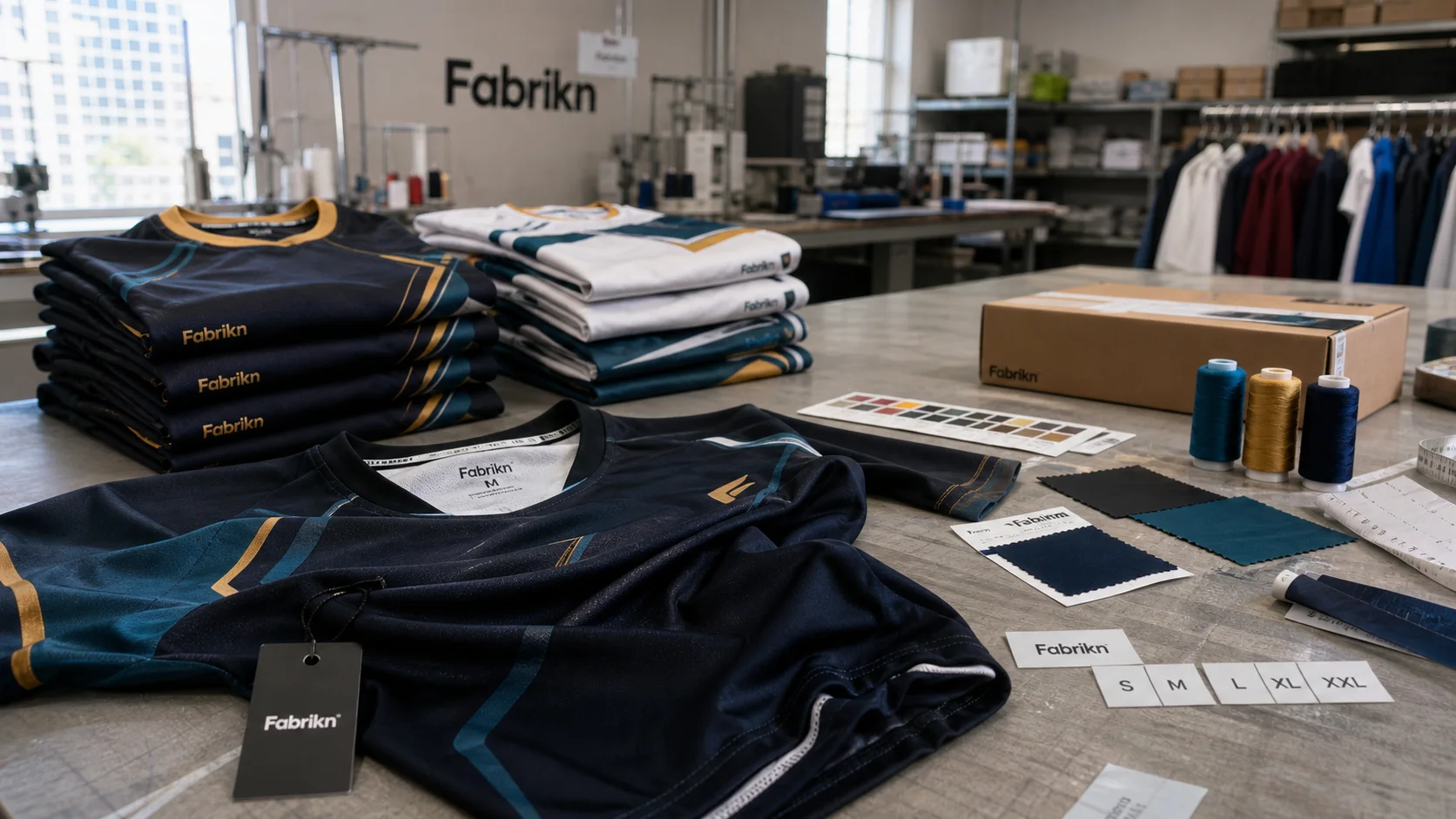
Sustainable Garment Mailers Buyer Checklist with checks for samples, fit, MOQ, QC evidence, pricing terms, and delivery risk.
Fast answer: Sustainable Garment Mailers Buyer Checklist: Material Claims, Seal Strength, Print, and Shipping should be judged by production evidence, not by a generic sourcing promise. The buyer needs sample proof, cost breakdowns, QC checkpoints, and delivery buffers in writing.
Ask for recent sample photos, measurement tolerances, fabric or print test assumptions, decoration test notes, packing examples, and a named inspection checkpoint. These details show whether the team can repeat an approved sample at bulk volume.
Separate garment cost, decoration, labels, packaging, sampling, testing, freight, and rush charges. When every cost line is visible, it becomes easier to reduce colorways, adjust size depth, or reserve more time for sampling.
The wrong mailer can eat your margin faster than a bad return season. Eco friendly poly bags for apparel shipping are no longer a decorative nod to sustainability; they are part of the operating model. In factory visits across Guangzhou, Dhaka, Ho Chi Minh City, and Istanbul, logistics teams kept landing on the same math: one damaged shipment can wipe out the margin on eight to 12 clean orders, while a six-gram weight cut per parcel can shave freight cost by 2% to 4% on high-volume lanes over a quarter.
Retailers are tightening the screws too. Many brands I audit now carry 2025 or 2030 packaging targets, often enforced with GOTS, OEKO-TEX Standard 100, and WRAP documentation, and consumer pushback on single-use plastic hasn’t gone anywhere. According to the World Trade Organization, cross-border goods flows keep expanding, which means packaging travels farther and gets handled more often. More touchpoints mean more chances for a weak seal, bad ink adhesion, or brittle film to become a complaint and a return.
Returns are the quiet villain. A blouse sent in a torn mailer costs more than the mailer itself once reshipment, labor, and reverse logistics enter the picture. I have seen brands paying $0.18 to $0.42 per standard poly bag, then losing $6 to $14 when a damaged parcel comes back. That gap puts packaging teams in finance meetings.
At one mid-market brand shipping 40,000 units a month, switching from a thin generic bag to a slightly heavier 65-micron recycled-content mailer produced on a Starlinger blown film line in Guangzhou cut damage-related credits by 17% in 90 days. The bag cost rose by $0.04, and the net savings still made the switch worth defending in a budget review.
Factories do not always stock what brands say they want. On paper, buyers ask for recycled content, tamper evidence, and clean white print. In production, many factories keep two or three fallback films on hand because supply stability matters more than a glossy pitch deck. I have seen bulk orders go wrong not because the spec was ambitious, but because the supplier could not hold gauge tolerance inside the promised ±10% on a Reifenhauser five-layer line located outside Ho Chi Minh City.
The part nobody mentions: some lower-cost mailers fail less often than premium-looking options because seal quality and gauge consistency matter more than a shiny surface. I watched a $0.11 mailer produced on a hot-wedge sealing press outperform a $0.19 alternative over 500 parcel drops, simply because the cheaper film had tighter sealing discipline and fewer weak edges. Fancy print does not stop a seam split.
For apparel teams building private label programs, packaging should be judged alongside garment construction, not after it. If you already source private label clothing services, ask whether the mailer spec is tied to packing room speed, return rates, and transit lane conditions. Those details separate a real supply partner from a sales sample.
“Eco friendly” gets abused fast. A bag can be recyclable in theory and still fail in curbside systems, or it can use recycled content and still be hard to recover because of mixed layers, heavy pigment, or adhesive closures. The claim matters only if it matches actual collection, sorting, and reprocessing routes. I have seen brands spend $0.06 extra per unit for a greener label that no municipal system can read.
Common materials include PCR plastic, which means post-consumer recycled content, PIR plastic, which uses post-industrial scrap, bio-based films made from renewable feedstocks like PLA and PBAT, and compostable blends that depend on industrial facilities certified to GRS (Global Recycled Standard). According to ISO standards, performance requirements should match the intended use, not sit there as decoration. A compostable bag that ends up in landfill is not a climate win; it is a cost with a moral adjective.
PCR content is often the most practical path for apparel shipping because it keeps the familiar poly structure while reducing virgin resin demand. I usually see 30% to 80% PCR claims, with the real sweet spot for shipping between 50% and 70% when the supplier has stable film extrusion on a Guangdong-based line. PIR can be cleaner in color and gauge, but it does less for waste diversion because the feedstock never left industrial circulation.
Recyclable in theory is a weak promise. Recyclable through curbside systems in practice is what buyers should ask for, and that answer changes by city. A clear LDPE mailer may be accepted in store-drop streams, while a dark gray film with zipper closure often gets sorted out, especially in systems without photo-optical sorting. Compostable films are even trickier: they can solve a brand story problem and create a recovery problem if the local organics infrastructure is weak in places like Istanbul or inland regions of Dhaka.
Gauge matters more than marketing copy. For apparel, I usually look at 50 to 80 microns for lightweight garments and 80 to 100 microns for bulkier fleece or heavy denim. A 65-micron recycled-content bag with a 12 mm seal cut by a cold-cut friction system can outperform a 90-micron film with sloppy sealing jaws. Additives matter too: anti-slip agents, antistatic treatments, and slip modifiers can improve automation, but too many additives complicate recycling.
Ink is another trap. Heavy coverage, metallic finishes, and dark pigments can interfere with sorting and reprocessing. Adhesive labels, zipper closures, and multi-material inserts are common greenwashing points because they make the bag look premium while reducing recovery odds. For brands doing sewn product development, the lesson is similar to cut and sew manufacturing: the spec sheet has to describe the actual process, not the mood board.
For moisture protection, a recycled-content LDPE mailer still beats paper in humid lanes, especially for three- to six-day transit windows. Paper wins on fiber recovery in some markets; poly wins on weight and puncture resistance. Pick by route, not slogan.
Unit price is the first trap. Landed cost is the real number. On small runs of 5,000 to 10,000 pieces, a standard virgin poly mailer may land at $0.08 to $0.14 per unit, a recycled-content mailer at $0.11 to $0.22, and a compostable mailer at $0.20 to $0.38 before freight. Print charges can add $80 to $250 per plate or setup, while custom tooling for seals, perforation, or odd sizes can push the first order up by another $150 to $600.
Storage changes the math too. A bulky paper alternative may take 30% to 45% more cube than a flat film mailer, which means fewer cartons per pallet and higher warehouse cost. MOQ 500 pieces sounds friendly until the supplier quotes a $250 sample approval fee and a three- to four-week production window. Cheap mailers can also carry hidden cost through defect rates, especially if gauge varies by batch.
I ask buyers to model four numbers at once: unit cost, freight, storage cube, and failure cost. If a bag costs $0.03 less but adds 1.5% more returns or damage claims, the “savings” evaporate fast. For high-volume apparel shipping, a 10,000-unit order can swing $300 to $900 just from gauge inconsistency and carton optimization.
Custom print can also mislead. A two-color logo on a recycled-content bag might look affordable at $0.04 extra, yet the real bill can jump when a factory needs a separate run for each size or region. A digitally printed pouch with variable data runs on a HP Indigo digital label press in Ho Chi Minh City can start at $2.50-4.00 per unit at 500 MOQ. If you are ready to request a quote, you can submit your specs through our packaging portal and get a breakdown that includes freight and certifications.
Capability is non-negotiable. Look for factories that operate dedicated lamination and metallization lines, maintain inline corona treatment, and can document their quality control cycles on SPC dashboards. A factory in Guangzhou serving fast-fashion logistics runs daily tensile and puncture tests on an Instron 5567, while another in Istanbul focuses on variable data heat sealing for luxury parcels.
Certifications matter because they represent governance systems around labor, environmental compliance, and materials handling. WRAP and BSCI audits show the workforce is cared for, OEKO-TEX Standard 100 validates that inks and film are free of banned azo dyes and phthalates, GOTS confirms fiber-to-packaging traceability for organic cotton bags, and GRS keeps recycled content claims honest.
Ask for process documentation: extrusion temperature curves, lamination dwell times, and seal jaw profiles. The machine list should include the film extruders (Reifenhauser or Windmoeller & Hoelscher), the chill roll configurations, and the robotic bagging lines with VisionPro inspection. Those details prove the factory is running a repeatable, scalable process—not just honoring a spec sheet.
Regional climate shapes both material decisions and supply routes. In humid Dhaka, anti-fog additives and moisture-resistant slip agents keep poly bags from sticking together in the packing room, while the cool, dry air of Istanbul’s European warehouses makes a lightweight film sufficient for winter shipments. When sending to the northeast US, add 3% extra film weight to resist brittle cracks in cold weather.
Logistics lanes vary too. A Guangzhou-produced mailer heading to New York may take 18-22 business days on a slow boat, so it needs puncture resistance, a white core for branding, and minimal handwork to avoid delays at the transship hub. By contrast, a Ho Chi Minh City-made bag sent to Australia can travel in 12-15 days if packed on a modular conveyor line that ties directly into the packing operation.
Packaging compliance also shifts by border. Some EU buyers require plastic bags to have the CE-marked recycling symbol and to supply detailed waste management plans, while Middle East buyers may emphasize flame retardancy and BSCI social compliance. The more markets the bag touches, the more certifications you need in your dossier.
Testing early saves thousands later. Run a 1000-unit pilot through your existing packing line to confirm bag width, gusset allowance, and seal integrity. Use drop-test protocols from ISTA 3A or 6A—some Guangzhou labs even simulate 24-hour humidity cycles before bag sealing. Record the number of open seals, print rub, and stacking damage.
On the sample side, require suppliers to provide a process audit: what resin batches were used, what masterbatch colors, whether the film was corona treated, and how many passes the bag had through the vacuum chamber. A consistent process means consistent results.
Capture the data. Track cost per damaged parcel, adhesive failure rates, and the number of seals that fail under a 5 kg pull test. If the first pilot is a success, expand to 5,000 units while reporting on the same KPIs. In my experience, two successful pilots spaced six weeks apart provide enough evidence to update spec sheets and move to larger production.
Outline your spec, including exact micron requirement, seal width, closure type, and desired certifications. Identify the lanes you serve, from Guangzhou to retailers in Los Angeles or Istanbul-based distributors, and request quotes that include landed cost, freight, and sample approval fees. Remember that lead time from Dhaka or Ho Chi Minh City to a North American port is often 18-22 business days, so plan accordingly.
Partner with suppliers who can support your innovation roadmap. That means having access to WRAP and BSCI audits, GRS recycling data, and OEKO-TEX Standard 100 verification, plus the ability to sample new materials like PLA-coated PLA or bio-based adhesives. The right partner builds this infrastructure and shares performance data transparently.
Lastly, keep testing. Evaluate a new film every 18 months, revalidate specs whenever your apparel assortment changes, and monitor returns to understand how the bag performs in the real world. When packaging becomes a performance KPI, you free up margin, protect the brand, and keep sustainability real.
Q: How do I know if a supplier can hit MOQ and maintain quality?
A: Visit the facility or request a third-party audit report that lists the machines in use—like blown film extruders, lamination towers, and laser perforators. Ask for SPC records showing run-to-run consistency, and verify that they can produce 500 pieces to test run the gauge before scaling.
Q: What certifications should I demand?
A: Require GOTS for organic fibers, OEKO-TEX Standard 100 for dye safety, GRS for recycled content, WRAP for worker welfare, and BSCI for social compliance. Additional certifications may apply depending on your markets.
Q: Why do some eco mailers cost $2.50-4.00 per unit at 500 MOQ?
A: Those costs typically cover digitally printed mailers with variable data, three-layer lamination, and special perforations—often produced on HP Indigo presses or three-drum thermal printers. The MOQ and setup process fee reflect the need for separate print runs per size or region.
Q: How long should I expect production and shipping to take?
A: Once approved, expect production to take 18-22 business days for exports from Dhaka or Guangzhou, depending on customs clearance. Add transit time for ocean freight or air freight lanes when calculating your total lead time.
Q: What are the best materials for humid climates?
A: Recycled LDPE with anti-fog additives and anti-slip coatings is ideal. Combining a low-ash resin with a matte finish prevents glare in high-light packing rooms and resists moisture during the 3–6-day transit window.