
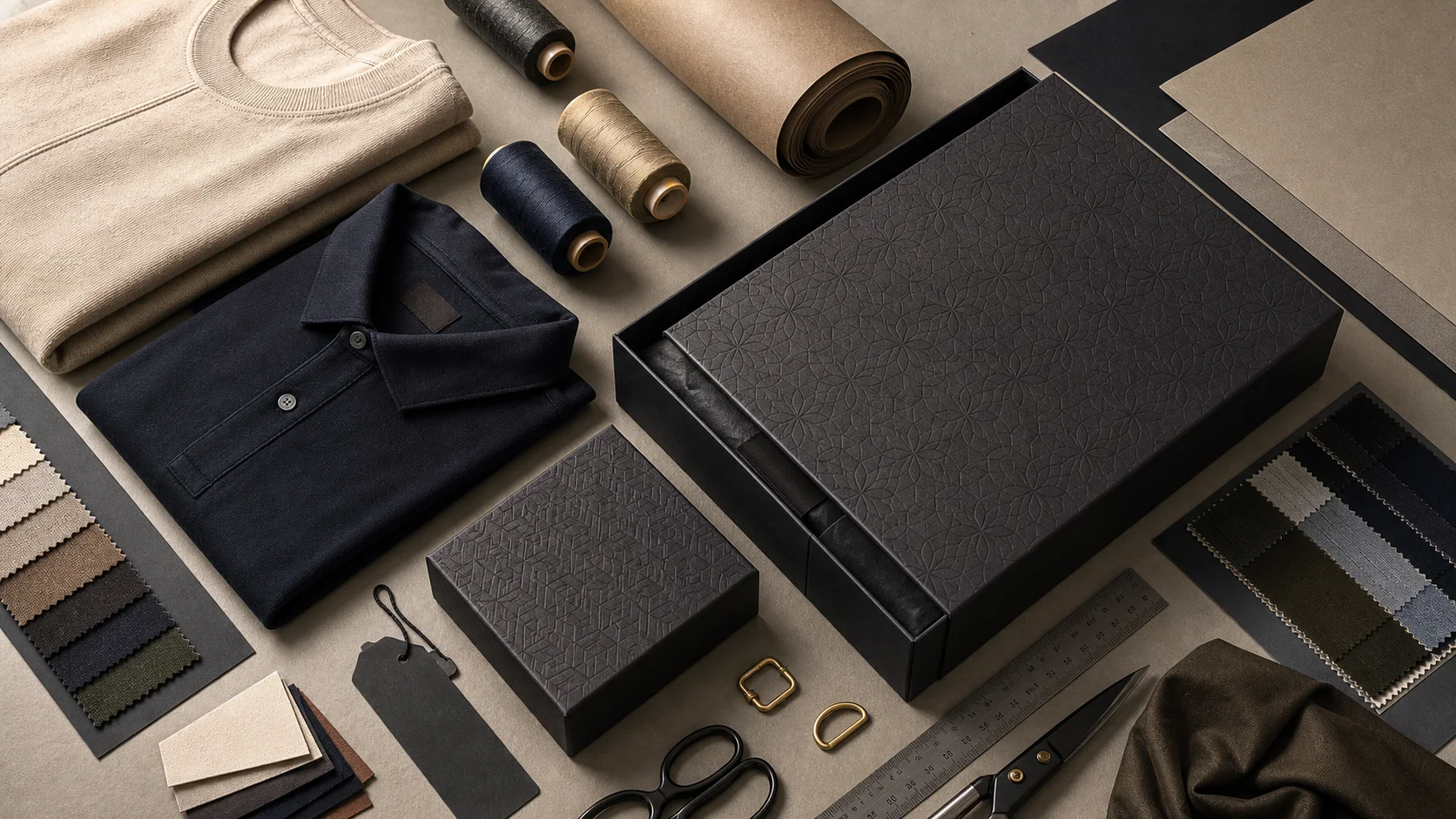
Embossed Labels Boost Clothing Brand Value compared by sample evidence, fabric or trim specs, MOQ, AQL terms, cost lines, delivery timing, and rework...
Fast answer: Embossed Labels Boost Clothing Brand Value: Material, Print, MOQ, and QC Terms should be judged by production evidence, not by a generic sourcing promise. The buyer needs sample proof, cost breakdowns, QC checkpoints, and delivery buffers in writing.
Ask for recent sample photos, measurement tolerances, fabric or print test assumptions, decoration test notes, packing examples, and a named inspection checkpoint. These details show whether the team can repeat an approved sample at bulk volume.
Separate garment cost, decoration, labels, packaging, sampling, testing, freight, and rush charges. Clear cost lines make it easier to reduce colorways, adjust size depth, or reserve more time for sampling.
In packaging and apparel branding, little details do a lot of heavy lifting. An embossed label looks simple at first glance, yet it can change how a customer reads your product in the first five seconds. I have seen brands move from “good enough” to “worth more” just by upgrading the label system on denim jackets, knitwear, caps, and fold-packed basics. It is a small touch. Not a small decision.
For clothing brands, embossed labels do more than identify a garment. They create texture, signal craftsmanship, improve shelf presence, and help your brand feel established. If you are asking what benefits embossed labels offer clothing brands, the short answer is this: they make products feel more premium without completely blowing up unit cost. That is why so many DTC labels, boutique fashion houses, and private label programs use them in their packaging mix.
At fabrikn.com, we see this trend often across custom packaging and branding projects. The brands that think carefully about labels usually end up with stronger customer perception and, in many cases, better repeat purchase behavior. You can learn more about our production capabilities on our services page or get in touch through contact us.
Embossed labels are branding labels made by raising part of the design above the surface of the material. The effect is tactile. You can feel the logo, the initials, or the pattern when you touch it. Depending on the material, embossing can be deep and bold or subtle and refined.
These labels are often made from:
In apparel, embossed labels may appear on neck tags, hem tags, patch labels, hang tags, box lids, garment bags, and presentation sleeves. I have personally seen them used very effectively on premium hoodies where the label is not just stitched on, but integrated into the packaging story. That kind of consistency matters.
The biggest benefit is obvious the moment a customer touches the garment or packaging. A flat printed label says information. An embossed label says intention. It suggests care, investment, and detail. That matters in fashion, where perception often drives price acceptance.
Customers do not analyze labels like industry people do. They feel them. A raised mark creates a small moment of interaction, and that moment is often interpreted as luxury or durability. Even a basic tee can feel more expensive if the label is handled well.
Embossed labels are memorable because they are tactile. People remember what they can feel. A logo that is pressed into leather or raised on a rigid swing tag sticks in the mind better than a simple ink print that disappears into the visual noise of the rack.
That is especially useful for newer brands trying to build recall. If your collection is not yet widely recognized, the label can act as a repeating signature. Consistency across sizes, silhouettes, and packaging creates a stronger identity. Over time, customers begin to spot your product faster.
In retail, the first impression starts before the fitting room. On a crowded shelf or table display, embossed details catch light and invite touch. Online, they also photograph well when styled correctly. Texture adds depth to product imagery, which can elevate the perceived finish of the item.
Unboxing is where embossed labels can really pay off. A customer opening a carefully packed garment box notices the label before they even inspect stitching or fabric. That moment can make the order feel like a gift rather than a simple transaction. In my experience, that shift in feeling is one of the easiest ways to justify premium pricing.
If you want to charge more, your product must look and feel like it deserves the price. Embossed labels help close that gap. They are not the only factor, of course. Fabric quality, cut, fit, and finishing still matter more. Yet labels are part of the evidence customers use to decide whether the price is fair.
For example, a wholesale garment with a standard printed woven label might support a certain retail range. Add a leather embossed patch, custom tag, and premium box insert, and the product can move into a higher category more comfortably. Brands often recover the label cost through improved perceived value, lower discount resistance, and stronger gift appeal.
Embossing has an old-world manufacturing feel. It looks considered. It looks like someone cared enough to make a mark permanent. That is a powerful message in an era when many products feel generic and disposable.
Customers looking for authenticity often respond well to tactile branding. They want something that feels made, not mass-produced in a forgettable way. A crisp embossed logo on a garment patch or packaging insert can reinforce that story quickly. This is one reason heritage-inspired brands and workwear labels use embossing so often.
Clothing is a crowded market. Similar silhouettes. Similar colors. Similar content claims. It gets noisy fast. Embossed labels help create a point of difference without changing the garment itself. That is useful when your design language is minimal and you still want to stand apart.
I have seen startups struggle because their shirts and hoodies were good, but looked too similar to five other brands on the same marketplace. Once they introduced a stronger label system, they finally had something distinct enough to remember. It did not solve everything, but it made the product look intentional.
One underrated advantage is flexibility. Embossed branding can be applied to the garment label, mailer insert, hang tag, rigid box, tissue sticker, or leather patch. That means a single design system can flow through the customer journey.
This consistency is valuable. Brands that look coherent tend to feel more established. Buyers notice. Retail partners notice too.
Perceived value is one of those phrases people use a lot, but in apparel it has a very practical meaning: what does the customer think the product is worth before they know the full technical details? Embossed labels influence that perception through texture, contrast, and subtle signaling.
A raised logo on a black leather patch suggests premium leather goods. A soft debossed mark on a matte paper tag suggests minimal sophistication. A metallic embossed plate hints at durability and precision. Each material creates a different story, and the story affects price expectations.
In my experience, a product does not need expensive branding to feel expensive. It needs coherent branding. Embossing is one of the fastest ways to create that coherence.
There is also a psychological factor. Touch creates engagement. When a customer touches a label, they slow down for a second. That tiny pause can make the product feel less generic and more curated. In fashion, that pause is worth money.
Of course, there is a limit. Overdone embossing can look forced. I have seen brands cram too many textures, foils, and raised elements onto one package. The result felt busy, not premium. The best labels are confident and restrained.
The material you choose affects both cost and brand image. If you want embossed labels that truly support brand value, the substrate needs to match your price point and audience.
Material Best for Typical look Approx. factory cost per label PU leather Streetwear, casualwear, mid-premium basics Soft, versatile, modern $0.18–$0.45 Genuine leather Premium denim, outerwear, heritage brands Rich, natural, upscale $0.40–$1.20 Metal plate Luxury accessories, jackets, bags Sharp, durable, high-end $0.25–$0.90 Rigid paperboard Hang tags, inserts, gift boxes Clean, crisp, packaging-friendly $0.05–$0.22 Rubber / silicone Sportswear, outdoor gear, kidswear Flexible, bold, practical $0.10–$0.35Finishing options can change the whole tone of the label. Blind embossing feels understated. Foil stamping adds shine. Debossing gives a softer impression. Painted edges, stitching, brushed metal, and matte coatings all shift the final effect a bit more.
Pick the finish that matches the product, not the trend. A heavy foil treatment on an ultra-minimal brand can feel off. A plain blind emboss on a luxury outerwear line may feel too quiet. The label should look like it belongs there.
Most embossed labels start with artwork preparation and die setup. Once the design is approved, the factory makes a mold or stamping plate, then tests material samples before moving to full production. Simple labels can move quickly. Complex ones take longer, especially if multiple finishes are involved.
A rough production timeline usually looks like this:
Pricing depends on size, material, finish, quantity, and packaging requirements. Small orders usually cost more per piece because setup work gets spread across fewer units. Larger orders lower the unit cost, but you still want to check the finish carefully. Cheap labels that crack, peel, or warp will cost more in the long run.
One common mistake is choosing a material that clashes with the product. A rugged leather patch on a very soft, feminine knit can feel out of place. Another is overdesigning the label until it competes with the garment instead of supporting it.
Brands also run into trouble when they ignore durability. If the label is on a jacket, cap, or bag, it needs to hold up to wear, moisture, and handling. A beautiful label that fails after two washes or one season is not helping anyone.
And there is the approval problem. Some teams rush the sample stage and skip close checks on spacing, depth, color, and edge finish. That is how you end up with a label that looks fine on a screen but awkward in real life. Screens forgive a lot. Products do not.
Choosing the right supplier matters as much as the label design. Look for a factory that can show real samples, explain material tradeoffs clearly, and give you practical advice instead of just saying yes to everything. The best partners push back when something will not work.
Ask to see recent production photos. Ask about minimum order quantity, sampling fees, lead times, and quality control steps. If your brand has multiple packaging pieces, check whether the factory can keep them visually consistent. That saves a lot of back-and-forth later.
Good communication is a signal in itself. If a supplier responds quickly, catches issues early, and understands fashion branding, that usually translates into fewer mistakes on the floor. You want someone who treats the label as part of the brand, not just a line item.
Get a free quote from Fabrikn — your trusted B2B clothing manufacturer with 10+ years of experience. MOQ as low as 200 pieces.
Get a Free Quote →Not always. They usually cost more than plain printed labels, but the jump is often manageable, especially at scale. The real question is whether the added perception is worth more than the added cost. For many clothing brands, it is.
Yes. In fact, smaller brands often benefit the most because the label helps them look more established. You do not need a massive product line to make a strong visual impression.
Yes, if the material choice supports that goal. Recycled paperboard and responsibly sourced leather alternatives can work well. Just make sure the finish does not undermine the sustainability message.
Embossing raises the design above the surface. Debossing presses it inward. Both can look premium. The right choice depends on the material, the artwork, and the look you want.
Embossed labels are not a magic trick. They will not fix weak design or poor product quality. But when the garment is already strong, the label can be the thing that makes people stop, look again, and remember your name.