
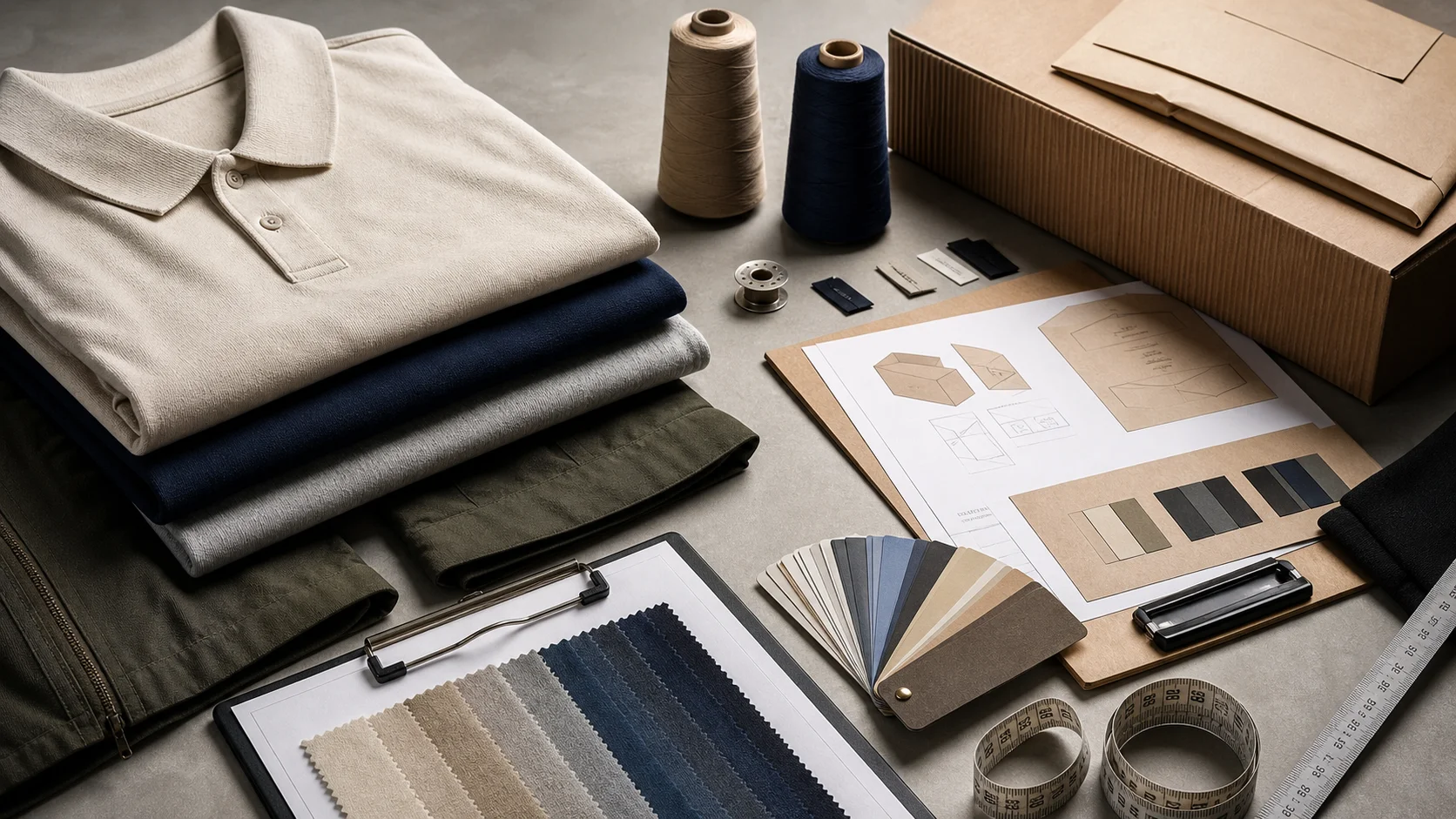
Find Apparel Manufacturers That Support Small Batch compared by sample evidence, fabric or trim specs, MOQ, AQL terms, cost lines, delivery timing, and...
Fast answer: Find Apparel Manufacturers That Support Small Batch: Sample Evidence, MOQ, Capacity, and Rework Terms should be judged by production evidence, not by a generic sourcing promise. The buyer needs sample proof, cost breakdowns, QC checkpoints, and delivery buffers in writing.
Ask for recent sample photos, measurement tolerances, fabric or print test assumptions, decoration test notes, packing examples, and a named inspection checkpoint. These details show whether the team can repeat an approved sample at bulk volume.
Separate garment cost, decoration, labels, packaging, sampling, testing, freight, and rush charges. Clear cost lines make it easier to reduce colorways, adjust size depth, or reserve more time for sampling.
Finding apparel manufacturers that support small batch wholesale orders can be a game-changer for emerging fashion brands, independent designers, and retail buyers who require flexibility, quality, and personalized service. Unlike traditional mass-production partners, small batch manufacturers specialize in lower minimum order quantities, faster turnarounds, and the ability to accommodate niche designs. However, identifying the right partner requires strategic research, due diligence, and an understanding of what small batch manufacturing truly entails.
This practical guide will walk you through every step of the process—from defining your goals to leveraging technology—and provide actionable insights that help you secure a manufacturing partner aligned with your business objectives. Whether you’re launching a new apparel line or scaling an existing one, the key lies in identifying manufacturers that balance craftsmanship, communication, and scalability.
Small batch wholesale orders allow you to experiment with new styles, fabrics, and seasonal trends without committing to large inventory volumes. This flexibility minimizes risk, reduces upfront costs, and supports rapid market testing. For many brands, the agility of small batch runs translates into a more responsive supply chain that can adjust quickly to consumer preferences.
Manufacturers who specialize in small batches often prioritize quality over quantity. They may have more hands-on involvement in each step of production, from pattern making to finishing. This attention to detail is crucial for brands that differentiate themselves through craftsmanship, unique features, or premium materials. Small batch partners are typically more invested in your product’s success, treating each order with elevated care.
By producing smaller quantities, brands avoid the financial strain of large upfront orders. Inventory storage, deadstock, and markdown pressure are dramatically reduced when you can produce what you need, when you need it. This financial flexibility allows you to reinvest capital into marketing, design development, or customer experience.
Before approaching manufacturers, clearly document your product specifications. Include fabric types, trims, colorways, sizing, construction complexity, and any special treatments (such as embroidery, screen printing, or dyeing). This level of detail not only helps you evaluate manufacturer capabilities but also enables more accurate quotes and prototypes.
Small batch can mean different things depending on your segment—50 units might be small for one brand and large for another. Estimate your required order quantities and consider your ideal production frequency. Are you planning monthly drops, seasonal collections, or limited capsule releases? Sharing this vision with prospective partners helps you find manufacturers aligned with your rhythm.
Establish a clear budget range. Factor in costs like materials, labor, shipping, customs, and any additional services such as pattern making or tech packs. Understanding your price points allows you to assess whether a manufacturer can deliver quality at the price you need while keeping margins healthy.
Small batch-friendly manufacturers have MOQs that align with your desired scale. Ask about their minimum for each silhouette, fabric, and finished style. Some partners may allow mixed style orders to meet MOQs, while others may require each garment to meet the threshold.
Understand the production and turnaround timelines. Small batch orders can still require weeks for sampling, production, quality checks, and shipping. Validate that the manufacturer can consistently deliver within acceptable timeframes to ensure your launches stay on schedule.
Evaluate their quality control procedures. Do they inspect fabrics upon arrival, conduct in-line checks, and perform final inspections before shipment? Ask for documentation or certifications that prove their commitment to consistent quality, especially when working with premium or technical materials.
Effective communication is a hallmark of successful manufacturing relationships. Look for partners who provide regular production updates, are responsive to questions, and articulate any challenges early. Transparency builds trust, especially when shorter runs leave little room for rework or delays.
Even if your current orders are small, choose a manufacturer that can scale with you. A partner who can grow alongside your business reduces the need for future supplier transitions and promotes long-term collaboration.
Online directories like Maker’s Row, Sewport, and ThomasNet list manufacturers with filters for MOQs, location, and services. These platforms often include reviews, certifications, and portfolio images, helping you identify partners that explicitly mention small batch capabilities.
Attending trade shows such as MAGIC, Texworld, or regional sourcing events provides direct access to manufacturers. Use these events to inspect sample quality firsthand, compare capabilities, and engage in conversations about their willingness to work on smaller volumes. Be prepared with clear questions and meaningful sample references.
Tap into your network for referrals. Collaborate with designers, sales reps, or even fabric suppliers who know reputable small batch makers. Personal introductions often lead to more candid insights about a manufacturer’s strengths and limitations.
Platforms like LinkedIn, Instagram, and specialized fashion forums can surface manufacturers actively marketing small batch services. Follow hashtags like #smallbatchmanufacturing or #ethicalmanufacturing, and join groups where members share sourcing experiences. Social media also shows the manufacturer’s latest work and capacity for brand collaborations.
Consider smaller studios or co-op factories in your region. Local partners reduce shipping time, allow for in-person fittings, and often provide faster turnaround for tweaks. Meeting in person fosters stronger relationships and helps you oversee quality more closely.
Detailed tech packs are crucial. Include flat sketches, measurement specs, fabric swatches, trim information, labels, and any finishings. Manufacturers rely on these documents to provide precise quotes and avoid costly misunderstandings. If you’re unsure how to create one, consult resources or designers who can help translate your vision into technical documentation.
In your initial outreach, include questions focused on your core needs:
The responses give insight into the manufacturer’s operations and readiness to adapt to smaller runs.
Even if your forecasts are conservative, share them. Honest volume expectations help the manufacturer plan resources, secure fabrics, and set realistic timelines. Transparency also reveals whether the manufacturer is open to nurturing small but growing clients.
Ask for sample garments or look at their portfolio to evaluate craftsmanship. Samples should reflect the quality you expect in fit, stitching, and finishing. Also, request references or case studies that showcase previous small batch work. Speaking with existing clients uncovers strengths and potential pain points.
Find out whether the manufacturer sources fabric for you or if you provide it. Some partners have relationships with textile suppliers that offer minimums matching your needs. Others may allow you to supply your own fabric to maintain full creative control. Understanding this detail influences pricing and production logistics.
Visiting the factory or studio gives you tactile insights into their workflow and professionalism. Observe how they handle cleanliness, quality control, and team communication. If an in-person visit isn’t feasible, request a virtual tour or live video walkthrough to assess their operations.
Note their responsiveness, detail orientation, and willingness to explain processes. Clarity in communication prevents missteps and ensures you stay updated throughout production.
Begin with a pilot order to test the partnership. Smaller initial runs allow you to verify quality, lead times, and fit. Use the pilot to gather customer feedback and iterate before committing to larger compositions.
Consider the manufacturer part of your team. Share constructive feedback after each order—highlight what worked well and where improvements are needed. Collaborative feedback nurtures trust and signals your investment in a long-term relationship.
As your partnership grows, discuss flexible terms for payment, MOQs, or scheduling. Some manufacturers provide loyalty incentives, priority slots, or reduced turnaround times for consistent clients. Building flexibility into your agreements benefits both sides.
Regular check-ins, holiday notes, and mutual updates on business goals strengthen the partnership. A positive relationship means quicker problem resolution and enhanced collaboration on future launches.
Platforms that track orders, manage samples, and monitor inventory streamline collaboration. Ask whether the manufacturer uses digital tools to share production milestones, approve fittings, or log inspections. These systems offer transparency and reduce the need for constant manual updates.
Some manufacturers offer digital sampling capabilities with 3D rendering and virtual fittings. These technologies shrink sampling time and costs, especially valuable for small batches where each sample carries weight. Embrace digital tools to enhance design iterations and obtain approvals faster.
Software such as Slack, Trello, or shared cloud drives can centralize communication, tech packs, and approvals. Agree on a communication platform early to avoid losing critical details across emails or messages.
Get a free quote from Fabrikn — your trusted B2B clothing manufacturer with 10+ years of experience. MOQ as low as 200 pieces.
Get a Free Quote →A strong brief makes the supplier's job narrower and the quote more reliable. For find apparel manufacturers that support small batch, include the target customer, sales channel, expected order quantity, size range, decoration needs, packaging requirements, and delivery market. Then call out the details most likely to affect the result, especially MOQ, line capacity, and pattern control.
The brief should also explain what cannot change. Some brands care most about hand feel, some about price, some about launch timing, and some about retail compliance. When those priorities are not written down, suppliers tend to optimize for whatever is easiest to quote. Clear priorities help the factory make better tradeoffs before the first sample is cut or printed.
Ask the supplier to respond with assumptions, not just a price. A useful reply states MOQ, sample route, production capacity, inspection plan, packing method, and freight handoff. If the answer is vague, the project may still work, but it needs a tighter pre-production stage before money and calendar pressure build up.
The best time to catch problems is before the pre-production sample is approved. Check measurements, color, placement, material behavior, shrinkage, construction, labels, and packaging in the same review instead of approving each item in isolation. Many bulk issues are not caused by one dramatic mistake; they come from several small unchecked assumptions.
For find apparel manufacturers that support small batch, pay special attention to QC checkpoint, export packing, and communication rhythm. These details often look minor in an email but become expensive once cutting, printing, sewing, packing, or shipping begins. A simple checklist with owner, due date, and approval status keeps the brand team and factory aligned.
Bulk production should not start until the supplier can explain how the approved sample becomes a repeatable production standard. That means reference sample storage, line instructions, inline checks, final inspection, and defect handling. A factory that can describe this process clearly is usually safer than one that only promises speed.
Price differences are useful only when the quotes cover the same work. Compare sample cost, material source, trims, decoration, packaging, testing, inspection, and freight assumptions. A low unit price can become expensive if it excludes items the brand needs before launch.
Timeline promises deserve the same scrutiny. Ask what happens if the first sample needs revision, whether materials are in stock, when the production slot is reserved, and how export packing is handled. The most reliable supplier is often the one that gives a realistic calendar instead of the fastest optimistic answer.
Small batch friendly manufacturers typically offer low minimum order quantities, personalized attention, quicker turnarounds, and flexibility to handle varied styles within the same order. They prioritize quality for each garment and collaborate closely with emerging brands.
Test demand through pre-orders or market research, then align that insight with your cash flow and storage capacity. Work with manufacturers who allow mixed styles, enabling you to meet their MOQ without overproducing a single item.
Yes. Many small batch manufacturers enjoy collaboration during the design refinement stage. Provide tech packs, samples, or mood boards to communicate your vision, and request their input on construction feasibility.
Location influences shipping time, communication, and oversight. Local partners allow for easier visits, while overseas partners may offer lower costs but require careful planning for lead times. Choose what suits your budget, timelines, and quality expectations.
Ask if they accept combined orders or partial MOQs for mixed styles. You can also negotiate a trial run with a smaller MOQ or collaborate on a shared order with other brands to meet thresholds. Transparency and creativity in negotiations often yield workable solutions.
Fabrikn specializes in tailored apparel manufacturing solutions for brands at every stage. Visit our services page to explore how we support design, production, and logistics. Ready to start a conversation? Reach out via our contact-us form, or learn more about who we are on our about-us page.