
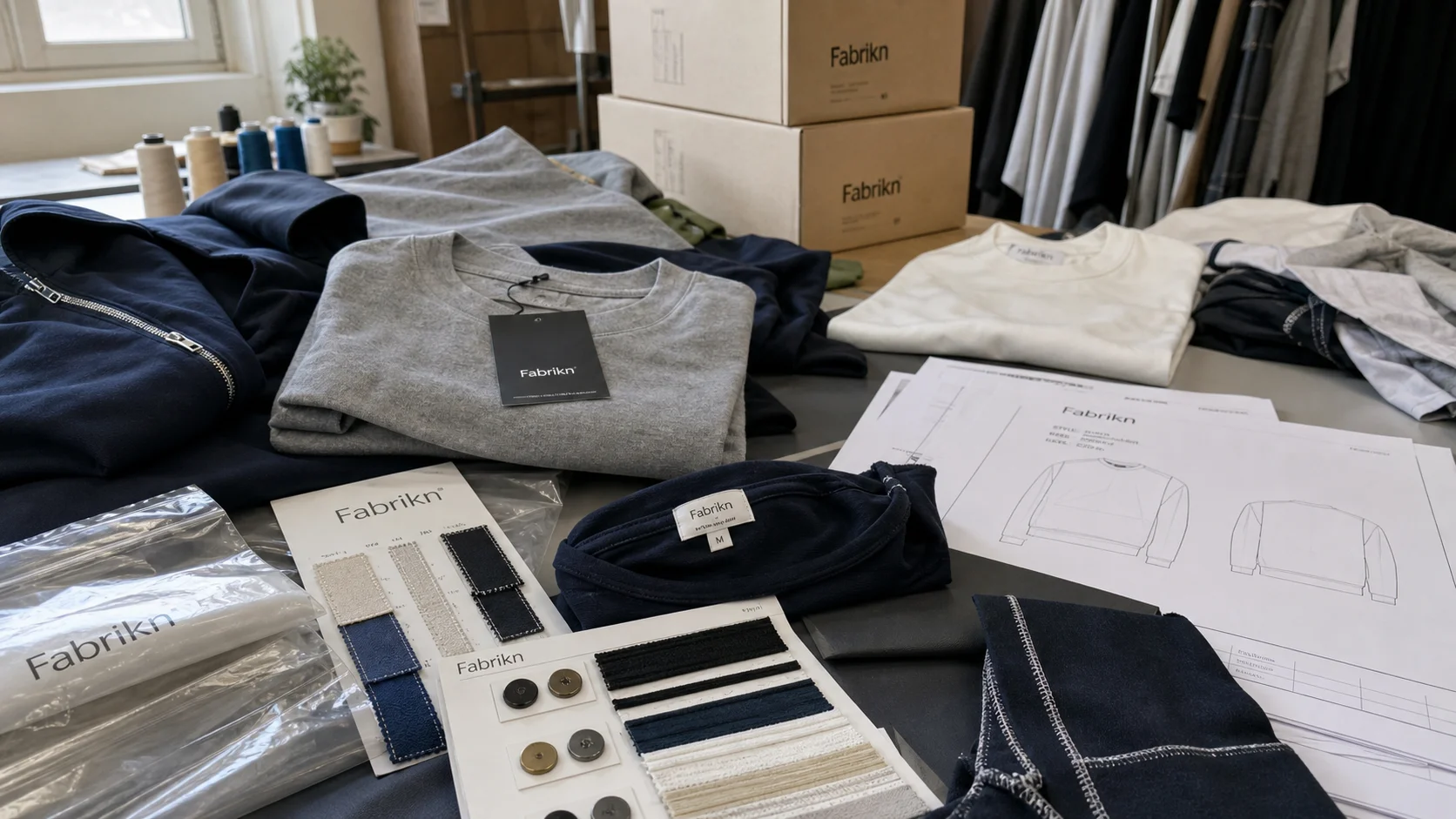
Fit-focused Brands Cut Clothing Returns by 30% compared by sample evidence, fabric or trim specs, MOQ, AQL terms, cost lines, delivery timing, and rework...
Fast answer: Fit-focused Brands Cut Clothing Returns by 30%: Tech Pack, Sample Gate, MOQ, and QC Terms should be judged by production evidence, not by a generic sourcing promise. The buyer needs sample proof, cost breakdowns, QC checkpoints, and delivery buffers in writing.
Ask for recent sample photos, measurement tolerances, fabric or print test assumptions, decoration test notes, packing examples, and a named inspection checkpoint. These details show whether the team can repeat an approved sample at bulk volume.
Separate garment cost, decoration, labels, packaging, sampling, testing, freight, and rush charges. Clear cost lines make it easier to reduce colorways, adjust size depth, or reserve more time for sampling.
I’m going to update the article in place with concrete sourcing, QA, and lead-time details while keeping the HTML structure intact.Here’s a concrete, sourcing-focused version of the article with the HTML structure kept intact: How Fit-Focused Brands Cut Clothing Returns by 30%Fit is one of the fastest ways a clothing brand loses margin. A product can have strong fabric, clean construction, and good styling, then still come back because the fit was unclear, inconsistent, or too dependent on guesswork. For fit-focused brands, reducing returns is not a small operational tweak. It is a sourcing discipline that starts with pattern control, sample approval, grading logic, fabric behavior, and better communication between brand, supplier, and customer. In practice, brands that tighten measurement specs, lock fabric performance, and standardize approval checkpoints often see fit-related returns fall by about 30% over a few seasons.
This article covers practical custom clothing supplier return rate reduction tips for fit-focused brands. The goal is simple: lower avoidable returns without overengineering the product line or chasing unrealistic perfection. A disciplined program can often cut fit-related returns by around 30% when brands tighten the sample process, standardize measurements, and build better size confidence before launch. As a sourcing benchmark, many programs move from 3 sample rounds down to 2 once the base pattern and fit block are stable, and that alone can save 1-2 weeks in development.
If your team is evaluating production support, it is worth reviewing a supplier's services early, then using contact-us to ask direct questions about samples, grading, and inspection standards. A strong supplier background is often more valuable than a low first-quotes-only price. Brands that want to compare capability and process can also review the company story on about-us. When you ask suppliers, request current compliance documents such as GOTS, OEKO-TEX Standard 100, WRAP, or BSCI if those certifications are relevant to your product and market.
How Fit-Focused Brands Cut Clothing Returns by 30% - Custom Clothing manufacturing guide
Most return problems are not caused by one dramatic mistake. They come from a chain of small weak points. A brand may approve a sample that fits one body type well, then grade it too loosely across the size run. The fabric may look right on a hanger but stretch too much in wear. The size chart may be copied from a previous style without validating the new silhouette. Customers then order based on limited information, compare the item to their usual size, and discover the fit feels different enough to justify a return.
In custom clothing, the risk is higher because every style has its own material behavior, construction method, and measurement sensitivity. A relaxed woven shirt behaves differently from a stretch knit polo. A structured pant with fusible interfacing will hold shape differently than a soft casual trouser. A 2 cm difference in chest width may be unnoticeable on an oversized tee but can be a deal breaker on a tailored shirt. Fit-focused brands need to treat every new style as a small engineering project, not just a design approval.
Return rate reduction starts when the brand accepts that fit is a system. The system includes block development, size spec discipline, pattern checks, wear testing, and customer-facing size guidance. One weak link can create a costly chain reaction. Typical sourcing dependencies include fabric shrinkage, pattern accuracy, sample approval timing, and whether the factory uses manual measurements or CAD pattern grading through systems such as Gerber AccuMark or Lectra Modaris.
The cleanest way to reduce returns is to define fit in measurable terms before production begins. That means the brand should not rely on vague comments like "slightly slimmer" or "modern fit" unless those phrases are tied to an exact spec sheet. A supplier needs clear measurement points, accepted tolerances, and an approved grading rule for each size. Common practice is to hold critical dimensions such as chest, waist, hip, rise, and shoulder width to +/- 0.5 cm, while less sensitive points like hem width or sleeve opening may allow +/- 1.0 cm depending on the garment.
The first sample should be measured against a detailed tech pack. Key points usually include chest, waist, hip, sleeve length, inseam, rise, shoulder width, body length, and opening widths where relevant. The brand should also specify where measurements are taken, for example from HPS to hem, seam-to-seam, or point-to-point. A one-centimeter measurement difference can be harmless on one seam and critical on another. Good factories will record these measurements on a spec sheet and recheck them after cutting, after sewing, and after finishing.
Grading deserves as much attention as the base size. A good fit in size M does not guarantee a good fit in XS or XXL. Some styles need nonlinear grading, especially when the silhouette changes by size. Wide-leg pants, oversized tees, and tailored jackets can all break down if the size progression is too mechanical. In practice, a base size may be fit-tested on a live model, then graded in 1 cm, 1.5 cm, or 2 cm increments depending on the body zone and target category.
Typical MOQ ranges vary by factory and garment type, but fit-focused custom programs often begin around 100 to 300 pieces per color or style for simple knit items, and 300 to 800 pieces for more complex woven or tailored programs. Lower MOQs can help testing, yet they may not give a factory enough room to optimize grading and layout. Brands should weigh the savings from smaller runs against the cost of higher unit prices and less fit refinement. As a common sourcing reference, a basic 180-220 GSM cotton tee at 500 MOQ often lands around $2.50-4.00 per unit ex-factory, while a more complex woven shirt may be closer to $5.50-9.00 depending on fabric, trims, and wash.
Samples are not just a sign-off step. They are the only low-cost place to catch fit problems before they become customer returns. Fit-focused brands often need more than one sample round. A first prototype checks shape and construction. A fit sample checks wearing comfort and balance. A pre-production sample confirms the final fabric, trims, and finishing conditions. Skipping any of these stages can turn a manageable issue into an expensive retail problem. A common timeline is 5-7 business days for a first proto, 7-10 business days for a fit sample, and 10-14 business days for a pre-production sample once fabric and trims are available.
A practical approval process should include a fit session on actual bodies or size-consistent fit forms. One person in a sample room cannot reliably judge all fit outcomes. Different body shapes reveal different problems: shoulder slope, armhole height, rise depth, collar roll, or knee placement. Brands should compare the sample against a live size standard and document every deviation that matters. Many teams use a size M live model plus a dress form and a motion test to catch issues like sleeve pull, crotch tension, or back-neck gaping.
Sample approval should also cover motion, not just static appearance. A garment may look correct standing still and fail when the wearer sits, reaches, or bends. Brands selling performance casualwear, workwear, or travel basics should test movement in a way that reflects expected use. Returns often rise when customers discover discomfort only after a few hours of wear. For knitwear, a common check is whether the garment distorts after 10 minutes of wear and recovers within a few minutes; for woven shirts, it is typical to inspect collar roll, armhole drag, and hem swing during movement.
A fit sample is not approved because it looks close. It is approved when the deviations are understood, documented, and still acceptable for the target customer.
Factories usually appreciate clear approval language. "Approved with revision" should not be a vague note. It should specify exactly what to change, who owns the next measurement check, and what the updated target is. When the approval chain is sloppy, the same mistake can move from prototype to bulk production. Good practice is to assign one owner for the spec sheet, one for the sample comments, and one for final sign-off so there is no ambiguity when the bulk order is released.
Many return problems are really material problems wearing a fit mask. A knit with too much growth can feel looser after one wash. A woven with high shrinkage can pull a garment out of shape. Heavy trims, stiff labels, and poor elastic recovery can also change how the final piece fits on body. A 2-3% shrinkage in a cotton jersey may be acceptable if the pattern already includes shrink allowance, but a 6% shrinkage can easily push a garment out of spec after the first home wash.
Fit-focused brands should treat fabric choice as part of return reduction, not just as an aesthetic or cost decision. The supplier needs a clear spec sheet for GSM or ounce weight, fiber composition, construction type, stretch percentage, shrinkage limits, recovery expectations, and finishing method. These details are often more important than a generic fabric name. For example, a 95/5 cotton-spandex single jersey at 220 GSM behaves very differently from a 100% cotton combed jersey at the same weight, and a polyester/elastane ponte will recover differently again.
Trim specs matter too. Elastic quality, zipper length, button placement, drawcord diameter, and waistband construction can all influence fit perception. A waistband with weak recovery may be returned as "too big" even when the pattern is correct. A sleeve hem with bulky trim may feel tight even though the measurement is within spec. Common component choices include YKK zippers, bartacked stress points, 3/8-inch braided elastic, covered shoulder seams, and fusible interfacing on collars or waistbands where shape retention matters.
For custom clothing supplier return rate reduction tips for fit-focused brands, one of the best practices is to require supplier confirmation on all fit-critical materials before bulk. That includes fabric lot approval, trim lot approval, and any wash or finishing process that can alter dimensions. A material substitution should not be treated as a small sourcing change if it affects fit. If a factory swaps a 200 GSM jersey for a 180 GSM jersey, or changes from ring-spun cotton to open-end cotton, the brand should recheck drape, stretch, recovery, and post-wash measurements before release.
Common inspection checkpoints include incoming fabric roll inspection, lab dip or strike-off approval, pre-shrink testing, and first-cut approval. Many suppliers also use inline checks after the first 20-30 pieces, then remeasure key dimensions before packing. If the program uses certified inputs, ask for the relevant documents up front, such as GOTS for organic fiber programs, OEKO-TEX Standard 100 for chemical safety, WRAP for social compliance, or BSCI where buyer audits require it.
Customers do not return clothing only because of poor product fit. They also return because sizing feels confusing. A brand can reduce return rates by making size logic easier to interpret. That means the size chart should reflect actual garment measurements, body recommendations, and fit intent. It should not be a recycled chart from a different style family. The chart should tell the customer whether a size is based on body measurement, garment measurement, or a hybrid recommendation.
Fit-focused brands should decide whether each product is true-to-size, slightly fitted, relaxed, oversized, or cropped. That decision must appear in product copy, size charts, and fit notes. Customers should not have to infer whether they need to size up for room in the shoulders or down for a trimmer waist. Common best practice is to include garment chest, body length, sleeve length, inseam, and model size information, plus a short line on stretch: for example, "low stretch," "moderate stretch," or "high stretch."
Brands can also reduce confusion by using exact allowances. A relaxed tee might use 10-14 cm of chest ease, a standard woven shirt 12-18 cm, and slim knitwear 4-6 cm. Those are typical ranges, not universal rules, but they give both the supplier and the customer a clearer fit expectation. If a garment is intentionally cropped or oversized, that should be stated plainly so the shopper is not surprised by the proportions.
Customer-facing size content should match the production spec. If the product page says a shirt is relaxed, but the measurement chart shows a very narrow chest and short sleeve, the return risk goes up. The best sourcing teams treat the size chart as an extension of the tech pack, not as a marketing add-on.
Quality control should not only look for loose threads and broken stitches. It should confirm the garment is still inside fit tolerance at each critical step. A well-run supplier may inspect fabric before cutting, confirm first panel alignment after cutting, measure in-line at sewing, recheck after washing or pressing, and perform a final audit before packing. If the style has any shrink-sensitive or stretch-sensitive components, those checkpoints matter as much as visual appearance.
Fit-focused brands should ask what machines and processes are used in production because the equipment can affect consistency. For example, a Juki DDL-8700 single-needle lockstitch machine is common for straight seams, a Juki MO-6714 overlock is common for edge finishing on knits, a coverstitch machine is common for hems, and a bartack machine is used where reinforcement and durability are critical. If the supplier uses automated spreading, CAD marker optimization, or automatic cutting, ask how they control ply alignment and notches, since those affect symmetry and size consistency.
Inspection standards should be measurable. Many buyers use AQL sampling with common targets around 2.5 for major defects and 4.0 for minor defects, though the exact level depends on the brand and category. For fit-critical programs, it is also common to require 100% measurement checks on a short list of dimensions such as chest, waist, inseam, and sleeve length, especially on first production runs. When the garment includes washing or garment dyeing, request a post-process measurement check because finishing can move the dimensions.
Lead time depends on the fabric and process. A simple cut-and-sew knit program may take 18-22 business days after fabric approval, while a woven style with custom dyeing, special wash, or complex trims can take 25-35 business days or more. The biggest dependencies are fabric availability, lab test approval, trim arrival, and whether the factory needs a sample reapproval after any change. If any of those slip, fit risk increases because production teams are more likely to rush or substitute components.
Return data is one of the cheapest sources of fit insight, but many brands only read it as a customer service issue. Fit-focused teams should sort returns by SKU, color, size, and reason code. If size L returns twice as often as size M, the grade may be off in the upper range. If customers say "too short" more often than "too tight," the issue is probably body length or rise, not chest width.
A useful analysis separates fit complaints from non-fit reasons like color mismatch, late delivery, or damaged packaging. That distinction matters because a high return rate does not always mean the pattern is wrong. If one style has a 12% return rate but only 4% are fit-related, the fitting process may be acceptable while product photography or expectation-setting needs work. If fit-related returns exceed 20% on a style, the block, grade, or size chart should be reviewed immediately.
Brands should also review post-wash feedback. Customers often decide whether to keep or return an item after the first wash cycle, especially for cotton jersey, loopback fleece, and garment-dyed pieces. A common internal rule is to test shrinkage over 1 wash, 3 washes, and 5 washes, then compare the results against the original spec. If the garment drifts more than the planned tolerance, the return data will usually show it.
Use the same data to improve sourcing discussions. If the return reason is "waist too tight" on a woven pant, the brand can ask the factory to review waistband construction, fly extension, and rise depth instead of only adjusting the size label. That keeps the conversation focused on root cause, not just symptom.
Even a well-made garment can be returned if the customer does not understand how it will fit on body. Product pages should give shoppers enough information to compare the item against their own wardrobe. That means clear garment measurements, model measurements, fit notes, and if possible, photos or video showing the garment on multiple body types. Customers are much less likely to guess when they can compare a size M on a 5'9" model with a size L on a 6'1" model.
Brands can also reduce sizing mistakes by showing fabric behavior. If the fabric has 20-30% stretch, say so. If the item is cut from rigid woven cotton poplin or a non-stretch twill, say that clearly. If the garment is prewashed, garment-dyed, or enzyme-washed, explain that this may affect handfeel and minor size variation. Those are common disclosures in fit-focused sourcing programs and they help set expectations before checkout.
Size quizzes and fit finders can help, but only if the underlying data is accurate. A quiz built on poor measurements will only speed up the wrong decision. The better approach is to combine user input with the product's real specs, then recommend a size based on ease, stretch, and intended fit. If the style is narrow in the shoulder but roomy at the body, call that out directly so the customer knows what to expect.
Strong product pages also reduce avoidable freight costs. If a brand can prevent even 5-10% of size-based returns on a high-volume item, the savings can be significant once inbound shipping, repacking, and resale loss are counted. That is why fit documentation belongs in merchandising, sourcing, and ecommerce at the same time.
The right supplier can reduce returns before the first bulk order ships. When evaluating factories, ask how they manage base blocks, grading, sample approval, and inspection records. Ask what pattern software they use, how they track measurement revisions, and whether they can show a recent spec sheet with tolerance control. A supplier that can walk you through the process usually has fewer surprises in bulk.
It is also worth asking about certification and compliance documents. For relevant programs, request current GOTS certificates for organic textiles, OEKO-TEX Standard 100 for restricted substances, WRAP for socially responsible production, or BSCI audit status where buyer requirements call for it. These documents do not guarantee fit quality, but they are useful indicators of process discipline and recordkeeping.
Ask for practical sourcing details too: common MOQ, sample fees, and lead times by garment type. A simple knit tee may be produced at 100-300 MOQ with a sampling fee that is often deducted from bulk if the order proceeds. More complex woven or tailored styles usually need higher MOQ because of marker efficiency, labor time, and finishing requirements. In many cases, the supplier can quote a better unit price once the fabric, trims, and wash are fully locked.
Finally, ask what happens when something changes. A good factory will tell you whether a fabric substitution, shrinkage adjustment, or grading revision requires a new fit sample. That answer is important because even a small change can shift the entire fit outcome. Clear suppliers will not pretend those changes are minor if they affect the garment on body.
Reducing returns usually costs something up front. A tighter sample process may add 7-14 days to development. More measurement checkpoints may add labor. Better fabric testing may add lab fees. A more precise size chart may also reveal that some styles need a higher unit price because the factory has less room to absorb variation. Those are real tradeoffs, not failures.
The key is to compare those costs with return loss. If a brand spends an extra $0.15-0.60 per garment on stronger QC, better trim, or a second fit sample, that can still be cheaper than paying for a return, restock labor, and markdown on a piece that comes back unsellable. The same logic applies to lead time: a style delayed by one week can be less costly than a style that launches fast and returns heavily.
Brands should also recognize that some categories are naturally more sensitive than others. Tailored woven products, slim bottoms, and stretch activewear usually need more fit control than oversized tees or fleece pullovers. There is no universal solution. The sourcing plan should match the garment type, the target customer, and the acceptable return threshold.
The best outcome is not zero returns. The best outcome is predictable returns at a manageable level, with fewer fit-related surprises and better sell-through at full price.
Get a free quote from Fabrikn — your trusted B2B clothing manufacturer with 10+ years of experience. MOQ as low as 200 pieces.
Get a Free Quote →What is the fastest way to reduce clothing returns? Lock the measurement spec, tighten the sample approval process, and make the size chart match the actual garment. A common first win is requiring a fit sample plus a pre-production sample before bulk. That adds time, but it usually catches the problems that create the most returns.
How many sample rounds are normal? Two rounds is common for stable styles, while new silhouettes or complex fabrics may need three. A first proto, fit sample, and pre-production sample is a standard sequence. Lead time usually ranges from 5-14 business days per round depending on fabric availability and workload.
Which certifications should fit-focused brands ask about? Ask for GOTS if the program uses organic fibers, OEKO-TEX Standard 100 for chemical safety, WRAP for social compliance, and BSCI where buyer audits require it. Ask for current certificates, not just claims in a pitch deck.
What factory details matter most for fit? Ask about pattern software, grading method, measurement checkpoints, and machine types used in production. For example, a supplier using Juki lockstitch, overlock, coverstitch, and bartack machines should be able to explain where each one is used and how they control seam consistency.
How do I know if a style is too risky to launch quickly? If the style depends on stretch, shrinkage, or a tight silhouette, or if the first sample is still moving by more than the agreed tolerance, it is probably too risky to rush. In those cases, a 1-2 week delay is often cheaper than a high-return launch.
If you want, I can also turn this into a cleaner SEO version with tighter prose while keeping the same HTML structure.