
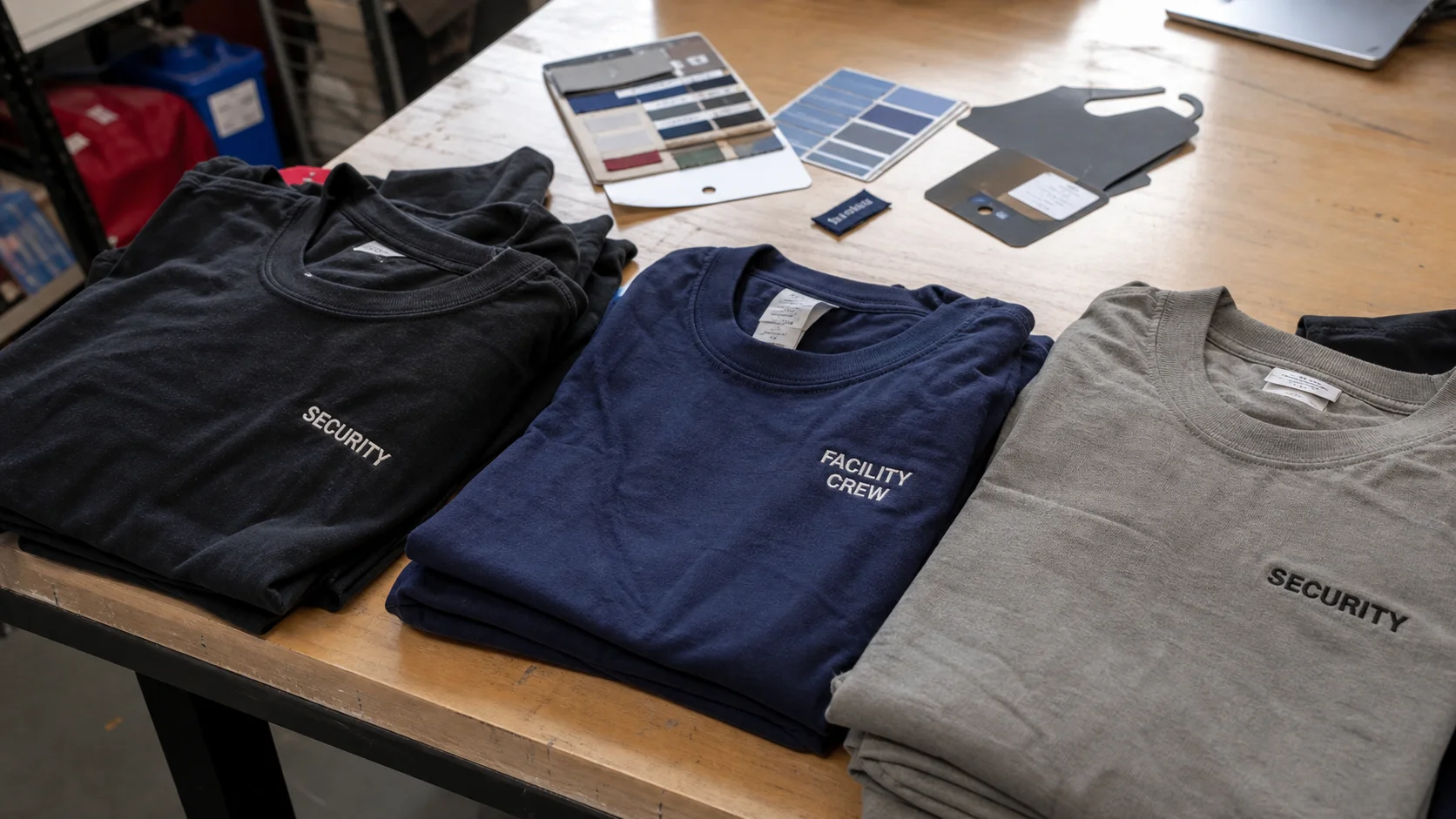
A focused outline explaining what FOB means in garment sourcing, how FOB pricing works on apparel orders, and what buyers should verify on production, packing, and shipping documents before placing a PO.
FOB Garment Costing for Apparel Buyers - Fabrikn production reference
FOB in garment sourcing usually means Free On Board. In practical apparel buying terms, it refers to the price of finished goods delivered by the manufacturer to the port of shipment, cleared for export, and loaded according to the agreed shipment arrangement. For apparel buyers, FOB is one of the most common price terms used when comparing clothing manufacturers, especially for bulk production.
When a supplier quotes an FOB garment price, the number typically covers the garment itself, factory overhead, labor, packaging, inland transport to the port, and export-related handling on the seller side. The buyer usually takes over the main freight cost from the port of origin onward, along with marine insurance if needed, destination charges, import duties, and local delivery in the destination country.
This sounds straightforward, but in apparel production, FOB costing is rarely just a freight term. It becomes a commercial framework that shapes how buyers compare suppliers, negotiate trim standards, plan lead times, and manage landed cost.
That is why buyers asking “what is FOB in garment sourcing?” should look beyond the shipping definition. The real issue is how FOB pricing affects margin control, order risk, and production visibility.
FOB matters because it creates a cleaner comparison point than many other quote structures. If two garment manufacturers are quoting the same style under the same specification pack, FOB pricing gives buyers a more workable basis to compare production cost before international freight and import costs distort the picture.
For many brands, retailers, and private label importers, FOB is the most useful middle ground:
From a purchasing standpoint, FOB is often the right choice when the buyer already has a freight forwarder or wants tighter control over shipping schedules. If the buyer has no logistics infrastructure at all, FOB can still work, but it requires more coordination than a fully managed shipping arrangement.
Buying judgment: FOB is usually the most balanced pricing term for established apparel importers. It is less suitable when the buyer is too early-stage to manage freight, customs coordination, or shipment documents properly.
If you are comparing sourcing models or need production support for apparel development and bulk manufacturing, it helps to review a supplier’s broader capabilities before focusing only on price. A useful starting point is the service overview at https://fabrikn.com/services/.
FOB garment costing usually includes several production and export-related elements. The exact scope can vary by supplier, so buyers should always confirm line by line rather than assume all factories define FOB the same way.
Fabric is often the largest cost component in apparel FOB pricing. Depending on the product category, fabric may account for roughly 35% to 70% of total FOB cost. Knit basics with stable cotton programs may have predictable fabric consumption, while fashion items with washed finishes, brushed surfaces, coatings, or yarn-dyed patterns carry more pricing variation.
Buyers should verify:
Trims include sewing thread, labels, hangtags, size stickers, care labels, polybags, zippers, buttons, snaps, drawcords, elastic, interlinings, and cartons. Small trim changes can affect FOB pricing more than many buyers expect, especially on lower-priced garments where trim cost makes up a larger share of the total.
A metal zipper from a nominated brand, custom-molded cord ends, FSC-certified hangtags, or recycled packaging can change cost and lead time at the same time. Buyers should not approve FOB pricing before the trim standard is frozen.
This covers the factory’s labor cost and production handling. In apparel sourcing, this is often described as CMP or CMT in some markets, but under FOB it is part of the complete price rather than a separate number. It includes cutting, sewing, finishing, pressing, in-line handling, packing, and internal quality control.
If the garment needs enzyme wash, garment dye, silicon wash, sanding, printing, embroidery, heat transfer, pleating, coating, or bonding, those processes are usually built into the FOB cost. This is a high-risk area for hidden assumptions. Wash recipes, shade bands, handfeel standards, and reject tolerance should be agreed during sample approval, not after bulk starts.
Standard export packing is generally included in FOB. That often means folding, polybagging, barcode labeling, carton packing, carton marking, and basic export carton quality. Special retail-ready packaging may cost extra, particularly if it requires custom inserts, belly bands, individual boxes, or strict drop-test standards.
The supplier’s FOB price usually includes movement from factory to port, export documentation, and local handling required to get the goods ready for shipment. Some suppliers include all standard origin charges cleanly. Others quote a nominal FOB price but add documentation or handling fees later. Buyers should request confirmation in writing.
FOB does not usually include everything needed to get the goods to your warehouse. That distinction matters because some buyers approve a “cheap” FOB quote and later discover that their landed cost is no longer competitive.
Items commonly excluded from FOB:
Development costs may also sit outside FOB, depending on the supplier’s policy. That can include pattern making, fit development, sales samples, pre-production samples, size set samples, and lab testing. Some manufacturers absorb a portion of development cost into future bulk pricing. Others charge it separately, especially for low-volume programs.
Purchasing judgment: A low FOB price is not automatically the best offer. If the factory is weak on documentation, carton compliance, or shipment coordination, downstream costs can erase the savings.
FOB garment costing is usually built from a bill-of-materials approach plus process cost and margin. Strong buyers request a cost sheet or at least a semi-open breakdown. Not every supplier will disclose full internal costing, but a serious manufacturer should still be able to explain the commercial logic behind the quote.
MOQ has a direct effect on FOB garment costing. Typical MOQ ranges vary widely by product and factory setup, but many apparel manufacturers work within broad ranges such as:
Lower quantities usually mean higher FOB pricing because fixed development and sourcing costs are spread over fewer units. A buyer can sometimes accept a slightly higher MOQ if it unlocks better fabric utilization, more stable shade consistency, and lower unit cost. That tradeoff is often worth it on replenishment styles.
FOB cost is only reliable when the sample approval path is controlled. A typical approval sequence may include:
Every sample stage can affect cost. Fabric substitution, construction revision, label changes, wash adjustment, or packing updates can all push the FOB price upward after the initial quote. Buyers should freeze specifications before bulk material booking whenever possible.
Lead time shapes FOB cost more than many sourcing teams admit. A standard bulk lead time for apparel may range from 45 to 120 days depending on fabric availability, trim complexity, order size, and season pressure. Custom fabric knitting or weaving, lab dips, strike-offs, print screens, wash approvals, and test reports can all add time.
If the buyer compresses the timeline, the supplier may need to:
That pressure often increases FOB cost or raises quality risk. Fast is rarely free in apparel manufacturing.
Below is a simplified example of how FOB costing might be structured for a basic cotton hoodie. This is not a universal benchmark and should not be treated as a market quote. Actual pricing changes by fabric source, country of origin, order scale, compliance standard, and season.
Cost Component Example Share of FOB Notes Fabric 50% Depends on fiber, weight, finish, and consumption Trims 8% Labels, drawcord, eyelets, zipper if applicable, packaging Cut and Sew Labor 16% Varies with style complexity and production efficiency Washing/Printing 6% Higher for graphics or specialty finish Factory Overhead 10% Utilities, supervision, internal handling Packing and Export Handling 5% Cartons, polybags, barcode labels, local transport Margin 5% Can vary materially by order quality and riskThe point of a breakdown like this is not to force a supplier into perfect transparency. The point is to understand where price sensitivity sits. If fabric is half the cost, then a small change in GSM, composition, or finish may matter more than trimming one cent from a hangtag.
Apparel buyers often compare FOB with EXW and CIF when deciding how much logistics responsibility to keep.
Term Supplier Responsibility Buyer Responsibility Best For EXW Factory makes goods available at site Handles pickup, export, freight, import, delivery Buyers with strong local logistics control FOB Handles production and export-side shipment preparation Handles main freight, insurance, import, delivery Most established apparel importers CIF Handles production plus cost, insurance, and freight to destination port Handles import clearance, duties, destination charges, delivery Buyers wanting less freight coordinationEXW can look attractive on paper, but it pushes more operational work onto the buyer. CIF can simplify freight booking, yet it often reduces buyer control over carrier selection and freight visibility. FOB remains the preferred choice for many apparel buyers because it keeps production responsibility with the supplier and shipping control with the buyer.
An FOB quote based on a reference image is not dependable. Buyers need a proper tech pack, fabric direction, construction details, trim list, labeling standards, and packing instructions. Otherwise, the quote is just a placeholder.
Consumption errors create major cost drift. A supplier may calculate based on one pattern layout, then bulk grading or size ratio changes increase actual usage. This is especially common in wide size ranges, oversized silhouettes, and brushed fleece programs.
FOB pricing does not remove quality risk. If the order has shade variation, poor measurement control, weak seam performance, print cracking, or carton assortment errors, the buyer still faces the cost of delay or claims. Inline inspections and final random inspections remain important.
Extremely low FOB targets often lead to hidden substitutions. The risk points usually show up in fabric weight, trim grade, stitch density, sewing consistency, packaging quality, or finishing labor. A squeezed supplier may still accept the order, but the execution risk rises.
Buying judgment: In apparel sourcing, the cheapest FOB price is often the most expensive option after claims, delays, rework, or chargebacks.
Buyers do have leverage over FOB garment costing, but the strongest savings usually come from specification discipline rather than aggressive last-minute negotiation.
Fragmented small orders push up cost. Combining colors, reducing style proliferation, or booking seasonal volume earlier can improve raw material efficiency and reduce FOB pressure.
Late changes are expensive. A buyer who confirms fabric, trims, measurement tolerances, and packaging early usually gets a more stable bulk price and fewer shipment surprises.
Pre-production meetings, approved counter samples, trim cards, and packing standards reduce execution errors. Those controls do not just protect quality; they also protect the FOB agreement from dispute later.
Strong suppliers can often suggest options such as:
This is a better route than demanding an arbitrary price cut with no design adjustment. If you need to discuss sourcing strategy or garment production options in more detail, the contact page is the right place to start: https://fabrikn.com/contact-us/.
Before confirming any apparel FOB quote, buyers should ask a few direct questions:
Those questions are not excessive. They are basic cost-control discipline. Buyers who skip them usually end up debating avoidable surcharges or quality disputes later in the process.
FOB in garment sourcing is more than a shipping term. It is the working price structure that connects product specification, factory capability, export handling, and purchasing control. For most apparel buyers with an established import process, FOB remains the most practical commercial term because it offers a clear division of responsibility.
Still, FOB only works well when the quote is built on real specifications and realistic production assumptions. Fabric quality, trim standards, MOQ, sample approval, inspection planning, and lead-time pressure all shape the true value of the quote. A buyer comparing FOB prices without checking those variables is not comparing like for like.
The better approach is simple: request precise specs, confirm what is included, test the supplier’s understanding of your quality standard, and review the total landed cost before issuing the order. If a manufacturer cannot explain the logic behind its FOB price, that is usually a warning sign.
For buyers evaluating a manufacturing partner, background matters as much as the quote itself. Reviewing the company profile can help clarify capability and positioning before moving into development or bulk discussions: https://fabrikn.com/about-us/.
Get a free quote from Fabrikn — your trusted B2B clothing manufacturer with 10+ years of experience. MOQ as low as 200 pieces.
Get a Free Quote →FOB means Free On Board. In apparel sourcing, it usually refers to the price of garments produced, packed, export-cleared, and prepared for shipment at the origin port, with the buyer taking responsibility for the main freight and import side costs.
No. FOB is only one part of landed cost. Landed cost also includes freight, insurance, import duties, taxes, customs clearance, destination charges, and inland delivery after arrival.
Yes, FOB garment pricing usually includes fabric, trims, labor, packing, and export-side handling. Buyers still need to confirm the exact specification included in the quote because trim quality and fabric assumptions can vary.
Under FOB, the buyer usually pays the main international freight from the port of origin onward. The seller typically covers production, export preparation, and shipment handling up to the agreed FOB point.
Many apparel buyers prefer FOB because it gives them control over freight booking while keeping the supplier responsible for production and export-side coordination. It is often the most practical balance between cost transparency and logistics control.
Yes. FOB prices can change if the approved sample differs from the original quotation basis. Fabric upgrades, trim changes, wash revisions, packaging updates, lower order quantities, or compressed timelines can all affect the final bulk price.
Typical MOQs can range from around 300 to 500 pieces for simpler items up to 1,000 pieces or more per style or color for more efficient bulk production. Actual minimums depend on fabric sourcing, trim customization, and factory setup.
For many established importers, yes. FOB is often more practical than EXW because the supplier handles export-side formalities and shipment preparation. EXW can work well for buyers with stronger local logistics infrastructure and origin control.