
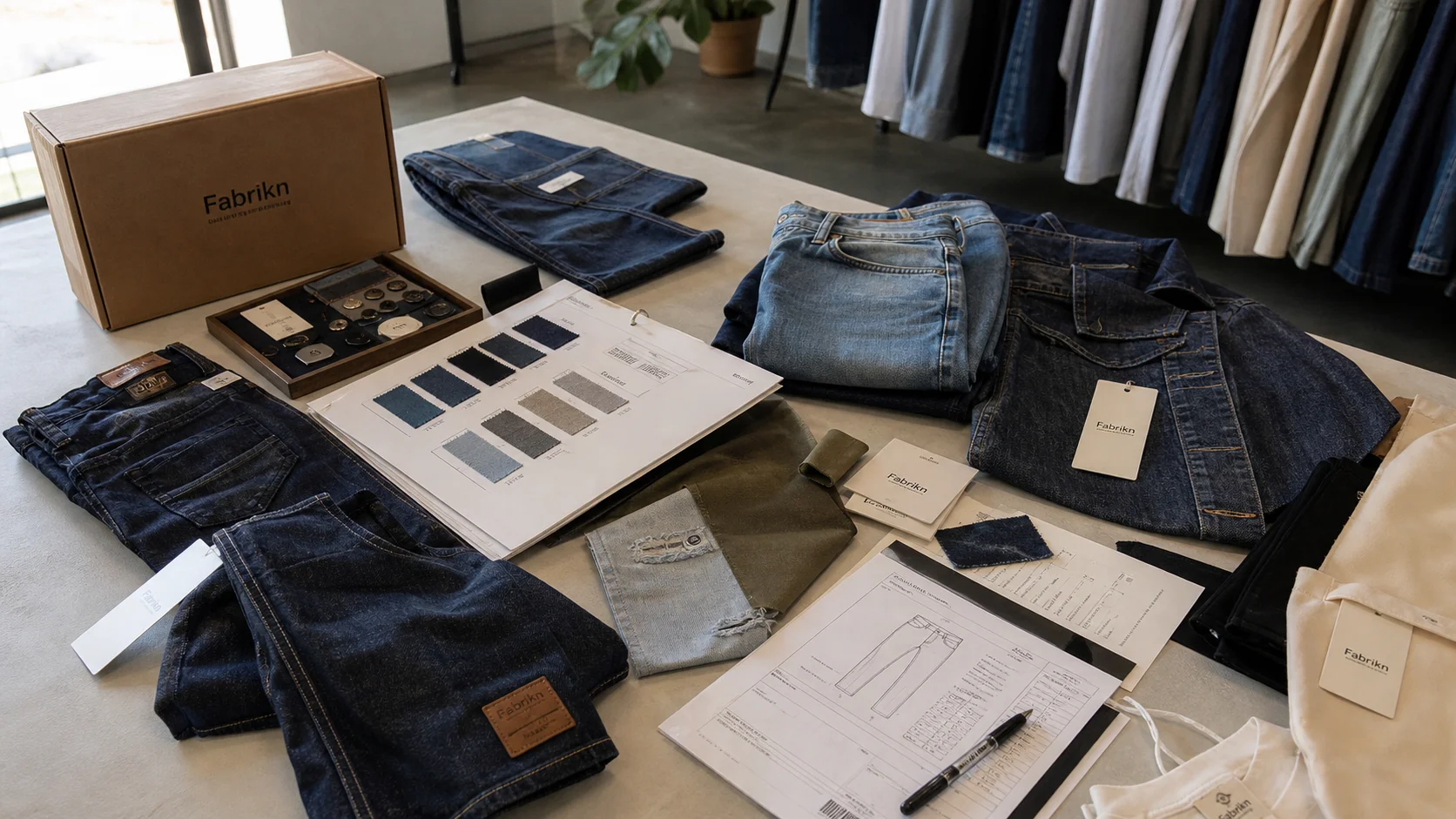
Garment Factory Sampling Process Explained compared by sample evidence, fabric or trim specs, MOQ, AQL terms, cost lines, delivery timing, and rework...
Fast answer: Garment Factory Sampling Process Explained: Tech Pack, Sample Gate, MOQ, and QC Terms should be judged by production evidence, not by a generic sourcing promise. The buyer needs sample proof, cost breakdowns, QC checkpoints, and delivery buffers in writing.
Ask for recent sample photos, measurement tolerances, fabric or print test assumptions, decoration test notes, packing examples, and a named inspection checkpoint. These details show whether the team can repeat an approved sample at bulk volume.
Separate garment cost, decoration, labels, packaging, sampling, testing, freight, and rush charges. Clear cost lines make it easier to reduce colorways, adjust size depth, or reserve more time for sampling.
If you are building a clothing brand, understanding the garment factory sampling process explained step by step can save you time, money, and a great deal of stress. Sampling is one of the most important stages in apparel manufacturing because it turns your idea, sketch, or tech pack into a physical product you can review, fit, and approve before bulk production begins.
In real sourcing terms, sample development often costs more per unit than bulk. For example, a simple jersey T-shirt sample might be quoted at $18-$35 per sample, while production could land around $2.50-4.00 per unit at 500 MOQ depending on fabric, print, and packaging. Lead times also vary: a straightforward sample may take 10-14 business days, while a more complex hoodie, blazer, or technical garment can take 18-22 business days or longer if fabric and trims must be sourced separately.
For emerging brands and established labels alike, the sampling stage is where design meets reality. It is where you confirm fit, construction, fabric behavior, trim quality, stitching standards, and overall product appearance. I have seen factories where a “small” sampling mistake turned into a full production headache (and yes, everyone suddenly had opinions). A good sample can validate your concept. A bad sample can help you catch issues before they become expensive mistakes in bulk manufacturing.
In practice, factories in Guangzhou, Dhaka, Ho Chi Minh City, and Istanbul often handle sampling differently based on their specialization. Guangzhou factories may move quickly on knitwear, denim, and fashion basics using automated cutting machines, CAD pattern systems, and multi-needle coverstitch lines. Dhaka suppliers are often strong in knit and woven basics, while Ho Chi Minh City and Istanbul frequently support more fashion-led small runs with higher attention to finishing and trim detail. If you want to learn more about our manufacturing capabilities, you can also explore our services, about us, or contact us for project support.
Garment sampling is the process of creating one or more prototype versions of a clothing product before bulk production. The sample is made according to the brand’s design requirements, technical specifications, fabric choice, and construction details. It allows both the brand and the factory to test the garment in real life.
Sampling is not just about making a “first version.” It is a structured development stage that helps confirm whether a product can be manufactured accurately, consistently, and at the desired quality level. Depending on the complexity of the style, several rounds of sampling may be needed before final approval. A basic sweatshirt may need only one or two rounds, while a tailored jacket, activewear set, or washed denim style may require three or more rounds because of shrinkage, seam behavior, and fit tolerance.
For clothing brands, sampling is the bridge between concept and production. Without it, you are essentially approving a product based on drawings or digital files alone. In apparel, that can be risky because fabrics drape differently, patterns shift during sewing, and fit issues are hard to predict without a physical prototype. In my experience, this is where brands either get disciplined or get burned later.
The garment factory sampling process explained in practical terms is about reducing risk. Every brand wants to avoid issues such as poor fit, off-spec measurements, construction defects, color mismatches, or materials that do not perform as expected. Sampling gives you the opportunity to identify these problems early.
For startups, sampling also plays a critical role in fundraising, merchandising, sales presentations, and internal decision-making. Buyers, agents, and investors often want to see a sample before committing to an order or partnership. Honestly, this approach works better because nobody wants to gamble on a sketch and a good story (not in this business, anyway).
It also helps brands align with compliance expectations early. For instance, a babywear or organic cotton program may need GOTS-certified fabric; a cotton tee, sweatshirt, or underwear style might require OEKO-TEX Standard 100 confirmation for chemical safety; and recycled polyester programs often need GRS documentation. Factory capability can also matter: WRAP and BSCI are common social compliance frameworks requested by buyers, especially when sourcing from larger facilities in Dhaka, Guangzhou, Ho Chi Minh City, or Istanbul.
Although each factory may have slightly different workflows, the garment factory sampling process generally follows a similar sequence. Understanding these stages helps clothing brands communicate more effectively and set realistic timelines.
The process starts when the factory receives the brand’s design information. This may include sketches, technical drawings, measurements, fabric details, logo placement, stitching notes, labeling instructions, and packaging requirements. A detailed tech pack is one of the most valuable tools a brand can provide.
The factory reviews the documents to check whether the design is clear, feasible, and complete. If information is missing, the manufacturer may request clarification before proceeding. Strong tech packs often include stitch types such as 301 lockstitch, 504 overlock, 406 coverstitch, bar-tacks at stress points, and measurement tolerance charts such as +/- 0.5 cm for key body points and +/- 1.0 cm for length on casualwear.
Once the concept is understood, the pattern team creates the base pattern for the garment. The pattern is the blueprint of the product and determines the shape, proportions, and fit. This step is essential because even a small pattern issue can affect the final garment significantly.
For complex styles, the factory may create an initial pattern based on standard fit blocks and then adjust it according to the brand’s size chart and target customer profile. Many factories now use CAD systems such as Gerber, Lectra, or Optitex for digital pattern making, grading, and marker planning, which helps improve accuracy and reduce fabric waste.
Before the sample can be made, the factory needs the correct fabric and trims. In some cases, the exact bulk materials are used. In other cases, the factory may source similar alternatives for development purposes if the final materials are not yet available.
Trims may include buttons, zippers, snaps, labels, threads, elastic, drawcords, hangtags, and packaging materials. Sampling gives the brand a chance to assess whether these components work well together. A fleece hoodie, for example, may need 320-380 GSM brushed French terry, rib cuffing with 5%-7% spandex, YKK zippers, and matching poly core spun thread. A woven shirt might use 100% cotton poplin, mother-of-pearl-style buttons, fusible interlining, and single-needle topstitching.
The sample room or sample production team assembles the garment based on the pattern and material specifications. This first sample is often called a proto sample, development sample, or first fit sample depending on the stage and purpose.
The goal at this stage is not perfect finishing. Instead, it is to create a functional garment that can be evaluated for fit, proportion, and style execution. And yes, sometimes it comes back looking a little rough around the edges—that is normal, even if brands occasionally act surprised.
In many factories, this step is carried out on industrial single-needle machines, overlock machines, coverstitch machines, feed-off-the-arm machines, and post-bed machines for details like sleeves, cuffs, hems, collars, and pockets. For denim, sample rooms may also use chainstitch machines, bartack machines, and washing test panels to check shrinkage and hand feel before committing to bulk.
Once the sample is completed, the brand reviews it carefully. This may involve checking it on a fit model, measuring key points, analyzing construction quality, and comparing it with the original design intent. Any issues are documented, marked on the sample, and sent back to the factory for revision.
This is where a lot of back-and-forth happens. A sleeve might be too tight, a neckline may sit oddly, or a pocket could be placed just a little too low. None of that is unusual. It just means the sample is doing its job.
After feedback is received, the factory revises the pattern, construction, or materials as needed and produces a new sample. This process may repeat until the garment meets the brand’s expectations. Some projects need only minor adjustments; others require several rounds of refinement.
Brands that move faster usually give feedback clearly and in one place. A messy mix of comments from three people in different emails tends to slow everything down. Happens all the time.
Different sampling stages serve different purposes. Not every sample is meant to look final, and not every round is about fit alone.
Each sample type serves a different purpose, and confusing them can waste time. A sales sample might look polished but still need fit corrections. A fit sample might look unfinished but still provide the right technical information. The label on the sample matters more than people think.
Before sending a style into sampling, brands should prepare as much information as possible. The cleaner the input, the smoother the process usually goes.
Useful preparation includes:
It also helps to define the end use of the garment. A fashion-forward shirt for retail has different requirements than a uniform, corporate program, or sportswear style. If you know your customer, price point, and quality target, the factory can usually sample with far fewer guesswork issues.
Inside a factory, sampling is usually handled by a smaller, more specialized team than bulk production. Pattern makers, sample sewers, fabric buyers, and QA staff often work closely together. In some factories, the sample room sits near the product development office so comments can be exchanged quickly.
The workflow is usually practical rather than glamorous. Someone checks the spec sheet. Someone else cuts the fabric. A machinist assembles the garment. Then the team tests it, measures it, argues about a seam allowance, and makes changes. That is the real process.
Factories with strong sampling systems often keep reference libraries of previous patterns, construction methods, wash results, and approved trims. This makes repeat sampling faster and more consistent, especially for brands that place seasonal orders or carry core styles year after year.
Sampling goes wrong for predictable reasons. Most of them are avoidable.
One of the biggest mistakes is assuming the first sample will be close enough to bulk quality. Sometimes it is. Often it is not. If the factory knows the sample is only for early fit development, they may not spend time on final finishing. That is normal, not a sign that anything is wrong.
Before approving a sample, review it from several angles. Check measurements, fit, stitching, labeling, color, trim placement, print quality, and overall workmanship. If the garment requires wash testing, stretch recovery, or wear trials, those should be completed before final sign-off.
When the sample is approved, make sure the factory understands which version is final. Keep a dated reference sample, final spec sheet, and written approval record. That way there is less confusion when bulk production starts.
And if something still looks off, do not force the approval just to keep the schedule moving. That shortcut usually costs more later.
Good sampling is not about luck. It usually comes down to clear communication and disciplined follow-up.
Brands that treat sampling as a serious development phase usually get better results in bulk production. Brands that rush it tend to pay for that later. Simple as that.
How long does garment sampling usually take? A basic sample may take 10-14 business days, while complex garments can take 18-22 business days or more depending on fabric sourcing, trims, and revision rounds.
How many sample rounds are normal? It depends on the style. Simple items may need one or two rounds. More technical or tailored products may need three or more.
Why is sampling more expensive than bulk production? Because the factory is setting up one-off work, sourcing materials in small quantities, and spending extra time on development and revisions.
Should brands always approve the first sample? No. The first sample is often for development and fit review, not final approval.
What documents should I send before sampling? A tech pack, sketches, size chart, fabric details, artwork, trim instructions, and any compliance requirements.
Can a factory sample without final fabric? Yes, in many cases. They may use a similar substitute for development, but the final sample should always be checked in the real production materials.
Sampling is where a clothing line starts to become real. It can be slow, a little messy, and occasionally frustrating, but that is usually better than discovering problems after thousands of pieces are already cut and sewn.