
Design High-end Streetwear Collab Garments compared by sample evidence, fabric or trim specs, MOQ, AQL terms, cost lines, delivery timing, and rework...
Fast answer: Design High-end Streetwear Collab Garments: Tech Pack, Sample Gate, MOQ, and QC Terms should be judged by production evidence, not by a generic sourcing promise. The buyer needs sample proof, cost breakdowns, QC checkpoints, and delivery buffers in writing.
Ask for recent sample photos, measurement tolerances, fabric or print test assumptions, decoration test notes, packing examples, and a named inspection checkpoint. These details show whether the team can repeat an approved sample at bulk volume.
Separate garment cost, decoration, labels, packaging, sampling, testing, freight, and rush charges. Clear cost lines make it easier to reduce colorways, adjust size depth, or reserve more time for sampling.
How to Design High-End Streetwear Collab Garments - Custom Clothing manufacturing guide
Designing high-end custom streetwear collaboration garments is not the same as making a standard logo tee and calling it a day. A real collab has tension in the right places. It should feel like two creative worlds meeting on purpose, with enough design discipline to make the product worth the price tag.
I have seen brands spend six months obsessing over a campaign lookbook and then approve a garment with weak fabric, sloppy seam work, and print placement that feels rushed. That is where the project loses its authority. High-end streetwear collabs live or die on details: fabric weight, pattern shape, wash treatment, label execution, sampling rounds, and whether the final piece feels collectible the moment someone picks it up.
If you are building one of these projects for the first time, think like a product developer, not just a designer. The best collab garments are commercially smart, visually sharp, and technically believable. They also need a factory partner who understands fashion-level construction. If you want that kind of support, the team at Fabrikn services is a useful place to start, and you can also reach out through contact us or read more about the company on about us.
High-end streetwear is not just expensive. It feels considered. The garment should have a point of view that is visible in the first three seconds, but it must hold up under closer inspection. That means the hand-feel is good, the proportions are deliberate, and the finishing details are cleaner than what most people expect from streetwear.
Streetwear collabs usually sit in a tricky middle ground. They need the cultural energy of streetwear, but they also need the control and discipline of premium apparel. That is why so many collaborations miss the mark. They copy the mood, not the standard.
The strongest pieces usually share a few things:
A good collab garment should also justify its existence. If the design could belong to either brand without change, the project is too generic. The whole point is that the collaboration creates a product neither side could have made alone.
Every successful collab starts with a clear design brief. Not a vague mood board. A real brief. Who is the customer? What culture are you speaking to? Is the drop rooted in music, skate, art, sport, luxury, or community identity? Those questions matter because they determine silhouette, graphic language, and price architecture.
I like to define the project in three layers:
Simple rule: lock this early. If you wait until sampling to decide what the project is, you will burn time and money chasing versions of the same idea.
The best collabs usually have one dominant design language. Maybe that is utility-driven construction with technical fabrics. Maybe it is washed cotton with distressed finishing and subtle embroidery. Maybe it is a premium varsity direction with chenille patches and heavyweight fleece. Pick one lane and stay in it.
A lot of collabs try to say too much. Big back graphic, oversized chest print, sleeve embroidery, contrast piping, custom hardware, woven patch, special wash, numbered label. That is noise. A luxury streetwear garment should feel edited. Restraint often reads more expensive than decoration.
Fabric is where high-end streetwear either feels real or fake. The wrong fabric makes even a beautiful design feel cheap. The right fabric gives the garment weight, structure, drape, and authority.
For premium tees, brands often start around 220 gsm to 280 gsm cotton. For heavyweight hoodies, 400 gsm to 500 gsm brushed fleece is common when the goal is a dense, luxury feel. For jackets and overshirts, I have seen strong results with 240 gsm to 320 gsm twill, nylon taslan, cotton canvas, and bonded blends, depending on the design direction.
Fit matters just as much. Streetwear buyers notice proportion immediately. Shoulder width, body length, sleeve opening, hem sweep, and crop level all change the personality of the piece. A boxy tee is not just a boxy tee if the neckline sits too high or the sleeves hit the elbow in the wrong way.
When developing a collab garment, I usually build a fit reference library with at least three points of comparison:
That gives the factory a practical target. Without it, they will guess. And guessing is expensive.
If you are working with a capable manufacturer, ask for fabric swatches before sampling. Ask for shrinkage data, colorfastness notes, and test reports on special washes if the garment will be garment-dyed or enzyme-washed. I have seen great concepts fall apart because the fabric changed shape after the first wash cycle.
High-end streetwear collab garments are built in the details people do not notice at first glance, but they feel them right away when they touch the product. Stitch density, seam alignment, rib recovery, collar shape, and label placement all matter.
For tees and fleece, use neat topstitching and consistent seam allowances. For jackets and overshirts, consider felled seams, bound edges, bartacks at stress points, and reinforced pocket openings. For pants, waistband stability, pocket bag strength, and crotch seam reinforcement are essential. These are not glamorous choices. They are the reason the garment survives daily wear.
Decoration should support the build, not fight it. If the piece is heavy and structured, a puff print or thick silicone transfer can work well. If the design is softer and more refined, tonal embroidery or a subtle woven label may be the better move. Mixed techniques can look excellent when they are disciplined.
Good factories will often suggest the most efficient construction route based on the design. That is valuable. A factory with real experience will tell you when a fancy seam detail is going to slow production, increase defect risk, and add cost without making the garment better. I trust that kind of honesty more than yes-man sourcing behavior.
One practical note: if the garment is meant to feel luxury-adjacent, the inside has to be as controlled as the outside. Clean seam work and neat internal finishing communicate value faster than any campaign photo ever will.
A collaboration garment needs a brand system, not random decoration. The strongest pieces use a hierarchy of branding so the eye knows where to land first. That could mean a main chest graphic, a subtle co-branded neck label, and a secondary detail like an embroidered sleeve mark or interior taping.
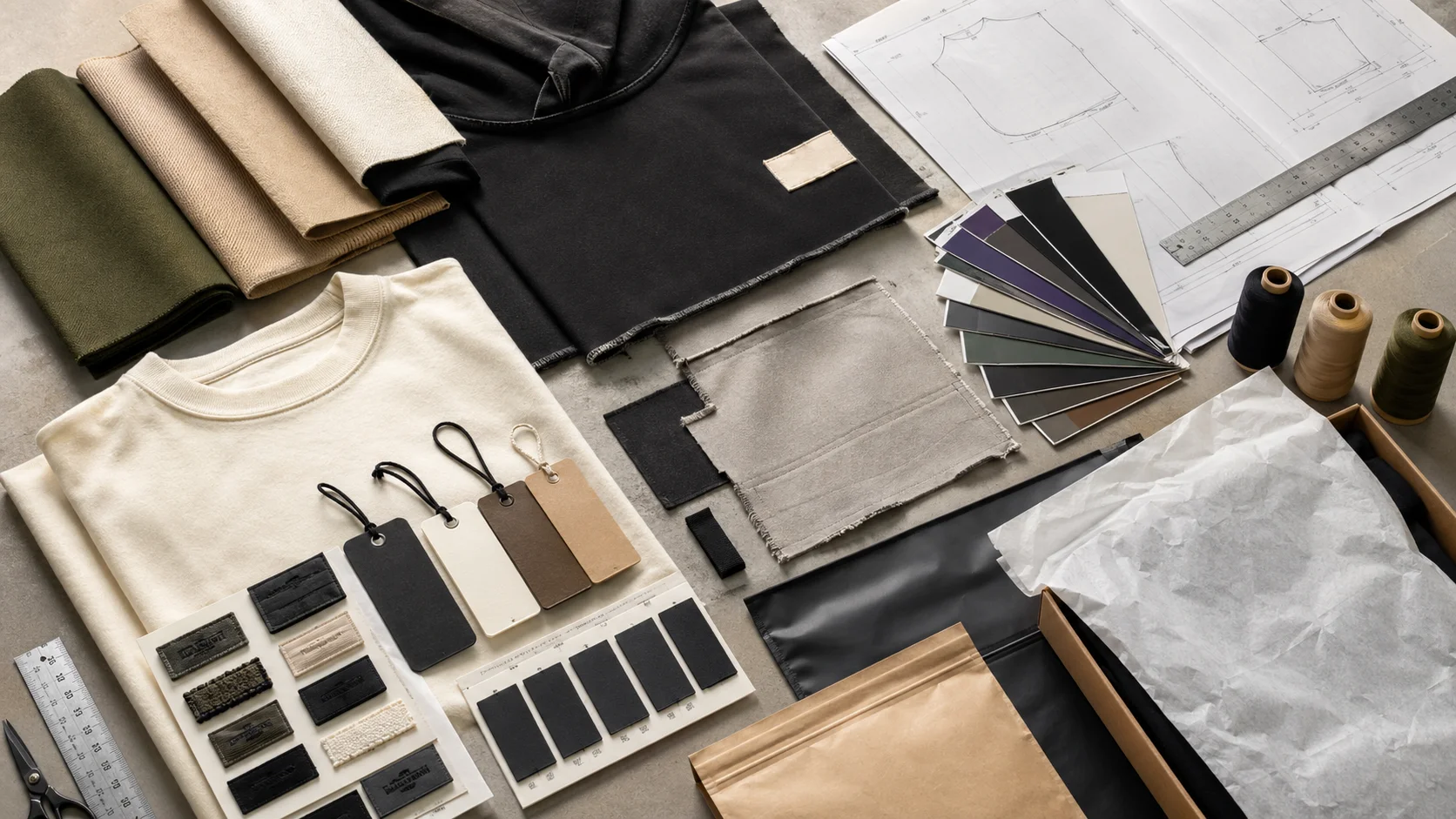
Think about trims as storytelling tools. Custom woven labels, branded hangtags, printed polybags, tissue wrap, and even carton art all contribute to the experience. The packaging should not outshine the garment, but it should prepare the customer for something more special than a standard retail item.
Collaboration storytelling also benefits from specificity. If the drop references a city, a subculture, a music era, or a shared archive, make that visible in the garment language. A small detail can carry meaning better than a large graphic. I have seen a tiny internal label referencing a venue or year become a collector favorite because it feels private, almost like a note left behind in the garment. That kind of detail sticks.
The factory process should not feel improvised. It needs clear stages, and each one should settle something specific. First comes concept approval. Then tech packs, fabric sourcing, pattern development, proto samples, fit revisions, SMS rounds, and pre-production approval. Skip a step and the garment usually reminds you later.
Tech packs matter more than people want to admit. Measurements, construction notes, artwork placement, trim callouts, color references, and wash instructions all need to be there. If the pack is vague, the sample will be vague too.
Ask for a sample review that covers both aesthetics and execution. Does the garment look right on body? Does it feel right in hand? Are the seams clean? Does the print sit where it should? Is the collar collapsing? You want the factory thinking like a maker, but you also want them thinking like a customer.
And do not rush approval just because the calendar is tight. I have watched teams approve a near-miss sample because they were tired of waiting. That is how a bad garment becomes a very expensive mistake.
Timelines depend on complexity, but a serious collab rarely moves fast. A simple tee or fleece capsule may move through development in a few weeks if materials are ready. A more involved jacket or pant program can take months, especially if custom fabric or special washes are involved.
For quantities, most collaborations work best when the numbers support both scarcity and efficiency. Too few units and the factory cost climbs. Too many and the product starts feeling generic before it even lands. The sweet spot depends on the market, the brands involved, and whether the drop is meant to test demand or make a loud statement.
Cost structure is where reality shows up. Custom fabrics, specialty trims, added embroidery, complex washes, and extra sampling all push the price upward. That is fine if the product earns it. It is not fine if the project is just adding cost for the sake of looking serious.
If you need to protect margin, spend where the customer can feel it. Better fabric, better fit, better finishing. Those are worth it. Fancy packaging and overdesigned extras can wait.
The most common mistake is trying to make the collab look impressive instead of making it feel right. Those are not the same thing. Visual overload can hide weak decisions for a minute, but it does not fix them.
Other mistakes show up fast:
There is also the temptation to make every collab feel like a deluxe archive piece. Sometimes the better move is a shirt that is cleaner, simpler, and easier to wear. Not every project needs to shout.
Get a free quote from Fabrikn — your trusted B2B clothing manufacturer with 10+ years of experience. MOQ as low as 200 pieces.
Get a Free Quote →What makes a streetwear collab garment feel premium? It usually comes down to fabric, fit, construction, and restraint. If those four are right, the garment feels expensive even before someone sees the label.
Should collab garments always be limited edition? Not always. Limited runs can create demand, but the product still has to justify itself. Scarcity helps, but it cannot carry the whole concept.
What is the biggest mistake brands make? They design for the campaign instead of the garment. The clothes should not be an afterthought to the marketing.
How important is factory selection? Very. The best ideas can die in the wrong factory, and a solid manufacturer can rescue a concept that is still being shaped. That partnership matters more than most teams expect.
At the end of the day, the best collab garments are the ones people keep reaching for because they work, not because they were told to care. That is the real win.