
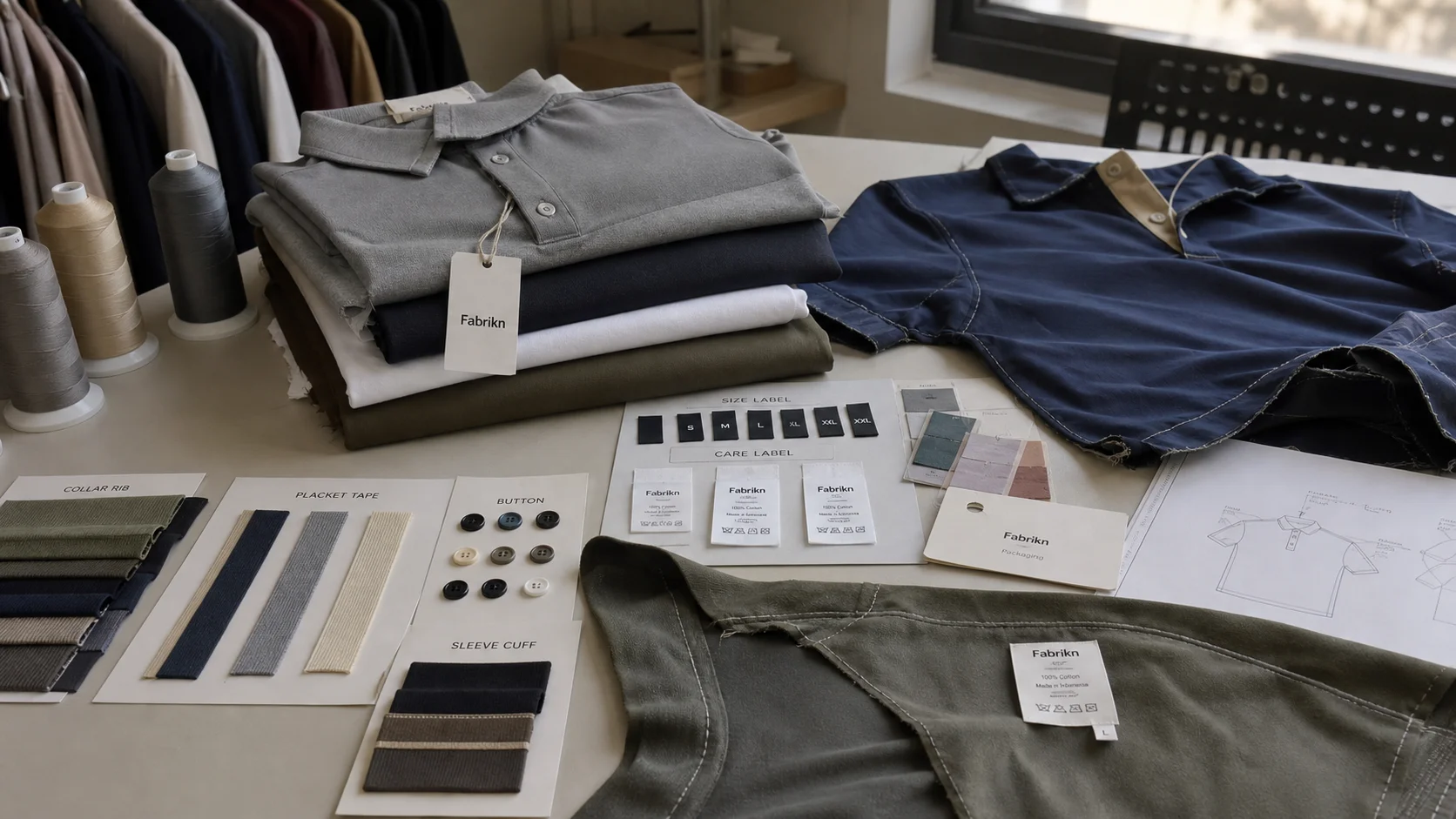
Dance Academies Source Custom Couture Rehearsal Wear compared by sample evidence, fabric or trim specs, MOQ, AQL terms, cost lines, delivery timing, and...
Fast answer: Dance Academies Source Custom Couture Rehearsal Wear: Tech Pack, Sample Gate, MOQ, and QC Terms should be judged by production evidence, not by a generic sourcing promise. The buyer needs sample proof, cost breakdowns, QC checkpoints, and delivery buffers in writing.
Ask for recent sample photos, measurement tolerances, fabric or print test assumptions, decoration test notes, packing examples, and a named inspection checkpoint. These details show whether the team can repeat an approved sample at bulk volume.
Separate garment cost, decoration, labels, packaging, sampling, testing, freight, and rush charges. Clear cost lines make it easier to reduce colorways, adjust size depth, or reserve more time for sampling.
Category: Clothing Manufacturer
Dance academies do not buy rehearsal wear the same way a fitness chain buys basic leggings. The stakes are different. A rehearsal garment has to survive 8-hour studio days, hold clean lines under mirrors, move with extreme extension, and still look polished enough for parent previews, donor events, and social media clips. That is why more schools now search for a custom couture rehearsal wear manufacturer for dance academies instead of generic activewear suppliers. I have worked with academy owners, costume coordinators, and production heads for years, and I can tell you this: the best sourcing decisions are made long before the first pattern is drafted.
When sourcing is done right, academies reduce emergency remakes, improve dancer confidence, and protect margins over an entire season. When it is done poorly, you get transparent fabrics under stage light, rolling waistbands during turns, and expensive rush air freight in recital month. This guide breaks down exactly how professional academies source, negotiate, test, and scale custom couture rehearsal wear with manufacturing partners that understand dance-specific construction.
Most dance academies learn this lesson after one painful season: not every garment factory can make true rehearsal wear, and not every sportswear vendor can execute couture-level finishing. Dance asks for a rare blend of functional engineering and aesthetic discipline. Seams must flex in grand allegro yet sit flat in still positions. Necklines need to frame posture. Compression needs to support, not restrict. Tiny details become major outcomes when dancers repeat movements thousands of times.
A custom couture rehearsal wear manufacturer for dance academies builds with that reality in mind. Pattern teams account for turnout, arabesque extension, shoulder articulation, and floor contact. Sewing floors understand where stress points happen in second position plié and deep back bends. Finishing teams know that exposed overlock at certain seams may be acceptable for training basics but not for premium academy collections where faculty and sponsors expect refined presentation.
In my experience, academies that switch from generic suppliers to dance-literate manufacturing partners cut fit-related complaints by 30% to 50% in the first year. That improvement is not luck. It comes from deliberate technical specs, better pattern blocks, and disciplined quality checkpoints.
“Couture rehearsal wear” is often misunderstood. It does not mean fragile garments. It does not mean theatrical costumes disguised as studio clothing. It means premium rehearsal pieces engineered for frequent use, made with elevated materials and superior construction, often with academy branding, signature color stories, and fit architecture aligned to dancer anatomy.
Typical couture rehearsal categories include panelled leotards, high-waist rehearsal tights, wrap skirts with secure closure systems, supportive crop tops for contemporary classes, men’s fitted unitards, and warm-up layers designed for quick on-off transitions. Product complexity can range from simple 8-panel bodies to multi-fabric hybrid garments with mesh overlays, powernet lining, hidden elastic channels, and reinforced seam junctions.
Factories that truly serve this category usually offer small-batch development with strict fit control, then scale to stable production without drift in construction quality. That balance matters. A beautiful proto sample means nothing if bulk output loses tension consistency or color depth after 20 washes.
Academies often rush into supplier outreach with mood boards and little else. That wastes weeks. A proper sourcing brief lets manufacturers quote accurately, flag technical risks early, and align development timelines with your recital calendar. Keep it practical and complete.
I usually advise academies to include one page called “non-negotiables.” Keep it brutally clear. For example: no front seam on high-compression tights, no fabric pilling under marley floor friction, no exposed elastic on necklines, no bulk production until 2nd fit sample sign-off. Crisp requirements save money.
You can benchmark your needs against professional manufacturing frameworks by reviewing service structures at https://fabrikn.com/services/. A strong service model should include development support, production planning, and quality systems, not just cut-and-sew capacity.
Factory selection is where most quality outcomes are decided. Price matters, yes. Capability matters more. I have seen academies choose the cheapest quote and spend double later on remakes and freight corrections. That is not savings. That is delayed cost.
Start with technical capability mapping. Ask what machinery is used for stretch construction: 4-thread overlock, 6-thread flatseam, coverstitch variants, bartack reinforcement, and elastic insertion methods. Check if they can handle mixed fabrics in one style without distortion. Ask about their pattern software, marker efficiency, and grading experience for dance-specific size curves. A general answer is a red flag.
Then verify process discipline. Good factories run pre-production meetings, inline inspections, and final AQL checks. Great factories also track needle logs, shrinkage test records, and color-lot consistency. If you are building premium rehearsal lines, insist on this rigor.
Visit in person when possible. If travel is not realistic, request a guided live video audit from fabric storage to finishing and packing. Look for organized trim bins, clean cutting tables, proper humidity control in storage, and clear line balancing on the production floor. Chaos in the factory usually shows up later in your garments.
One simple rule I use: if a factory cannot explain its quality system in plain language in ten minutes, it probably does not have one.
Fabric decisions shape everything: fit, durability, comfort, appearance, and cost. Dance academies typically use nylon-spandex blends (75/25 or 80/20) for compression and recovery, polyester-spandex for colorfastness, and specialty power mesh or powernet for breathability and control zones. GSM often falls between 220 and 320 for rehearsal garments, depending on category and climate.
Pick fabrics based on movement profile and class schedule, not just hand-feel. Ballet-heavy programs need smooth recovery and clean line definition under tights. Contemporary and acro programs need high abrasion resistance at knees and hips. Urban and commercial styles may prioritize matte visual depth and heavier drape for silhouette.
Trim quality gets ignored too often. It should not. Waist elastic, thread quality, labels, hooks, and optional cup systems can make or break user comfort. I have seen premium-looking garments fail because cheap waistband elastic lost tension after six hot washes. That kind of failure kills trust quickly.
Ask your factory for fabric test reports and keep them tied to lot numbers. Small detail. Big control.
Sampling for dance rehearsal wear is not a one-shot process. It is iterative by design. Most successful academies run a 3-stage sample path: prototype sample, fit sample, and pre-production sample. Each stage has different goals.
Prototype sample validates silhouette and construction feasibility. Fit sample corrects measurement balance, ease distribution, strap length, rise, and support zones. Pre-production sample confirms bulk-ready execution in approved fabric and trims. Skipping stages is tempting when calendars are tight. It usually backfires.
I recommend including at least two dancer body profiles per key size during fitting. A single fit model creates blind spots. For youth academies, growth allowance strategy is critical, especially for programs ordering once per season. Adult and pre-pro lines can be more precise with tighter grade increments.
Grade rules should reflect real dancer proportions, not generic apparel charts. Example: hip-to-waist differential in teen pre-pro groups may require custom increments to prevent waistband roll and hip compression imbalance. Armhole depth also needs care for overhead extension work. Tiny measurement shifts matter in motion.
Digital approvals speed this up. Ask factories to submit fit comments with measurement tables, annotated photos, and stretch percentage notes. That documentation becomes your control system when repeating styles in future seasons.
Let’s talk numbers clearly. Prices vary by region, complexity, quantity, and fabric grade, but academies still need realistic planning anchors. The table below reflects common ranges I see in premium rehearsal production programs.
Garment Type Typical MOQ Unit Cost (USD) Development Cost Notes Basic couture leotard (panelled) 120 pcs/style/color $28 - $46 $120 - $220/sample Higher with contrast piping or mesh inserts High-compression rehearsal tights 150 pcs/style/color $24 - $39 $100 - $180/sample Fabric choice drives price swings Supportive crop top with lining 120 pcs/style/color $22 - $36 $90 - $170/sample Cup options and strap hardware add cost Warm-up jacket with branded trims 100 pcs/style/color $42 - $78 $150 - $280/sample Zipper quality and finishing are key cost drivers Custom unitard with mixed fabrics 80 pcs/style/color $48 - $95 $180 - $350/sample Complex grading and seam mapping requiredCouture-level rehearsal wear generally lands above standard fitness apparel pricing, and that is justified when quality systems are real. My honest criticism of the market: some manufacturers sell “couture” as a label while delivering ordinary construction with fancy branding language. Ask for stitch-density specs and seam test data. Marketing copy cannot replace technical proof.
Payment terms often follow 30% deposit, 70% before shipment for smaller programs, with room for negotiated milestones as order volume grows. Academies with consistent reorder history can often secure improved terms after two or three successful cycles.
Time planning makes or breaks sourcing. Dance calendars are unforgiving. Recitals, competitions, and showcase shoots do not move because a shipment was late. Build backward from your first required wear date, then add risk buffers.
Phase Typical Duration Key Output Risk if Delayed Brief finalization 1 week Style list, quantity plan, tech expectations Inaccurate quotes and wrong sampling scope Sampling rounds 3 - 6 weeks Fit-approved pre-production sample Bulk fit issues and expensive corrections Material booking 1 - 3 weeks Fabric and trims confirmed by lot Color mismatch and line stoppage Bulk production 4 - 8 weeks Packed finished goods Missed class launch windows Freight and customs 5 - 18 days Delivered inventory Rush shipping costs, late distributionA practical full cycle for a multi-style academy capsule usually sits around 10 to 16 weeks. I advise adding a two-week buffer if your season includes competition travel or high-profile media shoots. Small delays happen. Plan for them before they happen.
Quality control in dancewear is more than visual inspection. You need performance inspection. A garment can look perfect on a hanger and fail in studio conditions within ten minutes. Set objective checks and enforce them every order.
Good factories run inline QC at 20%, 50%, and 80% production completion. Great factories send photo evidence and corrective action logs without being chased. If you are new to manufacturing oversight, appoint one internal coordinator to own approvals and recordkeeping. Multiple voices without a decision owner slow everything down.
I also recommend random wear tests by instructors before final acceptance. Faculty feedback on mobility and comfort is usually sharper than a standard inspection report because they observe movement quality every day.
Once production is done, logistics can still hurt your season if unmanaged. Decide early whether goods ship directly to academy branches, to a central warehouse, or through a fulfillment partner. Each model has cost and control tradeoffs.
Air freight is fast and expensive. Sea freight is economical and slower. Hybrid planning works well for many academies: core launch sizes by air, deeper inventory by sea. This protects launch dates while reducing total logistics spend. You should also pre-define customs documentation requirements, labeling format, and carton packing ratios to prevent border delays.
Budget a contingency reserve. I typically suggest 3% to 5% of total order value for unexpected logistics events, urgent replenishment, or minor remake batches. Nobody likes carrying contingency cost, yet every experienced operator knows it is cheaper than crisis mode in recital month.
A custom couture rehearsal wear manufacturer for dance academies should be treated as a strategic partner, not a one-off vendor. Long-term collaboration improves fit continuity, reduces development cost over time, and creates predictable delivery performance. Factories learn your blocks, your quality language, and your season rhythm. That institutional memory is valuable.
Start with a pilot capsule if needed, then scale with structured review points. Track metrics: first-pass sample approval rate, bulk defect rate, on-time shipment percentage, and reorder lead-time stability. Keep quarterly review meetings short and data-focused. Celebrate wins, then fix weak points quickly.
Partnership quality also depends on transparency from the academy side. Share forecast plans early. Confirm approvals on time. Avoid last-minute style changes after material booking. Respect both sides of the process and you get better outcomes, usually at better commercial terms.
If you want to understand the background and philosophy of a manufacturing partner, review company positioning and experience pages such as https://fabrikn.com/about-us/. When your program is ready for actual production discussions, use direct channels like https://fabrikn.com/contact-us/ to align on technical scope, lead time, and target budget.
Fit wins classes. Reliability wins seasons. Partnership wins years.
Even experienced schools make avoidable errors. Most of them come from speed pressure and fragmented decision-making. Keep this checklist visible during your sourcing cycle.
One short truth: late discipline creates expensive urgency. Early discipline creates confident launches.
Sourcing couture rehearsal wear is not just a purchasing exercise. It is a performance strategy. Your dancers feel every seam, every waistband, every fabric response during movement. Your instructors see instantly whether garments support technique or distract from it. Your operations team feels the impact of every late shipment and every quality return.
Choose a custom couture rehearsal wear manufacturer for dance academies with proven technical depth, transparent process, and season-aware planning. Build a serious brief, run a real sample workflow, test for movement, protect your timeline, and invest in partnership quality. You will spend smarter, launch smoother, and create a stronger visual identity for your academy brand.
I have seen this transformation many times. The academies that treat sourcing as a core capability, not an afterthought, almost always perform better both artistically and commercially. The studio floor tells the truth quickly.
Get a free quote from Fabrikn — your trusted B2B clothing manufacturer with 10+ years of experience. MOQ as low as 200 pieces.
Get a Free Quote →Most factories start around 80 to 150 pieces per style per color, depending on complexity. Smaller pilot runs are possible with some partners, though unit costs rise. A mixed strategy works well: lower MOQ on statement styles, higher MOQ on core essentials.
A practical starting budget for a focused 4- to 6-style capsule often falls between $12,000 and $45,000, including sampling, production, and freight. Final numbers depend on fabric quality, trims, quantity, and destination shipping costs.
A realistic timeline is 10 to 16 weeks for a multi-style program. Fast-track projects can move quicker, but compression usually increases risk and cost. Build in two extra weeks if your season calendar is fixed and public-facing.
Nylon-spandex and polyester-spandex blends with strong recovery and opacity perform well. Many academies use 220 to 320 GSM ranges based on movement intensity and climate. Request test data for pilling, colorfastness, and recovery before approval.
Yes, if the factory has strong grading experience and accepts fit validation across multiple body profiles. Youth grading and pre-pro grading need different logic. Confirm this capability during supplier evaluation, not after sampling starts.
Do not skip seam stress tests, movement-based fit checks, opacity checks under strong light, and wash durability tests. Visual inspection alone is not enough for rehearsal garments that face repeated high-range motion.
For many academies, yes. Better fit, durability, and brand identity can reduce replacements, improve dancer confidence, and create a premium academy image. Long-term value usually outweighs the initial price difference when sourcing is done correctly.
Start at least four to five months before first use, especially if you need multiple styles and custom colors. Early engagement gives room for proper fittings, corrections, and stable production scheduling without panic freight.