
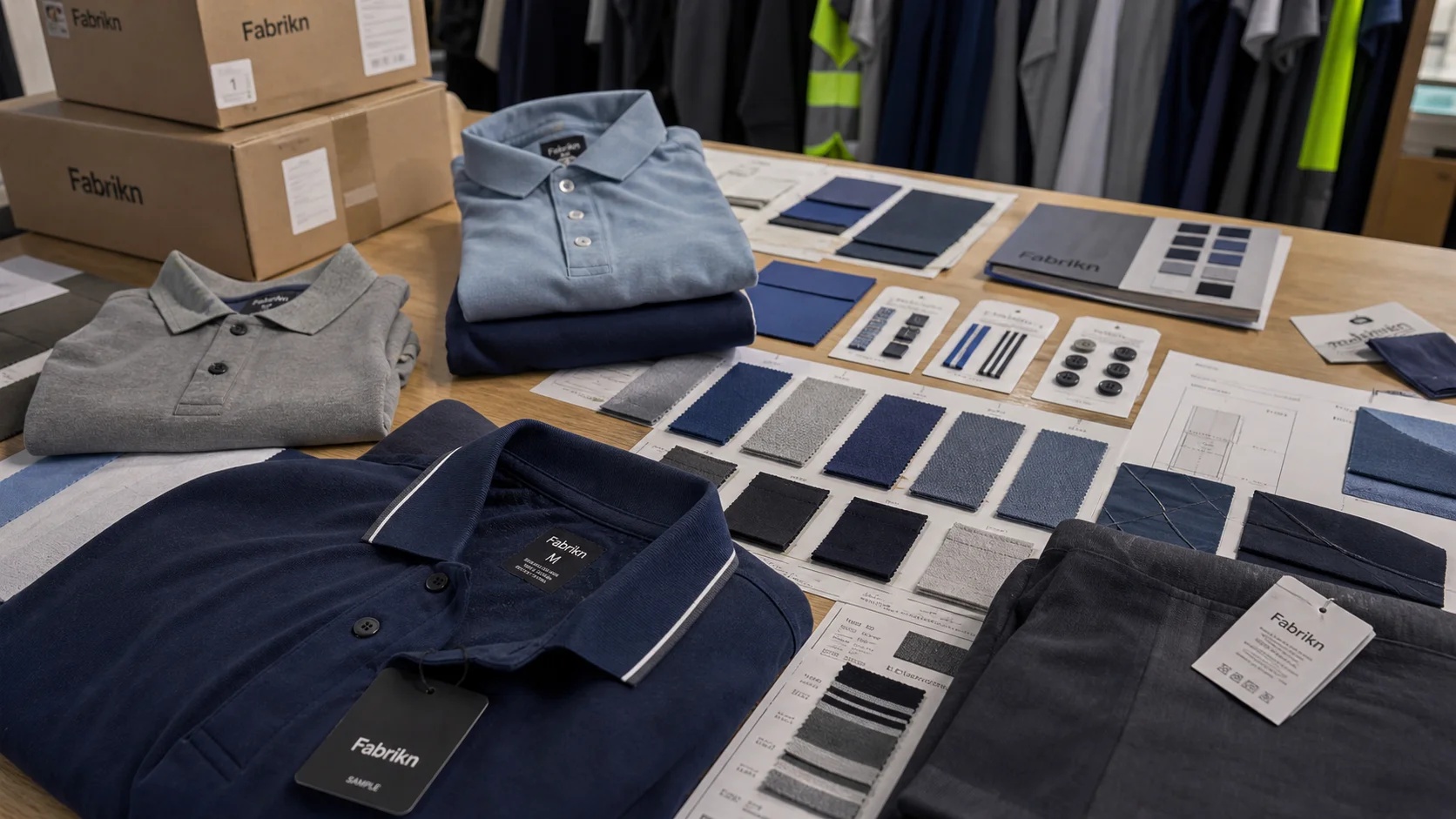
Make Custom Clothing Line Samples compared by sample evidence, fabric or trim specs, MOQ, AQL terms, cost lines, delivery timing, and rework responsibility.
Fast answer: Make Custom Clothing Line Samples: Tech Pack, Sample Gate, MOQ, and QC Terms should be judged by production evidence, not by a generic sourcing promise. The buyer needs sample proof, cost breakdowns, QC checkpoints, and delivery buffers in writing.
Ask for recent sample photos, measurement tolerances, fabric or print test assumptions, decoration test notes, packing examples, and a named inspection checkpoint. These details show whether the team can repeat an approved sample at bulk volume.
Separate garment cost, decoration, labels, packaging, sampling, testing, freight, and rush charges. Clear cost lines make it easier to reduce colorways, adjust size depth, or reserve more time for sampling.
If you’re launching a new apparel brand, one of the most important stages in the product development process is creating custom clothing line samples. Samples turn your ideas into physical garments so you can evaluate fit, construction, fabric quality, print placement, and overall market readiness before moving into bulk production. Whether you are developing streetwear, activewear, loungewear, uniforms, or premium fashion pieces, learning how to make custom clothing line samples will help you reduce mistakes, control costs, and bring a stronger collection to market.
For fashion startups and established labels alike, sample development is where concepts become real. It is also where many brands discover the difference between a sketch and a sellable product. This guide explains the full process step by step, from concept development and tech packs to sampling revisions, fitting approvals, and final production readiness. If you need support from an experienced manufacturing partner, you can explore Fabrikn’s services or reach out through the contact page.
Custom clothing line samples are prototype garments made during the product development stage. They are created to test design ideas, confirm construction methods, review fit, and make sure your product can be manufactured consistently at scale. In many cases, you may go through multiple sample rounds before approving the final version.
Samples can include:
Each stage serves a different purpose, but all of them help you move closer to a successful clothing line. In practice, a simple T-shirt sample may take 7-10 business days, while a more technical hoodie, jacket, or activewear set with custom trims, embroidery, and print placement often requires 12-18 business days for the first round.
Many new brands want to move quickly from idea to production, but skipping sample development is risky. A sample gives you a chance to inspect how the garment actually looks and feels, rather than relying on a digital rendering or drawing. This is especially important because fabric behavior, stitch quality, and proportions often look very different in real life.
Sampling helps you:
In short, custom clothing samples are the bridge between creative vision and commercial success. For example, a brand sampling organic cotton jersey from a GOTS-certified mill may see different shrinkage and hand feel than a standard combed cotton tee, while an OEKO-TEX Standard 100 certified fleece, recycled polyester activewear knit, or GRS-certified double knit can each require different stitch settings and wash tests.
The sample-making process should begin with a clear product concept. Before you contact a manufacturer, decide what your clothing line stands for, who it is for, and what specific garments you want to create. A well-defined concept makes every later step more efficient.
Ask yourself:
For example, a premium athleisure brand might focus on technical fabrics, minimalist branding, and performance fit, while a streetwear label may prioritize heavyweight cotton, oversized silhouettes, and bold graphic placements. The clearer your concept, the easier it is to make accurate samples. If you are planning a 5-style launch, it is common to budget 1-2 sample rounds per style before bulk approval, especially when using custom-dyed fabrics, flatlock seams, coverstitch hems, or bonded finishes.
Once your concept is defined, research the market to ensure your ideas are both distinctive and commercially viable. This is where you compare similar brands, study price ranges, and understand what customers expect from this product category.
Look at:
This research will help you avoid creating a garment that looks good on paper but does not align with what buyers actually want. It also helps you communicate better with your manufacturer by showing them where your product fits in the market. For instance, a basic cut-and-sew tee manufactured in Dhaka may land around $2.50-$4.00 per unit at 500 MOQ, while a more complex hoodie with brushed fleece, twill neck tape, and chenille applique in Guangzhou or Istanbul may be priced significantly higher depending on wash treatments and decoration.
A professional sample starts with precise documentation. A tech pack is one of the most important tools in clothing development because it translates your creative vision into manufacturing instructions. Without it, sample making becomes slower, more expensive, and more prone to errors.
A complete tech pack usually includes:
If you are not experienced in apparel technical design, it is worth investing in professional support. A strong tech pack reduces confusion, prevents back-and-forth, and ensures your sample comes out closer to your vision. Manufacturers commonly use CAD pattern systems such as Gerber or Lectra, then output marker files and cutting layouts before the first sample is sewn on single-needle lockstitch, overlock, coverstitch, or flatlock machines.
Fabric selection can dramatically change the outcome of your sample. Two garments with the same pattern can look and fit very differently depending on the textile used. That is why you should choose materials early in the process and, whenever possible, source actual production fabrics for sampling.
Consider the following:
Don’t forget trims and finishing details. Zippers, buttons, elastic, drawcords, labels, embroidery, screen prints, and heat transfers all affect the final sample. If you want the product to be production-ready, you should aim to sample with materials that closely match the final version. Common development materials include 180-220 GSM combed cotton jersey for tees, 320-380 GSM brushed fleece for hoodies, 260-300 GSM interlock for polos, 75D polyester-spandex for leggings, and recycled polyester rib or mesh that may carry GRS certification; for performance programs, factories often confirm OEKO-TEX Standard 100 compliance for skin-contact fabrics and GOTS for organic cotton supply chains.
Not every manufacturer is equipped for custom sample development. You need a partner that understands pattern making, sample construction, revisions, and scalable production. The right manufacturer should also communicate clearly and be able to guide you through technical decisions if needed.
When evaluating a manufacturer, look for:
If you want a partner that can support development from concept through production, review Fabrikn’s about us page to learn more about the team and manufacturing approach. In real sourcing conversations, brands often compare factories in Guangzhou for cut-and-sew and embellishment, Dhaka for cost-efficient bulk basics, Ho Chi Minh City for knitwear and sportswear programs, and Istanbul for faster lead times on premium small-batch collections. Many serious suppliers also carry WRAP, BSCI, GOTS, OEKO-TEX Standard 100, or GRS certifications, which can be important for retail compliance and buyer audits.
After your manufacturer receives the tech pack and supporting materials, the first sample is created. This initial version is often called a prototype sample or development sample. It may not be perfect, and that is expected. The purpose is to translate your design into a physical garment so you can assess the overall direction.
During this stage, the manufacturer may create patterns, cut fabric, sew the garment, and apply basic trims or artwork. Depending on the complexity of the item, they may also test construction methods or recommend adjustments to improve durability or fit.
When the sample arrives, review it carefully and compare it against the tech pack. Do not focus only on appearance. Evaluate construction, proportions, functionality, and comfort. For example, a 3D embroidered logo may need a Tajima or Barudan embroidery machine, a screen print may require a rotary or automatic carousel press, and bonded outerwear parts may need heat-press or seam-tape equipment before the sample can be signed off.
Sample evaluation is one of the most important steps in the entire process. This is where you determine whether the garment performs as intended. Fit testing should ideally involve fitting on a live model or fit model that matches your target customer dimensions.
Check for:
Many brands run a wash test, stretch test, and abrasion check at this stage. A jersey tee should hold seam integrity after 5-10 home washes, while performance leggings may need to pass pilling and recovery checks after repeated laundering. If the sample is for a retail buyer, you may also need to confirm label placement, barcode application, and hangtag positioning.
Very few first samples are perfect. Revisions are normal and should be expected as part of the development cycle. After your initial review, provide detailed feedback to your manufacturer so they can correct the issues and produce a revised sample.
Your feedback should be specific. Instead of saying “the fit is off,” say “the sleeve length needs to be shortened by 1.5 cm” or “the body width should increase by 2 cm at the chest.” Clear revision notes save time and reduce misunderstandings.
It is common to go through 2-3 rounds of sampling for a new style, especially when developing complex garments such as structured jackets, denim bottoms, tailored sets, or technical activewear. Each round should bring the product closer to final approval.
Once the garment is close to final, the manufacturer will usually prepare a pre-production sample, also called a gold seal sample or final approval sample. This version should reflect the exact fabrics, trims, labels, artwork, and construction methods intended for bulk production.
This stage is critical because it sets the standard for your entire order. Make sure every detail is correct before signing off. Check colors, measurements, washing results, packaging requirements, and compliance labels. If your product will be sold through major retailers, this is also the time to confirm documentation for standards such as GOTS, OEKO-TEX Standard 100, WRAP, BSCI, or GRS where applicable.
After approval, the sample becomes the reference point for mass production and quality control.
Once your sample is approved, you can move into production planning. This includes confirming order quantities, grading sizes, final fabric reservations, packaging instructions, and shipment schedules. A strong sample process makes this phase much smoother because the manufacturer already has the approved specifications.
Before production starts, confirm:
For many apparel programs, the transition from approved sample to bulk production can take 18-22 business days for simple knits and 30-45 business days for more technical, embellished, or wash-intensive garments, depending on fabric availability and factory load.
Sampling can save you time and money, but only if you do it correctly. A few common mistakes can lead to delays, extra cost, and disappointing results.
Avoid these issues:
Another common mistake is assuming the cheapest sample quote is the best option. A factory in Ho Chi Minh City or Dhaka may offer competitive pricing on basics, while a factory in Guangzhou or Istanbul may be better for smaller, higher-detail runs. The best choice depends on your product type, required certifications, and target quality level.
Sample costs vary widely depending on garment complexity, fabric choice, decoration, and how many revisions are needed. Simple styles like basic tees or tank tops can be relatively affordable, while jackets, denim, swimwear, or heavily embellished pieces cost more to sample.
As a rough guide:
At higher MOQs, unit cost may improve significantly in bulk. For example, a cut-and-sew tee, depending on fabric weight, decoration, and factory location, may land around $2.50-$4.00 per unit at 500 MOQ, while a more premium hoodie, polo, or garment-dyed style can move into the $5.00-$12.00 range or higher. Sampling itself is usually quoted separately from production, and some factories will credit part of the sample fee against your first bulk order.
Timeframes depend on the style, material sourcing, and how quickly feedback is provided. A straightforward sample may be ready in one to two weeks, while more complex programs can take several rounds over a few months.
Typical sample timelines include:
Fast approvals, complete tech packs, and readily available fabrics can significantly reduce lead time. If fabrics must be woven, dyed, printed, or certified first, the timeline may extend, especially for GOTS organic cotton, GRS recycled polyester, or OEKO-TEX Standard 100 compliant programs.
If you want better samples in less time, focus on preparation and communication. The more precise your instructions are, the less likely you are to waste time on avoidable revisions.
Helpful tips include:
It also helps to ask your manufacturer what machines and finishing equipment they actually use. A factory with automatic spreading and cutting tables, lockstitch and overlock sewing lines, bar tack machines, embroidery heads, and heat-transfer stations is usually better equipped to produce consistent samples than a factory relying on manual-only processes.
A professional clothing manufacturer brings more than labor to the table. They provide technical guidance, pattern support, sourcing help, and quality control systems that can make the difference between a rough prototype and a production-ready product.
Working with an experienced partner can help you:
For brands that need both development and manufacturing support, Fabrikn can help bridge the gap from first concept to approved sample and bulk production. This is especially valuable if you are comparing sourcing options across regions like Guangzhou, Dhaka, Ho Chi Minh City, or Istanbul and need one partner to manage communication, timelines, and production standards.
Learning how to make custom clothing line samples is one of the most important skills in launching a successful apparel brand. Samples help you test the fit, refine the design, and confirm that your product can be made consistently and profitably. When you approach sampling with clear documentation, realistic timelines, and the right manufacturing partner, you dramatically improve your chances of creating a collection customers will actually want to buy.
Whether you are building a small capsule collection or preparing for a larger retail launch, take the time to sample properly. It is one of the smartest investments you can make in your brand’s future.
How many samples do I need before production?Most brands need at least 1-2 rounds for simple items and 2-3 rounds for more complex garments. Technical outerwear, tailored pieces, or embellished products may require additional revisions.
Can I make samples without a tech pack?You can, but it is not recommended. A tech pack helps the manufacturer understand your design clearly and reduces costly mistakes.
What fabrics are best for samples?Use the same or very similar fabrics to your final production material whenever possible. For example, if the final garment will use GOTS-certified organic cotton, sample with the same construction-weight cotton rather than a lightweight substitute.
How do I choose the right factory?Look for product-category experience, strong communication, sample development capability, and certifications such as WRAP, BSCI, OEKO-TEX Standard 100, GOTS, or GRS when relevant to your market and compliance requirements.
How long does it take to get a clothing sample?Simple samples can take 7-10 business days, while more technical or decorated samples may take 15-25 business days depending on fabric sourcing and revision cycles.