
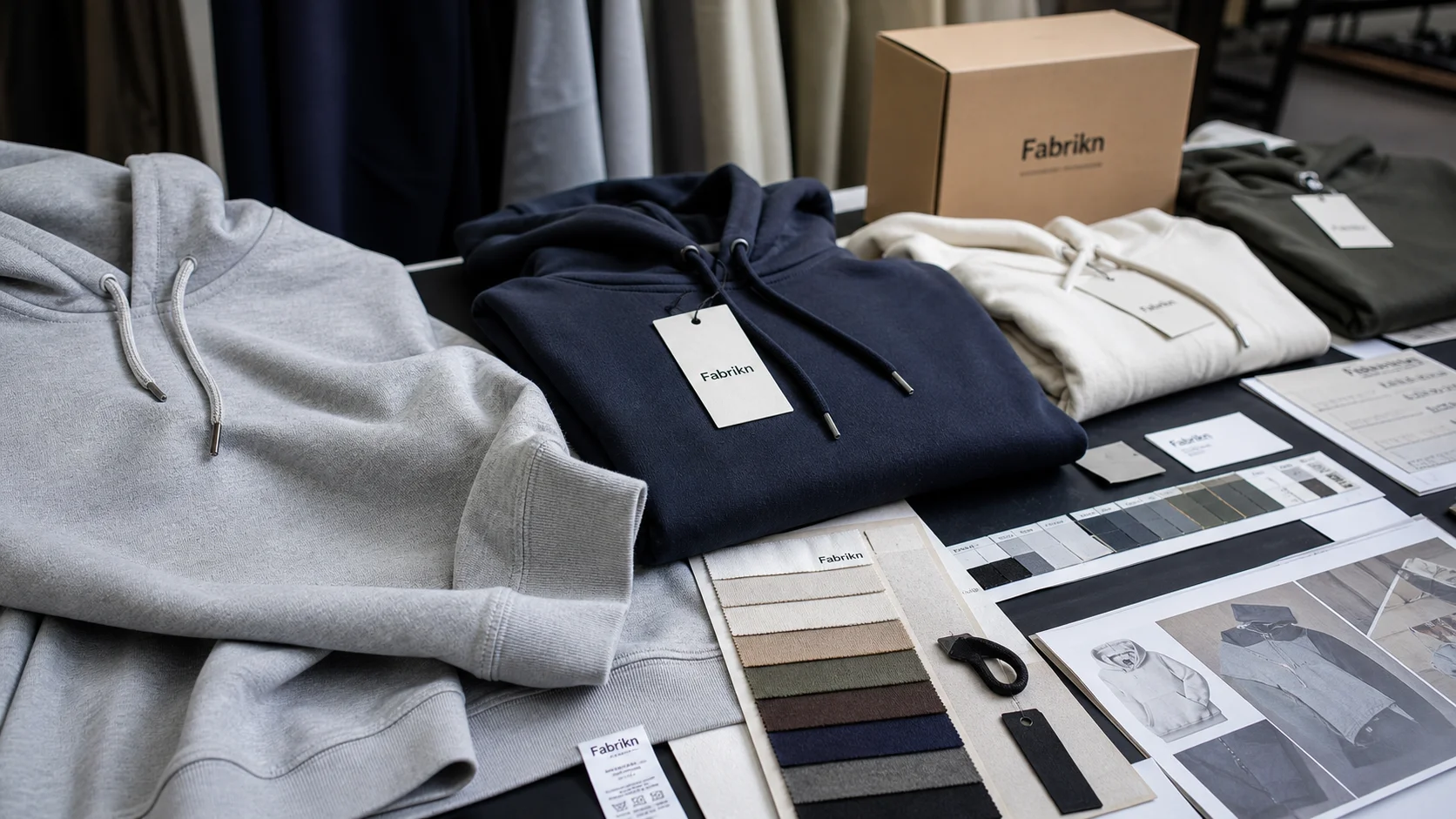
Negotiate Payment Terms with Clothing Production Vendor compared by sample evidence, fabric or trim specs, MOQ, AQL terms, cost lines, delivery timing, and...
Fast answer: Negotiate Payment Terms with Clothing Production Vendor: Sample Evidence, MOQ, Capacity, and Rework Terms should be judged by production evidence, not by a generic sourcing promise. The buyer needs sample proof, cost breakdowns, QC checkpoints, and delivery buffers in writing.
Ask for recent sample photos, measurement tolerances, fabric or print test assumptions, decoration test notes, packing examples, and a named inspection checkpoint. These details show whether the team can repeat an approved sample at bulk volume.
Separate garment cost, decoration, labels, packaging, sampling, testing, freight, and rush charges. Clear cost lines make it easier to reduce colorways, adjust size depth, or reserve more time for sampling.
The fastest way to lose a factory’s attention is to treat payment terms like a footnote. Ten percent. That tiny shift in deposit timing can move thousands of dollars in working capital, and I have watched it decide who gets the machines, the fabric buy, and the first open line slot. In many factories, especially with new accounts, the opening ask is 30% to 50% upfront. Smaller workshops sometimes want 100% before production starts. Not greed alone. Cash flow math.
Walking through factories in Vietnam, Bangladesh, Portugal, and southern China, the pattern kept repeating. Low-volume workshops with 15 to 40 workers often demanded higher deposits because they buy fabric in smaller lots and have less access to bank credit. Vertically integrated manufacturers, or mills with in-house knitting and dyeing, could sometimes accept 20/40/40 or 30/70 because they control more of the supply chain and can stage costs. Bigger systems breathe easier.
Payment terms are not just finance language. They determine when fabric gets ordered, whether trims are reserved, and if your line is treated as priority or filler work. A factory owner once told me, bluntly, that two buyers may offer the same $6.80 unit price, but the one who pays on time gets the better cutting table and the cleaner QC team. No theory there. Survival.
The hidden cost of a bad deposit structure shows up fast. Pay 50% too early and you finance the factory’s fabric buy while carrying the inventory risk yourself. Drag the deposit too long and your order slides behind accounts that already paid. On a $24,000 order, moving from a 50% deposit to a 40% deposit keeps $2,400 in your account until fabric arrives. That matters when freight, sampling, and marketing are all hitting at once.
Here’s the part many buyers miss: factories sometimes accept a slightly lower margin, maybe 3% to 5% less on the unit price, in exchange for disciplined payment and fewer disputes. Predictability wins. A buyer who promises a high price and then stalls every approval for 12 days usually loses ground. The factory wants money, yes. It also wants order clarity, fast responses, and no unpleasant surprises.
According to U.S. Trade & market information for international buyers and trade data reported across textile exporters, payment risk is one of the biggest reasons small suppliers price conservatively on first orders. I have seen that caution in every region. Once you understand it, payment terms stop looking like a side note and start looking like the real negotiation.
Before I negotiate payment terms, I split the quote into pieces. Fabric. Trims. Labor. Testing. Sampling. Freight. Packaging. Payment timing. If a factory gives you only one unit price, you do not yet have a negotiation document. You have a guess. Ask for a revised quote in writing, line by line, before you discuss concessions.
A clean quote usually exposes the real structure: 30/70, 50/50, net 30, or something stranger. An $8.20 sweatshirt quote with 50% upfront can cost more in practice than an $8.55 quote with 30% deposit and 70% after inspection. Why? Because the cheaper quote may push fabric risk, sample rework, and currency conversion onto you at the start.
Hidden charges can add 5% to 12% in real cost. I have watched vague sample fees of $60 per style turn into $180 after “extra revisions.” I have seen rework charges appear after the buyer asked for a second PP sample. I have also seen currency clauses quietly shift a 2% bank spread onto the buyer, especially on cross-border invoices.
So I compare price points by cash flow, not just by unit cost. A $5.90 knit tee with a 50% deposit may look cheaper than a $6.15 tee with 30/70 terms. On a 10,000-piece order, the first structure ties up $29,500 before cutting starts. The second ties up $18,450. That extra $11,050 can cover freight, a second fit round, or your next sampling run.
If you work in categories like custom baby clothing manufacturing, the quote must also spell out testing, because CPSIA, nickel-free trims, and softer finishes can add $0.18 to $0.60 per piece. For simpler basics, the hidden cost often sits in postage, thread color change, or label revisions. Every clause matters. Every blank line costs you later.
When you are learning how to negotiate payment terms with clothing factory, treat the quote as the real battlefield. If the document is fuzzy, the negotiation will be fuzzy too. Ask for every assumption in writing, including packing method, sample charge, and who pays bank fees. Clarity beats charm.
For buyers building private label clothing services, this step matters even more because the supplier may also be handling labels, cartons, and hangtags. The more components they manage, the easier it is for small fees to hide inside the total. You want the full map before you negotiate the road.
Order size changes your bargaining power more than most buyers admit. A 300-piece capsule run rarely gets the same treatment as a 12,000-piece repeat program. On small MOQ orders, factories often ask for 50% or even 100% upfront because the fixed setup cost is high and they cannot absorb mistakes. On larger runs, especially recurring ones, milestone payments become much easier to secure.
I have seen the difference on the factory floor. A 500-piece order of 280 GSM French terry hoodies might require a 50% deposit because the mill will not release custom-dyed fabric without cash. A 15,000-piece program using stock fabric and existing trims may get 20/40/40, especially if the buyer has already placed three orders and paid on time. Volume buys trust. Trust lowers friction.
Lead time matters just as much. Sample-led orders that move from design approval to pre-production in 2 to 4 weeks are riskier for factories because decisions happen fast and fabric availability can be uncertain. A 60 to 90 day production cycle gives both sides more room to stage payments around fabric booking, cutting, and packing. If you need urgency, you often pay for it in cash terms. If you offer more time, you gain negotiation room.
Repeat buyers should ask for net 15 or net 30 only after proving discipline. Clean invoices. No late approvals. Forecasts the factory can actually trust. I have seen a brand with six on-time orders and $240,000 annual spend secure net 30 from a mid-sized supplier after paying all sample invoices within 48 hours. The manufacturer wanted the relationship more than the immediate deposit.
Region also changes the deal. Lower-cost regions can still insist on higher deposits because they may have limited bank financing or higher import costs for dyes, zippers, and elastic. A workshop in Cambodia or parts of South Asia may need 40% upfront simply to buy raw materials. A larger mill in Turkey or eastern Europe may offer more staged billing because it has access to trade finance and tighter internal controls. Cost level does not equal payment flexibility.
Match the payment structure to risk. For custom dyeing, embroidery, or imported fabric, a higher deposit makes sense because the factory is committing cash before sewing starts. For orders using stocked jersey, rib, or French terry 320 GSM already in warehouse, push for a lower deposit or a mid-production milestone. That balance protects both sides.
If your program depends on cut and sew manufacturing, remember that the supplier’s exposure starts earlier than yours. Pattern development, marker making, and cutting all require cash before a finished garment exists. That is why a fair structure often beats a sharp unit price with punishing upfront terms.
Factories respond better to shared-risk language than to pressure. I never say, “I need better terms because other suppliers offer them.” That sounds like a threat. I say, “If we can reduce front-loaded risk, I can commit to a larger order and faster approvals.” One sentence shifts the tone from confrontation to problem-solving.
Concrete trade-offs work. Offer a higher total order value, say 8,000 pieces instead of 5,000, in exchange for a lower deposit. Promise approval of lab dips within 48 hours. Limit design changes after PP sample sign-off. Agree to a shorter production lock-in so the factory can schedule lines with confidence. These are real concessions, and a manager can take them upstairs without rolling their eyes.
I have found that trust is built through boring discipline. Pay sample fees on time. Approve PP samples quickly. Keep communication on one channel instead of scattering it across WhatsApp, email, and voice notes. On one trip in Ho Chi Minh City, a production manager told me the buyer who replies in 6 hours gets better attention than the buyer who negotiates 2 cents harder but takes 4 days to confirm artwork.
The thing nobody tells you: many owners will accept a 20% deposit plus 40% at cutting and 40% before shipment if the buyer has already paid sampling fees and moved fast on approvals. I have seen that structure on orders worth $38,000 to $120,000. It works because the factory sees commitment early and reduced risk at the point where fabric and labor costs are locked in.
Use numbers, not mood. Say, “If we move from 50/50 to 20/40/40, I can release the purchase order today and confirm fabric within 72 hours.” That tells the factory what it gets, when it gets it, and why the change helps. Managers can use that. They cannot do much with, “Can you be more flexible?”
If you are building a long-term brand, especially with how to negotiate payment terms with clothing factory as a recurring skill, trust is currency. I have seen factories forgive a slower margin, but rarely a sloppy buyer. The cleanest negotiators usually sound firm, not difficult. There is a difference.
The right structure depends on volume, category, and trust level. I compare them side by side before I send any purchase order. A 30/70 split is common for first orders. A 50/50 split is common for fast-turn basics or risky custom work. A 20/40/40 structure gives both sides checkpoints. Net 15 and net 30 are usually reserved for repeat buyers. Letters of credit sit at the more formal end of the scale.
Cash flow impact matters. On a $60,000 order, 30/70 means $18,000 leaves your account upfront. 20/40/40 means only $12,000 leaves at the start. That $6,000 difference can fund freight, content production, or a second size run. On the factory side, 20/40/40 still gives enough cash to buy fabric and start cutting if the buyer moves fast on approvals.
Letters of credit make sense when the order is large, the supplier is new, or the garments are high value, such as tailored outerwear or heavy fleece sets. Banks and trade finance institutions like structure. Small factories often do not. They may struggle with the documents or dislike the delay, so a simpler milestone plan can actually be more practical.
Data from U.S. Trade & market information for international buyers shows that export transactions work best when documentation is clean and payment triggers are explicit. That mirrors what I see in factories. The more exact the trigger, the less arguing later. This is why I treat milestone terms as a quality tool, not just a finance tool.
The biggest red flag is a demand for 100% upfront payment without a proforma invoice, sample approval record, or clear delivery date. That is not standard risk management. That is a buyer trap. I have seen it most often with one-person trading setups posing as factories, or with workshops under severe cash strain.
You can reduce exposure by tying money to measurable milestones. Pay part of the deposit when fabric arrives. Release the next payment when cutting starts. Hold the third payment until mid-production inspection. Keep the final balance for final inspection or packing confirmation. A structure like 20/30/30/20 is harder to sell than 50/50, but it protects you when the order is custom or expensive.
Lock contract details before any transfer. Bank account name. Currency. Due dates. Late delivery penalties. Defect handling. Refund triggers. If the invoice says one company and the bank account says another, pause. That mismatch is a classic warning sign. I also verify whether the account is local or offshore, because fees can rise fast when conversion and wire charges are hidden inside the transfer.
Some export-oriented markets use stronger documentation and clearer milestones; others rely more on relationship-based trust and verbal agreement. Neither is automatically better, but the paper trail matters more when you are sending $15,000 or more. In relationship-heavy settings, I push harder for signed terms and dated approvals because memories are not evidence.
For fraud prevention, verify bank details by video call and third-party checks before sending money. I have done this after factory tours in three countries, and it saved one buyer from wiring funds to an altered account. Five minutes on a call can prevent a six-figure headache.
Start with a quote review. Break out fabric, trims, labor, testing, sampling, freight, and bank fees. Decide your target term before you negotiate. For a first order, I usually aim for 30/70 or 20/40/40. If the factory is asking 50/50, I want to know what risk they are covering. If they demand 100% upfront, I stop and ask for written justification.
Prepare two fallback positions. Your preferred structure may be 20/40/40. Your fallback may be 30/70 with a lower deposit only after fabric is booked. That gives you room to trade, not just plead. The best negotiators arrive with a price ceiling, a deposit ceiling, and one concession they can offer quickly, such as faster artwork approval or a longer order commitment.
Use a short script. I often say: “We want to place this order, and the volume could repeat monthly if the first run ships cleanly. If we can move to milestone-based payment, I can release the PO today, approve lab dips within 48 hours, and keep the production calendar firm.” It is specific. It is calm. It gives the factory a reason to say yes.
Before you wire funds, send five documents: the purchase order, tech pack, proforma invoice, supplier contract, and inspection plan. If you are ordering tailored styles or pattern-heavy programs, the contract should also reference fit approval and trim approval. If you are using contact Fabrikn for a free quote, ask for the revised payment terms in the same thread so nothing gets lost.
Set your timeline with discipline. Negotiate before sampling ends. Confirm terms before bulk fabric purchase. Get signatures before production starts. That order matters because each step reduces your leverage. Once fabric is cut, your options shrink fast. Once sewing begins, they shrink again. By the time cartons are sealed, you are mostly managing risk, not shaping it.
When I visited factories across eight countries, the buyers who protected the relationship usually got the best quality, the fewest delays, and the least drama. Not because they paid more. Because they paid on time, agreed on milestones, and treated payment terms as part of production control. That is how to negotiate payment terms with clothing factory orders now: firmly, in writing, and with cash flow in mind.
Start with 30/70 or 20/40/40 and ask for the revised terms in writing before sampling ends. Offer faster approvals, a clear PO, and a realistic production calendar. First orders over 1,000 pieces usually have more room to negotiate than small 300-piece runs.
Many factories ask for 30% to 50% upfront, while smaller workshops may ask for 100% before production. The exact amount depends on fabric risk, order size, and whether the supplier is buying custom materials. Repeat buyers often secure lower deposits after 2 to 3 clean orders.
Sample-led orders often move in 2 to 4 weeks, while bulk production typically takes 60 to 90 days. If fabric is already in stock, the timeline can shorten by 1 to 2 weeks. Payment timing should match those milestones, especially cutting, sewing, and final inspection.
Usually not on the first order. Net 30 is more common after repeated business, clean payment history, and monthly forecasting commitments. Small factories often need cash earlier because they must buy fabric and trims before production begins.
For most first-time orders, 20/40/40 or 30/70 offers a good balance of risk and flexibility. Letters of credit are safer for large international orders above $50,000, but they add paperwork and bank fees. Always verify the bank account name before sending funds.