
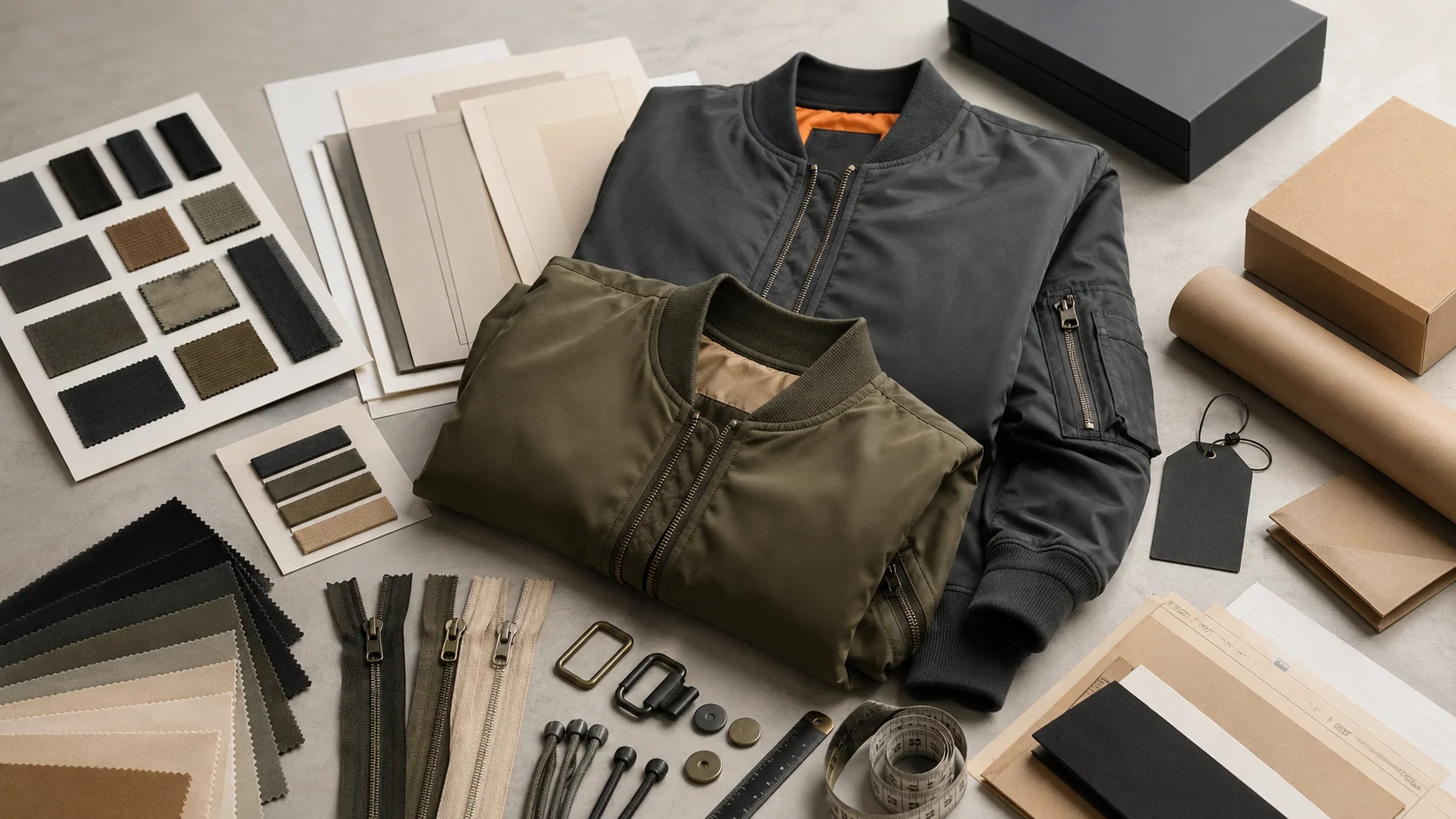
Select A Clothing Manufacturer for Small Batch Production compared by sample evidence, fabric or trim specs, MOQ, AQL terms, cost lines, delivery timing,...
Fast answer: Select A Clothing Manufacturer for Small Batch Production: Sample Evidence, MOQ, Capacity, and Rework Terms should be judged by production evidence, not by a generic sourcing promise. The buyer needs sample proof, cost breakdowns, QC checkpoints, and delivery buffers in writing.
Ask for recent sample photos, measurement tolerances, fabric or print test assumptions, decoration test notes, packing examples, and a named inspection checkpoint. These details show whether the team can repeat an approved sample at bulk volume.
Separate garment cost, decoration, labels, packaging, sampling, testing, freight, and rush charges. Clear cost lines make it easier to reduce colorways, adjust size depth, or reserve more time for sampling.
If you are building a fashion brand, launching a capsule collection, or testing a new product line, small batch production can be the smartest way to move forward. It reduces financial risk, allows faster market testing, and gives you more flexibility as you refine your designs. But the success of small batch manufacturing depends heavily on choosing the right partner.
Selecting a clothing manufacturer for small batch production is not just about finding the lowest price. It is about finding a factory that understands your business goals, can work efficiently at lower volumes, and is willing to support your growth. In this guide, we will explain what to look for, which questions to ask, and how to compare manufacturers so you can make a confident choice.
Small batch production refers to manufacturing clothing in limited quantities rather than in large-scale runs. This approach is commonly used by startups, boutique brands, niche apparel labels, and established companies testing a new concept.
Instead of producing thousands of units per style, a small batch might mean dozens or a few hundred pieces. The exact quantity depends on the factory, the garment type, fabric availability, and the manufacturer’s minimum order quantity, also known as MOQ.
Small batch production offers several advantages:
However, not every manufacturer is equipped to handle small runs efficiently. Some factories are built for mass production and may not prioritize smaller orders. That is why finding the right fit is essential.
Choosing the right clothing manufacturer can influence everything from your product quality to your delivery timeline and profit margins. A good manufacturing partner helps you avoid costly mistakes, such as poor stitching, inconsistent sizing, delayed shipments, or fabric shortages.
For small batch production, this matters even more because every unit counts. When your order volume is limited, a quality issue can have a greater impact on your business. You may not have extra inventory to replace defective items, and delays can disrupt your launch schedule.
The right manufacturer can also help you scale. If your small batch performs well in the market, you may want to increase production later. A reliable partner who understands your product and brand can make that transition much smoother.
To learn more about Fabrikn’s manufacturing support, you can explore our services page and see how we work with businesses at different stages of growth.
Before reaching out to manufacturers, you need a clear understanding of your own production requirements. This will help you identify factories that are genuinely capable of meeting your needs.
Are you producing T-shirts, hoodies, activewear, dresses, children’s clothing, or tailored garments? Different product categories require different equipment, technical skills, and sourcing capabilities.
Define how many units you need per style, per size, and per color. Even if your numbers are approximate, having a target range helps manufacturers assess whether your order fits their production model.
Manufacturers usually need tech packs, measurements, sketches, artwork files, and fabric details. The more organized your product information is, the easier it will be for factories to provide accurate quotes and timelines.
Are you aiming for entry-level retail, premium fashion, or luxury positioning? Your target market will determine fabric quality, finishing standards, and acceptable price points.
If you need samples or full production by a specific launch date, communicate that early. The best manufacturer for your project is one that can align with your schedule without compromising quality.
Once you understand your own needs, you can begin evaluating manufacturers using a clear set of criteria. Below are the most important factors to consider.
Not all manufacturers treat small orders the same way. Look for a partner that regularly works with startups, independent labels, or brands that need flexible order quantities. Experience with small batch production often means better communication, more adaptability, and a realistic understanding of what small brands need.
A manufacturer that specializes in your garment category will usually deliver better results than a generalist. For example, if you are producing technical outerwear, choose a factory with the right machinery, seam expertise, and fabric handling knowledge. If you are creating streetwear, find a partner who understands heavyweight cottons, washes, trims, and custom finishing.
MOQ is one of the biggest deciding factors in small batch manufacturing. Some factories require large minimums that do not fit a startup’s budget or inventory strategy. Ask about minimums for each style, color, and size, and confirm whether those minimums can be negotiated for future orders.
Sampling is critical in small batch production because it helps you test fit, construction, and overall quality before committing to full production. A strong manufacturer should have a clear sampling process, reasonable sample lead times, and the ability to revise prototypes efficiently.
Some manufacturers source materials for you, while others expect you to provide them. Both models can work, but you need to know who is responsible for what. Ask whether the factory has access to reliable fabric suppliers, trim vendors, and embellishment options that fit your brand.
Good communication is essential. You want a manufacturer that responds clearly, answers questions in detail, and keeps you updated throughout the process. Delays often happen when communication is slow or unclear. A responsive partner can save you time, money, and frustration.
Find out how the manufacturer checks product quality during and after production. Ask about inspection procedures, defect rates, and how issues are handled. Quality control is especially important when producing in smaller quantities because even minor problems can affect a larger share of your inventory.
Small batch production should ideally move faster than large-scale manufacturing, but that is not always guaranteed. Lead times depend on workload, product complexity, and material availability. A good manufacturer will give you realistic timing instead of promising something they cannot deliver.
Price matters, but it should be evaluated in context. A lower quote may not include sampling, pattern adjustments, packaging, labeling, or freight. Request a full breakdown so you can compare the real cost of production across different factories.
Even if you are starting small, you should think about growth. A manufacturer that can support higher volumes later may save you the trouble of changing partners once your sales increase. Look for a company that can grow with your brand.
If you want to understand Fabrikn better before reaching out, visit our about us page.
Once you have shortlisted a few manufacturers, ask detailed questions to assess whether they are the right fit. The answers will reveal not only their capabilities but also how they operate.
Asking these questions will help you understand whether the manufacturer has the experience and flexibility your brand needs. A professional partner should answer clearly and transparently.
Not every factory is a good fit, even if the pricing seems attractive. Watch out for these common warning signs:
These issues often lead to bigger problems later, especially when you are working with limited quantities and tighter budgets. If something feels off during the early conversations, it is usually best to keep looking.
After collecting information from several suppliers, compare them using a simple scorecard. This makes the decision more objective and easier to justify.
Rate each manufacturer on the following areas:
It is tempting to choose the cheapest option, especially when you are starting out. But a slightly higher price may be worth it if the manufacturer offers better quality, fewer errors, and smoother communication. In small batch production, reliability often matters more than bargain pricing.
Samples tell you a lot about a manufacturer. Check stitching, seam alignment, fabric feel, sizing accuracy, trim quality, and overall finishing. If the sample does not meet your expectations, ask whether the factory can revise it. Their response will reveal how easy they are to work with.
If you are unsure about a new partner, consider placing a small test order first. This allows you to evaluate their process before committing to a larger production run. For many brands, this is the safest way to build trust.
Choosing a clothing manufacturer is not a one-time transaction. It is the start of a business relationship. The strongest partnerships are built on trust, clarity, and mutual understanding.
To build a strong relationship with your manufacturer:
When both sides communicate well, production becomes smoother and more efficient. This is especially valuable for small brands that need dependable execution on limited budgets.
If you are ready to begin a conversation about your next collection, feel free to contact us.
Selecting a clothing manufacturer for small batch production is one of the most important decisions you will make as a brand owner. The right partner can help you launch confidently, maintain quality, and grow sustainably. The wrong one can create delays, frustration, and unnecessary costs.
To make the best choice, start by defining your needs clearly, then evaluate manufacturers based on experience, MOQ, product specialization, communication, sampling support, and quality control. Ask detailed questions, review samples carefully, and compare more than just price.
In small batch manufacturing, flexibility and reliability are often more valuable than scale. When you find a manufacturer that understands your goals and can work with you at your current stage, you set your brand up for better results from the very beginning.
Get a free quote from Fabrikn — your trusted B2B clothing manufacturer with 10+ years of experience. MOQ as low as 200 pieces.
Get a Free Quote →MOQ varies by factory and product type. Some manufacturers may accept 50 to 100 units per style, while others may require more. It depends on the complexity of the garment, materials, and production setup.
Yes, the unit cost is usually higher than mass production because setup costs are spread across fewer items. However, it lowers financial risk and reduces inventory burden, which can make it more cost-effective overall for new brands.
Look for a factory that works with smaller brands, offers sampling support, communicates clearly, and has flexible MOQ options. They should understand the needs of businesses that are still testing the market.
Both options have advantages. Local manufacturers may offer faster communication and shorter shipping times, while overseas manufacturers may provide lower production costs or broader capabilities. The best choice depends on your budget, timeline, and quality requirements.
Ideally, you should prepare a tech pack, design sketches, size specifications, fabric preferences, logo details, and estimated order quantities. Having this information ready helps manufacturers provide more accurate quotes and timelines.
Many can, but not all. Some offer full development support, while others focus mainly on production. If you need help refining your product, be sure to ask about sample development and pattern-making services early in the conversation.
Lead times vary depending on the product and materials, but small batch production may take several weeks from sampling to final delivery. Complex garments or custom fabrics can take longer.