
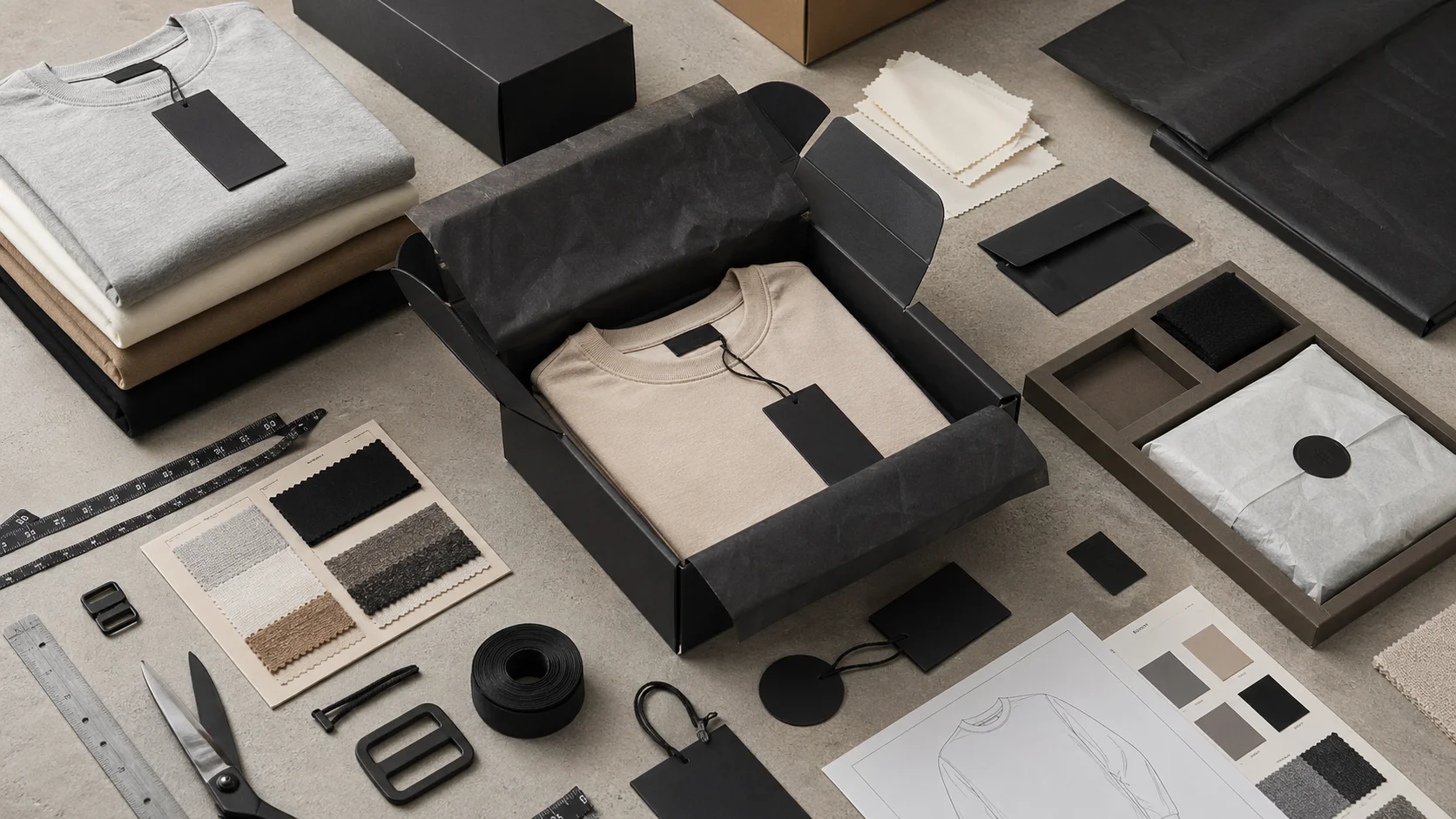
A practical outline explaining what low MOQ means in garment manufacturing, how minimums are set by production stage, and what small-batch buyers should evaluate before placing an order.
Low-MOQ Garment Manufacturing for Small-Batch Buyers - Fabrikn production reference
Low MOQ in garment manufacturing refers to a low minimum order quantity, which is the smallest number of units a factory is willing to produce for a specific style, color, or order. In practical sourcing terms, MOQ is one of the first filters that determines whether a buyer and a manufacturer are commercially aligned.
For small brands, startups, test-market sellers, corporate merch buyers, and boutique retailers, low MOQ can be the difference between launching a product and shelving it. A traditional factory may ask for 500 to 2,000 pieces per style, while a low-MOQ garment manufacturer may accept 50 to 300 pieces, depending on fabric availability, construction complexity, and trim requirements.
The phrase sounds simple, but buyers should treat it carefully. Low MOQ does not always mean low cost, fast delivery, or full customization. In many cases, it means the factory is willing to take a smaller run if the product is operationally efficient, the materials are stock-supported, and the specification package is clear.
That distinction matters. Some suppliers advertise low MOQ, then raise the threshold after they review fabric, print placement, size ratios, or packaging demands. Others accept a small run but charge a noticeable premium per piece. Buyers should read MOQ as a production condition, not just a marketing claim.
If you are comparing sourcing options, it helps to review a manufacturer’s broader production capabilities and service scope before focusing only on order size. Pages such as services and about us can help clarify whether a supplier is positioned for development-stage orders or only for larger volume programs.
Small-batch buyers usually need flexibility more than scale. They are often testing a new design, validating fit, checking retail response, or managing limited cash flow. Low MOQ allows those buyers to place production orders without tying up too much capital in inventory.
That flexibility creates several commercial advantages.
There is also a strategic reason low MOQ matters. Many emerging brands assume their first order should look like a scaled-down version of a mass-market apparel program. That approach often fails because the cost structure of small runs is different. A well-managed low-MOQ order is usually built around simpler construction, in-stock fabrics, limited trim variation, and fewer colorways.
The strongest purchasing decision is not always the lowest MOQ on paper. It is often the supplier that offers a realistic MOQ with stable execution. A factory willing to do 100 pieces with disciplined sampling and material control is typically a better partner than one promising 30 pieces without a clear production system.
Factories do not set MOQs randomly. They build them around efficiency, material consumption, machine setup, labor allocation, and purchasing constraints from their own upstream vendors.
At a basic level, MOQ is influenced by five core factors:
Fabric is usually the biggest driver. A garment factory may be willing to sew 80 hoodies, but the fabric mill might require 300 kilograms per color for custom dyeing. That means the actual MOQ is no longer determined by sewing capacity alone. If buyers select ready-stock fabric instead of custom-developed fabric, MOQ often drops sharply.
Trim can create the same issue. Custom woven labels, molded zipper pulls, printed polybags, branded hangtags, and specialty snaps often carry their own minimums. Buyers who insist on fully customized branding at a very small quantity should expect either higher unit pricing or compromise on trim options.
Construction matters too. A basic jersey T-shirt is easier to accommodate at low volume than a seam-sealed outerwear jacket with multiple panels, hidden pockets, and complex sizing. The more complicated the garment, the more pressure there is to raise MOQ so setup costs can be spread over more units.
In apparel sourcing, MOQ is not just a sales number. It is the point where material supply, production efficiency, and commercial viability meet.
MOQ ranges vary widely by product category and factory model. The figures below are typical market ranges, not fixed rules. Buyers should treat them as planning benchmarks and confirm actual thresholds after sharing a tech pack, bill of materials, size breakdown, and artwork details.
Product Type Typical Low MOQ Common Conditions Basic T-shirts 50-150 pcs per style Stock jersey fabric, limited colors, simple print or embroidery Polo shirts 80-200 pcs per style Pique fabric availability, collar and placket consistency required Hoodies and sweatshirts 100-250 pcs per style Fleece availability, rib matching, print or embroidery impacts cost Leggings and activewear basics 100-300 pcs per style Performance fabric sourcing, stretch recovery, opacity testing important Woven shirts and blouses 100-250 pcs per style Fabric width, marker efficiency, and construction detail affect MOQ Dresses 80-200 pcs per style Higher variation in fabric yield across sizes can affect costing Jackets and outerwear 150-500 pcs per style Complex trims, lining, padding, and fit approval raise thresholds Uniform or workwear basics 100-300 pcs per style Durability specs and repeat-order potential may support lower MOQBuyers should also ask whether the MOQ applies per style, per color, per fabric, or per total order. Those are very different things. A supplier that offers 200 pieces total across four colorways is not offering the same flexibility as one allowing 100 pieces per color with a balanced size ratio.
Low-MOQ garment manufacturing creates clear advantages, but it also introduces tradeoffs that buyers need to price in from the start.
This is where purchasing judgment matters. Many buyers focus heavily on reaching the lowest possible order quantity, then get surprised by the final cost. In most cases, pushing MOQ too low creates a poor cost-to-flexibility ratio. The more practical target is often an order quantity that is small enough to manage risk but large enough to support consistent material selection and stable production planning.
For example, raising an order from 60 units to 120 units may unlock better fabric utilization, more consistent dye lot control, and a more workable size spread. That often produces a healthier outcome than forcing an ultra-small run that looks attractive only on the initial quote.
Low-MOQ orders succeed or fail on development discipline. Buyers who want smooth execution should pay close attention to fabric specs, trim compatibility, and sample approvals.
Stock-supported fabric is usually the most efficient route for small-batch production. Common options include cotton single jersey, cotton-spandex jersey, fleece, French terry, basic pique, poplin, and certain performance knits. When evaluating fabric, buyers should confirm:
A clear fabric spec reduces disputes later. “Heavy cotton tee” is too vague. “100% combed cotton jersey, 220 GSM, reactive dyed, pre-shrunk” is a usable starting point.
Trim complexity often pushes small orders into avoidable delays. Buyers should separate essential trims from decorative trims. Essential trims include labels, care labels, thread, elastics, buttons, zippers, and packaging basics. Decorative trims include custom cords, branded eyelets, specialty pullers, silicone patches, and high-density print applications.
For low MOQ, the safest approach is usually to keep decorative trim customization limited in the first run. That preserves budget and reduces sourcing friction.
A disciplined sample process is non-negotiable, even for small orders. Typical stages include:
Some low-MOQ programs skip stages to save time. That is possible for simple repeat styles, but risky for new development. If there is custom printing, embroidery, washing, or technical performance criteria, skipping size set or pre-production approval can create expensive rework during bulk production.
Buyers who need help structuring development requirements can often narrow the discussion faster by sharing complete specs through a sourcing inquiry page such as contact us.
Lead time for low-MOQ garment manufacturing depends less on sewing minutes and more on preparation quality. A small order with unresolved materials or unclear approvals can take longer than a larger repeat order.
Typical timelines often look like this:
These ranges shift based on seasonality, material availability, printing queues, washing capacity, and shipping mode. Buyers should never assume a low quantity automatically means immediate production. Factories still need to schedule cutting, sewing, finishing, and quality control around line capacity.
One of the most common sourcing mistakes is approving samples verbally while measurement comments, label details, or packaging instructions remain undocumented. That creates delay later because the factory has to stop and reconfirm details once production is underway.
The cleaner the approval chain, the faster low-MOQ orders move. A strong purchase package usually includes:
Small-batch buyers sometimes assume low-MOQ production is easier to control because the order is smaller. That is only partly true. Smaller orders can receive less process discipline if the supplier treats them as side jobs rather than core production.
Common inspection risks include:
For knitwear and casualwear, buyers should review measurement tolerances at chest, body length, shoulder, sleeve length, and sweep. For stretch garments, stretch recovery and seam performance deserve attention. For woven garments, seam puckering, collar symmetry, placket alignment, and button security are recurring checks.
A practical inspection approach for low MOQ includes three checkpoints:
The goal is not to over-engineer a small order. It is to catch preventable mistakes before the full batch is packed. Buyers should also ask whether replacement units are possible if inspection issues appear. In low-volume runs, exact re-cuts may be difficult if fabric leftovers are limited.
Choosing the right low-MOQ garment manufacturer requires more than asking for the minimum quantity and price list. Buyers should assess whether the supplier can manage development, communicate clearly, and maintain consistent standards at small volume.
Commercial fit matters as much as technical fit. A supplier that is organized around large commodity orders may accept a small order, but that does not mean they are well suited to handle detailed startup development. In contrast, a manufacturer with a structured sampling process and realistic MOQ policy is often better for small-batch buyers, even if the initial quote is not the cheapest.
Look for clarity, not sales language. If MOQ answers are vague, sample steps are undefined, or fabric specs are still loose after several discussions, expect execution friction later.
Low-MOQ sourcing works best when buyers simplify what truly needs to be customized and tighten everything else.
One sensible buying strategy is to reserve customization budget for the features customers notice most, such as fit, fabric hand feel, and print quality. Many small brands overspend on packaging or custom hardware during early orders while underinvesting in fit approval and construction consistency. That is usually the wrong tradeoff.
Another smart approach is to treat the first low-MOQ order as a controlled learning run. If the factory delivers stable quality, clear communication, and reliable lead times, the relationship can scale more safely in future orders.
So, what is low MOQ in garment manufacturing? It is a small minimum order threshold that allows buyers to produce apparel in limited quantities, usually with some combination of stock materials, simplified customization, and tighter production planning. For small-batch buyers, low MOQ is not just a convenience. It is a commercial tool for reducing inventory risk, testing products, and entering the market with more control.
The important point is that low MOQ should be evaluated through the full sourcing picture: fabric availability, trim minimums, sample discipline, lead times, pricing structure, and quality control. Buyers who chase the lowest stated minimum without reviewing those variables often run into avoidable delays or cost surprises.
The better purchasing decision is usually the manufacturer that offers realistic low-volume capability with transparent development steps and dependable execution. If you are assessing production options in the Clothing Manufacturer category, reviewing operational scope through pages like services, about us, and contact us is a practical place to start.
Get a free quote from Fabrikn — your trusted B2B clothing manufacturer with 10+ years of experience. MOQ as low as 200 pieces.
Get a Free Quote →MOQ stands for minimum order quantity. In garment manufacturing, it is the smallest quantity a factory will accept for a style, color, or order based on material sourcing and production efficiency.
Low MOQ often falls in the range of 50 to 300 pieces, depending on the product type, fabric availability, and trim complexity. Simple knit styles tend to allow lower minimums than technical outerwear or heavily customized garments.
Factories use MOQs to cover setup costs, fabric and trim purchasing minimums, labor planning, and production efficiency. Without a workable minimum, small orders can become commercially inefficient for both the buyer and the supplier.
No. Low MOQ usually means higher unit cost because development, cutting, sewing setup, and sourcing costs are spread over fewer garments. Buyers gain flexibility, but they rarely get the best cost per piece at very small quantities.
You can, but customization options are often limited at low volumes. Stock fabrics and standard trims are usually the most practical route. Custom dyeing, branded hardware, and specialty packaging often require separate minimums or add cost.
A typical process includes a proto sample, fit sample, size set, and pre-production sample. Some simple orders may combine stages, but skipping approvals on a new style raises the risk of bulk quality issues.
Lead times vary by style and material readiness. Many low-MOQ orders take a few weeks for sampling and several more weeks for bulk production, especially if prints, washes, or custom trims are involved.
Yes, in many cases. Low MOQ helps startup brands reduce inventory risk, test market demand, and refine products without making a large upfront commitment. The tradeoff is higher unit cost and tighter material limitations.