
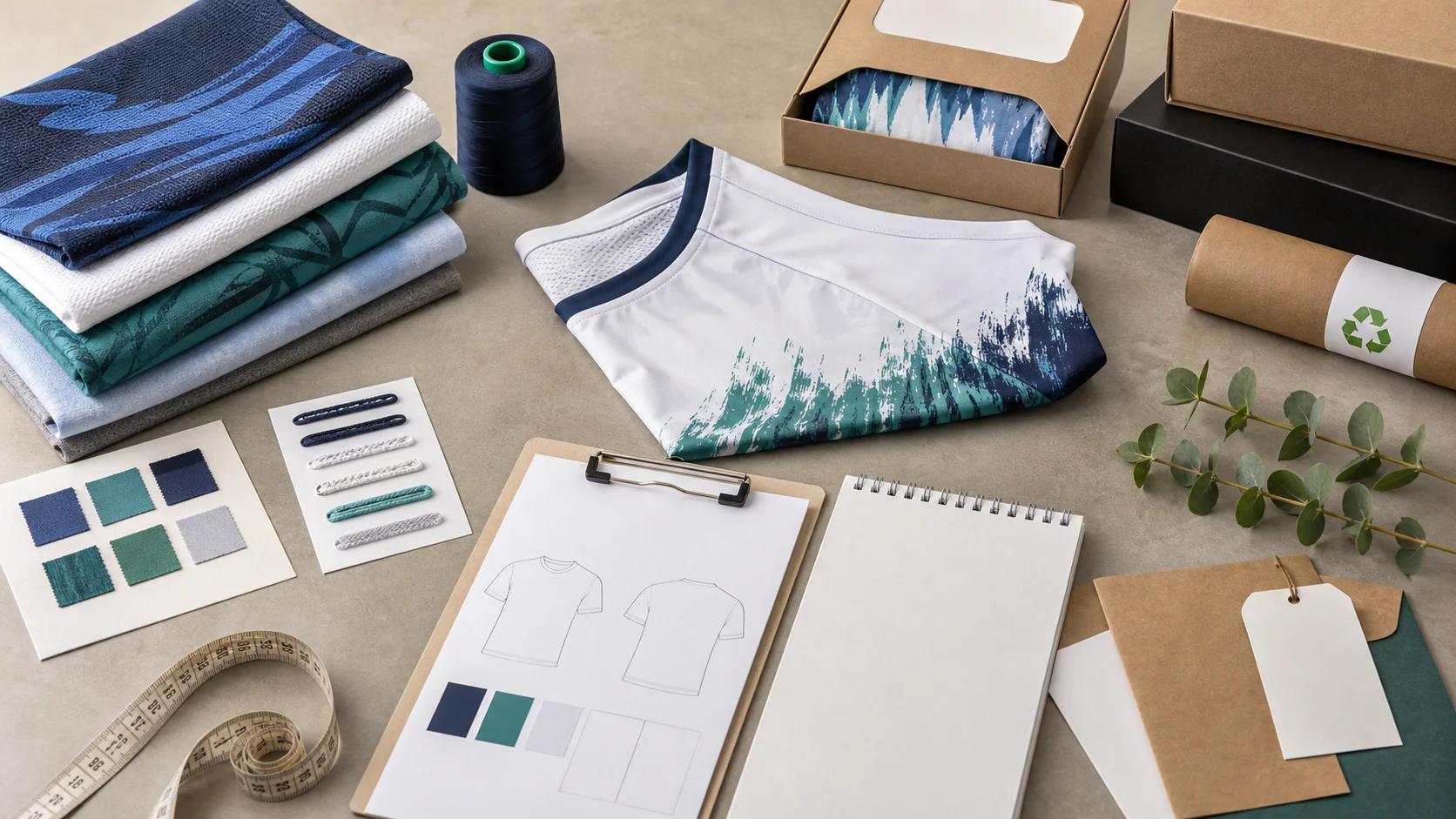
A production-focused outline for wholesalers sourcing OEM cut and sew scrubs, covering garment specs, pattern development, decoration methods, compliance,...
OEM Cut and Sew Scrubs for Wholesalers - Fabrikn production reference
OEM cut and sew scrubs are a practical sourcing category for healthcare uniform wholesalers that need repeatable sizing, reliable fabric performance, and room for private-label positioning. In this model, the wholesaler is not buying a generic stock garment and relabeling it. The product is built to order from specified patterns, fabric, trims, and decoration requirements. That matters in healthcare, where buyers look for durability, comfort, laundry performance, and a consistent fit across sizes and reorder cycles.
For wholesalers, the value is straightforward. Cut and sew development lets you define the garment rather than accept a supplier’s default style. You can choose scrub tops, pants, jackets, and sets with the pocket layout, stretch level, color range, and finishing details your customers expect. That control comes with tradeoffs: higher development effort, more sample rounds, longer lead times, and a greater need for disciplined spec approval. A wholesale program works best when the product plan is clear before production begins.
OEM stands for original equipment manufacturing. In apparel, it usually means the supplier produces garments to the buyer’s specifications, using the buyer’s branding, measurement requirements, and construction details. Cut and sew refers to the production method: fabric is sourced, cut into pattern pieces, sewn into finished garments, then decorated and packed according to the order. For wholesalers, this is the standard route when the goal is a proprietary scrub line rather than off-the-shelf merchandise.
The key distinction is control. A wholesaler can specify:
This control is useful in a category where procurement teams and distributors compare garments on comfort, appearance after laundering, and consistency over time. It is also where sourcing discipline matters. A scrub that looks acceptable in a sample may behave differently after repeated washing, especially if the fabric finish, thread quality, or shrinkage control is weak.
Wholesalers usually choose OEM cut and sew scrubs for one of three reasons: margin control, brand differentiation, or account-specific requirements. Stock garments limit how much you can separate your offer from competing catalogs. OEM production gives room to build a line around a customer segment, whether that is clinics, dental offices, veterinary practices, lab staff, or institutional buyers.
Private-label scrubs can support better account retention when the fit, color palette, and decoration method are consistent across reorder seasons. That is especially important for healthcare buyers that need uniformity for staff appearance. A stable product line also makes it easier to support size run continuity, replacement orders, and multi-site accounts.
There is a commercial tradeoff. OEM products typically require larger commitments than a simple stock buy. Typical MOQ ranges vary by supplier and complexity, but wholesalers often see minimums in the range of 300 to 1,000 pieces per style or color, with higher thresholds for custom fabric dyeing or specialized trims. Smaller runs are possible, but unit pricing usually rises when the order is fragmented across too many colors, sizes, or decoration variants.
The best scrub programs start with a tight specification package. A supplier can only quote accurately when the product is defined in practical terms. For wholesale buyers, that means more than a loose idea of “comfortable scrubs.” It means a measurable spec sheet.
A useful development package usually includes:
The sample process normally moves in stages. A prototype confirms construction and silhouette. A fit sample checks measurements and wearing ease. A pre-production sample confirms the final fabric, trims, labels, and decoration. Wholesale buyers should not skip approval steps because scrub garments are judged on everyday usability, not just appearance on a hanger. Pockets that pull, waistbands that twist, or tops that bind at the shoulders will create returns and complaints quickly.
When comparing suppliers, ask whether they can work from your tech pack, adapt a reference garment, or develop from a concept. The least risky route is usually a supplier that can translate your specs into a controlled sample sequence without improvising the design on the factory floor.
Scrub fabric is where many wholesale programs succeed or fail. Healthcare uniforms need a balance of durability, hand feel, color retention, and easy care. Common fabric options include polyester-rayon-spandex blends, polyester-cotton blends, and performance stretch fabrics with a woven or knit structure depending on the garment type.
Typical fabric considerations include:
Trims matter more than many buyers expect. A scrub garment with weak elastic, low-grade drawcord tips, or unstable pocket reinforcement may pass a quick review and still fail in use. Zippers should cycle smoothly and hold alignment. Thread should match the fabric weight and seam stress. Buttonholes, bartacks, and pocket corners should be clean and reinforced. If the garment includes knit cuffs, waistband rib, or contrast panels, those components need the same level of specification as the main fabric.
Private-label wholesalers should also pay attention to labeling components. Neck labels, size pip labels, country-of-origin labels, and care labels all need to fit the branding plan without irritating the wearer. In healthcare, comfort inside the garment matters as much as the outside presentation.
MOQ is not just a procurement number. It affects pricing, color strategy, and the number of SKUs you can support. A wholesale scrub line with too many colorways and size splits can become expensive fast. Suppliers may quote a lower MOQ for a simple top in one fabric and a higher MOQ for a coordinated top-and-pant set, especially when separate pattern pieces, trims, and packaging are involved.
Sampling usually takes multiple rounds when the program is new. A realistic schedule often includes:
Lead time depends on several variables. Fabric availability is usually the biggest driver. Stock-dyed fabric moves faster than custom-dyed fabric. Decoration adds time, especially if the logo requires embroidery digitizing, print screening, or multi-location placement. Seasonal congestion, order size, and packaging requirements also affect timing. Wholesalers should build buffer into replenishment planning rather than assuming sample approval and bulk delivery will move on a compressed calendar.
As a working rule, simpler styles made from readily available fabric can move faster than complex multi-panel designs. Once custom color matching or specialty trims are introduced, buyers should expect longer development and production windows.
Because this topic sits in Decoration & Printing, the decoration plan deserves specific attention. In scrub programs, decoration is not only a branding exercise. It affects wash durability, hand feel, lead time, and how the garment is perceived by institutional buyers. Common methods include embroidery, heat transfer, screen printing, and woven or printed labels.
Embroidery is often preferred for logos on scrub tops and jackets because it is durable and communicates a more premium profile. The tradeoff is added weight and possible backing stiffness inside the garment. For fine logos or small text, embroidery can lose detail if the artwork is too busy. Screen printing works for flatter surfaces and larger graphics, but ink choice and curing quality determine wash life. Heat transfer can be useful for variable data or special placements, yet it needs careful testing for laundering performance and edge lifting.
Decoration planning should account for:
Wholesale buyers should ask for decoration strike-offs or lab dips where relevant, then wash-test them before approving bulk. A decoration method that looks good on day one may fail after repeated industrial laundering. That is a commercial risk, not a cosmetic one.
For a broader view of production capabilities and decoration support, review the available services page. For project inquiries and quotation requests, the contact page is the most direct next step.
Scrubs are functional garments, which means buyers need to inspect them as workwear, not just apparel. The most common defects are preventable with clear standards. In wholesale production, the inspection focus should cover measurements, seam integrity, color variation, stitching consistency, and decoration placement.
Typical risk points include:
Inspection should begin before bulk production with sample approval and material verification. During production, in-line checks help catch cutting and sewing issues before the full run is complete. Final inspection should verify carton count, size breakdown, folding, polybagging, labeling, and visible defects. For healthcare uniforms, a failure in one size or one colorway can disrupt a reorder sequence and create avoidable service issues downstream.
Wholesalers should also clarify acceptable tolerance levels in advance. A supplier may consider a measurement variation normal that a distributor would not accept. That gap is where disputes begin. Clear tolerances, agreed by size and placement, reduce rework and protect the buyer’s margin.
A good OEM scrub supplier should be able to quote clearly, sample accurately, and communicate limitations early. The strongest vendors are not the ones promising every feature at the lowest price. They are the ones who tell you what is realistic, what requires more time, and what changes the cost structure.
Useful evaluation questions include:
The supplier should also be transparent about capacity. If a vendor can make only a small number of new styles each month, that affects your launch calendar. If they rely on outsourced printing or embroidery, the decoration lead time should be stated separately. Good sourcing decisions come from knowing the weak points before the order is placed.
For company background and production context, wholesalers often review the supplier’s about page before moving into detailed quotation work. That helps separate a general trading presence from a production setup that can support repeat business.
Wholesale scrub sourcing should be treated as a portfolio decision. Not every account needs a fully custom program. Some buyers benefit from a narrower approach with one core fit, a limited color set, and one decoration method. That keeps inventory cleaner and reduces the risk of slow-moving stock. Other accounts justify deeper customization because they need a stronger branded presence or a strict uniform policy.
A sensible buying strategy balances four things: unit cost, minimums, lead time, and sell-through. Lower unit cost is not useful if the size breakdown is wrong or if the product misses the functional expectations of the buyer. A slightly higher-priced scrub that fits reliably and reorders cleanly may produce better gross margin over time than a cheaper garment that creates returns or rework.
It is also worth resisting unnecessary complexity. Extra seams, multiple contrast trims, special patches, and custom packaging all add friction. Some additions help the product sell. Others only inflate development time and inspection risk. Wholesalers should protect the core value proposition first: a dependable scrub with consistent fit, acceptable decoration, and repeatable delivery.
OEM cut and sew scrubs give healthcare uniform wholesalers a workable path to private-label product control. The advantage is not just branding. It is the ability to define fabric performance, construction quality, decoration method, and supply consistency around the needs of real buyers. That control comes with responsibility. The more custom the program, the more important it becomes to lock down specifications, confirm samples carefully, and inspect production with discipline.
For wholesalers, the most reliable scrub programs are usually the ones that stay clear on the basics: stable fabric, sensible MOQ planning, practical decoration choices, and honest lead-time assumptions. That approach may sound conservative, but in this category it is usually the difference between a one-time order and a repeat line.
Get a free quote from Fabrikn — your trusted B2B clothing manufacturer with 10+ years of experience. MOQ as low as 200 pieces.
Get a Free Quote →MOQ varies by supplier, style complexity, and fabric sourcing method. A common range is 300 to 1,000 pieces per style or color, with higher minimums for custom-dyed fabric or more complex decoration.
It depends on how complete the starting specification is. Simple projects may move through sampling in a few weeks, while more complex programs with custom fabric or decoration can take longer because fit, construction, and finish all need approval.
Blends that balance durability, stretch, and easy care are usually preferred. Polyester-rayon-spandex and similar performance blends are common because they can offer comfort, shape retention, and better wash performance than basic cotton-only options.
Embroidery is usually more durable for logos on scrub tops and jackets, while printing can work better for larger graphics or flatter placements. The right choice depends on the artwork, fabric, wash conditions, and the look the buyer wants.
They should confirm measurements, fabric hand feel, shrinkage behavior, color consistency, decoration placement, stitching quality, and label accuracy. A pre-production sample should match the final order as closely as possible before bulk cutting starts.
The most common problems are vague specs, weak sample approval, fabric variation, poor trim quality, and unclear inspection criteria. Most of these risks are preventable if the buyer defines the product carefully and checks samples against the intended use.