
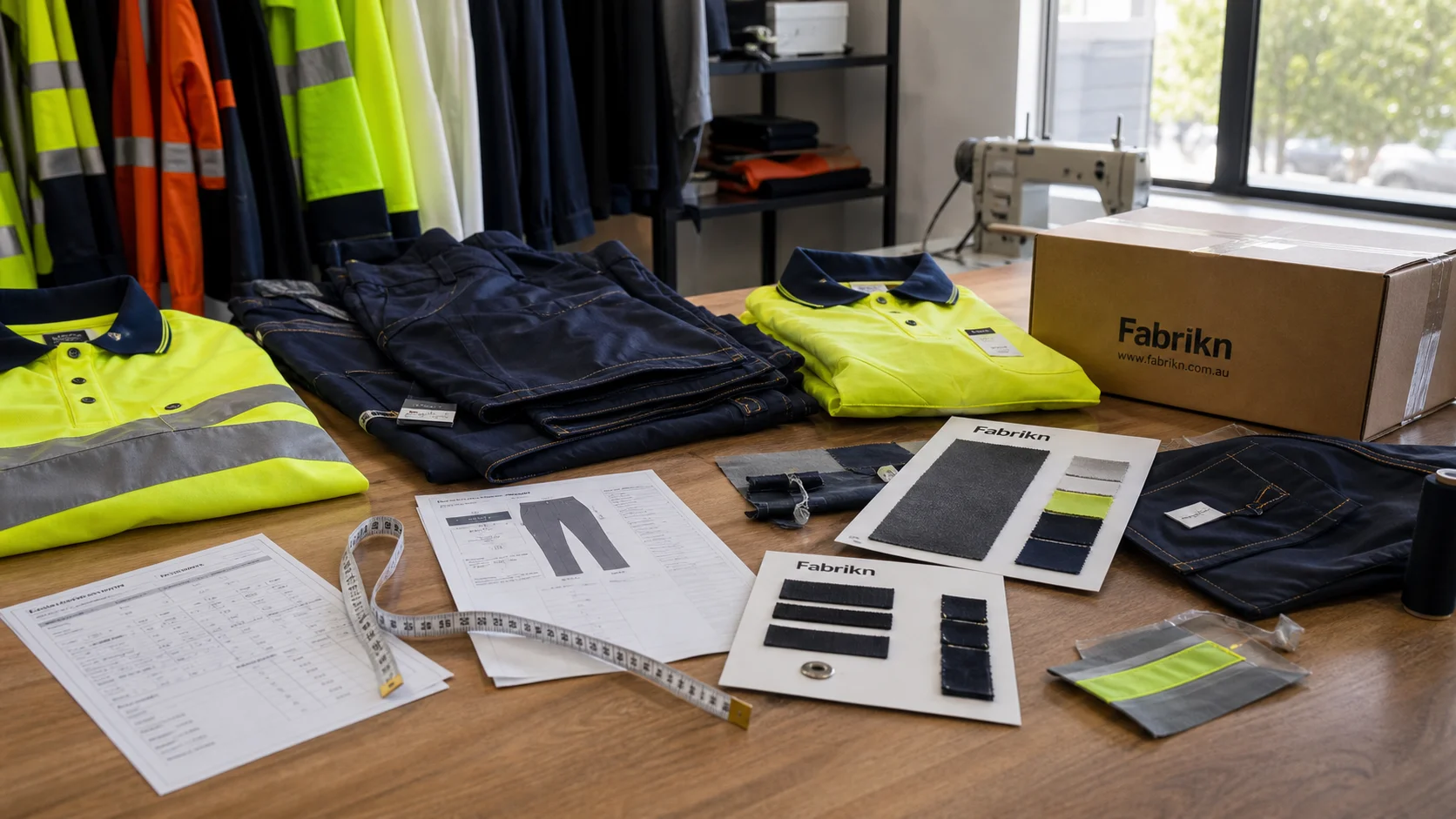
Private Label Product Launch Checklist for Amazon Sellers compared by sample evidence, fabric or trim specs, MOQ, AQL terms, cost lines, delivery timing,...
Fast answer: Private Label Product Launch Checklist for Amazon Sellers: Material, Print, MOQ, and QC Terms should be judged by production evidence, not by a generic sourcing promise. The buyer needs sample proof, cost breakdowns, QC checkpoints, and delivery buffers in writing.
Ask for recent sample photos, measurement tolerances, fabric or print test assumptions, decoration test notes, packing examples, and a named inspection checkpoint. These details show whether the team can repeat an approved sample at bulk volume.
Separate garment cost, decoration, labels, packaging, sampling, testing, freight, and rush charges. Clear cost lines make it easier to reduce colorways, adjust size depth, or reserve more time for sampling.
Launching a private label product on Amazon is a significant milestone for ambitious brand builders. With millions of products competing for attention, having a comprehensive launch checklist is the difference between a successful introduction and a missed opportunity. This article distills years of B2B clothing manufacturing experience into a step-by-step private label product launch checklist specifically tailored for Amazon sellers. Whether you are refreshing an existing product line or launching your very first SKU, this guide offers strategic clarity and practical actions to accelerate results.
Before launching a private label product, you must understand the Amazon marketplace dynamics surrounding your category. Use tools like Jungle Scout, Helium 10, and Amazon's Brand Analytics to identify high-demand but low-competition niches. Analyze customer reviews on similar products to uncover pain points and opportunities for differentiation. Evaluate seasonal trends, pricing expectations, and potential barriers to entry.
Competitive research goes beyond pricing. Examine competitor listings for their content quality, imagery, and customer engagement. Note what features resonate with customers and where existing offerings fall short. Your private label product should solve a specific problem better than competitors, whether that means higher quality fabric, tailored sizing, or sustainable materials.
Create a customer avatar that covers demographics, purchasing motivations, lifestyle habits, and shopping behaviors. This detailed profile helps in crafting compelling product messaging, choosing the right launch keywords, and designing packaging that resonates emotionally. Clarity about your ideal customer also guides inventory planning—knowing whether you’re targeting eco-conscious millennials or value-driven families informs everything from materials to marketing tone.
Turn your market research into product ideas. Sketch designs, select fabrics, and list features that align with unmet needs. Ideal private label products should have clear unique selling propositions (USPs). Outline these USPs in your launch playbook: Do you offer ergonomic design, antimicrobial materials, or inclusive sizing? The differentiators will fuel your product listing narrative.
Before investing heavily, validate the concept through Lean testing. Consider producing a small batch for soft launch or using crowdfunding platforms to gauge interest. You can also list prototype listings on Amazon to test keyword performance. Use Amazon's "Add to Cart" data and early sales feedback to refine your price point and product features.
Launch success isn’t just about sales volume—it’s about margins. Calculate your cost of goods sold (COGS), including manufacturing, packaging, shipping, and Amazon fees. Then determine your break-even point and desired profit margin. Make sure the unit economics support sustainable advertising spend and promotional activities during the launch phase.
Partner with a manufacturer experienced in private label production to avoid common pitfalls. If you need apparel manufacturing or specialized fabrication, rely on partners like Fabrikn who understand Amazon requirements, compliance standards, and efficient production workflows. Align on minimum order quantities (MOQs), lead times, and quality control protocols before signing any agreements.
Create detailed tech packs that cover materials, measurements, tolerances, and print treatments. For apparel, specify fabric blends, stitching methods, and label placement. Precise specifications reduce revisions, manufacturing errors, and unexpected costs. Keep your manufacturers updated whenever adjustments arise to maintain quality consistency.
Amazon enforces strict safety and compliance policies. Ensure your product complies with applicable regulations—textile labeling, chemical safety (e.g., for dyes or finishes), and certification standards. For clothing, consider flammability compliance, fiber content statements, and care instructions. Maintain documentation for audits and provide it when requested by Amazon.
Integrate quality assurance processes within your manufacturing timeline. Use third-party inspection services to validate sample batches before shipping to Amazon. Capture high-resolution photos of production samples and document any discrepancies. Address defects early to prevent Amazon returns or poor reviews post-launch.
Choose between Fulfillment by Amazon (FBA) and Fulfillment by Merchant (FBM) based on your product type and logistics capabilities. For private label launches, FBA often offers better Prime visibility and logistical convenience. Create a plan for inventory replenishment, including reorder points, safety stock, and lead time buffers, to stay ahead of demand spikes.
Your packaging is part of the brand experience. For private label clothing, invest in packaging that reflects your brand story while meeting Amazon’s packaging guidelines. Include branded inserts, swing tags, and care labels. Apply scannable barcodes—either FNSKU or manufacturer barcodes—as required. Double-check packaging dimensions for shipping calculations.
Coordinate logistics to move products from your manufacturer to Amazon fulfillment centers. Use experienced freight forwarders familiar with Amazon’s inbound shipment workflow. Prepare shipping plans that include carton weights, dimensions, and pallet stacking instructions. Consider customs paperwork and compliance if importing from overseas.
Even with the best product, returns happen. Define a proactive customer service workflow that manages inquiries, tracks issues, and delivers solutions quickly. Use Amazon’s Buyer-Seller messaging tools for timely responses. A strong customer service reputation improves product reviews and seller performance metrics.
Enroll in Amazon Brand Registry if you have a trademark. Brand Registry unlocks enhanced content options, A+ pages, and better protection against counterfeiters. It also allows you to customize your product details and control your brand narrative on the platform.
Build listings optimized for search and conversions. Conduct keyword research using Amazon tools and third-party software to uncover conversational phrases shoppers use. Craft a persuasive title (under Amazon limits), five bullet points, and a description that highlights benefits and features. Prioritize readability and mobile-friendly formatting to capture attention quickly.
Invest in professional product photography. Include lifestyle shots, detail-focused close-ups, infographic overlays, and size charts. Support the listing with image-rich A+ Content, if eligible. Visual quality influences click-through rates and conversions, so plan creative briefs well in advance.
Beyond standard listings, craft an emotional brand story. A+ Content allows for richer layout options with comparison charts, modules, and narrative text. Present your brand values, production commitment, and sustainability initiatives to foster trust and loyalty. You can also apply for Amazon Storefronts if you plan to build a mini-site within Amazon.
Create a detailed timeline beginning 8-12 weeks before your launch date. Include milestones for production completion, shipping, listing creation, content approvals, and advertising setup. Stick to a project management system so all stakeholders—manufacturers, photographers, copywriters, and logistics partners—know their deadlines.
Prepare Amazon PPC campaigns before launching. Start with broad, phrase, and exact match campaigns to gather keyword data quickly. Allocate budget for Sponsored Products, Sponsored Brands, and Sponsored Display placements. Monitor ACoS (Advertising Cost of Sale) daily, optimizing bids and keywords after you’ve collected enough performance data.
Product reviews are critical for trust. Use Amazon’s Request a Review feature and enroll in the Amazon Early Reviewer Program if applicable. Encourage verified purchasers to leave honest feedback through follow-up emails. Never offer incentives for reviews outside Amazon’s guidelines—this can lead to penalties.
Drive external traffic to your Amazon listing via influencer partnerships, email marketing, and content marketing. Promote your launch on social media, featuring behind-the-scenes production content and exclusive offers. Consider collaborations with niche bloggers and creators who align with your brand. External traffic can boost Amazon’s ranking algorithms, especially in the critical first weeks.
Plan promotional tactics such as coupons, limited-time discounts, or bundle deals. Coupled with ads, these incentives encourage higher conversion rates and help gain traction. Track promotion performance to understand which offers resonate with your audience.
After launch, review metrics daily for the first two weeks, then weekly thereafter. Track sales volume, conversion rate, session percentage, and Buy Box ownership. Use Amazon Brand Analytics to identify shifts in search terms or competitive landscape. These insights guide adjustments in pricing, advertising, and stock levels.
Listings should evolve based on performance. A/B test images, bullet points, and pricing. Replace underperforming keywords with those showing higher search volume or lower competition. Keep your listing fresh by integrating customer testimonials or seasonal messaging relevant to your category.
Maintain visibility over your physical inventory. Use an inventory management system that syncs with Amazon. Forecast demand based on historical data, seasonality, ad campaigns, and upcoming promotions. Avoid running out of stock, which can hurt ranking and delay momentum.
Use feedback to refine products, packaging, and messaging. Respond to reviews professionally, addressing concerns and thanking customers. Convert negative feedback into product improvements—if multiple buyers point out sizing issues, revise your design or include clearer size charts.
Once the initial launch stabilizes, explore scaling opportunities. Add color variants, size enlargements, or bundled deals. Bundles can increase average order value and position your brand as a comprehensive solution provider. Always test new variants in small batches before wider rollout.
Document lessons learned and incorporate them into future product launch checklists. Maintain a knowledge base of supplier insights, logistics partners', and marketing strategies that performed well. Building a repeatable launch process ensures each new private label product can surpass the previous one.
Get a free quote from Fabrikn — your trusted B2B clothing manufacturer with 10+ years of experience. MOQ as low as 200 pieces.
Get a Free Quote →A strong brief makes the supplier's job narrower and the quote more reliable. For private label product launch checklist for amazon sellers, include the target customer, sales channel, expected order quantity, size range, decoration needs, packaging requirements, and delivery market. Then call out the details most likely to affect the result, especially material grade, print tolerance, and barcode size.
The brief should also explain what cannot change. Some brands care most about hand feel, some about price, some about launch timing, and some about retail compliance. When those priorities are not written down, suppliers tend to optimize for whatever is easiest to quote. Clear priorities help the factory make better tradeoffs before the first sample is cut or printed.
Ask the supplier to respond with assumptions, not just a price. A useful reply states MOQ, sample route, production capacity, inspection plan, packing method, and freight handoff. If the answer is vague, the project may still work, but it needs a tighter pre-production stage before money and calendar pressure build up.
The best time to catch problems is before the pre-production sample is approved. Check measurements, color, placement, material behavior, shrinkage, construction, labels, and packaging in the same review instead of approving each item in isolation. Many bulk issues are not caused by one dramatic mistake; they come from several small unchecked assumptions.
For private label product launch checklist for amazon sellers, pay special attention to folding method, pack-out sequence, and retail compliance. These details often look minor in an email but become expensive once cutting, printing, sewing, packing, or shipping begins. A simple checklist with owner, due date, and approval status keeps the brand team and factory aligned.
Bulk production should not start until the supplier can explain how the approved sample becomes a repeatable production standard. That means reference sample storage, line instructions, inline checks, final inspection, and defect handling. A factory that can describe this process clearly is usually safer than one that only promises speed.
Price differences are useful only when the quotes cover the same work. Compare sample cost, material source, trims, decoration, packaging, testing, inspection, and freight assumptions. A low unit price can become expensive if it excludes items the brand needs before launch.
Timeline promises deserve the same scrutiny. Ask what happens if the first sample needs revision, whether materials are in stock, when the production slot is reserved, and how export packing is handled. The most reliable supplier is often the one that gives a realistic calendar instead of the fastest optimistic answer.
Private labeling involves sourcing or manufacturing products under your own brand name, allowing you to control branding, pricing, and quality. Reselling typically means selling existing branded products without custom branding. Private label gives you more control and long-term scalability.
Ideally, plan at least 8-12 weeks in advance. This timeframe accommodates research, product development, manufacturing, quality checks, shipping, and listing creation to ensure you have inventory and your listing is fully prepared at launch.
For most private label launches, FBA provides better Prime visibility and customer trust, which boosts conversions. However, if you have unique logistics needs, FBM can work. Evaluate costs, inventory control, and handling requirements before deciding.
Use Amazon’s built-in tools like “Request a Review,” enroll in programs such as Amazon Vine if eligible, and follow up with customers via Amazon-approved messages. Provide excellent customer service to naturally encourage positive reviews.
External traffic drives momentum on Amazon by increasing sessions and conversions, which signals Amazon’s algorithm to rank your product higher. Collaborating with influencers, using email marketing, and promoting on social platforms can accelerate visibility and credibility.
Launching a private label product on Amazon requires meticulous planning, strategic execution, and continuous optimization. By following this ultimate private label product launch checklist for Amazon sellers, you can navigate the complexities of sourcing, logistics, marketing, and analytics with confidence. For tailored support on manufacturing or logistics, learn more about Fabrikn’s services, our commitment to sustainable production on our about us page, or reach out directly via our contact us form.