
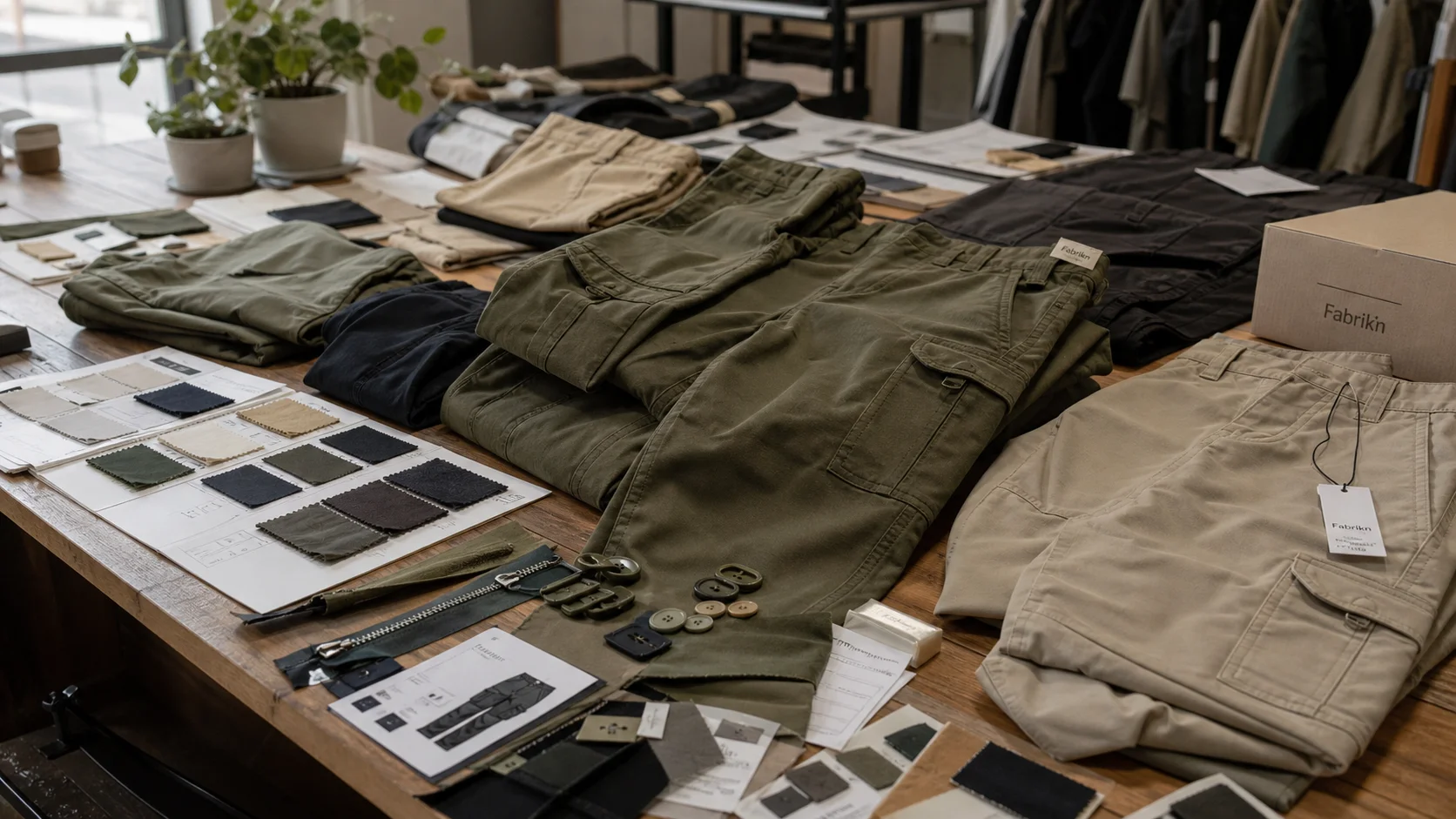
Private Label Tank Manufacturer for Brands with checks for samples, fit, MOQ, QC evidence, pricing terms, and delivery risk.
Fast answer: Private Label Tank Manufacturer for Brands: Text, Placement, Material, and MOQ should be judged by production evidence, not by a generic sourcing promise. The buyer needs sample proof, cost breakdowns, QC checkpoints, and delivery buffers in writing.
Ask for recent sample photos, measurement tolerances, fabric or print test assumptions, decoration test notes, packing examples, and a named inspection checkpoint. These details show whether the team can repeat an approved sample at bulk volume.
Separate garment cost, decoration, labels, packaging, sampling, testing, freight, and rush charges. When every cost line is visible, it becomes easier to reduce colorways, adjust size depth, or reserve more time for sampling.
Tank tops don’t forgive sloppy factories. If you’re vetting a private label tank top manufacturer, this is the style that tells you—fast—whether they can actually deliver or just talk a good game. I’ve watched buyers approve a 12-piece sample, then scrap a 5,000-piece order because the neckline grew 8 mm after one wash and the side seams twisted by 1.5 cm. No collar. No sleeves. No hiding place. Just stitch quality, fabric stability, and the discipline to make 1,000 pieces look like the first one.
During factory visits in China, Vietnam, and Turkey, the contrast was impossible to miss. In Shanghai, a plant running 14-year-old flatlock machines still held a neck opening within 0.5 cm because QA checked every 30 pieces and tracked shrinkage by dye lot. In Southeast Asia, a cheaper quote came with a sample room that had no measurement board, no wash-test log, and no inline inspection record. Saving 12% on labor didn’t save that buyer; it produced 400 defective units, two extra weeks of rework, and a margin loss that swallowed the supposed discount.
Fabric mistakes show up immediately on tank tops. A 180 GSM combed cotton jersey behaves nothing like a 220 GSM cotton-spandex blend, and a weak-recovery rib knit will sag at the armhole after a few wears. These simple silhouettes are a stress test for pattern-making, sourcing, and finishing. If a factory can’t keep a clean hem, a stable neckline, and consistent shade across six colors, a more complex program will expose it even faster.
Here’s the filter I use after 200-plus factory visits: the lowest quote is often a trap. A supplier priced at $2.10 per piece may look attractive next to a $2.75 offer, but add 6% defect rates, three approval rounds, and slower communication, and the “cheaper” factory ends up costing more. I’ve seen the same thing in India, Mexico, and the U.S. Good control beats a low sticker price. Every time.
A private label tank top manufacturer does much more than sew a blank body and slap on a label. Fabric sourcing comes first, then pattern development, size grading, labeling, trims, packaging, and compliance checks. Last year, one brand I worked with had a factory source 32 single jersey options, narrow them to four, then adjust the armhole by 7 mm to stop gaping from XS through XL. That’s the kind of detail that separates a polished product from a commodity.
Production models matter. Cut-and-sew means the factory builds your garment from fabric rolls using your tech pack. OEM usually means a pre-existing base with some custom changes. ODM gives you an existing design that can be branded faster, often with lower development cost but less room to stand out. For many brands, private label sits in the middle: custom labels, custom packaging, maybe a modified neckline or fit, and tighter control over presentation. Need deeper specification control? cut and sew manufacturing gives you far more room to shape the product than any stock template.
Factories handle custom necklines, rib knit choices, dyeing, wash finishes, screen print readiness, embroidery placement, woven labels, and hang tags. A scoop neck in 1x1 rib is not the same animal as a racerback in self-fabric binding. Garment dye adds depth, but weak chemistry can shift shade by 5 to 8 percent. Enzyme wash softens the hand feel without the heavy abrasion of stone wash, which matters on lightweight 140 GSM viscose blends that can pill or distort.
Buyers still have to stay involved. I never hand a factory an incomplete tech pack and expect precision. Artwork files, graded size specs, stitch details, approval checkpoints, and clear tolerances for length, width, and neckline depth all need to be on the page. Building a broader assortment? private label clothing planning should keep labels, packaging, and size charts aligned across the range. The factory executes. You own the decisions.
Region changes everything when you choose a private label tank top manufacturer. China still offers deep fabric networks and fast access to trims, but labor can run $500 to $900 per month in some hubs, and communication quality varies by city and factory tier. Vietnam tends to deliver clean workmanship with MOQs around 1,000 to 3,000 pieces, though sampling may take 7 to 14 days longer if fabric has to be imported. India is strong on cotton and recycled yarns, with competitive pricing for 160 GSM to 220 GSM knits, but lead times can stretch to 30 to 45 days when mills are congested. Turkey moves fast into Europe, often with 2 to 4 week freight windows and responsive technical teams. Mexico can make sense for U.S. buyers, especially at 500 to 1,500 piece MOQs. U.S. factories carry the highest labor cost, yet 5 to 10 day domestic replenishment can beat ocean freight when speed matters more than scale.
For trade-flow context, textile sourcing patterns are documented by the U.S. Commercial Service trade resources and broader trade statistics from the World Trade Organization. Those numbers matter. Freight, tariffs, and compliance costs can wipe out a unit-price edge fast.
Here is the comparison I use for a basic men’s or women’s tank at 1,000 pieces:
No one likes hearing this, but a higher-priced factory can still produce a lower total landed cost. I saw one Turkish supplier charge 18% more per piece than a competitor in South Asia, yet the defect rate stayed under 1.5%, the packing was cleaner, and ocean-plus-hold time was 19 days shorter for a European brand. That saved more than the unit-price gap. Want to compare suppliers quickly? request a free quote and send the same spec sheet to each factory.
A reseller sells what already exists. A real private label tank top manufacturer controls the fabric, fit, and finish. Cotton is still the most common choice, but cotton-spandex gives better neckline and armhole recovery, polyester blends dry faster, modal drapes softly, viscose feels cooler, and recycled yarns now show up in more 160 GSM to 240 GSM programs than many buyers expect. According to Textile Exchange, recycled fiber demand keeps rising, and that pressure shows up in the brand briefs I see every quarter.
GSM drives almost everything. A 140 GSM tank feels airy but can go semi-sheer in white. A 180 GSM single jersey is the sweet spot for many DTC brands. A 220 GSM rib knit adds structure and better drape for premium fits, especially when the neckline needs recovery after repeated wear. Armhole placement matters too. Drop it 1 cm too low and the garment feels sloppy. Raise it too high and mobility disappears. Body length is a margin driver because 2 extra cm of fabric on a million units turns into a serious cost line.
Finishes separate the good from the forgettable. Garment dyeing adds depth, but low-cost runs often show dye-lot variance that jumps out when three shades of black sit on one rack. Enzyme washing can reduce surface fuzz without the heavy hand of stone wash, which is useful for compact combed cotton. Screen-print readiness depends on fabric stability and pre-shrink behavior. I ask for wash tests, print-adhesion checks, woven labels, and hang tags before first bulk approval. If a supplier can’t explain how a 3% shrinkage limit will be handled after two home washes, I keep walking.
Sample costs usually land between $25 and $80 per style, while development fees can run from $50 to $300 if pattern work or grading is custom. First-order pricing is where the real negotiation starts. A 500-piece order may sit 15% to 35% above the price at 3,000 pieces because setup, cutting loss, and print calibration have to be spread across fewer units. Repeat orders usually drop 8% to 18% if the fabric, trims, and fit stay the same.
MOQ changes more than price. Lower MOQs often cut color options from eight shades to two or three, limit size runs, and push factories toward generic packaging. Want custom polybags, size stickers, hang tags, and branded cartons? Expect those extras to add $0.18 to $0.65 per unit depending on volume. Lab dips can cost $30 to $90 per color. Strike-offs for prints can tack on another $25 to $60. Freight, duties, and customs delays aren’t theoretical either; a 7-day port delay on a seasonal basic can turn a healthy margin into dead stock.
For margin math, I use a simple test. If your landed cost is $4.10, your wholesale price is $10.00, and your direct-to-consumer price is $28.00, the gross-margin stack looks different by channel. Wholesale leaves room for 20% to 40% retailer margin, so unit economics need to be tighter. DTC can absorb more product cost, but return rates, paid acquisition, and packaging eat into the spread. Judge the supplier quote against the channel, not in isolation. A $3.60 tank with 4% defects can lose to a $4.25 tank with 0.8% defects every single time.
Quality control on a tank top is not glamorous, but it’s where money gets saved or burned. I check fabric testing, measurement tolerance, stitch density, shade banding, and wash performance. A basic jersey should survive 3 to 5 home wash cycles without neck distortion, skew, or pilling beyond agreed limits. Stitch density matters because loose seams at 8 to 9 stitches per inch fail sooner than balanced construction at 11 to 12 SPI on many knit programs.
Compliance matters too. Fiber content labels have to match the actual composition. Country of origin has to be right. For children’s product, CPSIA rules apply in the U.S. For many export programs, REACH restrictions and azo dye limits matter. Packaging rules change by market, and I’ve seen shipments held because a carton mark didn’t match the shipping docs. Standards from OEKO-TEX and the ASTM standards provide useful testing benchmarks when a factory claims compliance but can’t produce paperwork.
Factory red flags show up fast. No inline QA? Problem. Weak records? Problem. A chaotic sample room with unlabeled knit swatches, missing shrinkage logs, and no defect map? Problem. Evasive answers on rejection rates are worse. If a supplier can’t tell you whether their current defect rate is 1.2%, 3.8%, or 7%, they’re asking you to finance their mistakes.
My short vetting checklist is blunt:
The cleanest buying process starts with a price target, not a vague mood board. Set your landed-cost ceiling, usually with a 20% buffer for freight, duties, and rejects. Then build the tech pack: fabric weight, fiber content, neckline shape, armhole depth, body length, size chart, label placement, stitching, packaging, and target margin. Only then should you request quotes. Weak brief, weak samples, expensive confusion.
I always ask factories for photos of the production floor, a current production calendar, lab reports, and references from brands at a similar price point. A factory that sells $2.50 basics is not automatically fit for a $7.00 premium rib tank. If it can’t show two or three comparable programs, the reference doesn’t mean much. Ask for sample lead time too, usually 7 to 14 days, and bulk lead time, often 25 to 45 days depending on fabric availability and print complexity. Building a wider line? browse our product catalog to compare silhouettes and decide whether your tank should anchor a capsule or sit beside tees and loungewear.
Compare two suppliers using landed cost, defect risk, and communication speed. A factory that answers within 6 hours, sends detailed measurement charts, and flags fabric risk early is often worth more than one that’s $0.30 cheaper and vague. I’ve seen founders chase the lowest quote, then spend five weeks fixing fit issues, resampling in a new dye lot, and air freighting replacement inventory. That isn’t sourcing. That’s damage control.
My advice is blunt. Shortlist 3 factories, sample 2, and place a first order only when the math holds up on paper and in hand. The right private label tank top manufacturer won’t just make a garment. It will protect your margin, cut noise, and give your brand a product that survives wear, wash, and a very unforgiving customer.
A private label tank top manufacturer sources fabric, develops patterns, grades sizes, applies labels, and manages packaging and compliance. Many also handle custom necklines, wash finishes, and print or embroidery setup. For a basic order, expect 7 to 14 days for samples and 25 to 45 days for bulk production.
Pricing varies by region, fabric, and MOQ. Basic cotton tanks often run $1.95 to $3.50 per piece at higher volumes, while premium or fashion-fit styles can reach $4.50 to $7.50 or more. Sampling usually costs $25 to $80 per style, with development fees on top if the pattern is custom.
Compare landed cost, defect risk, sample quality, and communication speed. Ask for lab test reports, references from similar brands, and production photos. A factory with a slightly higher unit price can still win if it reduces rework, delays, and defects below 2%.
Yes. Most can adjust armhole depth, neckline shape, body length, and fabric weight. Common options include 160 GSM cotton jersey, 180 GSM combed cotton, 220 GSM rib knit, and cotton-spandex blends for better recovery. The buyer still needs a clear tech pack and approval checkpoints.
Sampling usually takes 7 to 14 days, depending on fabric availability and revisions. Bulk production often takes 25 to 45 days, with domestic or nearshore factories sometimes moving faster. Add extra time for lab dips, print strike-offs, customs clearance, and freight delays if the order is seasonal.