
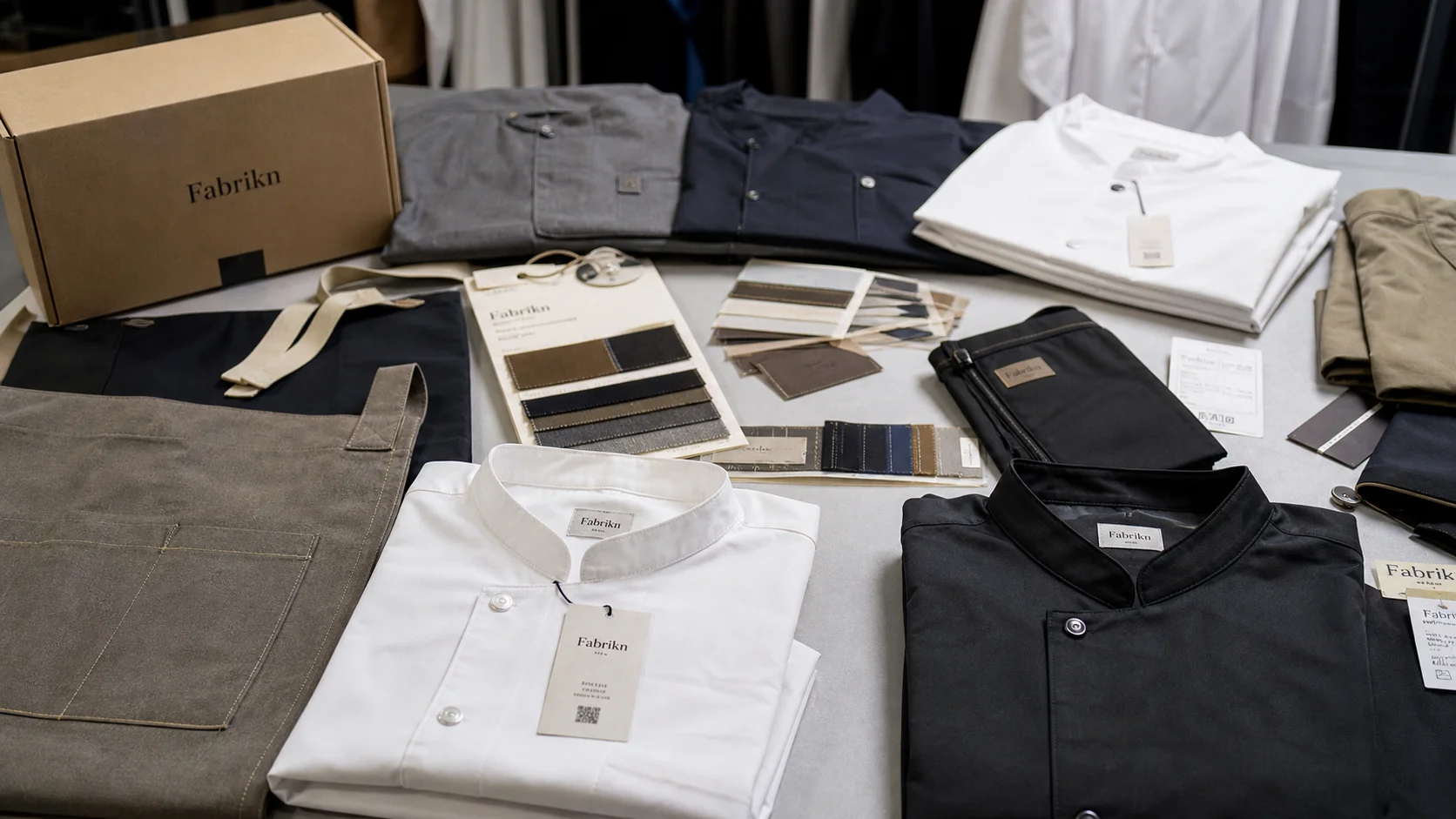
Recycled Cardboard Boxes for Clothing Shipping compared by sample evidence, fabric or trim specs, MOQ, AQL terms, cost lines, delivery timing, and rework...
Fast answer: Recycled Cardboard Boxes for Clothing Shipping: Tech Pack, Sample Gate, MOQ, and QC Terms should be judged by production evidence, not by a generic sourcing promise. The buyer needs sample proof, cost breakdowns, QC checkpoints, and delivery buffers in writing.
Ask for recent sample photos, measurement tolerances, fabric or print test assumptions, decoration test notes, packing examples, and a named inspection checkpoint. These details show whether the team can repeat an approved sample at bulk volume.
Separate garment cost, decoration, labels, packaging, sampling, testing, freight, and rush charges. Clear cost lines make it easier to reduce colorways, adjust size depth, or reserve more time for sampling.
In a busy packing room, waste is rarely subtle. I once watched a 220 g tee go into a 420 g carton with two polybags, one insert, and a corner crushed before the pallet left the dock. That mismatch is exactly why recycled cardboard boxes for clothing shipping are under a harsher spotlight than most brand teams expected.
At one factory in Vietnam, I counted 37 oversized cartons on a single line, all carrying folded knitwear that weighed less than 1.2 kg per order. The freight bill told the story. Box cube, not product weight, was driving cost. Apparel still ships light, but it ships in bulky packaging, and that is where emissions, carton waste, and margin leak out together. In Guangzhou and Ho Chi Minh City, similar lines churn through 5,200 to 7,800 cartons per day, yet quality teams still struggle with mis-sized die cuts and tape seals applied over dust that traveled from the inland Dhaka feeder lines. Istanbul converters, by contrast, line up certifications like GOTS, OEKO-TEX Standard 100, WRAP, BSCI, and GRS alongside their carton quotes because their European retail customers require the paperwork before the trucks leave the port.
Across 200-plus factory visits, three pressures keep showing up. In Asia, high-volume factories still chase speed, with 3,000 to 8,000 cartons a day moving through one line. In Europe, compliance teams ask for recycled content declarations, FSC traceability, and packaging reports tied to EPR rules. In North America, brand buyers ask bluntly about damage rates, landed cost, and whether the unboxing still feels premium at $1.50 to $4.00 per order.
Data from the WTO and trade.gov shows how cross-border freight costs are sensitive to cubic volume, not just kilograms. That matters because the average apparel parcel often carries more air than fabric. One carton I measured held 14 shirts and used 42% more board area than the product actually required. Not rare. Normal.
Recycled does not mean weak. It means the spec must match the route, the garment weight, and the stack height. A 200 GSM cotton tee needs a very different outer pack from a 900 g wool coat or a two-piece denim set. If the board grade is right, the carton survives. If it is guessed, the box fails in the first 48 hours of transit.
Recycled cardboard is not one product. It is a mix of recovered fiber content, liner quality, flute selection, and printability. Separate those variables before comparing quotes. A box with 80% recovered fiber and well-formed liners can outperform a cheap virgin board carton made with loose formation and inconsistent adhesive. In Guangzhou converters typically run double-faced corrugators from BHS or Fosber at 260 to 320 meters per minute, using kraft and testliner sourced from nearby mills, with starch-based adhesives formulated for higher humidity tolerance.
For apparel, the core metrics are straightforward. ECT tells you edge crush resistance. Burst strength shows resistance to puncture and rough handling. Compression resistance matters if cartons are stacked 8 to 12 high. Moisture behavior matters if the route crosses humid ports, open yards, or a monsoon season. A box that reads fine on a spec sheet can still sag after 72 hours at 85% humidity.
Single-wall board is enough for most folded clothing, especially tees, leggings, and lightweight woven shirts. Double-wall is better for heavier multipacks, coats, or cartons going through long ocean legs with 5 to 7 transfer points. I have seen brands overbuy strength for simple apparel and then pay for it in freight. I have also seen the opposite: underbuilt mailers collapsing because the fill pattern was loose.
The thing nobody tells you: recycled boxes can beat low-grade virgin cartons because the recycled board formation was tighter, the flute height was more consistent, and the glue line was cleaner. Fiber label alone does not tell you how a carton will behave on the floor.
For neat apparel presentation, simple finishes work best. A tissue wrap, paper insert, or molded fiber spacer can hold folded garments in place without introducing plastic trays. Water-based inks are enough for branding, and minimal coatings help the box remain recyclable. If you need guidance for product categories beyond adult basics, I often point teams working on custom baby clothing manufacturing toward lighter, cleaner pack-out standards because infant items are more sensitive to odor, compression, and presentation.
When sourcing from a manufacturer or factory, ask how board recovery, production control, and quality checks are handled from reel to finished carton. A reliable supplier should be able to explain the stack tests and the moisture limits without jargon. For brands ordering wholesale or bulk, that process clarity matters as much as the price.
On a pure unit basis, recycled cartons can be cheaper, equal, or slightly higher than virgin board. For a 3,000-piece run, I have seen plain recycled mailer boxes land at $0.28 to $0.46 per unit, while a comparable virgin board box ranged from $0.30 to $0.49 depending on print, coating, and flute profile. At 20,000 pieces, those numbers often fall by 15% to 30% because conversion waste drops and tooling cost is spread across more units.
Freight math matters more than many procurement teams admit. A right-sized carton that cuts outer dimensions by 10% can reduce volumetric chargeable weight by 8% to 14%, especially on air freight or parcel networks. That means a box premium of $0.03 can disappear quickly if the smaller carton saves $0.12 in shipping. For low-margin basics, that difference is real money, not theory.
Damage is the hidden line item. A 2% return rate on 50,000 orders is 1,000 customer complaints. If each return costs $6 to process, the box mistake becomes a $6,000 problem before customer service time or lost repeat sales. I have watched a brand spend an extra $900 on better cartons and avoid nearly $8,000 in damage-related costs over one season.
Regional recycled fiber pricing also moves the quote. In China and Vietnam, converter access to recovered fiber can be strong, but inland trucking and port congestion can add 7 to 12 days; the same route from Ho Chi Minh City to Los Angeles can stretch to 18-22 business days when a monsoon delays the berth. In Poland or Spain, compliance and collection systems can support more stable recycled inputs, though labor is higher. In the United States, shorter trucking legs often help lead times, but carton prices can be 8% to 18% above Asian sourcing on identical specs.
A Dhaka plant that holds BSCI and WRAP certifications quoted $2.50-4.00 per unit at 500 MOQ for a reinforced single-wall carton with kraft liners, a 60 gsm testliner, and a moisture-blocking inner sleeve. That price included flexo printing on a 6-color Mark Andy line, slitting, and die-cutting the closure tabs. Brands doing private label clothing services usually feel the squeeze first because packaging and branding costs hit before revenue scale does. Compare the landed carton cost, the damage rate, and the expected freight per order across a 10,000-unit forecast. That is where the real answer sits.
Good carton design starts with garment categories, not with a catalog. Tees and jersey tops usually pack well in small mailers around 180 x 130 x 50 mm. Denim needs more depth, often 250 x 180 x 80 mm, because folded seams create pressure points. Knitwear and sweaters need room to breathe, or the edges crease. Coats, especially padded outerwear, often need a larger 350 x 250 x 100 mm box or a reinforced mailer.
I have seen three failure points repeat across factories. First, too much void space. The garment slides and the box dents. Second, crushed corners, often from weak board choice or poor pallet stacking. Third, closure lines that tear because tape is applied over dust, humidity, or poor die-cut tolerances. These are avoidable failures, and they show up fast in the warehouse.
For folded apparel, single-wall corrugation is usually enough if the pack-out is tight and the route is short. If the order carries multiple items, or if the carton is going through export lanes with heavy stacking, a stronger flute profile makes sense. E-flute works well for premium mailers with good print detail. B-flute and C-flute offer more crush protection. For heavier garments heading toward long-haul shipments, I have teams specify a microflute liner plus a reinforced cross-directional board formed on a multi-ply corrugator before it hits the rotary die-cutter.
Reinforced edges can come from hot-melt glues applied with a thin bead using a Nordson hot melt pump and a high-precision applicator head. If the closure is glued instead of taped, specify a Kraft or starch-based cold glue with a dwell time of at least 12 seconds on the folding table. That level of detail keeps the garment snug and the carton square, even when the liner was pressed from 70% recycled pulp sourced through a GRS-compliant supply chain in Guangzhou.
A strong brief makes the supplier's job narrower and the quote more reliable. For recycled cardboard boxes for clothing shipping, include the target customer, sales channel, expected order quantity, size range, decoration needs, packaging requirements, and delivery market. Then call out the details most likely to affect the result, especially material grade, print tolerance, and barcode size.
The brief should also explain what cannot change. Some brands care most about hand feel, some about price, some about launch timing, and some about retail compliance. When those priorities are not written down, suppliers tend to optimize for whatever is easiest to quote. Clear priorities help the factory make better tradeoffs before the first sample is cut or printed.
Ask the supplier to respond with assumptions, not just a price. A useful reply states MOQ, sample route, production capacity, inspection plan, packing method, and freight handoff. If the answer is vague, the project may still work, but it needs a tighter pre-production stage before money and calendar pressure build up.
The best time to catch problems is before the pre-production sample is approved. Check measurements, color, placement, material behavior, shrinkage, construction, labels, and packaging in the same review instead of approving each item in isolation. Many bulk issues are not caused by one dramatic mistake; they come from several small unchecked assumptions.
For recycled cardboard boxes for clothing shipping, pay special attention to folding method, pack-out sequence, and retail compliance. These details often look minor in an email but become expensive once cutting, printing, sewing, packing, or shipping begins. A simple checklist with owner, due date, and approval status keeps the brand team and factory aligned.
Bulk production should not start until the supplier can explain how the approved sample becomes a repeatable production standard. That means reference sample storage, line instructions, inline checks, final inspection, and defect handling. A factory that can describe this process clearly is usually safer than one that only promises speed.
Price differences are useful only when the quotes cover the same work. Compare sample cost, material source, trims, decoration, packaging, testing, inspection, and freight assumptions. A low unit price can become expensive if it excludes items the brand needs before launch.
Timeline promises deserve the same scrutiny. Ask what happens if the first sample needs revision, whether materials are in stock, when the production slot is reserved, and how export packing is handled. The most reliable supplier is often the one that gives a realistic calendar instead of the fastest optimistic answer.