
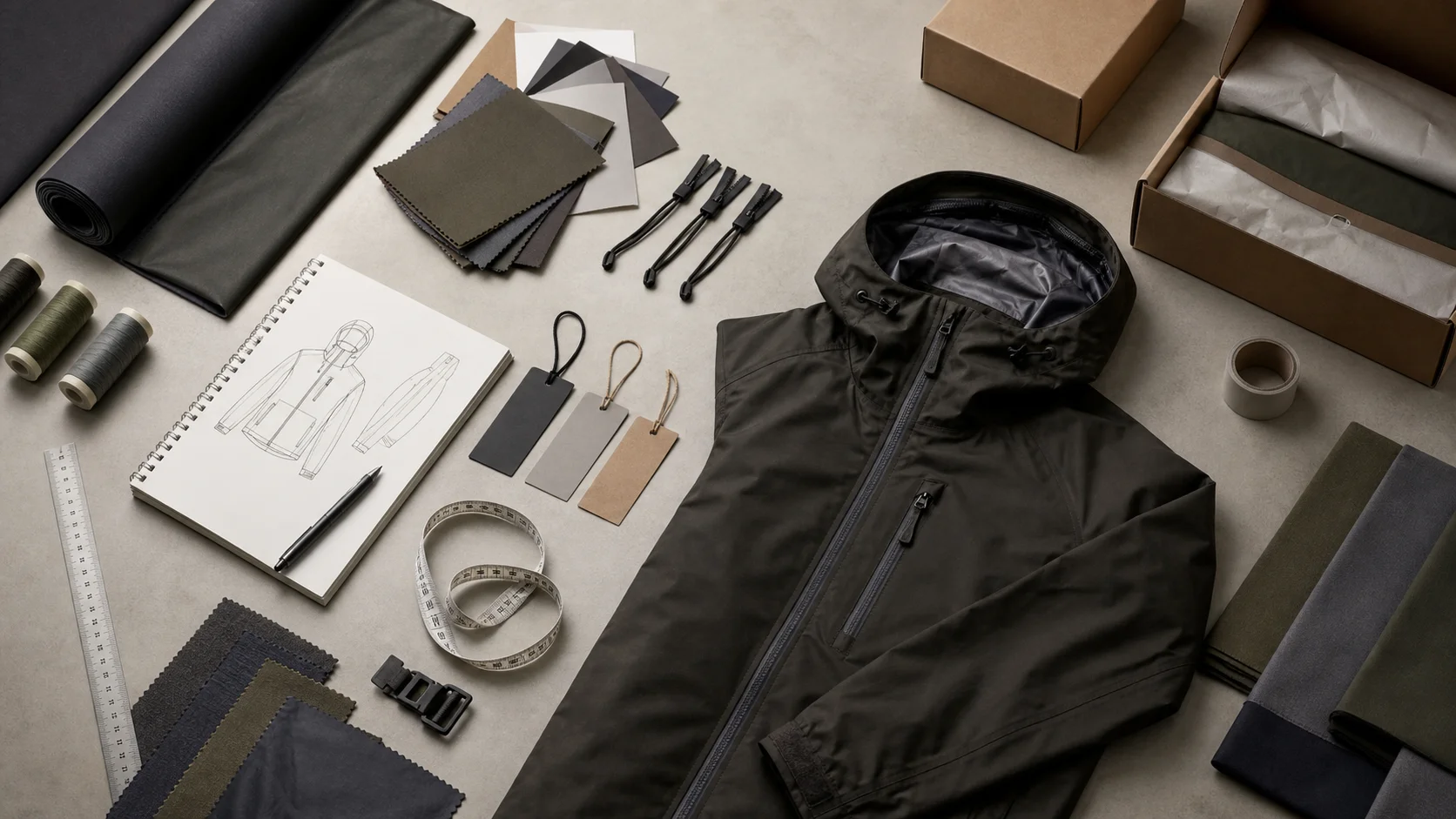
Screen Printed Mailer Bags for Apparel with checks for samples, fit, MOQ, QC evidence, pricing terms, and delivery risk.
Fast answer: Screen Printed Mailer Bags for Apparel: Costs, Quality, Strategy should be judged by production evidence, not by a generic sourcing promise. The buyer needs sample proof, cost breakdowns, QC checkpoints, and delivery buffers in writing.
Ask for recent sample photos, measurement tolerances, fabric or print test assumptions, decoration test notes, packing examples, and a named inspection checkpoint. These details show whether the team can repeat an approved sample at bulk volume.
Separate garment cost, decoration, labels, packaging, sampling, testing, freight, and rush charges. When every cost line is visible, it becomes easier to reduce colorways, adjust size depth, or reserve more time for sampling.
A torn seam has a way of turning a profitable order into a very expensive apology. And damage rates of 2% to 5% sound small until you ship 50,000 units and 1,000 to 2,500 parcels come back with crushed corners, split seams, or scuffed labels. I’ve watched screen printed mailer bags for apparel move from “nice branding extra” to packing-floor standard because they speed up pack-out, cut tape use, and make every parcel look intentional the moment it leaves the belt.
In Vietnam, Turkey, and Poland, the failures were rarely about the print. Weak heat seals. Ink sitting too glossy on low-grade film. Mailer dimensions that were 20 to 40 mm too large for the folded garment. And oversized bags wander in transit. Too-small bags stress the seal. A clean logo cannot fix either one.
Plain poly mailers protect the product, but branded outer bags do something else: they signal value before the box is opened. For a $24 basics brand, that matters because packaging often delivers the first premium cue. And for streetwear sold at $110 to $180, screen printed mailer bags for apparel can reinforce scarcity and consistency. For subscription orders of three or four pieces, a branded outer bag makes the package feel deliberate instead of generic.
I’ve seen this with French terry hoodies at 320 GSM, rib tanks, and midweight tees where the garment itself is not the differentiator. The outer bag becomes part of the product story. And that is why some teams use screen printed mailer bags for apparel alongside screen printing services for labels, inserts, and seasonal packaging runs.
Branding is not the real question. Does it pay for itself through lower handling time, fewer returns, and stronger repeat recall? In some warehouses, yes. And in others, it is decoration with a shipping label on top.
Teams in Guangzhou and Dhaka have learned that repeatable precision—70-micron metallized BOPP printed on a 2-color rotary screen press like the MHM SCS 320—keeps damage under 0.5% when paired with a Berstco impulse sealer delivering 250 mm-wide heat seams. And these locations pair that equipment with adhesives rated for 25 reseals, so customers don’t get frustrated pilot-testing deliveries.
At entry level, a plain 10 x 13 inch mailer might cost $0.08 to $0.14, while a single-color printed version lands closer to $0.16 to $0.28 at 5,000 pieces. Mid-market brands buying 10,000 to 25,000 units often see $0.18 to $0.34 depending on film gauge, print area, and whether the order includes a second color. And premium labels with custom sizing, matte finish, and tighter tolerance can push into $0.30 to $0.55 per piece fast.
Region changes the math, but not always the way buyers assume. In Asia, especially China and parts of Vietnam, labor is usually lower and lead times can be three to five weeks, yet color control depends heavily on the factory’s print discipline. Turkey tends to run higher labor and energy costs, but it often wins on faster communication, tighter boutique runs, and more willingness to adjust 1,000 to 3,000 piece test orders. And Eastern Europe sits between those two, with easier access to EU buyers and smaller freight shocks on seven- to 14-day trucking lanes.
A factory in Ho Chi Minh City once registered a three-color logo within 0.7 mm across 20,000 bags. A higher-priced supplier in northern Italy missed alignment by nearly 2 mm on the same design. Process mattered more than hourly wage. And the cleaner result came from screen discipline, not geography. Data from WTO trade flows shows why buyers keep spreading orders across regions: freight volatility changes total landed cost faster than many teams forecast.
Budget brands gain most when their AOV sits below $40 and the bag replaces a plain mailer plus a separate branded sticker. And mid-market DTC labels see value when repeat purchase matters and packaging is part of retention. Premium labels also benefit, but only if the bag matches the garment story. A matte black outer bag for heavyweight fleece makes sense. A flashy, crowded print on low-margin basics usually does not.
A smaller factory with stricter sign-off steps can beat a larger plant with cheaper labor, especially on 5,000 to 10,000 piece runs where one sloppy shift can ruin the whole batch. And for apparel brands that also source trims or labels, it helps to keep packaging aligned with private label clothing services so the outer bag, hangtag, and insert card speak the same visual language.
Buyers read packaging in seconds. Gloss level, logo sharpness, and whether the print sits square to the seal line matter more than people admit. And under warehouse LEDs, a crisp one-color mark on a 60 to 80 micron film often looks more premium than a muddy three-color graphic on a thicker bag.
Film gauge is the first technical spec to check. A 50 micron mailer may save pennies, but it scuffs faster and tears more easily on conveyor edges. But a 70 micron to 80 micron bag costs more, yet it tends to survive re-handling better, especially in cross-dock environments. Adhesive strip quality matters too. If the peel tape opens in 30 seconds or the closure fails after one reseal, the package feels cheap no matter how good the print is.
Print opacity is the next signal. A white logo on dark film needs enough ink deposit to stay legible after folding and rubbing. And I ask for rub tests because warehouse friction is brutal. A clean logo that disappears after 15 minutes in a tote is useless. ASTM test methods and AATCC colorfastness references are useful benchmarks; I often ask suppliers to reference ASTM, AATCC, or OEKO-TEX protocols when they claim abrasion resistance.
One strong color usually wins. A single black, white, or metallic gold mark on a restrained background reads cleaner than a four-color design that loses registration. Most of the time, a one-color system reduces setup time by 15% to 25% and lowers spoilage on shorter runs of 2,000 to 5,000 bags. I’ve seen brands spend extra on a second color only to create a logo that looks busier, not richer.
Better appearance links directly to retail outcomes: fewer complaints about crushed or dirty packaging, stronger recognition at repeat delivery, and more unboxing posts from customers who recognize the brand before they tear the seal. And that visibility keeps the brand top of mind for whatever comes next.
The cheapest option on paper is a plain mailer. A basic poly bag at 10,000 units might cost $0.09 to $0.13. Add a sticker and you may spend only $0.02 to $0.05 on the label itself, but the labor to apply it adds 8 to 20 seconds per order, and that compounds fast at 1,000 orders a day. Screen printed mailer bags for apparel often cost $0.07 to $0.18 more than plain bags, yet they remove the manual labeling step.
Here is the part procurement teams miss. Stickered mailers create hidden waste. Misapplied labels hit 1% to 3% in many warehouses, and peeled stickers after transit scuffs can trigger replacement shipments or customer service tickets. And if one replacement order costs $6 to $14 in freight and labor, the “cheap” sticker solution starts to look expensive before the week is over.
A strong brief makes the supplier's job narrower and the quote more reliable. For screen printed mailer bags for apparel, include the target customer, sales channel, expected order quantity, size range, decoration needs, packaging requirements, and delivery market. Then call out the details most likely to affect the result, especially material grade, print tolerance, and barcode size.
The brief should also explain what cannot change. Some brands care most about hand feel, some about price, some about launch timing, and some about retail compliance. When those priorities are not written down, suppliers tend to optimize for whatever is easiest to quote. Clear priorities help the factory make better tradeoffs before the first sample is cut or printed.
Ask the supplier to respond with assumptions, not just a price. A useful reply states MOQ, sample route, production capacity, inspection plan, packing method, and freight handoff. If the answer is vague, the project may still work, but it needs a tighter pre-production stage before money and calendar pressure build up.
The best time to catch problems is before the pre-production sample is approved. Check measurements, color, placement, material behavior, shrinkage, construction, labels, and packaging in the same review instead of approving each item in isolation. Many bulk issues are not caused by one dramatic mistake; they come from several small unchecked assumptions.
For screen printed mailer bags for apparel, pay special attention to folding method, pack-out sequence, and retail compliance. These details often look minor in an email but become expensive once cutting, printing, sewing, packing, or shipping begins. A simple checklist with owner, due date, and approval status keeps the brand team and factory aligned.
Bulk production should not start until the supplier can explain how the approved sample becomes a repeatable production standard. That means reference sample storage, line instructions, inline checks, final inspection, and defect handling. A factory that can describe this process clearly is usually safer than one that only promises speed.
Price differences are useful only when the quotes cover the same work. Compare sample cost, material source, trims, decoration, packaging, testing, inspection, and freight assumptions. A low unit price can become expensive if it excludes items the brand needs before launch.
Timeline promises deserve the same scrutiny. Ask what happens if the first sample needs revision, whether materials are in stock, when the production slot is reserved, and how export packing is handled. The most reliable supplier is often the one that gives a realistic calendar instead of the fastest optimistic answer.
Before making the final decision, write down the specification, approval owner, delivery expectation, and the one or two risks that would cause the most trouble if missed. For screen printed mailer bags for apparel, this usually means checking material grade, print tolerance, barcode size, and the support process after the order is placed.
This last review does not need to be complicated. It simply makes the decision easier to repeat, easier to explain, and easier to verify when the finished product or jewelry arrives.
One useful way to pressure-test the decision is to ask what would happen if the order had to be repeated in six months. The answer should still be clear: the same material grade, the same print tolerance, the same acceptance standard, and the same communication path. If a second order would depend on memory or guesswork, the first order is not documented well enough yet.
Another useful check is to separate preference from requirement. Preference is the look, wording, or finish the brand likes. Requirement is the measurement, tolerance, certificate, material, or delivery condition that cannot fail. Good buying decisions keep both visible, so the final choice is not pushed around by the last email, the cheapest quote, or the prettiest sample photo.
Finally, ask who owns each approval. A project with one accountable owner for sample review, one owner for final content or artwork, and one owner for delivery sign-off usually moves faster than a project where every decision is shared loosely across a team. Clear ownership reduces delays and makes the finished result easier to judge.