
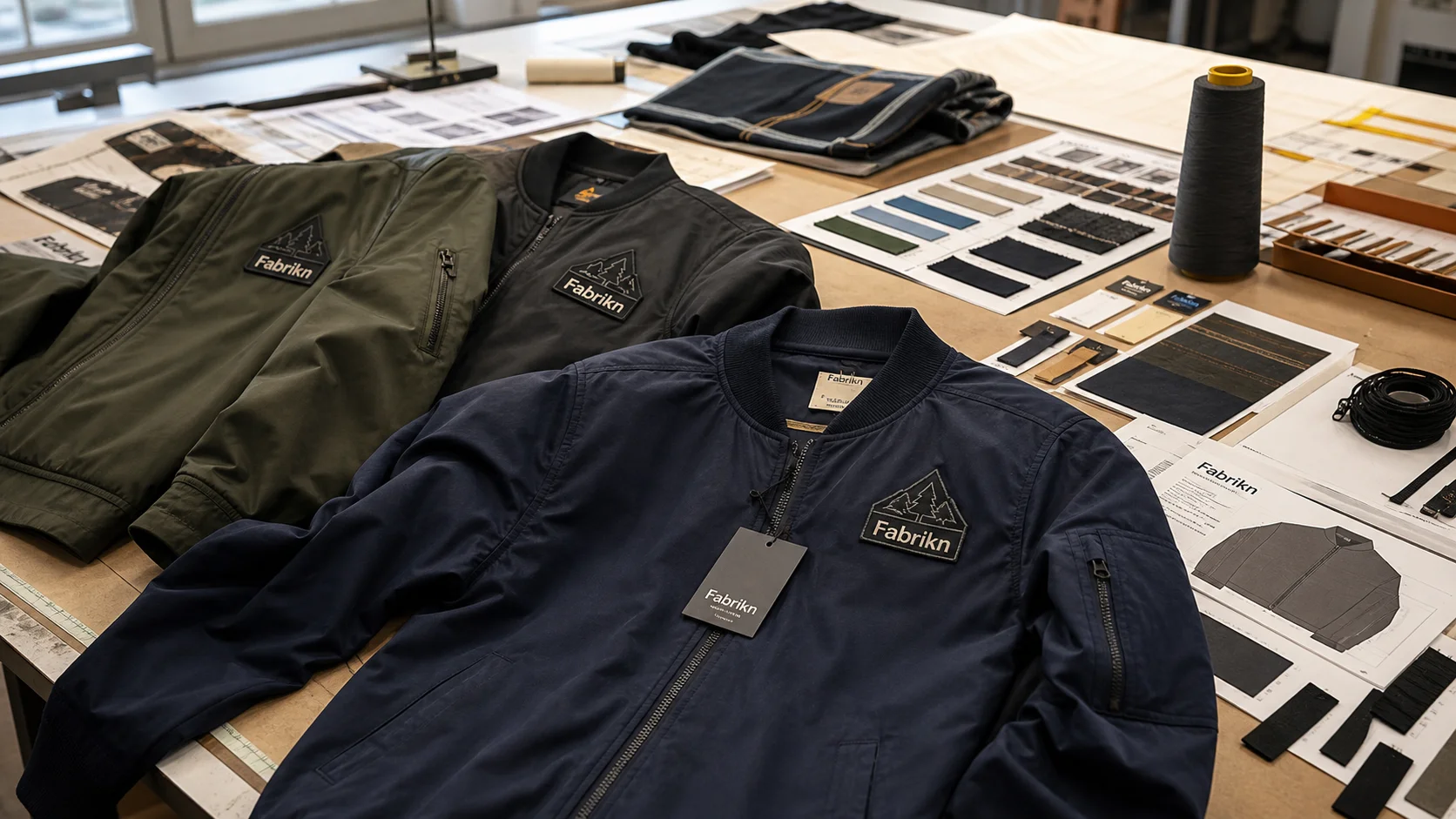
Screen-Printed Clothing Poly Bags with checks for samples, fit, MOQ, QC evidence, pricing terms, and delivery risk.
Fast answer: Screen-Printed Clothing Poly Bags: Film, Ink, Care, and Cost should be judged by production evidence, not by a generic sourcing promise. The buyer needs sample proof, cost breakdowns, QC checkpoints, and delivery buffers in writing.
Ask for recent sample photos, measurement tolerances, fabric or print test assumptions, decoration test notes, packing examples, and a named inspection checkpoint. These details show whether the team can repeat an approved sample at bulk volume.
Separate garment cost, decoration, labels, packaging, sampling, testing, freight, and rush charges. When every cost line is visible, it becomes easier to reduce colorways, adjust size depth, or reserve more time for sampling.
The fastest way to make a T-shirt look more expensive is often embarrassingly simple: put it in a better bag. A folded knit tee inside a clean printed sleeve suddenly feels controlled, finished, and worth more before anyone touches the fabric. That is why screen printed poly bags for clothing keep showing up in mid-market and premium lines, even as brands try to cut plastic wherever they can.
Across factory visits in Vietnam, Turkey, India, and China, the same pattern kept surfacing. Brands selling $6 to $18 T-shirts often choose printed poly over plain bags because the print adds perceived value without the cost of a rigid carton. A plain LDPE bag can cost $0.03 to $0.07 per piece at scale. Screen printed poly bags for clothing may run $0.06 to $0.14. A folding box can hit $0.35 to $1.20 before inserts. For a brand moving 50,000 units, that gap is budget strategy, not decoration.
Why print instead of plain poly? Control. Centered logo. Even fold. Clean warning text. Buyers read that as operational discipline. I have seen that judgment hold in wholesale showrooms where garments stay on hangers and the packaging never reaches the consumer. The bag is doing silent work.
Packaging gets dismissed as an afterthought, yet a better bag can reduce scuffing, dust, and moisture issues when garments pass through four to six hands between sewing line, QC table, carton, warehouse, and retail floor. A small upgrade may cut returns tied to staining or crushed trims by 1% to 2%. On a 20,000-piece order, that matters more than the extra $800 spent on print.
Fashion buyers still choose poly because it works. It protects from humidity during two- to eight-week transit windows. It stacks efficiently in warehouses. It keeps size labeling visible. And under retail pressure, screen printed poly bags for clothing can make a basic item feel deliberate. The sustainability problem is real, but the commercial logic is real too, which is why many teams keep using it while they test recycled content, lighter gauges, and better recovery pathways. According to the Textile Exchange, recycled and preferred-material sourcing is rising, yet packaging decisions still hinge on performance and cost, not slogans.
Before printing even starts, the film has to exist. It is either extruded in-house or sourced as rolls or pre-made bags, usually LDPE or HDPE, with gauges from 30 to 80 microns depending on garment weight and shipping route. In Bangladesh and southern China, factories often use 40 to 50 micron film for basic tees and 60 micron or higher for heavier sweatshirts. Thicker film feels better in hand, but it uses more resin and adds shipping weight. Thinner film saves material, then splits the moment cartons get rough treatment.
Screen printing works by pushing ink through a mesh stencil onto the poly surface. Mesh count matters. A 90 to 120 mesh often suits bold logos and simple text; finer detail may need tighter mesh and slower press speeds. Ink viscosity has to be tuned so the print sits on the film without smearing. Then comes drying or curing, depending on the ink system. Registration — the alignment of each color layer — is where a lot of cheap quotes fall apart. A 2 mm shift can make a logo look tired.
Factories using recycled content face a real constraint. PCR film can come in at 20% to 100% recycled content, but print adhesion is not always as clean as virgin film. Better results usually show up when extrusion and printing sit in the same plant. Buy film outside, and the surface energy changes from batch to batch; the ink may resist cure or rub off after folding. Ask for adhesion tests, not just a recycled claim. The claim is easy. The outcome is harder.
Spec approval should cover width, gusset, seal strength, opacity, vent holes if needed, suffocation warnings, and barcode placement. On one athleisure program, moving the barcode 18 mm lower solved warehouse scan failures across three distribution centers. That kind of detail rarely shows up in a sales quote. It lives in the packing room.
For brands running decorated apparel or activewear programs, I often compare this workflow with sublimation printing services and with garment-side print methods such as screen printing services. The material behavior is different, but the lesson is the same: surface prep, heat, and registration decide whether the result looks premium or just cheap.
If you need a sourcing comparison, look at cost, weight, volume, and brand effect side by side. Plain poly is the cheapest, but it carries almost no visual authority. Screen printed poly bags for clothing cost a bit more and usually give the best ratio of protection to branding. Tissue wrap looks softer, yet it tears and wrinkles in humid transit. Folding cartons signal luxury, though they are heavy, expensive, and space hungry. Compostable mailers can work for e-commerce, but they are not automatically lower-impact if they require thicker gauges or perform poorly in hot, humid warehouses.
Wholesale basics usually favor printed poly bags because they protect volume at low unit cost. Premium basics often use a printed bag plus tissue insert to feel polished without pushing packaging above 4% to 6% of FOB value. Luxury or limited editions can justify boxes because the unboxing matters more than cubic efficiency. For e-commerce, a mailer may be better if the garment ships alone and the outer package doubles as transit protection. For high-volume replenishment, the winner is still often a printed poly bag, especially when 10,000 to 100,000 units move through the same carton spec.
Regional differences can swing the economics fast. Several Asian factories print poly bags at scale for a lower per-unit cost because labor, film sourcing, and press setup sit close together. A similar job in Portugal, Poland, or Mexico may cost more per bag, yet cut lead time by 7 to 15 days and reduce inventory risk. That matters when the launch window is tight or the retailer charges for late delivery.
According to WTO trade data, freight volatility can wipe out small unit savings quickly. A bag that is $0.02 cheaper at factory gate can end up more expensive once you add two rounds of freight, one sample rerun, and a carton rework caused by poor sealing. I have watched brands save $600 on material and lose $4,000 on damage. Cheap packaging turns expensive the moment it starts failing.
For private-label programs, packaging also shapes how the line reads at retail. A consistent bag can make a 12-piece color story feel intentional, and that matters when the same product sits beside higher-priced assortments from private label clothing services. The bag is not the hero. It is the frame.
Quantity, size, gauge, print colors, coverage, and finishing drive most of the price. Still, two quotes can land 30% apart because every factory builds cost differently. A run of 5,000 bags with 1-color print, 40 micron film, and minimal copy may sit around $0.08 to $0.12 each. The same bag with two colors, heavier film, and a wide print field can jump to $0.14 to $0.22. At 50,000 pieces, those numbers compress, but setup fees still bend the low end.
Screen printed poly bags for clothing usually get better pricing at scale because the screen setup is spread across more units. Small runs are where buyers get punished. A screen, plate, and ink calibration can cost $40 to $150 per color. Sampling may take one to three rounds. If your art is messy, every correction adds labor. One European buyer I worked with spent $380 more on redraws than on the first quote difference between two suppliers. Common story.
Region changes the picture too. In China or Vietnam, a recurring program of 30,000 to 100,000 pieces may lock in sharper pricing and a three- to four-week production cycle. In nearshore markets, a 5,000 to 15,000 piece launch may cost more per unit, yet cut freight exposure and allow faster replenishment. The best quote is not the lowest factory price. It is the lowest landed cost after duty, inland freight, and reject allowance.
I ask buyers for three numbers every time: factory price, landed price, and assumed defect rate. If a supplier quotes 2% waste but ships at 6%, the real unit cost climbs fast. Hidden costs also show up in moisture testing, barcode reprints, late artwork fixes, and freight upgrades. Recycled content can carry a premium of 5% to 20%, especially when the supplier has to prove PCR traceability.
Blunt version: low quotes often hide weak ink coverage, seal failures, or a higher wastage rate that only shows up after cartons are opened. Ask for the QC method, not just the price. A supplier offering $0.05 bags with no rub test is rarely cheaper after the second rejection. Procurement arithmetic.
Good QA begins with color. Pantone matching should be checked under controlled light, not under fluorescent warehouse glare. Registration needs to hold within 1 to 2 mm, depending on the artwork. I also insist on rub tests, because some inks look perfect on day one and streak after 20 to 30 folds. Seal integrity matters too. A bag that splits at the side seam after stacking is a failure, not a cosmetic issue.
Sample approval should never stop at a flat sheet. Defects often appear only after bags are folded, poly-stacked, or packed 500 units to a carton. A print that looks clean on the bench may ghost at the fold line or crack near the gusset. That is why first article signoff, inline checks, and carton-level inspection need to be documented. One approved pre-production sample is not enough for a 40,000-piece run.
Compliance is practical, not decorative. Buyers should confirm suffocation warnings, recycling symbols, country-of-origin marking, and retailer-specific packaging rules before production begins. If the bag will sit near infantwear or children’s goods, the warning language has to be exact. For some categories, retailers require specific vent-hole spacing or opacity levels. Miss that once, and you eat the reprint.
In babywear programs, the packaging bar gets even higher because retail and safety rules are tighter. I have worked on custom baby clothing manufacturing orders where the garment itself passed inspection, but the bag copy had to be revised twice to satisfy a retailer compliance sheet. Packaging is part of product approval.
Start with a clean RFQ. Include bag dimensions, film gauge, recycled content target, print colors, artwork format, quantity, packing method, and required certifications. Add width, gusset, seal type, and whether the bag needs a suffocation warning or barcode panel. If the supplier cannot quote those fields within 48 hours, they are not ready for a serious program.
Shortlist factories by capability, not by headline price. Ask how many print colors they handle, what bag types they produce, their lead time history for 3 months and 12 months, and whether they export regularly to your market. A plant that handles 2-color cosmetic bags may not be right for a 3-color apparel job. Ask for defect thresholds in writing. Lock sample approval before deposit. Define replacement terms for print error, seal failure, and dimension mismatch.
Timeline-wise, a straightforward program often moves from artwork to sample in 7 to 10 days, sample approval in 3 to 5 days, pilot run in 5 to 7 days, and repeat production in 2 to 4 weeks. Delays usually come from artwork corrections, film sourcing, or late compliance edits. Freight-ready pack counts should be confirmed before shipment, not after.
After launch, track four numbers: damage rate, retailer complaints, warehouse efficiency, and whether the packaging actually improved perceived value. If the bag looks good but slows packing, the program is broken. If it cuts complaints by 1% and saves 20 minutes per thousand units at the warehouse, it is earning its keep.
Asia still dominates high-volume packaging because tooling, film supply, and print capacity sit close together. Europe often wins on shorter lead time, tighter compliance, and fewer surprises. Nearshore sourcing can be the smartest move for DTC brands that reorder every four to six weeks and cannot afford 45-day ocean cycles. Labor, energy, and freight shift the math, but service quality shifts it too.
At the low end, fast-fashion programs value speed and price tolerance. At the premium end, consistency matters more than absolute cost. DTC brands sit in the middle. They need flexible MOQs, often 1,000 to 10,000 pieces, and they need the bag to survive both warehouse handling and consumer unboxing. A higher unit price can still win if it cuts lead time by 10 to 15 days or lowers defects from 5% to 1%.
In my field notes, the most reliable suppliers were not always the cheapest. They were the ones who answered questions in 24 hours, held color within a narrow tolerance, and reprinted a bad lot without a drama-filled negotiation. Packaging is a service business disguised as a commodity line. If the supplier understands that, your assortment looks sharper and your inventory plan becomes calmer.
How much do they cost? Small runs often sit around $0.08 to $0.22 per bag, depending on size, colors, and gauge. At 25,000 pieces or more, unit pricing usually drops, but freight, duty, and setup still matter.
What MOQ should I expect for screen printed poly bags for clothing? Many factories quote 5,000 to 10,000 pieces for standard printed poly, though some premium suppliers start at 20,000. Custom dimensions and multiple colors push MOQ higher.
How fast is turnaround? A simple order can move in 2 to 4 weeks after sample approval. Complex art, recycled film, or retailer compliance checks can stretch that to 5 to 6 weeks.
Can I use recycled film? Yes, but ask for adhesion tests and proof of PCR content. Recycled film can print well, yet some grades need a tighter QC window and may add 5% to 20% to cost.
How do I know the print quality will hold? Ask for Pantone targets, rub tests, seal checks, and a folded sample. Flat-sheet approval alone is not enough for real warehouse use.
Most buyers see $0.06 to $0.14 per bag at scale, while smaller runs can reach $0.22 or more depending on size and print colors. Add freight, duty, and sampling before you compare suppliers.
Standard MOQs are often 5,000 to 10,000 pieces. If you need custom sizing, multiple colors, or recycled content, expect 10,000 to 20,000 pieces from many factories.
After artwork approval, simple orders often take 2 to 4 weeks. If you need revised artwork, compliance review, or PCR film sourcing, plan for 4 to 6 weeks.
Yes. Many suppliers offer 20% to 100% PCR film, but print adhesion and seal strength need testing. Ask for a folded sample, rub test, and written recycled-content documentation before approval.
Approve a pre-production sample, then a first article from the actual press run. Check Pantone match, registration, rub resistance, seal integrity, and dimensions within 1 to 2 mm.