
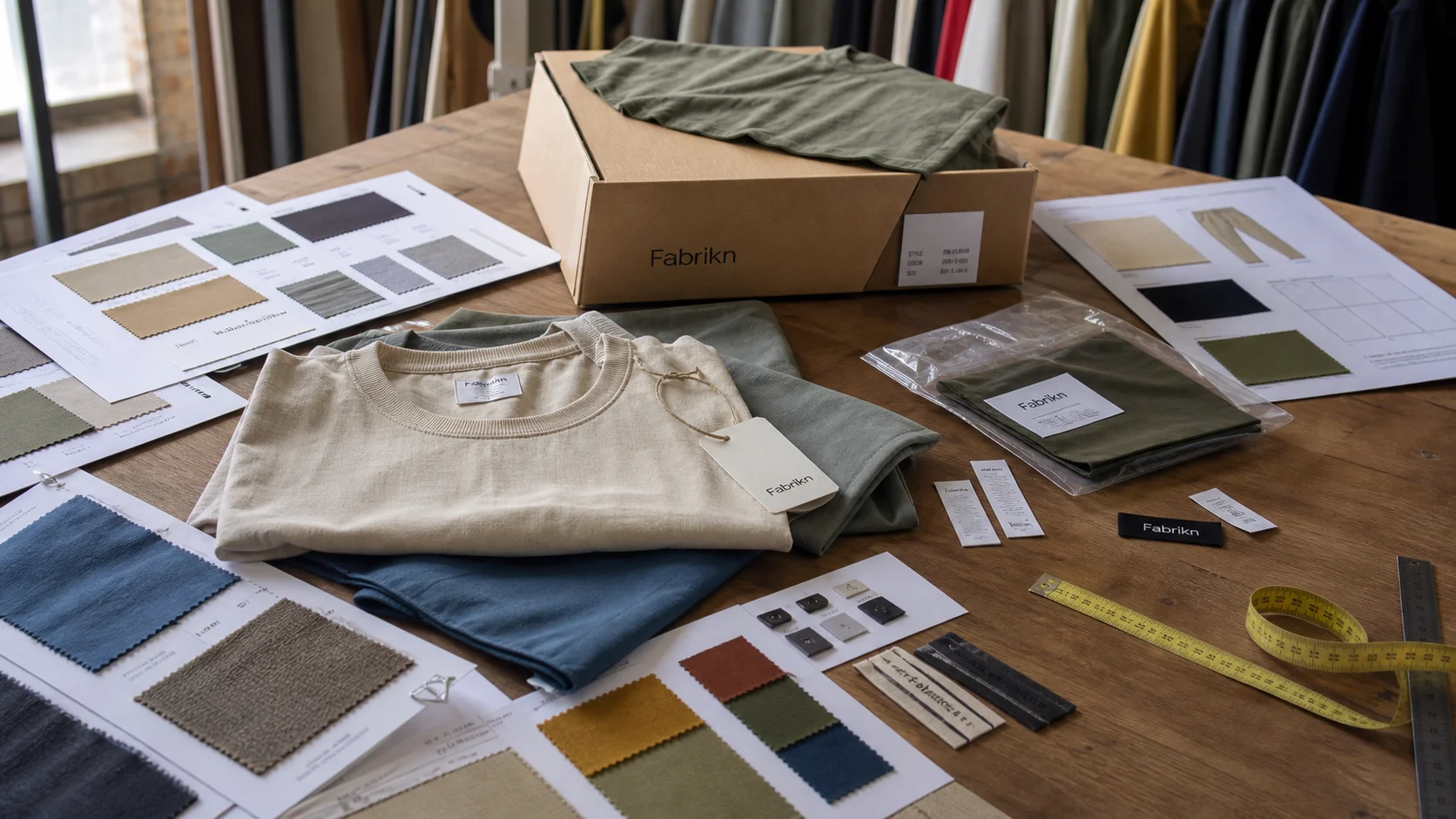
Shipping Timeline for Clothing Manufacturer Orders with checks for samples, fit, MOQ, QC evidence, pricing terms, and delivery risk.
Fast answer: Shipping Timeline for Clothing Manufacturer Orders: Samples, MOQ, QC, and Lead Time should be judged by production evidence, not by a generic sourcing promise. The buyer needs sample proof, cost breakdowns, QC checkpoints, and delivery buffers in writing.
Ask for recent sample photos, measurement tolerances, fabric or print test assumptions, decoration test notes, packing examples, and a named inspection checkpoint. These details show whether the team can repeat an approved sample at bulk volume.
Separate garment cost, decoration, labels, packaging, sampling, testing, freight, and rush charges. When every cost line is visible, it becomes easier to reduce colorways, adjust size depth, or reserve more time for sampling.
When you place an order with a clothing manufacturer, one of the first questions that comes to mind is, “How long will shipping take?” For fashion brands, retailers, and private label businesses, understanding the shipping timeline for clothing manufacturer orders is essential for inventory planning, launch dates, seasonal drops, and customer fulfillment. A delay of even a few days can disrupt a product release or create stock shortages, while a well-planned timeline can help your business stay efficient and profitable.
The full shipping process involves more than just handing a package to a courier. It includes product development, sampling, approval, production, quality checks, packing, freight booking, transit, customs clearance, and final delivery. Each step adds time, and each order is influenced by different variables such as fabric sourcing, production volume, destination country, and shipping method. If you understand these moving parts early, you can make smarter decisions, reduce costly delays, and create more accurate delivery expectations for your team and customers.
In this article, we’ll break down the complete shipping timeline for clothing manufacturer orders, explain the biggest factors that affect lead times, and share practical planning tips that help you stay ahead. If you’re looking for a dependable manufacturing partner, you can learn more about our capabilities on our services page or reach out through our contact us page.
A shipping timeline is the estimated schedule from the moment you confirm your order to the moment it arrives at your warehouse, store, or fulfillment center. For clothing manufacturing, this timeline usually includes several phases, not just the shipment itself. Many buyers focus only on transit time, but the reality is that manufacturing preparation often takes longer than shipping.
For example, a small apparel order might take a few weeks to produce and then a few days to ship domestically. A larger order involving custom fabrics, labels, packaging, and international freight could take several months from start to finish. That’s why it’s important to separate production lead time from shipping time and consider the full end-to-end timeline.
In most clothing manufacturing projects, the total timeline generally includes:
Each of these steps can influence your delivery date, so understanding the full process helps you avoid unrealistic expectations.
The timeline begins once you approve the final specs, pricing, and order quantity. During pre-production, the manufacturer reviews your tech pack, confirms materials, and prepares the factory schedule. If your order requires custom colors, trims, labels, or packaging, this stage may take longer than expected.
Before bulk production starts, many clothing orders go through a sampling phase. Samples help verify fit, construction, and overall quality. If revisions are needed, the process may require multiple rounds. While sampling adds time upfront, it reduces the chance of costly issues in bulk production and shipping.
Once the order is approved, the manufacturer sources fabrics, threads, zippers, buttons, care labels, hangtags, and packaging. If materials are in stock, this step may be fast. If they must be custom produced or imported, it can extend the schedule significantly.
Bulk production is often the longest phase. Depending on order size and complexity, manufacturing may take anywhere from a couple of weeks to several months. Simple garments with standard materials are usually faster than highly customized or technical products.
After production, garments are inspected for defects, sizing accuracy, stitching quality, and labeling consistency. Once approved, they are folded, packed, and prepared for shipment. Careful packing is especially important for reducing damage, wrinkling, and moisture exposure during transit.
For domestic orders, this step may be straightforward. For international orders, shipping booking often includes invoices, packing lists, customs forms, and import/export documentation. Missing or inaccurate paperwork can lead to delays at the port or border.
The final shipping phase depends on your selected method. Air freight is faster but more expensive. Sea freight is more affordable for large shipments but can take much longer. Ground shipping is common for domestic deliveries and usually offers the most predictable transit times.
Every clothing order is unique, and the shipping timeline can vary widely based on several important factors. Knowing these variables helps you forecast more accurately and choose the right manufacturing approach for your business.
A basic t-shirt order is much faster to produce than a multi-piece performance wear collection with embroidery, custom dyeing, and special trims. More design details mean more production steps and more opportunities for delay.
Larger orders generally require more production time, more quality checks, and more shipping space. While a high-volume order can improve per-unit costs, it usually extends the timeline.
One of the most common causes of delays is waiting for materials. If fabrics or trims are not already available, the manufacturer must source them first. Global supply chain issues can make this step unpredictable.
Custom prints, embroidery, washes, labels, sizing tags, and packaging all add time. The more personalized the order, the more time the factory needs for setup and execution.
Where the garments are produced affects both production and shipping time. Factories closer to your distribution center may reduce transit time, while overseas production may require longer transport and customs processing.
Air freight is the fastest option, but it costs more. Sea freight is slower but often better for large wholesale orders. Couriers and ground shipping can be ideal for smaller or domestic shipments.
Factories are often busier before major retail seasons, holiday periods, and fashion launches. If your order is placed during peak demand, it may take longer to move through production and dispatch.
International shipments can be delayed by customs inspections, incomplete paperwork, or compliance issues. Planning for customs clearance is essential if you are importing apparel into another country.
The best way to avoid shipping stress is to plan backward from your launch or in-store date. Instead of asking when your order will ship, begin with the date you need the products in hand and build your schedule from there.
Start with your final delivery target and subtract estimated transit time, customs clearance, production time, sample approvals, and sourcing time. This gives you a realistic order placement deadline.
Always add a cushion for unexpected delays. A backup window of one to three weeks is often wise, especially for larger or international orders. Buffer time helps protect your launch from last-minute disruptions.
Slow sample approvals can push the entire timeline back. Review samples promptly, gather feedback internally, and send consolidated revision notes to the manufacturer as soon as possible.
If your order is time-sensitive, air freight or expedited courier services may be worth the added cost. If timing is flexible, sea freight can reduce shipping expenses substantially.
Clear communication is one of the best ways to keep production on schedule. Confirm your tech pack, size specs, artwork files, packaging needs, and delivery expectations early. You can also review our company background on the about us page to better understand how we support apparel brands through the full process.
Break the timeline into checkpoints: sample approval, material arrival, production start, completion, quality inspection, dispatch, and delivery. Monitoring milestones helps you identify issues sooner and respond faster.
Even with strong planning, delays can still happen. The key is knowing the most common causes so you can minimize the risk.
If the tech pack is unclear or missing measurements, the factory may need to pause production to get clarification. To avoid this, provide complete specs, artwork, and construction details before the order is confirmed.
Waiting too long to approve samples can delay bulk production. Schedule your review process internally so feedback is provided quickly and consistently.
If your chosen fabric is unavailable, your manufacturer may need to source alternatives or wait for restocking. Where possible, ask about material lead times before finalizing your order.
If defects are found after production, the manufacturer may need to rework or replace garments. While this adds time, it is better to catch problems before shipping than after arrival.
Incorrect shipping documents can cause customs delays. Double-check product descriptions, quantities, HS codes, and country-specific compliance requirements to reduce the chance of clearance issues.
Severe weather, port congestion, strikes, and transport bottlenecks can affect shipping schedules. While you can’t prevent these events, you can plan with extra time to protect your timeline.
Shipping timelines can look very different depending on whether your order is delivered domestically or internationally. Understanding the difference helps you set more accurate expectations.
Domestic shipping is usually the fastest and most predictable option. Once production is complete, transit may take only a few days. Because there is no customs clearance involved, there are fewer risks of additional delays.
International orders generally take longer due to freight scheduling, customs processing, and cross-border transport. Depending on the destination, the delivery phase alone can add several days to several weeks after production is finished.
If you are launching a collection on a fixed date, it may be worth paying more for faster transport. If your supply chain allows more flexibility, a slower shipping method can lower logistics costs without affecting business performance.
Not all manufacturers manage timelines the same way. A reliable clothing manufacturer can make the entire process smoother by providing clear communication, structured workflows, and proactive updates. This is especially important if you are balancing multiple styles, seasonal drops, or tight launch deadlines.
At Fabrikn, we understand that timing is just as important as quality. Efficient production planning, transparent coordination, and responsive support can help you reduce avoidable delays and keep your apparel business moving. If you want a partner that can help streamline your order process, explore our services or get in touch through our contact us page.
The right manufacturer should help you with:
If you want to reduce delays and improve fulfillment speed, these practical tips can help.
Small improvements in communication and planning can have a major impact on your shipping timeline. Even when production is complex, a well-organized process keeps your apparel business more predictable and professional.
Get a free quote from Fabrikn — your trusted B2B clothing manufacturer with 10+ years of experience. MOQ as low as 200 pieces.
Get a Free Quote →It depends on the size, complexity, destination, and shipping method. Some domestic orders can arrive within days after production, while international bulk apparel orders may take several weeks or longer from production to delivery.
Production time covers sourcing, sampling, and manufacturing the garments. Shipping time starts after the order is packed and dispatched, covering transit and delivery. The full timeline includes both.
Yes. You can speed things up by providing complete specifications, approving samples quickly, choosing readily available materials, and selecting faster shipping methods when needed.
International orders usually involve freight booking, customs clearance, more documentation, and longer transit distances. These extra steps add time compared with domestic shipping.
Fabrikn supports apparel brands with manufacturing services, clear communication, and production planning designed to help you set realistic timelines and avoid unnecessary delays. Learn more on our services page or contact us directly through our contact us page.
Choose air freight when speed is the top priority and sea freight when cost savings matter more. The best option depends on your budget, order size, and launch timeline.