
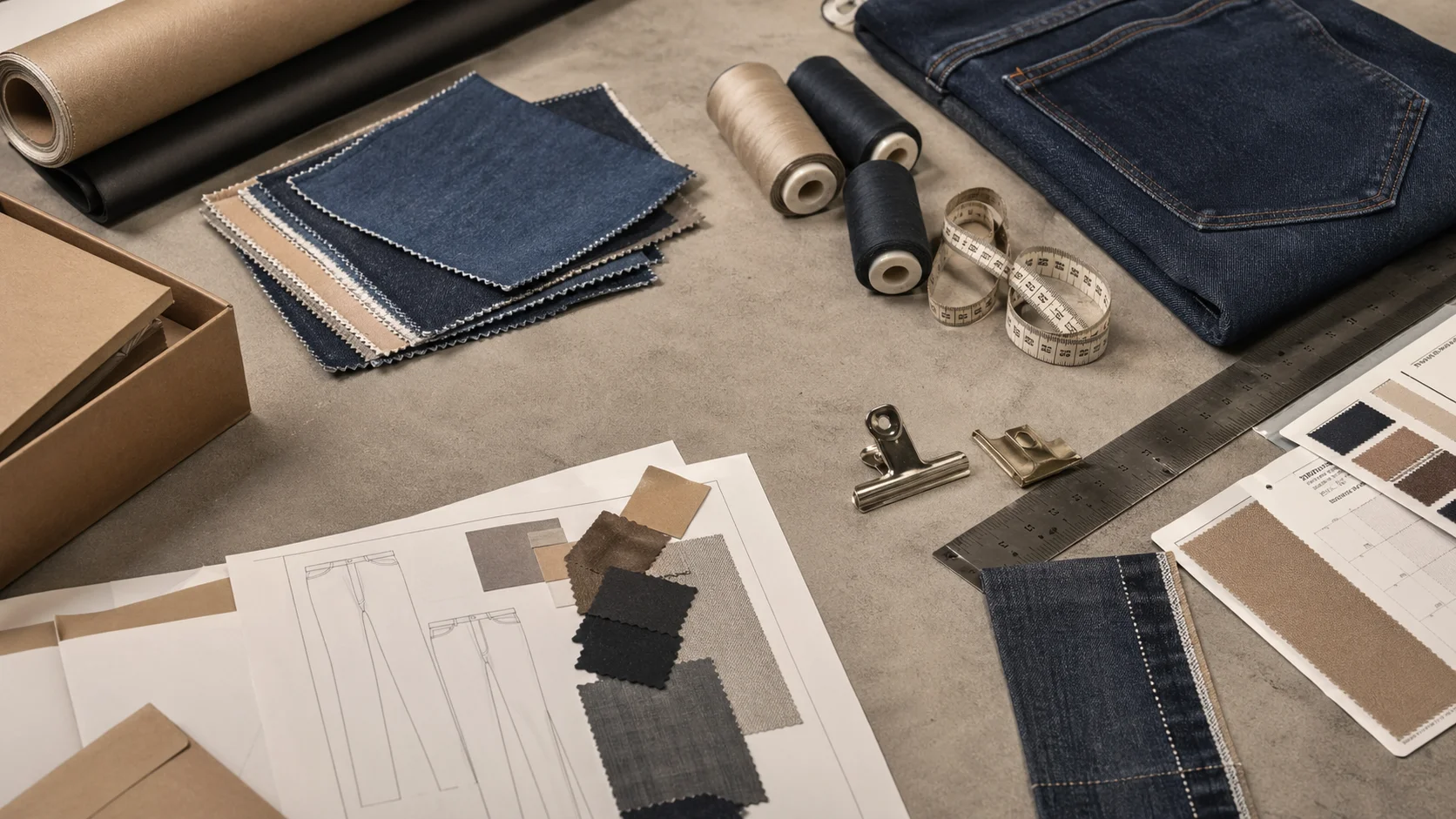
A Garment Fit Sample compared by sample evidence, fabric or trim specs, MOQ, AQL terms, cost lines, delivery timing, and rework responsibility.
Fast answer: A Garment Fit Sample: Tech Pack, Sample Gate, MOQ, and QC Terms should be judged by production evidence, not by a generic sourcing promise. The buyer needs sample proof, cost breakdowns, QC checkpoints, and delivery buffers in writing.
Ask for recent sample photos, measurement tolerances, fabric or print test assumptions, decoration test notes, packing examples, and a named inspection checkpoint. These details show whether the team can repeat an approved sample at bulk volume.
Separate garment cost, decoration, labels, packaging, sampling, testing, freight, and rush charges. Clear cost lines make it easier to reduce colorways, adjust size depth, or reserve more time for sampling.
A garment fit sample is an early prototype of a clothing style made to evaluate how the product fits on the body before bulk production begins. In real factory workflows, it is typically produced after the first pattern draft and before grading, costing, and bulk marker planning. It is one of the most important development stages in apparel manufacturing because it helps brands and manufacturers assess sizing, proportions, silhouette, comfort, and overall wearability.
Unlike a final production garment, a fit sample is primarily focused on shape and fit accuracy rather than final appearance. It is often made in a temporary or available fabric such as cotton muslin, 160-220 GSM jersey, poly-cotton twill, or a similar substitute that behaves close to the final textile. The sample may be sewn on a 1-needle lockstitch machine, overlock/serger, or coverstitch depending on the product category, and it may not include all finishing details, trims, labels, or final embellishments. The goal is to ensure the pattern, construction, and measurements meet the intended design and target customer requirements.
For clothing brands working with a manufacturer, understanding what a garment fit sample is can prevent costly mistakes later in the process. A well-executed fit sample allows teams to test the design, identify issues early, and make adjustments before mass production starts. In sourcing hubs such as Guangzhou, Dhaka, Ho Chi Minh City, and Istanbul, fit samples are often turned around in 3-7 days for simple styles and 7-10 days for more complex garments, depending on fabric sourcing and pattern revisions.
If you are developing a new clothing line or scaling production, fit sampling is an essential step. At Fabrikn, fit development is part of a structured manufacturing workflow designed to help brands move from concept to production with greater confidence. Learn more about our capabilities on our services page.
Fit is one of the biggest factors determining whether a garment succeeds in the market. Even if a product has strong design, premium materials, and attractive branding, poor fit can lead to returns, negative reviews, and lost customer trust. That is why garment fit samples are a critical checkpoint in the development process.
Fit samples matter because they help manufacturers and brands:
In many cases, a technically accurate pattern may still produce a garment that does not wear well on the body. Fit sampling bridges the gap between technical specs and real-life wear performance. This is especially important for categories such as activewear, outerwear, tailored wear, childrenswear, and premium fashion, where precision fit is essential. A fit issue discovered after bulk cutting can cost $1.50-$8.00 per unit in rework, while an approved sample usually costs only $2.50-4.00 per unit at 500 MOQ when sampled through a streamlined factory workflow.
New brands often confuse fit samples with other sample types. While all samples play a role in product development, each one has a different purpose. Which sample comes first, and which one is meant to sell?
A fit sample is made to test the shape, proportions, and overall fit of the garment on a fit model, dress form, or mannequin. It is usually based on the initial pattern and may use substitute fabric such as combed cotton jersey, polyester woven, or unbrushed French terry to mimic the final drape and stretch.
A proto sample is an early version of the garment used to visualize the product concept. It may focus more on design execution than exact fit. Proto samples are often created before fit samples.
A sales sample is used for presentations, buyer meetings, and showroom displays. It is generally more polished and closer to the final product than a fit sample, often using final trims, branded labels, and proper finishing.
A size set sample is produced in multiple sizes to check grading accuracy and fit consistency across the size range. This comes after the fit sample stage.
A pre-production sample is made using final fabrics, trims, labels, and production methods. It is the last approval sample before bulk manufacturing begins.
Understanding these differences helps brands communicate better with their garment manufacturer and avoid delays in the development timeline. In factories certified to standards such as WRAP, BSCI, OEKO-TEX Standard 100, GOTS, or GRS, sample approval is often tied to documented QA checkpoints and test reports before PO confirmation.
The fit sample process usually begins after the pattern is drafted. In professional garment development, the sample is reviewed in multiple rounds until the fit, balance, and measurements are approved. A typical development cycle takes 18-22 business days for the first round in medium-complexity garments, though basic T-shirts may be faster and technical outerwear may take longer.
The process starts with a pattern based on design sketches, technical packs, measurement charts, and reference garments. This pattern defines the shape and structure of the product, and it is commonly developed in CAD systems such as Gerber, Lectra, or Optitex.
The sample is sewn using a suitable test fabric or a fabric similar to the final material. The objective is to create a garment that accurately represents construction and fit. Sample rooms often use single-needle lockstitch machines, 4-thread overlock machines, coverstitch machines, bartack machines, and steam irons with vacuum tables to mirror production methods as closely as possible.
The sample is tried on a fit model or placed on a form. The development team reviews the garment from multiple angles, assessing neckline, shoulder slope, sleeve length, waist position, crotch depth, hem balance, and ease. For denim and tailored trousers, teams may also check rise, fork length, knee placement, and inseam twist; for knits, they verify stretch recovery, neck opening stability, and seam waviness after wear.
Any issues are marked on the sample using pins, tape, chalk, or digital annotations. Measurements are compared to the spec sheet to identify where adjustments are needed. Some factories in Guangzhou and Ho Chi Minh City now use 3D fit software and digital pattern marking to reduce revision time and improve repeatability.
The pattern maker updates the pattern according to the fit comments. This may include altering seam lines, reshaping panels, changing dart placement, or adjusting garment length. If the final fabric is a stretch blend like 95% cotton / 5% spandex or recycled polyester with elastane, grading may also need to account for stretch percentage and recovery.
A corrected sample is produced to verify that the changes solved the fit issues. Depending on the complexity of the style, several rounds may be required before approval. For high-volume programs, many suppliers target 2 fit rounds before proceeding to pre-production sample approval.
Brands working with an experienced production partner can streamline this process significantly. If you want support from sampling to mass production, you can reach the Fabrikn team through our contact page.
A fit sample is judged by much more than simple size accuracy. Professional sample reviews examine a combination of technical and aesthetic details. The checklist is detailed, and every point matters.
Need a garment that fits properly the first time? That is the real goal.
Some styles require extra scrutiny because their performance depends on movement, stretch, or layering. Activewear, for example, must maintain support without restricting motion, while tailored jackets need clean balance across the chest, back, and sleeve head. On the other hand, a loosely fitted knit tee may appear simple, but even a small neckline or shoulder issue can change the whole look and feel of the piece.
Although fit samples are meant to reduce risk, mistakes still happen. Some are technical, while others come from weak communication between brands and manufacturers. Here are the most common problems to watch for.
One frequent mistake is using the wrong test fabric. If the substitute material behaves too differently from the final fabric, the sample will not show true fit performance. Another issue is skipping reference measurements or working from an incomplete tech pack, which often leads to pattern confusion and delayed revisions.
Teams also make trouble for themselves when they review fit samples without a clear approval standard. One person may focus on appearance, while another focuses on measurements, and the result is endless feedback loops. Why approve a sample if the criteria are vague?
Ignoring movement tests is another major mistake. A garment can look correct in a static pose and still fail during real wear, especially in categories like sportswear, workwear, and stretch denim. Finally, rushing to bulk production before the sample is fully approved often causes expensive rework, wasted fabric, and avoidable shipment delays.
Strong fit sampling starts with strong preparation. Brands should begin with a precise tech pack that includes measurement specs, construction notes, artwork placement, and clear references for the desired silhouette. The more specific the information, the fewer revision cycles are usually needed.
It also helps to use a consistent fit model or a standardized dress form throughout development. That approach makes comparisons more reliable, especially when multiple sample rounds are required. If the sample is intended for a stretch garment, the team should test how the piece behaves both at rest and in motion.
Communication matters, too. Feedback should be concise, measurable, and easy to apply. Instead of saying the sleeve feels wrong, a stronger comment would note that the sleeve cap needs a 1 cm reduction and a slight forward pitch adjustment. This kind of precision saves time and reduces misunderstanding.
Finally, manufacturers and brands should document every revision carefully. Photos, notes, comments, and updated specs create a traceable development history that supports better decisions later. Would you really want to restart a sample round because no one saved the previous changes?
Fit samples do more than improve garment quality. They also make production more efficient by preventing defects, reducing revision waste, and shortening the path to approval. A well-managed sample process gives factories clearer instructions and fewer surprises on the production floor.
When fit issues are resolved early, bulk cutting can begin with greater confidence. That lowers the chance of fabric loss, sewing errors, and last-minute pattern corrections. In many programs, this also reduces the number of email threads and sample shipments needed before final sign-off.
For manufacturers, the benefit is operational as much as it is technical. Better fit samples improve planning, stabilize workflow, and help teams meet target timelines more consistently. For brands, the payoff is simpler: fewer returns, better reviews, and stronger customer satisfaction.
Not every clothing manufacturer handles fit sampling with the same level of care. When choosing a partner, look for a team with experienced pattern makers, a dedicated sample room, and a clear approval process. A manufacturer should be able to translate design intent into a garment that fits, moves, and wears correctly.
It is also wise to ask about communication speed, revision turnaround, and sampling capabilities across different product categories. Some factories are strong in basics but less experienced in tailored garments or technical activewear. Others may offer 3D sampling, CAD pattern development, or in-house fitting support that can save time during development.
Ask for examples of previous sample work if possible, and pay attention to how the factory responds to fit comments. A reliable partner will treat each revision as part of a controlled process, not as an afterthought. That is especially important when production volumes are high or launch dates are fixed.
What is the purpose of a garment fit sample? It is used to check fit, shape, proportions, and construction before bulk production begins.
How many fit sample rounds are normal? Many styles need one to three rounds, depending on complexity and how precise the initial pattern is.
Is a fit sample made in final fabric? Usually not. It is often made in a substitute fabric that behaves similarly to the final material.
Who reviews a fit sample? Typically the brand, pattern maker, product developer, and manufacturer review it together.
Why do fit samples fail? Common reasons include incorrect patterns, poor fabric substitution, unclear specs, or incomplete feedback.