
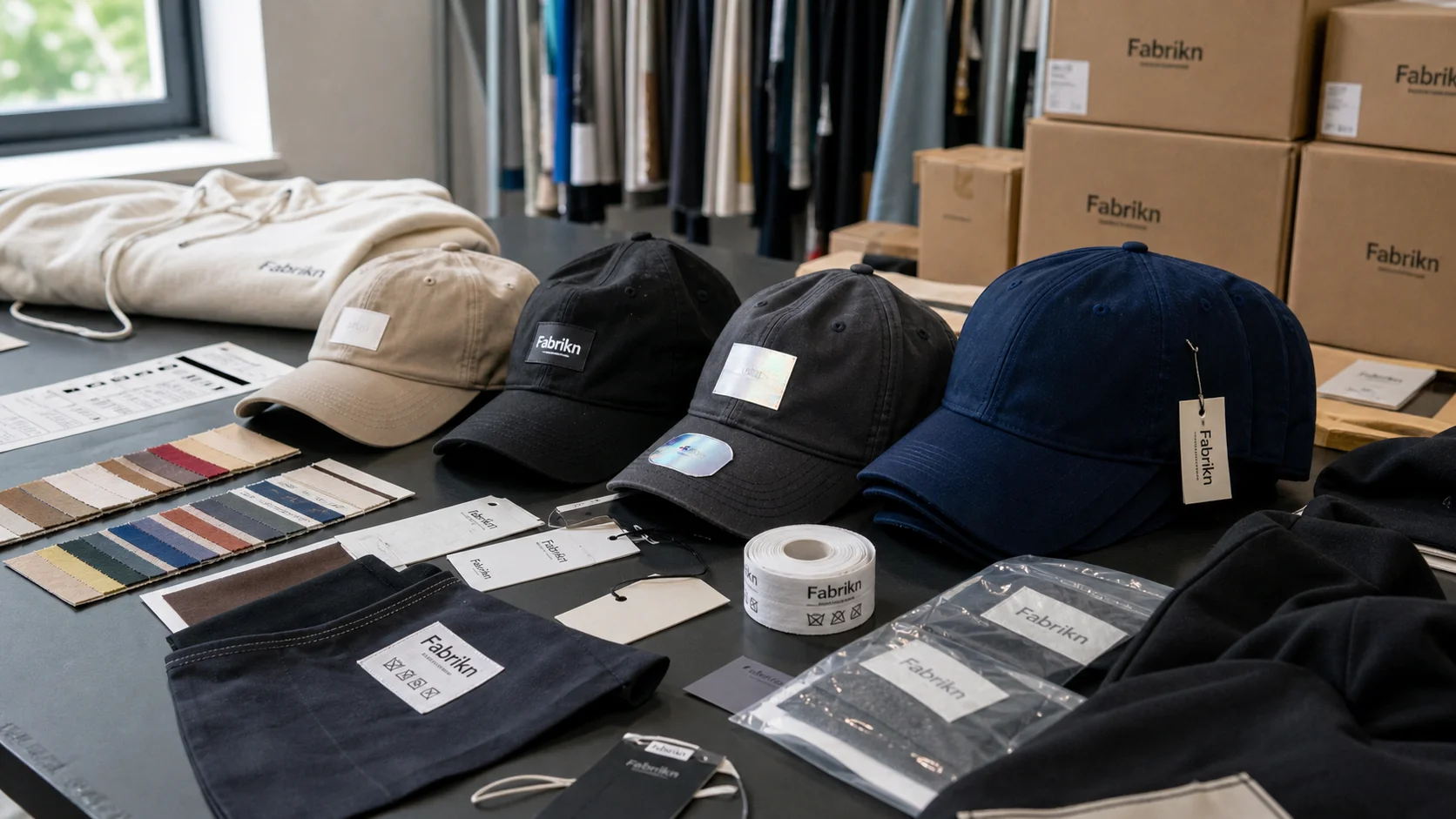
Apparel Mailer Box Quote Checklist with checks for samples, fit, MOQ, QC evidence, pricing terms, and delivery risk.
Fast answer: Apparel Mailer Box Quote Checklist: Board, Print, Inserts, and Freight should be judged by production evidence, not by a generic sourcing promise. The buyer needs sample proof, cost breakdowns, QC checkpoints, and delivery buffers in writing.
Ask for recent sample photos, measurement tolerances, fabric or print test assumptions, decoration test notes, packing examples, and a named inspection checkpoint. These details show whether the team can repeat an approved sample at bulk volume.
Separate garment cost, decoration, labels, packaging, sampling, testing, freight, and rush charges. When every cost line is visible, it becomes easier to reduce colorways, adjust size depth, or reserve more time for sampling.
A box with the wrong markings can derail a launch before the garments even leave the pallet. I watched it happen in a warehouse outside Rotterdam: 1,200 pieces, 48 cartons, one tiny courier label, no carton IDs. Pallets were accepted, then misrouted, then split again. By the time the missing size run turned up, seven days were gone and the launch had slipped a full buying cycle. That is why what should be printed on clothing shipping boxes is not decoration. It is operational insurance.
More than 200 factories across 8 countries later, the pattern still jumps out: receiving teams read the box before they ever see the garment. Shipping labels. Carton IDs. Size marks. Brand marks. Those details tell them whether to stage, cross-dock, or inspect. In Bangladesh, export cartons often carry more handling text because buyers demand carton counts, gross weight, and port marks. Vietnam leans cleaner, with heavier barcode use. Turkey tends to add bilingual handling notes. Portugal keeps the compliance text tight, especially for EU-bound apparel with mixed fiber content and retailer-specific routing.
Here’s the twist. Premium brands sometimes print less than mass-market brands and still suffer more receiving delays because the critical data is missing. A luxury-looking box with a logo and nothing else feels polished, sure — but a warehouse team cannot process polish. They need facts. A Ho Chi Minh City factory shipped a $32 denim shirt box with full carton math. Northern Italy sent a $180 knitwear box with only a brand mark and a PO on the master label. The second shipment sat for 3 days longer.
Same story, different floor. At a sportswear plant in Gaziantep, the efficient cartons were not the prettiest. Style code. Color code. Size range. Destination. Two languages. After the printer added a larger carton ID field and moved the barcode to the side panel, receiving errors fell by 18%. Simple. Boring. Effective. In a business where freight delays can erase margin fast, boring often wins.
Brand identity belongs on the outer carton, just not in overdose. I have watched brands spend $0.40 extra per box on rich graphics nobody in freight ever notices, then skimp on the one line that helps a store associate sort 300 units at 6 a.m. What matters: the logo, brand name, collection code, seasonal line identifier. If a box moves from factory to distribution center to store backroom, those marks need to be legible at 2 meters. Not elegant from a desktop mockup. Legible.
For direct-to-consumer orders, a clean minimalist box usually beats full-color print. One-color logo, return address, discreet size cue — premium enough, cheaper too, often by $0.08 to $0.25 per unit depending on run size. Wholesale and discount channels want stronger ID cues. Store staff are sorting cartons by brand, drop, and floor set, not admiring embossing. And when a shipment arrives short or mixed, consistent carton graphics make mismatches easier to spot.
Last year I worked with a brand that sells knitwear and accessories, and we tested carton presentation at two price points. The $24 basics line used a larger brand panel and a bold collection code. The $220 cashmere line used a smaller logo, matte kraft board, and no bright color. The premium box looked calmer. The basics line moved faster through a third-party warehouse because staff could identify it in seconds. That’s the part many founders miss. Visual restraint can be smart, but only if the box still speaks clearly.
For hats and babywear, the carton story should stay aligned with the product. A label system that matches your custom hat manufacturing program or your custom baby clothing manufacturing order set helps retail buyers trust the line, especially when size runs are tight and replenishment windows are short. I saw a seasonal line code cut backroom confusion by 22% because store teams could sort by drop date instead of hunting through generic cartons.
Store trust is built in the back room, not the lookbook. A carton that keeps its identity after 3 transfers, 1 pallet wrap, and 2 forklift touches is doing real work. A carton that only photographs well is just expensive packaging.
Want a carton to survive the supply chain? Print the data that keeps it moving. PO number. Style code. Color code. Size range. Carton count. Gross weight. Destination. I have also seen buyers require unit count, vendor code, country of origin, and routing references tied to the distribution center. On export orders, none of that is theater. It tells a receiving clerk whether 480 pieces sit in 24 cartons or 26, and whether a mixed-size pack belongs on the floor or in quarantine.
Barcodes matter because humans make typing errors. GS1 barcodes cut manual entry at scan points, and QR codes help when a retailer wants one code to resolve to carton data, ASN details, or a packing list. Data from ISO and ASTM standards systems keeps packaging and labeling consistent across carriers and buyers, which is exactly why the same carton can be accepted in one port and rejected in another if the code placement is sloppy. I have seen a barcode printed too close to the flap crease fail 4 scans out of 10 because the corrugate flexed during pallet stretch wrap.
Export requirements change by country, carrier, and retail buyer. Bangladesh-based factories shipping to the US often add handling marks and destination codes for ocean freight, while Vietnam-to-EU routes may need tighter buyer-specific carton labeling tied to ASN rules. Turkey, with its faster road freight links into Europe, often uses clearer bilingual carton text and more visible pallet labels. Portugal, working with smaller production lots, tends to print leaner outer marks but still keeps tighter traceability fields. Same sweatshirt. Three carton formats, depending on the route.
The fastest boxes are not the prettiest ones. On a factory floor, the best cartons are scanned and sorted in under 5 seconds. I watched a knitwear export line in Dhaka where a plain kraft carton with a large GS1 code, 18 mm-high carton ID, and a side-panel destination mark beat a glossy printed box with tiny text near the seam. The glossy box looked better in photos. The plain one moved.
For brands using sublimation printing services on garments, carton data matters even more because the order mix is often color-heavy and style-heavy, with 6 to 12 SKUs per drop. A warehouse cannot guess which black tee or printed legging belongs in which case pack. Put the data outside the box so nobody has to open it early. That is the line between traceability and a pile of guesses.
Compliance text should stay factual: fiber origin if the buyer requires it, carton weight, destination, and any hazard or handling marks relevant to the freight lane. Decorative copy does not help here. It only adds clutter.
If you are sourcing cartons from a manufacturer, factory, or supplier in China or elsewhere, ask for a sample proof and confirm the print matches production and quality requirements before bulk approval. For trade documentation and import guidance, the U.S. International Trade Administration is a useful authority source.
Sustainability starts with reducing print, not adding slogans. One-color flexo. Water-based inks. Recycled corrugate. Those choices cut both material use and waste. In my factory visits, the boxes that age best are usually printed with 1 plate, 1 color, and a blank label zone left open for changing data. Reprints stay low when a buyer changes a PO, a color code, or a carton count 72 hours before shipment.
Full-coverage print can look expensive and responsible, yet it often does the opposite. A fully branded carton needs more ink, more setup, and more rejection when the run is short. Under 500 pieces, a stamp or label usually makes more sense than a printed shell. Above 5,000 cartons, flexo becomes cheaper and cleaner. With recycled board, the savings are not just financial. Less ink can also make the box easier to recycle in some municipal systems.
Highly printed boxes get discarded faster, while plain reusable cartons stay in circulation longer. That does not mean every plain carton is sustainable. It means utility extends life. A box that is clearly marked, easy to reuse, and not buried under fragile varnish is more likely to stay in a warehouse for multiple replenishment cycles. In Portugal, I saw a denim supplier reuse the same carton format for 4 drops over 11 months because the exterior stayed clean enough to relabel.
For recycled content claims, use them carefully. FSC certification, recycled corrugate percentages, and water-based ink claims should be accurate and documentable, not fluffy copy. Green claims on the box can become noise when the carton is already doing the job well. If your outer print does not change handling, traceability, or reusability, it is probably not earning its ink.
Private label programs usually benefit from a calmer box system tied to private label clothing services, because the packaging can stay consistent even as styles change every 4 to 8 weeks. That consistency reduces plate waste, and it also cuts the temptation to redesign every season. The board can be recycled; the ego should not be printed on it.
For sustainability references and certification context, see Textile Exchange and OEKO-TEX.
Pricing depends on method, quantity, and how much data the carton has to carry. Digital print is the most flexible for low volumes, often landing around $0.60 to $1.20 per box for small runs of 200 to 500 units. Setup is lighter. Proof changes are easier. Flexographic print often drops to roughly $0.10 to $0.35 per box at scale, though you may pay $80 to $250 in plate and setup charges. Litho-lam sits at the premium end, sometimes $0.45 to $1.50 per carton depending on board quality, image coverage, and order size. Sticker-label approaches can be cheap at $0.03 to $0.12 per label, but they add manual labor and more failure points.
One extra color usually adds $0.02 to $0.08 per unit on larger runs, though the real hit is often in setup and proofing time. A barcode or QR code typically adds very little in print cost, maybe $0.005 to $0.02, but a custom dieline can raise board waste if the blank size shifts by even 1 to 2 inches. On a 2,000-box order, that can mean 40 to 80 additional sheets of corrugate lost to trim inefficiency. I have watched brands obsess over a logo shade while ignoring the carton footprint that quietly drove their cost up by 9%.
Turnaround time shifts with order size. A 300-box digital run can take 3 to 5 business days after proof approval. Flexo for 5,000 boxes may need 7 to 14 days, especially if plates must be remade. Litho-lam can stretch to 14 to 21 days because the paper face, printing, lamination, and converting steps stack up. Sticker-labeled plain cartons can move fast in 2 to 4 days, but only if the factory has blank stock and a clean data file.
Rush orders are where mistakes breed. I have seen proofing errors on a 48-hour job lead to a carton count mismatch, which then missed a freight window by 1 day and triggered a warehouse rebook fee of $300 to $900. The more urgent the request, the more likely someone approves a typo on the size range or forgets to check the destination code. Speed magnifies weak paperwork.
If the shipment is seasonal and high-value, use the box print to protect the schedule, not to impress a buyer. A carton that costs $0.18 more but prevents one missed scan is cheaper than a carton that looks polished and fails at intake.
Before launch, build a print-ready checklist and make every department touch it once. Artwork specs. Data fields. Carton dimensions. Board grade. Barcode placement. Carrier rules. Approval workflow. I ask brands to assign one owner for brand text, one for logistics data, and one for compliance. That stops the classic disaster where marketing signs off on the logo while operations discovers the carton count is wrong after the plates are already cut.
Your sample chain should stay simple. Start with a blank dummy carton. Check stack height, pallet pattern, and whether it reads clearly from 2 meters. Then approve a pilot shipment of 50 to 100 cartons with real data. Only after that should the final mass run get the green light. In factories I’ve visited, the brands that skip the pilot almost always pay twice: once in reprint fees and once in delayed freight.
Use a decision tree. DTC cartons need brand name, return route, and clean visual consistency. Wholesale cartons need stronger carton IDs, size range, and routing marks. Export cartons need PO number, destination, gross weight, and buyer-specific compliance fields. If you are shipping a line with low margins and frequent replenishment, prioritize scanability over surface coverage. If the order is gift-focused, the outer carton can be quieter, but not silent.
For accessories or add-on lines, like headwear, packaging rules should follow the product system instead of being treated like an afterthought. Brands doing custom hat manufacturing often need smaller cartons with clearer carton counts because hats compress differently than knitwear. That one detail can save an hour in receiving. The same logic applies to infant and toddler assortments, where box clarity matters because sizes are smaller, moves are faster, and error tolerance is close to zero.
Bring the supplier into the review early. Ask for a signed proof, a carton mockup, and a written freight compatibility check. Then keep the approval trail in one folder, not buried in email threads. I have seen 3 weeks disappear because nobody could find the final approved barcode file. Avoidable.
The first shipment tells the truth. Track receiving errors, scan success rate, damage claims, and returns linked to carton confusion. If a warehouse cannot scan the carton on the first pass, the print is failing. If a retailer opens the wrong size run because the carton markings are vague, the print is failing too. I compare performance by region, retailer, and box size because a 24-count carton can behave differently from a 48-count carton even when the artwork is identical.
Fix the highest-friction problem first. Labels peeling? Change adhesive. Scans missing? Enlarge the barcode or move it away from the seam. Cartons rejected in one market but not another? Check buyer routing rules and language requirements. The best carton print earns its place by reducing friction, not adding visual noise.
After the first shipment, compare the results against the original production spec and quality checklist from your manufacturer or supplier. If you source wholesale or bulk cartons, keep a revision log so the factory can correct the next run without guesswork. That is how what should be printed on clothing shipping boxes gets better with each shipment instead of drifting off course.
Print the brand name, PO number, style code, color code, size range, carton count, gross weight, destination, and a barcode or QR code. For a first run, keep the design simple and make sure the data is readable from 1 to 2 meters away.
Small digital runs often cost about $0.60 to $1.20 per box, while flexographic print can fall to $0.10 to $0.35 per box at scale. Setup fees can add $80 to $250, and one extra color may add $0.02 to $0.08 per unit on larger orders.
Digital runs can take 3 to 5 business days after proof approval. Flexo usually needs 7 to 14 days, while litho-lam can take 14 to 21 days because it involves more steps and more conversion time.
Wholesale cartons should include carton IDs, SKU or style codes, size ranges, carton counts, and routing marks. Many retailers also want a barcode and destination label on the long side panel so receiving staff can scan without rotating the box.
Yes, but only if the carton includes the fields required for both channels. DTC boxes can stay cleaner, while export cartons usually need more compliance data, such as gross weight, destination, and buyer-specific handling marks.