
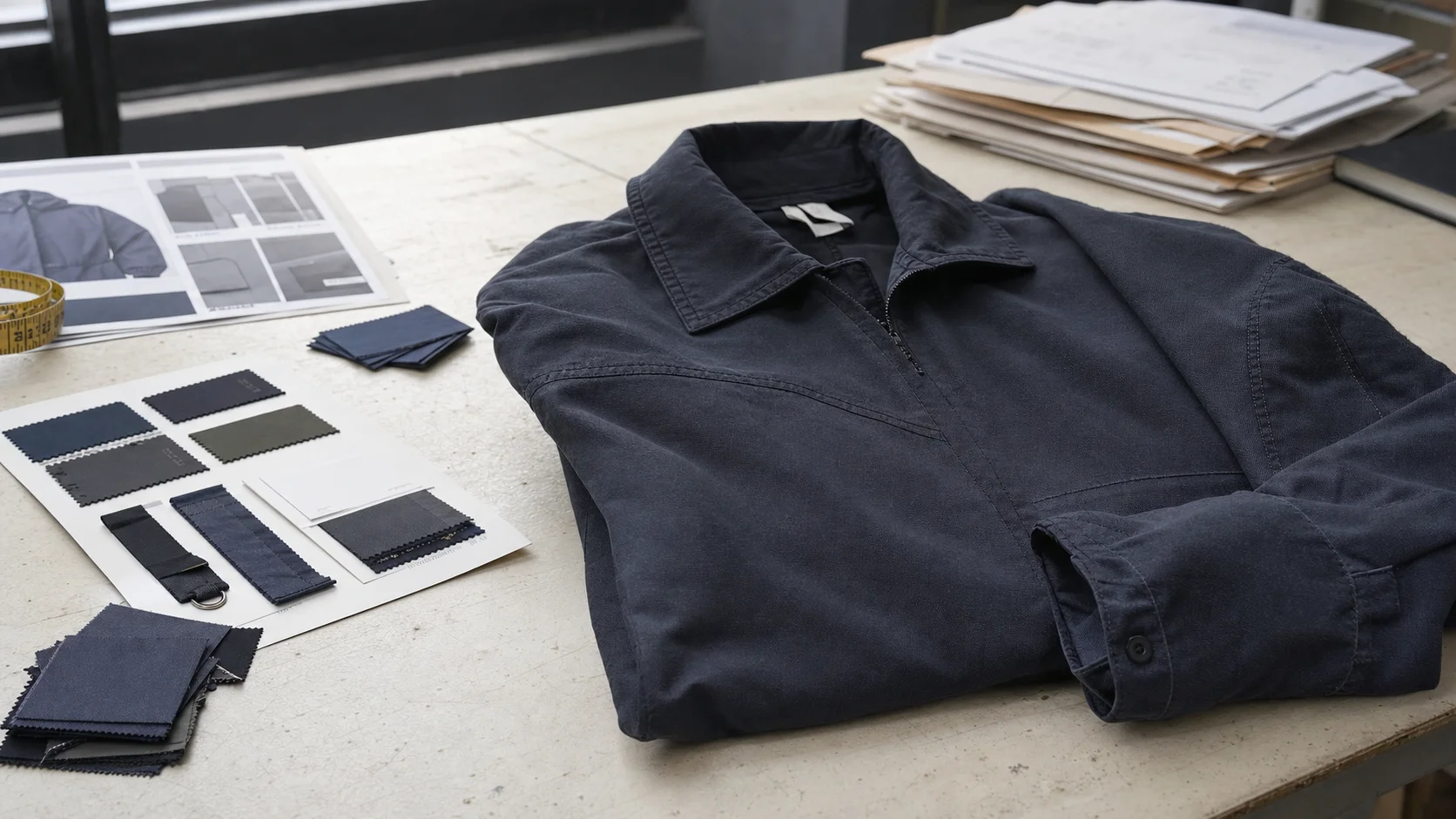
A practical pricing outline for white label outerwear jackets in corporate apparel, covering decoration methods, material choices, order structure, and the...
White Label Outerwear Jacket Pricing for Buyers - Fabrikn production reference
Category: Outerwear & Jackets
White label outerwear jacket pricing for corporate apparel is usually less about a single quote and more about how the order is built. Fabric choice, insulation, decoration method, trim package, carton packing, size range, and compliance requirements all move the number. Buyers who compare prices on unit cost alone often miss the bigger picture: a jacket that looks inexpensive at the sample stage can become costly once branding, freight, duties, revisions, and rework are added.
This guide breaks down how white label outerwear pricing typically works for corporate programs, what drives cost up or down, and where sourcing teams should apply judgment. The goal is not to chase the lowest number. It is to price the right specification for the right use case, then make sure the supplier can repeat it consistently at scale.
White label outerwear jackets are pre-developed or semi-custom garments made by a supplier and branded for a buyer. In corporate apparel, this usually means the buyer adds logos, selects colors, adjusts a few design points, and orders the product under their own program. The supplier owns the production capability and often the base pattern or shell design.
For buyers, white label offers a useful balance. It can reduce development time and lower design cost compared with a fully custom program. The tradeoff is less freedom on fit, fabric platform, and construction details unless the order volume is high enough to justify changes.
In practice, white label works best when the buyer needs a dependable jacket for employee uniforms, promotions, dealer programs, or seasonal corporate gifting. It is a poor fit when the brand requires a very specific silhouette, technical performance standard, or fashion-led finish that depends on exact material control.
A jacket quote is usually a mix of base garment cost and program cost. The base garment reflects materials and factory labor. Program cost covers decoration, packaging, testing, sampling, and any custom handling required by the buyer.
Common pricing components include:
The most useful way to evaluate a quote is to ask what is included and what is excluded. Some suppliers quote only ex-factory garment price. Others include logo application and standard packaging. A clean comparison requires the same basis across all offers.
Buyers should treat outerwear pricing as a specification problem first and a negotiation problem second. A weak spec creates hidden cost faster than a firm factory margin does.
MOQ for white label outerwear varies widely by supplier type and customization level. For simple stock-supported styles, MOQs can be relatively low. For custom fabric, special trims, or branded lining, the minimum rises quickly.
Typical ranges buyers often see:
Lower MOQ usually comes with a higher unit price. That is normal. The factory is carrying more setup burden across fewer pieces, and in some cases it may be buying shorter-run materials at a premium. Buyers should decide whether lower stock risk is worth the higher cost per unit.
Sample approval is where many pricing misunderstandings show up. A jacket that looks acceptable in a sales photo may still need adjustments to fit, handfeel, decoration placement, or zipper quality. Buyers should expect a structured approval sequence rather than a single sample sign-off.
A typical process looks like this:
Every extra round of sampling adds time and may add chargebacks. Buyers should ask whether sample fees are refundable against bulk, whether courier charges are included, and how many revision rounds are covered in the quote. It is also worth confirming who owns the sample patterns and approved artwork files, since losing track of those details often causes repeated delays on reorders.
White label outerwear pricing moves on a handful of levers. The most important one is fabric. A basic woven shell is not priced like a bonded softshell, and neither one behaves like an insulated jacket with coated performance features. Even small changes in denier, coating, or yarn composition can change the cost structure.
Polyester pongee, recycled polyester, nylon taslon, softshell, fleece-backed shell, and water-resistant laminated fabrics all sit in different cost bands. Heavier or more technical fabrics usually increase both material cost and sewing difficulty. Recycled content can also add cost, especially if the buyer requires traceability documentation.
Unlined jackets are generally cheaper and faster to produce. Mesh, taffeta, brushed tricot, and quilted linings add material and labor. Synthetic fill, padding, or thermal insulation adds even more, and the price rises again if fill weight must be controlled tightly across sizes.
Embroidery is often durable and premium-looking, but it can become expensive if the logo is large, dense, or placed on difficult panels. Screen print is usually limited on outerwear surfaces. Heat transfer can be efficient for smaller runs, though buyers should inspect adhesion, stretch, and wash durability. Woven patches, silicone badges, and rubber labels also affect cost and appearance.
Zippers are a common pricing pivot. Standard coil zippers are cheaper than branded water-resistant zippers or heavy-duty molded options. Adjustable cuffs, storm flaps, chin guards, inner pockets, hem toggles, and reflective tape each add cost. The same applies to custom main labels, hangtags, and special packing inserts.
One or two core corporate colors are easier to manage. Multiple body colors, contrast panels, and matching trim packs can increase minimums and delay approvals. If the jacket uses dyed-to-match components, the factory may need extra lab work and stronger raw material control, which pushes pricing upward.
Volume remains one of the biggest pricing levers. Once a style is set up, a larger run spreads the sampling, cutting, and sewing setup cost over more units. Buyers should still check whether the lower price on a higher volume order is real or simply offset by higher freight, larger inventory exposure, or forced overbuying on sizes.
Lead time is not fixed. It depends on whether the supplier is using stock fabric, whether trims are already on hand, and how fast approvals move. A white label jacket with a simple logo can move faster than a fully customized outerwear program, but only if the buyer keeps decisions tight.
Main lead-time drivers include:
For simple white label corporate jackets, buyers may see production windows in the 30 to 60 day range after approval, but this is highly dependent on the material platform and factory load. Technical outerwear can stretch well beyond that. A realistic schedule should always include buffer for sample revisions and inspection corrections.
Smart sourcing teams lock the spec before asking for final pricing. If the spec is loose, suppliers will quote on assumptions, and the resulting comparison becomes unreliable.
Specification Area Lower-Cost Direction Higher-Cost Direction Buyer Impact Shell fabric Standard polyester woven Nylon, softshell, laminated technical fabric Affects unit cost, handfeel, and weather performance Lining Unlined or basic mesh Quilted or brushed thermal lining Adds warmth, weight, and sewing time Closure Standard coil zipper Water-resistant or branded zipper Decoration Small left-chest logo Large multi-location branding or patches Changes labor, setup, and visual effect Construction Basic seams and minimal panels Complex paneling, taped seams, structured hood Raises labor and inspection risk Packing Bulk polybag Individual retail-style folding and inserts Influences logistics cost and carton volumeBuyers should be careful with the phrase “same as last time.” That often hides small specification drift. A millimeter difference in zipper tape, a changed pocket bag cloth, or a new shade tolerance can make a reorder behave like a new development project.
Outerwear has more failure points than basic apparel. Jackets combine shell fabric, linings, seams, closures, and often weather-related claims. That creates a broad inspection surface.
Common risks include:
Pre-shipment inspection should check both appearance and function. Buyers should ask for an agreed measurement chart, acceptable tolerance range, and defect classification before bulk starts. For higher-risk programs, a sealed sample and a size set are worth the effort. That upfront discipline is cheaper than sorting problems after cartons arrive.
The best pricing strategy is usually specification discipline, not aggressive squeezing. Buyers should define the jacket use case first. A sales team jacket, a warehouse uniform, and a winter event gift do not need the same performance level, and they should not be priced like they do.
Three practical rules help control cost:
Buyers should also separate price into decision layers. First decide on material and construction. Then compare decoration and packing. Last compare freight and landed cost. A lower ex-factory quote is not automatically a lower program cost if the supplier uses weaker packaging, slower approvals, or higher defect rates.
For corporate apparel teams that need support across sourcing, development, and order execution, it helps to work with a supplier that can talk through tradeoffs in plain terms. Fabrikn’s service overview is a useful starting point: /services/. For program scoping or quote requests, the contact page is the direct path: /contact-us/. Buyers who want to understand the company’s broader positioning can also review /about-us/.
There is no single correct price for a white label outerwear jacket. The right price is the one that fits the spec, the order size, and the quality tolerance. In corporate apparel, that usually means accepting a slightly higher unit price in exchange for repeatable fit, consistent branding, and fewer production surprises.
Get a free quote from Fabrikn — your trusted B2B clothing manufacturer with 10+ years of experience. MOQ as low as 200 pieces.
Get a Free Quote →Pricing varies widely by fabric, insulation, decoration, and quantity. Simple logo-only jackets can sit in a lower range, while technical or insulated styles cost much more. Buyers should request quotes against a locked spec before comparing suppliers.
Outerwear has meaningful setup cost in cutting, sampling, trim sourcing, and decoration. When the order is small, those costs are spread over fewer units. Larger runs usually reduce unit cost, but only if the material and trim platform are truly scalable.
Embroidery is often the most durable and most common choice for corporate outerwear. Heat transfer can work well on smaller runs or smoother shell fabrics. The best method depends on fabric type, logo complexity, and the look the buyer wants to achieve.
That depends on how much customization is involved. A simple stock-supported program can move quickly, while a custom jacket may need multiple sample rounds. Buyers should budget time for fit review, logo approval, and any corrections before bulk production starts.
Shade variation, zipper issues, logo placement, seam quality, and inconsistent sizing are common problems. Insulated and weather-resistant jackets need extra attention because functional defects are often harder to catch in a quick visual check.
No. The lowest unit price can become expensive if it comes with weak materials, repeated sampling, slow approvals, or high defect rates. For corporate apparel, a stable spec and reliable execution usually create better total value than a bargain quote.