
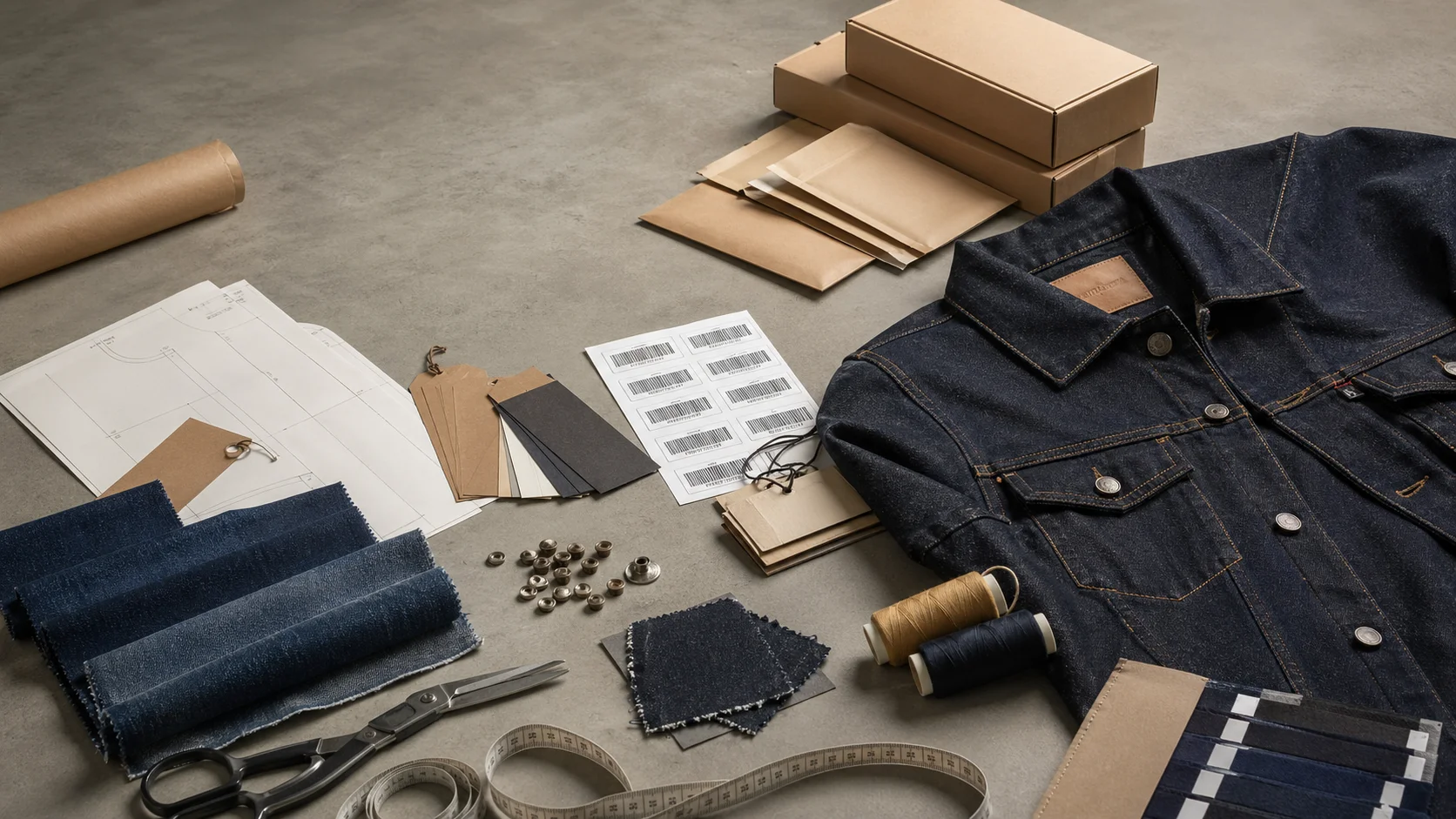
China Garment Vendor Sourcing Checklist with checks for samples, fit, MOQ, QC evidence, pricing terms, and delivery risk.
Fast answer: China Garment Vendor Sourcing Checklist: Audit, MOQ, QC, and Delivery should be judged by production evidence, not by a generic sourcing promise. The buyer needs sample proof, cost breakdowns, QC checkpoints, and delivery buffers in writing.
Ask for recent sample photos, measurement tolerances, fabric or print test assumptions, decoration test notes, packing examples, and a named inspection checkpoint. These details show whether the team can repeat an approved sample at bulk volume.
Separate garment cost, decoration, labels, packaging, sampling, testing, freight, and rush charges. When every cost line is visible, it becomes easier to reduce colorways, adjust size depth, or reserve more time for sampling.
For brands, retailers, and private label businesses, sourcing apparel suppliers in China can unlock major advantages in cost, scale, product variety, and production expertise. At the same time, it can also be a challenging process if you do not have a structured sourcing strategy. A well-prepared apparel supplier sourcing checklist for China helps you reduce risk, compare vendors more effectively, and build a supply chain that supports long-term growth.
Whether you are launching a new clothing line or looking to improve your current manufacturing setup, this guide will walk you through the key steps, evaluation criteria, and business tips you need to source with confidence. We will cover how to identify the right apparel suppliers, what to ask before placing an order, and how to protect product quality while keeping timelines and costs under control.
China remains one of the most important global hubs for apparel manufacturing, but success depends on preparation. A checklist turns a complex process into a repeatable system, helping you make better decisions and avoid costly mistakes. If you want support from a manufacturing partner, you can also explore our services to see how Fabrikn works with B2B buyers.
China has built a strong reputation in apparel production for several reasons. First, it offers a mature manufacturing ecosystem with access to fabrics, trims, accessories, printing, embroidery, washing, and packaging solutions. Second, many factories specialize in specific product categories, such as activewear, knitwear, workwear, childrenswear, or fashion basics. Third, Chinese suppliers often have the capacity to handle both small and large production runs, depending on their setup.
For international buyers, another advantage is that many suppliers are familiar with export requirements, custom documentation, and shipping procedures. This can help streamline production if you are importing to North America, Europe, the Middle East, or other regions.
Still, the market is highly diverse. Not every supplier is the right fit for your business. Some factories are built for high-volume orders, while others are better for design-heavy, smaller-batch production. Some excel at speed, while others specialize in premium quality. This is why an apparel supplier sourcing checklist for China is essential.
Use the following checklist as a practical framework when researching and vetting apparel suppliers in China.
Before contacting suppliers, identify exactly what you need. Include garment type, target market, fabric composition, size range, color options, construction details, branding requirements, packaging needs, and expected order quantities. The more detailed your product brief, the easier it is to get accurate quotes and compare suppliers fairly.
Not all apparel suppliers are the same. Some are garment factories, some are trading companies, and some are sourcing agents or integrated manufacturers. A factory may offer stronger pricing and better production control, while a trading company may provide a wider range of product options and easier communication. Understanding the supplier model helps you align your sourcing goals with the right partner.
Ask whether the supplier has experience producing your exact category. A factory that makes suits may not be the best choice for technical sportswear. A supplier that produces women’s fashion basics may not understand the construction needs of heavy-duty workwear. Category experience matters because it often affects pattern making, stitching quality, fabric selection, and production efficiency.
Request examples of similar items they have made, and ask for photos, videos, or sample references. If possible, ask whether they have worked with international brands or buyers in your region.
Before proceeding, verify the supplier’s legal and business information. This may include their company registration, factory address, export license, certifications, and website or trade platform profile. A legitimate supplier should be willing to provide basic company details and answer questions transparently.
Strong communication is one of the most important indicators of a reliable supplier. If a factory responds slowly, gives unclear answers, or avoids technical questions at the inquiry stage, those issues may become bigger later during sampling and production. Look for suppliers that respond promptly, understand your requirements, and communicate clearly in writing.
Pay attention to how they handle details such as fabric specifications, MOQ, production timelines, and sample revisions. Good communication reduces the chance of misunderstandings and delays.
Minimum order quantity, or MOQ, is a critical factor in apparel sourcing. Some suppliers have high MOQs because of fabric sourcing, machine setup, or production line requirements. Others are more flexible, especially for startups or seasonal test orders. Ask for MOQ by style, color, size, or fabric type so you understand the real production threshold.
At the same time, confirm production capacity. A supplier may be willing to accept your order, but if their capacity is limited, they may struggle to meet deadlines or scale with your business.
Sampling is one of the most important steps in the sourcing process. Never assume the bulk order will match your expectations unless you have reviewed approved samples. Ask for a proto sample, size set sample, pre-production sample, or top-of-production sample depending on the stage of development.
Pricing in apparel manufacturing can vary based on fabric choice, order quantity, construction complexity, embellishments, packaging, and shipment terms. When reviewing quotes, make sure you understand what is included and what is extra. A lower unit price may not actually be cheaper if it excludes sampling, labels, packaging, or quality inspection.
Ask suppliers to break down the price by component if possible. This makes it easier to compare offers and spot hidden costs.
Production lead time is another key checkpoint. Ask how long sampling takes, how long bulk production takes, and whether the supplier can meet your launch deadline. China apparel suppliers may need additional time for fabric sourcing, dyeing, accessory procurement, or peak season scheduling.
Request a realistic timeline in writing, including milestones for sample approval, production start, inspection, and shipment readiness. This helps you plan sales campaigns and inventory arrivals more accurately.
A reliable supplier should have a clear quality control process. Ask how they inspect incoming materials, monitor in-line production, and handle final inspection before shipment. Quality assurance should not be treated as an afterthought. It should be built into every stage of production.
Depending on your market, your garments may need to meet specific safety, labeling, chemical, or performance standards. This is especially important for children’s apparel, activewear, uniforms, and regulated categories. Ask the supplier whether they can support testing requirements and whether they understand your destination market’s compliance rules.
If needed, request fabric test reports, colorfastness testing, or third-party lab verification. Compliance is a business necessity, not just a formality.
Packaging matters more than many buyers expect. The right packaging can improve brand perception, reduce shipping damage, and support retail presentation. Ask if the supplier can handle custom polybags, hangtags, care labels, size stickers, folding methods, carton markings, and retail-ready packaging.
If your brand has a specific unboxing or merchandising standard, share it early so the factory can build it into the production process.
Payment terms should be clear before you place any order. Common terms may include a deposit and balance payment before shipment, but conditions vary by supplier and order size. Make sure you understand which payment methods are accepted and what protection you have in case of disputes.
For first-time orders, it is wise to proceed carefully and use formal documentation for every transaction. A professional supplier should be willing to issue invoices and confirm terms in writing.
Once you have gathered several quotations, compare suppliers using a structured scorecard. This prevents you from choosing based only on price. The best supplier is not always the cheapest one. Instead, look for the strongest overall fit across quality, communication, flexibility, reliability, and cost.
A simple evaluation matrix can include the following categories:
It is also helpful to check whether the supplier asks thoughtful questions. Good suppliers want to understand your brand standards, market, and target customer. This usually signals professionalism and a lower risk of costly errors.
If you need broader support across product development and sourcing, you can learn more about our company on the about us page.
Quality control is one of the biggest risk areas in overseas sourcing. Even a supplier with a strong reputation can make mistakes if expectations are not documented clearly. To reduce risk, create a technical package or spec sheet that includes measurements, material details, construction notes, artwork placement, and packaging instructions.
Use objective standards whenever possible. For example, define tolerances for measurements, acceptable defect levels, label positioning, and stitch quality. This makes inspection more consistent and gives both sides a clear benchmark.
For compliance, make sure you understand:
If your products are sold through major retailers or marketplaces, compliance requirements may be even stricter. It is always better to clarify early than to discover a problem after production is complete.
Logistics should be part of your sourcing plan from the beginning. When comparing suppliers in China, ask who handles freight booking, export paperwork, customs documentation, and carton preparation. Also clarify the shipping term being quoted, such as EXW, FOB, or CIF, so you understand your total landed cost.
Lead times can be affected by many factors, including fabric availability, holidays, order size, production complexity, and shipping schedules. Chinese factory calendars can be impacted by peak seasons and local holidays, so planning ahead is important.
Build buffer time into your sourcing plan. This is especially important for seasonal fashion, promotional launches, and retail replenishment programs. A supplier may quote a fast turnaround, but your business should still have a backup plan in case of delays.
Many importers lose time and money because they rush through supplier selection. Avoid these common mistakes:
These mistakes are preventable when you use a disciplined sourcing checklist and work with suppliers who understand international business standards.
At Fabrikn, we understand that apparel sourcing is about more than finding a factory. It is about building a dependable manufacturing relationship that supports your brand goals, product quality, and growth plans. We work with B2B buyers who need a practical and professional approach to apparel manufacturing in China.
Our team helps clients streamline sourcing, improve product development, and manage manufacturing with better visibility. If you are exploring a new supplier relationship or want to improve your current production process, our services are designed to support your needs from concept to delivery.
We also encourage buyers to work with partners who are transparent, responsive, and experienced. If you would like to discuss your sourcing needs directly, please visit our contact us page to start a conversation.
An effective apparel supplier sourcing checklist for China gives your business a clear structure for evaluating factories, managing risks, and building better supplier relationships. Instead of relying on guesswork, you can use a consistent process to compare options, verify capabilities, and protect your product standards.
When you define your requirements clearly, ask the right questions, review samples carefully, and confirm quality and compliance details early, you create a stronger foundation for successful sourcing. Whether you are a startup brand or an established buyer, a disciplined checklist can save time, reduce costly mistakes, and improve your chances of long-term success in the Chinese apparel market.
If you are ready to take the next step, use this guide as your sourcing framework and connect with a manufacturing partner that understands international B2B requirements.
Get a free quote from Fabrikn — your trusted B2B clothing manufacturer with 10+ years of experience. MOQ as low as 200 pieces.
Get a Free Quote →The most important item is defining your product requirements clearly. If your spec sheet, fabric details, sizing, and branding instructions are incomplete, it becomes much harder to evaluate suppliers accurately and avoid production mistakes.
It depends on your business needs. A factory is usually better for direct production control and cost efficiency, while a trading company may offer more flexibility and a broader product range. The right choice depends on your order size, product type, and sourcing strategy.
Look for clear communication, verifiable business information, relevant production experience, willingness to provide samples, and transparent pricing. A trustworthy supplier should answer your questions directly and provide documentation when requested.
Yes. Samples are essential for checking fabric, fit, workmanship, trims, and branding details. Never place a bulk order without approving samples first.
Ask whether the MOQ applies per style, color, size, or fabric. Also ask whether the supplier can offer flexibility for first orders or future scaling. MOQ rules vary widely across suppliers.
Use detailed technical specifications, approve samples carefully, define quality standards in writing, and confirm the supplier’s inspection process. For larger orders, consider third-party inspection before shipment.
Yes. Fabrikn supports B2B buyers with manufacturing and sourcing-related services. To discuss your project, visit our contact us page or review our services.