
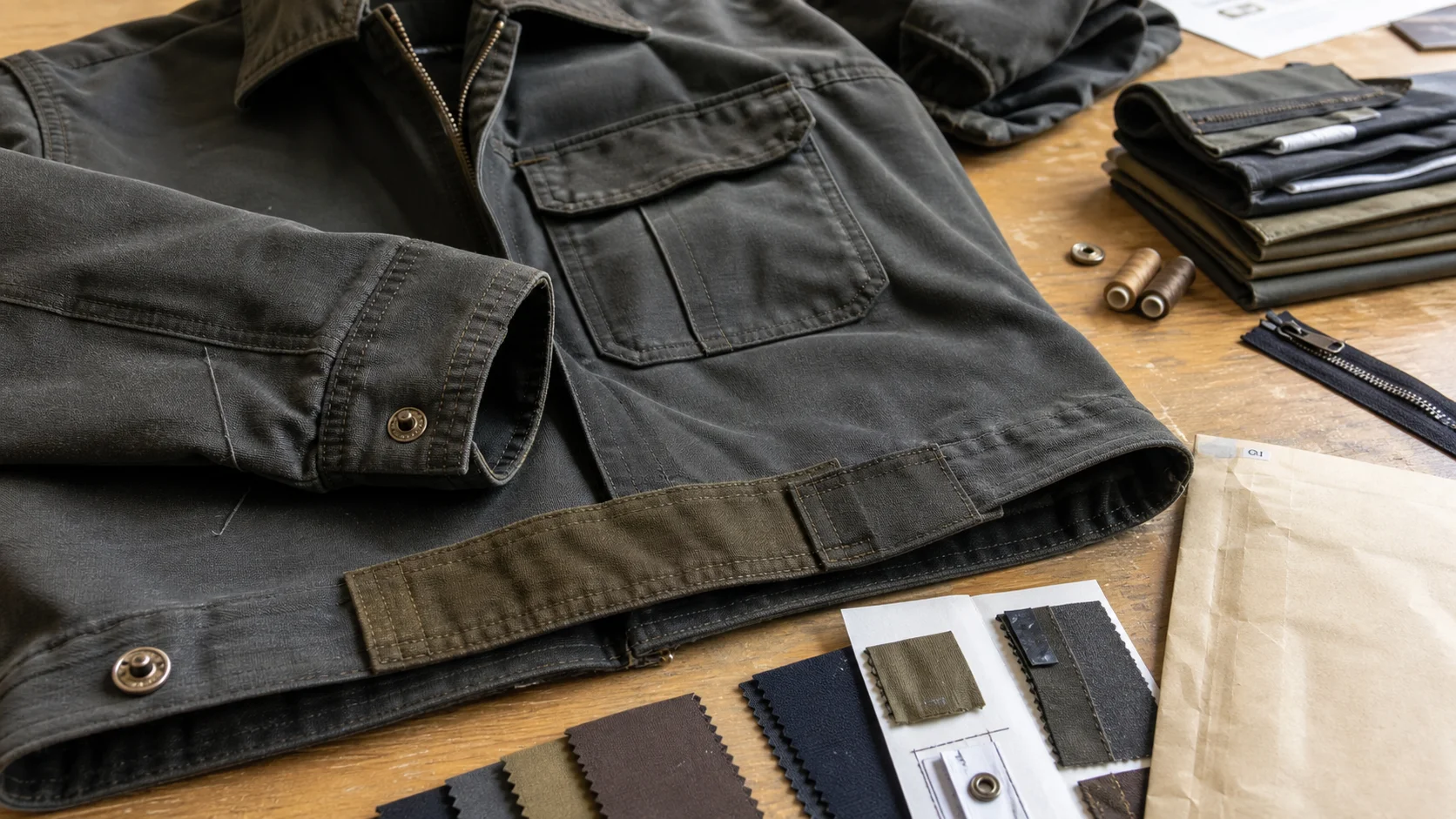
A product-specific SEO outline for security contractors evaluating repairable work jacket suppliers, size grading artifacts, fit consistency, and...
Repairable Work Jacket Size Grading Review for Buyers - Fabrikn production reference
For security contractors, a work jacket is not just outerwear. It is part uniform, part weather protection, part identification system, and part daily equipment carrier. A repairable work jacket adds another layer: the garment should be built so damaged components can be replaced without discarding the whole jacket. That only works commercially if the sizing is reliable across the order, across repeat buys, and across mixed teams.
Size grading is where many uniform programs become expensive. A jacket can look correct in one medium sample, then fail when extended into XS, 3XL, or 5XL. Sleeves may become too long, shoulders too wide, chest ease too tight over body armor, or hem width too narrow when staff sit in patrol vehicles. For security contractors, poor grading does not only create returns. It can affect mobility, visibility, comfort, and the professional appearance of the contract team.
A repairable work jacket supplier size grading review should therefore happen before bulk production, not after the first complaint from the field. Buyers should ask how the supplier develops the base size, how the grade rules are applied, how tolerance is controlled, and how extended sizes are tested. A supplier that cannot explain these points clearly may still be able to sew jackets, but may not be ready for a multi-site security uniform program.
Good size grading is not about making every size larger by the same amount. It is about preserving function, movement, and proportion across the full size range.
Security contractors often place repeat replenishment orders rather than one-off fashion buys. That changes the sourcing decision. The best value is not always the lowest first price. A slightly higher unit cost may be justified if the supplier can keep the same fit block, archive approved patterns, replace damaged panels, and deliver consistent sizes over several seasons.
Before reviewing a repairable work jacket supplier, buyers should define the working conditions of the security team. Jackets for retail guards, night patrol teams, event stewards, logistics gatehouse staff, and mobile response units do not need the same fit. A single generic jacket specification can create avoidable problems in wear trials.
The first decision is layering. Will the jacket be worn over a shirt only, over a fleece, or over a stab vest or ballistic vest? Security contractors should be direct about this in the tech pack. A jacket graded for light layering may feel tight across the chest and upper arm if worn over protective equipment. A jacket graded too generously may look unprofessional in front-of-house environments.
The second decision is posture and movement. Static door staff may need a clean silhouette and strong branding zones. Mobile patrol teams need arm lift, driving comfort, radio access, and pocket stability. Warehouse security teams may require abrasion resistance on elbows and hem areas. Event security teams may need high-visibility panels and rapid size allocation for temporary staff.
The third decision is contract duration. If the buyer expects replacement orders for two to five years, the supplier must manage continuity. Pattern archiving, fabric shade control, trim availability, and repair part compatibility all matter. A jacket designed with unusual zippers or seasonal fabrics may become difficult to repair or reorder later.
Buyers sourcing for a sustainable fashion or responsible procurement program should avoid vague language such as “eco workwear” or “durable uniform jacket.” These phrases are not enough for manufacturing. Use measurable garment details instead: fabric composition, tear strength target, seam type, repair access, spare trim pack, and approved measurement tolerances.
Repairability should be designed into the jacket from the first pattern stage. If it is added late, it usually becomes a marketing claim rather than a practical feature. For security contractors, the repairable elements should focus on the parts most likely to fail during service: zippers, cuffs, pocket bags, sleeve hems, elbows, reflective tape, and ID attachment points.
A practical repairable work jacket does not need to be complicated. In many cases, buyers get better results from standard, serviceable construction than from unusual modular systems. The tradeoff is simple: more modular features can improve repair access, but they may add cost, weight, stitching bulk, and inspection points. A jacket with a replaceable front zipper and reinforced elbow patch may be more commercially reliable than a fully modular jacket with multiple detachable panels.
A repairable garment also needs documentation. Buyers should ask for a repair map or component list. This does not need to be complex, but it should identify which parts are replaceable, which trims are stocked, and which repairs are realistic at local alteration level. If a supplier cannot supply replacement trims or pattern pieces, the repairability claim becomes weak.
For buyers building a formal uniform sourcing process, it can be useful to review supplier service capabilities through a partner page such as Fabrikn services. The important point is not the page itself, but the discipline behind it: sampling, development, production control, and follow-up need to be connected.
A repairable work jacket supplier size grading review should start with the measurement chart. Buyers should not approve a sample only by visual assessment. A medium jacket that looks acceptable on one wearer does not prove the grade is correct. The measurement chart should show the base size, grade increments, tolerance, and any size-specific adjustments.
The base size is usually medium or large, depending on the target market. For security contractors, large is often useful as a fit reference because many wearers layer garments underneath. That said, the best base size depends on wearer data. If the buyer has previous issue records showing high demand in XL and 2XL, the grading review should focus on those sizes rather than only on medium.
Core jacket measurements include chest, hem, shoulder, sleeve length, back length, bicep, armhole, cuff opening, neck, hood opening, and pocket placement. Security jackets also need functional measurements such as radio pocket position, badge panel placement, reflective tape position, and zipper length. These details should not drift excessively as sizes increase.
Typical grade increments vary by market and silhouette. A common chest grade may be around 4 cm to 5 cm in full circumference between standard sizes, with larger jumps sometimes used for extended sizes. Sleeve length grades may be much smaller, often around 1 cm to 1.5 cm per size, and may need caps for larger sizes. Back length may increase gradually but should be checked against operational use.
Extended sizes need special attention. A straight mathematical grade from S to 6XL often creates poor proportions. Larger sizes may require adjusted shoulder shape, armhole depth, bicep width, hem sweep, and pocket position. Smaller sizes may need reduced sleeve length and narrower shoulder without making the chest too restrictive. This is where experienced pattern work matters.
Many security contractors ask for a unisex jacket because it simplifies ordering and stock control. A unisex block can work for some teams, especially when the jacket is a loose outer shell. It is less reliable when the garment is worn for long shifts, issued across a wide size range, or expected to look polished in public-facing roles.
The buyer’s tradeoff is operational simplicity versus wearer acceptance. One unisex block reduces development cost, inventory complexity, and MOQ pressure. Separate male and female blocks improve fit for more wearers but increase sampling, size sets, stock planning, and production complexity. For larger contracts, separate blocks may be worth the cost. For smaller contractors, a carefully tested unisex block with strong size guidance may be more practical.
Female security staff often report problems with sleeve length, shoulder width, hem fit, and chest shaping when issued a simple unisex jacket. These problems can lead to size exchanges and reduced comfort. If a buyer chooses a unisex jacket, the grading review should include fit sessions on different body types, not only one fit model.
Buyers should avoid approving fit through photos alone. Photos can help review appearance, but they rarely show tension across the upper back, restriction at the bicep, or discomfort while seated. A short movement test is more useful: zip the jacket fully, raise both arms, reach forward, sit down, access radio pocket, and put hands into lower pockets.
Fabric selection affects size grading more than many buyers expect. A rigid woven jacket and a stretch softshell jacket may use different ease even when the body measurements are the same. A padded jacket needs additional internal volume. A laminated waterproof fabric may feel tighter because seams and layers reduce flexibility. A heavy canvas may require more bicep and shoulder ease for comfort.
For repairable work jackets, common outer fabric options include polyester oxford with PU coating, recycled polyester twill, poly-cotton canvas, softshell laminates, and nylon blends. Each has tradeoffs. Polyester oxford is cost-effective and common for outerwear, but lower grades can feel noisy and may abrade at stress points. Recycled polyester supports sustainability targets, but buyers should confirm performance, shade consistency, and certification claims. Poly-cotton canvas can be durable and repair-friendly, but it may absorb moisture and require careful shrinkage control. Softshell is comfortable and presentable, but repairs may be more visible and lamination quality varies.
Trim choices should support repairability and long-term procurement. A jacket that depends on a custom zipper pull, unusual snap, or seasonal reflective material may be harder to repair next year. Standardization is often the smarter buying decision. Choose trims that are strong, available, and documented.
Buyers should request shrinkage and wash test information for both fabric and finished garments. If the shell fabric shrinks but lining does not, or if the lining shrinks more than the shell, the jacket can twist or pucker. Size grading becomes irrelevant if the garment changes significantly after care testing.
For sustainable fashion positioning, buyers should be cautious with environmental claims. Recycled fabric content, repairable construction, spare part availability, and longer service life are useful claims only when documented. Do not rely on broad sustainability language without certificates, test reports, or a clear product life extension plan.
Typical MOQ ranges for repairable work jackets depend on fabric availability, trim customization, size range, and whether the product is made from an existing block. For a basic work jacket using stock fabric and standard trims, a supplier may consider around 300 to 500 pieces per color. For customized fabrics, dyed-to-match trims, special reflective layouts, or extended size ranges, MOQ may move closer to 800 to 1,500 pieces. Programs requiring separate male and female blocks may need higher combined quantities to keep unit cost reasonable.
Small security contractors often want low MOQ and broad size coverage. That is possible only if the buyer accepts certain compromises: stock fabric, standard color, limited trim customization, and fewer size splits. A low MOQ order with six colors, twelve sizes, custom zippers, and separate fit blocks is rarely efficient. The supplier may accept it, but the price and lead time will reflect the complexity.
Sampling should be structured. A good process reduces risk before bulk production begins. Buyers should not move from first sample to bulk order without a pre-production sample, especially when size grading and repairable features are important.
Lead times vary widely. A simple jacket using available materials may take around 45 to 75 days after approvals. More customized programs can take 90 to 120 days or longer, especially if fabric must be woven, dyed, coated, tested, or certified. Delays often come from late trim approvals, incomplete branding artwork, unclear size ratios, missing care label requirements, or changes after the pre-production sample.
Buyers should separate calendar lead time from production lead time. Production may be 45 days, but fabric booking, sampling, testing, approvals, packing, inspection, and shipping add time. If jackets are needed for a contract launch date, build in buffer. Security uniform rollouts are unforgiving; late jackets can force expensive temporary purchases.
For buyers planning a new uniform program, early contact with a sourcing or manufacturing team through Fabrikn contact can help clarify whether the desired MOQ, fabric, and size range are commercially realistic before a tender commitment is made.
Inspection for repairable work jackets should go beyond general appearance. AQL inspection can catch visible defects, but buyers also need measurement checks, functional checks, and component checks. A jacket can pass a quick visual inspection and still fail in the field if the zipper is weak, pocket bags tear, or size grading is inconsistent.
Measurement inspection should cover multiple sizes and multiple pieces per size. A common mistake is checking only the base size. For security contractors, size variation in large sizes can create the most complaints because these sizes are often worn over layers and equipment. If a 3XL jacket is smaller than the approved tolerance, the wearer may reject it immediately.
Reflective tape and branding alignment should be inspected carefully. Misaligned tape looks unprofessional and may create compliance concerns if high visibility placement is part of the specification. Badge panels must be straight and positioned consistently. Security clients notice uniform inconsistency quickly, especially on teams posted at public entrances.
Repairability also needs inspection. Buyers should confirm that the replaceable parts are actually accessible. If a pocket bag is described as repairable but trapped inside multiple sealed seams, repairs become expensive. If the front zipper is replaceable only by dismantling the lining and storm flap, the repair process may not be practical for routine uniform maintenance.
Packaging inspection matters for multi-site security contractors. Cartons should be marked by size, color, style, and quantity. Mixed cartons can reduce warehouse space, but they create issuing errors if not carefully labeled. For larger rollouts, pre-packed site allocations may be worth the extra handling cost.
A supplier scorecard helps buyers compare options beyond unit price. For a repairable work jacket, the lowest quote may hide weak grading, limited repair support, or poor repeat-order control. The best supplier is usually the one that can balance fit consistency, component availability, realistic MOQ, and stable production quality.
Review Area Strong Supplier Signal Buyer Concern Pattern and grading Provides full size chart, grade rules, and measured size set. Only shows one sample and gives vague tolerance answers. Repairability Identifies replaceable components and spare trim options. Uses repairable language without practical repair documentation. Material control Confirms fabric specs, trim specs, shade control, and testing route. Changes fabric or trim after approval without clear notice. MOQ flexibility Explains cost tradeoffs for stock materials and custom features. Promises very low MOQ for complex custom work without explanation. Sampling discipline Supports fit sample, size set, trim approval, and pre-production sample. Pushes directly to bulk after one development sample. Inspection readiness Accepts measurement checks, functional checks, and final inspection. Resists third-party inspection or avoids tolerance commitments. Repeat order support Archives pattern, fabric references, trim codes, and approval records. Cannot guarantee continuity for future replenishment orders.Buyers should ask direct questions. What is the approved base size? Which sizes will be sampled before bulk? What is the chest tolerance? Can the front zipper be replaced with a stocked component? What happens if the reflective tape supplier changes? How are size ratios packed? How long are patterns and trims archived?
Supplier confidence is useful only when supported by documents and samples. A practical supplier will explain limitations. That is a positive sign. If the buyer asks for recycled fabric, low MOQ, waterproof performance, high visibility detailing, separate gender blocks, repairable construction, and urgent delivery, the supplier should flag tradeoffs rather than accept every requirement without adjustment.
For security contractors, the right repairable work jacket supplier is not simply the one with the broadest catalog. The stronger choice is a supplier that can control the fit system, maintain component continuity, and support repairs in a way that reduces replacement waste. This sits well within sustainable fashion thinking, but it must be handled as a manufacturing discipline rather than a marketing slogan.
A buyer should prioritize size grading if the team includes varied body types, extended sizes, female wearers, or staff wearing protective equipment. Poor grading will create returns, complaints, and inconsistent appearance. A cheaper jacket that fails in size allocation can become more expensive than a better-graded jacket with a slightly higher unit cost.
Repairability should be judged by likely repair frequency. If zippers, cuffs, pockets, and badge panels are the most common failure points, focus there first. Do not overpay for complex modularity unless the contractor has a real repair workflow. A simple jacket with replaceable high-failure components is often the most sensible procurement choice.
MOQ should be reviewed honestly. If the order quantity is small, keep the jacket closer to stock fabric and standard trims. If the contract volume is large, invest in better grading, size sets, wear trials, and component planning. The cost of development is easier to justify when it protects a long-term uniform program.
Buyers can also assess whether a manufacturing partner’s wider approach aligns with long-term uniform goals by reviewing company background information such as Fabrikn about us. The key is to look for evidence of process, communication, and production control rather than broad claims.
The safest buying decision is a jacket that security staff will actually wear, warehouse teams can issue accurately, and repair teams can maintain without hunting for unavailable components.
A final approval should include the signed size chart, approved pre-production sample, fabric and trim card, repair component list, care label, packing instructions, and inspection checklist. If any of these are missing, the buyer is accepting avoidable risk.
Get a free quote from Fabrikn — your trusted B2B clothing manufacturer with 10+ years of experience. MOQ as low as 200 pieces.
Get a Free Quote →Size grading is the process of increasing or decreasing a jacket pattern across sizes while keeping fit, movement, and proportions usable. For repairable work jackets, grading must also protect pocket placement, reflective tape alignment, badge zones, and replaceable component positions.
Many programs start around XS–4XL, but larger contractors may need XXS–6XL depending on workforce data. Buyers should check previous issue records before finalizing the size range. Extended sizes should not rely only on automatic grading from the base size.
Typical MOQ may range from about 300 to 500 pieces per color for simpler jackets using stock materials. More customized work jackets with special fabrics, trims, reflective layouts, or separate gender blocks may require around 800 to 1,500 pieces or more.
Unisex fit blocks simplify stock control and can work for loose outer jackets. Separate male and female blocks usually improve wearer acceptance but increase sampling, MOQ pressure, and inventory complexity. Larger contracts often benefit from separate blocks; smaller orders may need a carefully tested unisex option.
The most useful repairable parts are usually the front zipper, cuffs, pocket bags, elbow areas, reflective tape, hood, and badge panels. Buyers should focus on parts that fail most often during service rather than adding unnecessary modular features.
A careful process normally includes a development sample, fit sample, selected size set, trim approval, wash or wear test sample, and final pre-production sample. Bulk production should not begin until the pre-production sample matches the approved fabric, trims, pattern, and measurements.
Buyers should inspect measurements across several sizes, zipper function, pocket strength, reflective tape alignment, branding placement, seam quality, color consistency, and packing accuracy. Repairable components should also be checked to confirm they can realistically be replaced.
Repairability supports sustainability by extending garment life and reducing replacement demand. The claim is strongest when supported by durable materials, replaceable components, spare trim availability, and a documented repair plan.