
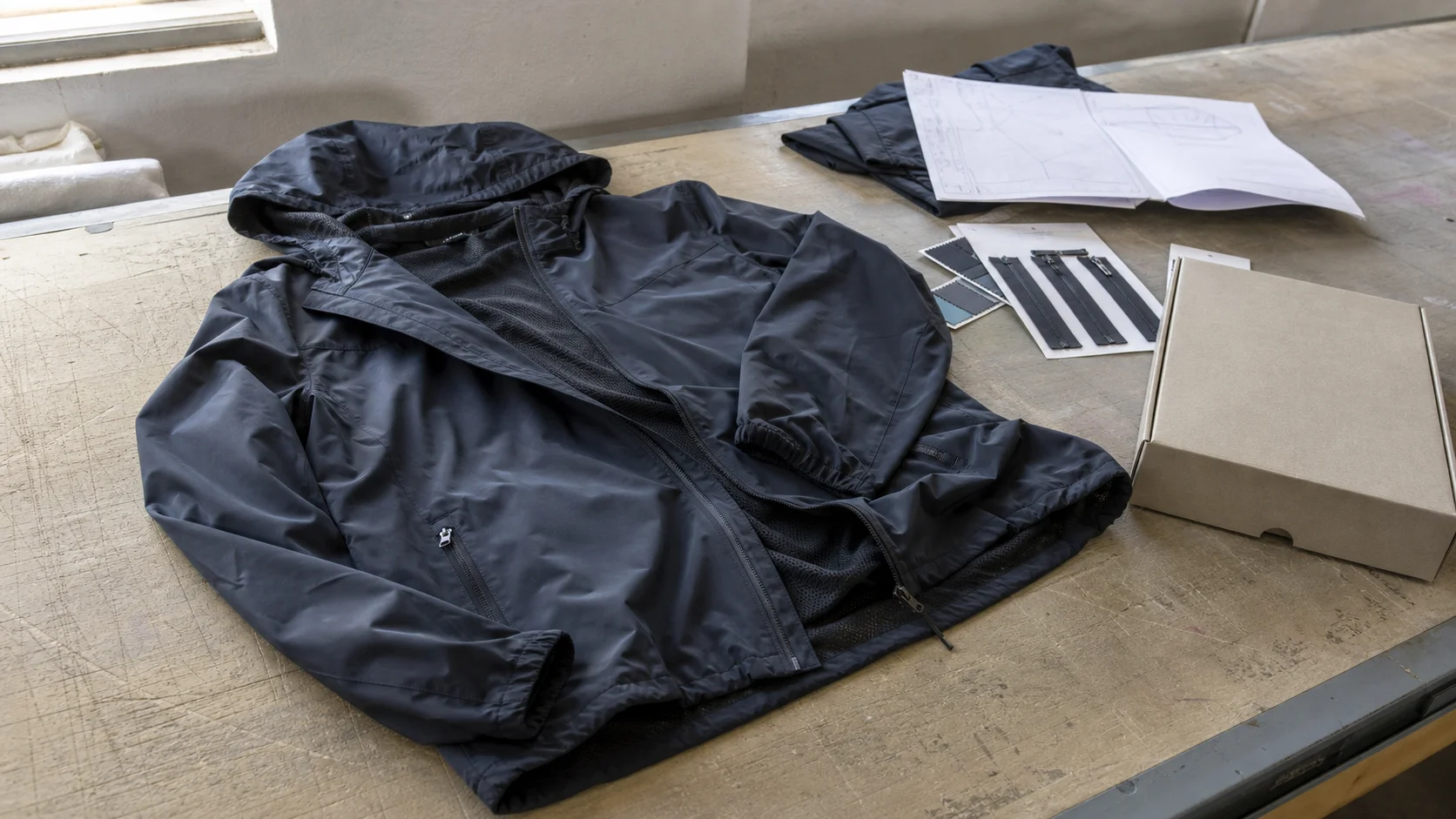
A product-specific SEO outline for restaurant groups evaluating reorder risk with warehouse coat manufacturers, focusing on insulation specs, size curves,...
Warehouse Coat Reorder Risk Review for Restaurants - Fabrikn production reference
Restaurant groups buy warehouse coats for a practical reason: cold storage, receiving docks, commissaries, prep areas, and delivery handoff zones all need outerwear that can survive repetitive use. The reorder risk appears later, when a coat style that worked for one season becomes difficult to replenish at the same size curve, fabric weight, color, price, or delivery window.
For multi-unit restaurant operators, the issue is not only whether a warehouse coat manufacturer can make the first order. The larger question is whether the manufacturer can repeat the garment consistently when new locations open, staff counts change, winter demand spikes, or procurement teams need replacement units quickly. A warehouse coat reorder risk review helps purchasing teams identify what can go wrong before the next purchase order is urgent.
This guide reviews the manufacturing, specification, MOQ, sampling, lead-time, inspection, and supplier-management risks that restaurant groups should check before placing or repeating warehouse coat orders.
A restaurant group may start with a simple outerwear requirement: black or navy warehouse coats for cold-room staff, receiving teams, commissary workers, or back-of-house managers. The first order may be based on immediate headcount. The reorder is where hidden risk shows up.
Reorders are rarely identical to the original purchase. Staff turnover changes the size curve. A new commissary may need longer cold-storage wear time. A regional manager may request embroidered logos. The supplier may have changed fabric mills, zipper sources, padding weight, or production lines. If the original specification was vague, the second shipment can look similar in a catalog but perform differently in use.
Restaurant groups also face seasonal pressure. Cold-weather outerwear is often ordered close to the period when it is needed most. A delayed reorder can force operators to mix old and new garments, use retail substitutes, or accept higher freight costs. This matters for brand consistency, worker comfort, and procurement control.
The safest warehouse coat program is not the cheapest first order. It is the one that can be repeated without surprise changes in fabric, fit, trims, labeling, or delivery timing.
For B2B buyers, reorder risk should be evaluated before supplier selection, not after the first shortage. A practical review gives procurement teams a clearer view of what must be locked, what can flex, and where backup options are needed.
Warehouse coats for restaurant groups sit between workwear, outerwear, and food-service uniform programs. They are not always customer-facing, but they still affect workplace safety, comfort, and brand discipline.
Staff working around walk-in coolers, freezers, and refrigerated storage need coats that provide warmth without excessive bulk. The coat must allow bending, lifting, reaching, and short periods of high movement. Too much insulation can cause overheating outside the freezer. Too little insulation leads to discomfort and inconsistent wear compliance.
Restaurant groups with commissary kitchens usually need more structured garment control. Coats may be issued by department, shift, or role. Reorder consistency is important because different production batches may be worn side by side in the same facility.
Dock teams and receiving staff need abrasion resistance, reliable closures, and practical pocketing. These coats face more snagging, grime, and exposure to wet conditions than coats used only inside a walk-in cooler. Water resistance, sleeve durability, and zipper quality become more important.
When a coat becomes part of a restaurant group’s uniform program, cosmetic consistency matters. Color matching, logo placement, trim color, and label position should be standardized. Reorder risk rises when different locations order independently from different sources.
A warehouse coat manufacturer reorder risk review should focus on repeatability. Buyers should not only ask whether the supplier can make a warm coat. They should ask whether the supplier can keep making the same coat when the reorder quantity, timing, and size mix change.
Risk Area What Can Go Wrong Purchasing Judgment Fabric continuity Different shell fabric weight, finish, handfeel, or shade in later batches Lock fabric composition, GSM, finish, color standard, and approved mill or equivalent requirement Insulation consistency Padding thickness changes, warmth changes, garment becomes bulky or thin Specify insulation type, weight, quilting method, and acceptable tolerance Trim substitution Zippers, snaps, drawcords, binding, or Velcro differ from the approved sample Approve trims by brand, gauge, material, color, and performance requirement Size curve mismatch Reorder has too many slow-moving sizes and too few core sizes Base reorder size ratio on actual issue data, not the first estimated curve MOQ pressure Supplier requires high minimums for repeat production or special fabric Negotiate replenishment terms before the first bulk order Lead-time slippage Reorder misses seasonal need date due to fabric, trim, or factory capacity Plan cut-off dates and reserve production capacity for seasonal buysThe highest-risk programs are usually those with custom color, custom insulation, special branding, unusual sizing, or low annual volume. Standard stock designs reduce some risk, but they can still create problems if the manufacturer changes components without notice.
Reorder quality depends on the strength of the original specification. A vague purchase order that says “black insulated warehouse coat” leaves too much room for interpretation. A proper tech pack or production specification reduces disputes and makes supplier substitution easier if the current manufacturer cannot support future orders.
At minimum, restaurant groups should maintain a controlled specification file for each warehouse coat style. This does not need to be overly complex, but it should be detailed enough for repeat production.
The strongest reorder control comes from a signed approval sample, a measurement chart, and a bill of materials. Buyers should keep photos of approved details, not just the physical sample. Physical samples can be misplaced, damaged, or replaced informally. Digital records help maintain control when procurement staff changes.
For restaurant groups building a broader uniform or outerwear program, it is sensible to centralize specifications with a supplier that understands repeat manufacturing. Buyers comparing service options can review apparel production support through Fabrikn’s services and use that as a starting point for defining production scope.
Fabric is one of the most common reorder risk points. A warehouse coat may look acceptable in a sample photo, but small fabric changes can affect warmth, durability, cleaning behavior, and perceived quality.
Restaurant warehouse coats often use polyester, nylon, poly-cotton blends, or coated woven fabrics. For indoor cold-room use, buyers may prefer a fabric that is easy to clean, not too noisy, and resistant to light abrasion. For dock or outdoor receiving use, water resistance and tear strength become more relevant.
Common shell fabric specifications may include 100% polyester pongee, polyester twill, nylon taslan, or poly-cotton twill. Weight can vary widely depending on the intended performance. Lighter shell fabrics may sit around 90 to 150 GSM, while heavier workwear-oriented shells may move into higher ranges. The correct choice depends on the work environment, expected wear time, cleaning method, and budget.
Insulation should be specified by type and weight. Polyester padding is common for cost-controlled programs. Fleece lining can add warmth and comfort, but it may hold lint and can change the garment’s feel after repeated laundering. Quilted lining helps stabilize padding and may improve durability, but it can increase sewing complexity and cost.
Typical insulation weights for light cold-room coats may fall around 80 to 120 GSM. Heavier cold-storage or outdoor-use coats may require 150 to 200 GSM or more. These figures are not universal rules. A coat’s warmth also depends on shell fabric, lining, quilting, garment length, sleeve design, closure coverage, and fit.
Black, navy, charcoal, and dark green are common because they hide stains better than light colors. They also show shade variation between batches if fabric is not controlled. If multiple locations will wear the coats at the same time, buyers should require lab dips for custom colors and confirm acceptable shade tolerance.
For black coats, do not assume all black fabrics match. Polyester black, nylon black, and poly-cotton black can reflect light differently. Reorder batches can look mismatched under kitchen, dock, or daylight conditions. A physical color standard is useful when exact brand presentation matters.
Minimum order quantity is a commercial risk as much as a production issue. Many restaurant groups can place an initial order large enough to satisfy a manufacturer, then struggle when they need only replacement units or new-hire sizes later.
MOQ varies by manufacturer, fabric availability, decoration method, and customization level. For stock or semi-stock warehouse coats, buyers may find minimums from roughly 50 to 200 pieces per style, especially when decoration is simple. For custom production, typical MOQs often sit around 300 to 1,000 pieces per style or color. Special fabric, custom dyeing, private-label trims, or unusual insulation can push the practical MOQ higher.
Small reorders may be possible, but unit cost usually rises. The manufacturer may need to reopen a production line, source small trim lots, or buy fabric at less favorable terms. Buyers should ask for both initial-order MOQ and replenishment MOQ before approving the style.
Restaurant groups often underestimate size curve complexity. A first order may use a general S to 3XL ratio, but real usage data may show heavier demand in L, XL, and 2XL. Cold-storage coats may also need more ease because staff wear layers underneath.
A poor size curve creates two costs. One is stockout risk in core sizes. The other is dead inventory in sizes that rarely issue. Buyers should collect issue data by location, role, and season. Reorder ratios should be based on actual consumption, not only headcount.
Program Type Likely MOQ Range Reorder Risk Best Control Stock coat with logo 50 to 200 pieces Style discontinuation or logo placement inconsistency Confirm stock continuity and maintain decoration spec Semi-custom coat 200 to 500 pieces Fabric or trim substitution Lock bill of materials and approve pre-production sample Fully custom coat 500 to 1,000+ pieces High replenishment MOQ and longer lead time Forecast annual demand and negotiate reorder terms early Extended-size program Varies by size and pattern Slow production or high cost for fringe sizes Confirm grading, fit sample, and minimums by size rangeThe buying decision is straightforward: if the restaurant group needs frequent small replenishment, a stock or semi-stock program may be safer than a fully custom coat. If brand control and technical performance are more important, custom manufacturing can be justified, but the annual volume and storage plan must support it.
A reorder should not automatically bypass sampling. If the manufacturer confirms that all materials and patterns remain unchanged, buyers may approve a shorter process. If any fabric, trim, factory line, or decoration supplier has changed, a sample review is worth the time.
For simple reorders, the material swatch and pre-production sample may be enough. For high-volume restaurant groups or updated designs, the full process is safer. The tradeoff is time. Sampling can add one to four weeks, depending on material readiness and shipping. Skipping it can save time but increases the risk of receiving a batch that does not match the approved coat.
Restaurant buyers should be careful with “same as last time” approvals. That phrase is not a specification. It works only when the supplier has complete records, unchanged materials, and reliable production discipline.
Lead time is rarely one number. It depends on fabric availability, trim sourcing, sample approval speed, production capacity, decoration complexity, inspection timing, and shipping method.
For stock warehouse coats with simple logo decoration, a practical lead time may be two to six weeks after artwork approval, depending on inventory and decoration queue. Semi-custom or custom production commonly requires eight to sixteen weeks after sample approval. Special fabric, custom dyeing, imported trims, or peak-season capacity can extend that timeline.
Ocean freight can add several weeks compared with air shipment. Air freight may solve an urgent shortage, but it can erase the savings of offshore manufacturing. Restaurant groups should calculate landed cost, not only unit price.
The strongest purchasing approach is to work backward from the in-hand date. If coats must be issued before winter, the purchase order should not be placed when temperatures have already dropped. For larger restaurant groups, a seasonal reorder calendar is better than emergency buying.
Buyers who need to clarify production timing, replenishment options, or documentation can start a supplier conversation through Fabrikn’s contact page. Clear questions at the start usually prevent expensive decisions later.
Warehouse coats fail in predictable places. Closures break, seams open, insulation shifts, pockets tear, embroidery puckers, and sizing drifts. A restaurant group does not need luxury-level inspection, but it does need consistent workwear checks.
For bulk orders, buyers should define an inspection standard before production. AQL inspection is common in apparel, though the chosen level depends on order value, risk tolerance, and supplier history. Critical defects should include safety or compliance issues. Major defects should include functional failures such as broken zippers, open seams, wrong measurements, or incorrect branding. Minor defects may include loose threads or small cosmetic issues that do not affect use.
Measurement checks should include chest, sweep, shoulder, sleeve length, body length, across back, and bicep. Cold-room outerwear needs enough room for movement. If staff cannot lift boxes or reach shelves comfortably, the coat will not be worn consistently.
Restaurant environments are hard on garments. Coats may face grease, condensation, food residue, and frequent cleaning. Buyers should confirm the intended care method. Domestic laundering, industrial laundering, spot cleaning, and dry cleaning all create different risks.
Before a large reorder, a wash test can reveal shrinkage, seam puckering, insulation clumping, color bleeding, logo distortion, or lining change. This is especially important if the reorder uses a substituted fabric or new decoration method.
A supplier scorecard keeps the reorder discussion objective. It also gives procurement teams a common language when comparing manufacturers.
Evaluation Point Low Risk Higher Risk Documentation Tech pack, BOM, size chart, approved sample, and production records available Supplier relies on verbal notes or catalog description Material control Fabric and trims are documented with replacement approval rules Supplier may substitute available materials without buyer signoff MOQ flexibility Initial MOQ and reorder MOQ are clear before order placement Replenishment terms are discussed only after stock runs low Sampling discipline Supplier provides swatches, fit samples, and pre-production samples as needed Supplier pushes bulk production without updated approval Lead-time transparency Supplier separates material, production, decoration, inspection, and shipping time Supplier gives one broad delivery promise without dependencies Quality control Inspection criteria and defect categories are agreed before shipment Defects are handled only after delivery complaintsRestaurant groups should not treat the lowest quote as the lowest-risk option. A cheap coat that cannot be reordered consistently may become expensive when locations need emergency replacements. A slightly higher unit cost can be justified if it includes better material control, documentation, and replenishment planning.
The best purchasing strategy depends on the restaurant group’s scale, branding needs, and operational environment. A small regional group may not need fully custom manufacturing. A larger multi-brand operator may need a controlled outerwear platform with defined specifications and annual replenishment cycles.
Custom manufacturing is worth considering when the coat must meet specific warmth, durability, branding, or fit requirements. It is less attractive when annual demand is low and unpredictable. Custom programs require stronger forecasting and more disciplined inventory planning.
Buyers should ask the manufacturer these questions before committing:
A restaurant group that expects growth should design the coat program for future demand, not only current headcount. New openings, seasonal hiring, and staff replacement all create demand that may not appear in the first purchase order.
Warehouse coats may be back-of-house garments, but branding still requires control. Embroidery, woven patches, heat transfers, and private labels each carry different reorder risks.
Embroidery is durable and widely used, but dense stitching can pucker insulated panels if backing and placement are not managed. Patches can offer a cleaner look and easier standardization, but they add trim inventory and attachment steps. Heat transfers may work for some shell fabrics, yet they must be tested for adhesion, wash durability, and performance on coated surfaces.
Labels and packaging should also be specified. Restaurant groups often benefit from size stickers, polybags by size, carton markings by location, and packing lists that match distribution needs. Poor packing creates avoidable labor at the receiving end.
Compliance requirements depend on market, garment type, labeling rules, and buyer standards. At minimum, buyers should confirm fiber content, country-of-origin labeling, care instructions, and any applicable safety or restricted-substance expectations. If the restaurant group has internal compliance standards, those should be shared before sampling.
Inventory planning is where procurement can reduce risk without changing the garment. A warehouse coat program should define reorder points, safety stock, and responsibility for forecasting.
Core sizes should be protected. If historical issue data shows that L, XL, and 2XL move fastest, those sizes should not be ordered in the same quantity as XS or 4XL unless headcount justifies it. Extended sizes should remain available, but they may need different purchasing logic because demand is less predictable.
For multi-location groups, centralized buying usually provides better control than site-by-site purchasing. It reduces style drift, improves volume leverage, and makes inspection easier. Site-level managers can still request quantities, but the garment standard should remain centralized.
Vendor-held inventory may be attractive, but it should be reviewed carefully. It can reduce the buyer’s storage burden, yet it may come with higher unit costs, holding fees, or minimum annual commitments. The commercial terms should state what happens to slow-moving sizes and discontinued materials.
Before issuing a warehouse coat reorder, restaurant groups should run a short but disciplined review. This step does not need to delay the order if records are complete. It simply prevents assumptions from becoming defects.
The practical tradeoff is clear. Faster reorders are possible when the program is well documented. Poor documentation turns every reorder into a new sourcing project. Restaurant groups that invest in specifications, supplier discipline, and inventory data usually spend less time fixing outerwear problems later.
For buyers evaluating a long-term apparel manufacturing partner, company background and sourcing approach matter as much as the garment quote. A useful next step is reviewing Fabrikn’s background and then defining whether the warehouse coat program should be stock, semi-custom, or fully custom.
Get a free quote from Fabrikn — your trusted B2B clothing manufacturer with 10+ years of experience. MOQ as low as 200 pieces.
Get a Free Quote →A warehouse coat reorder risk review is a purchasing check that identifies whether a manufacturer can repeat a restaurant group’s coat style consistently. It reviews fabric, trims, sizing, MOQ, lead time, sampling, quality control, branding, and replenishment terms before the next order is placed.
Stock or logoed warehouse coats may start around 50 to 200 pieces, depending on supplier inventory and decoration. Semi-custom coats often require 200 to 500 pieces. Fully custom warehouse coats commonly require 500 to 1,000 pieces or more, especially when custom fabric, color, insulation, or trims are involved.
Not always. If the same manufacturer is using the same materials, pattern, trims, and decoration process, a shorter approval may be enough. If any component has changed, a pre-production sample or at least material swatch approval is a safer choice.
Stock coats with decoration may take roughly two to six weeks after artwork approval. Semi-custom and custom production often requires eight to sixteen weeks after sample approval. Fabric availability, peak-season capacity, inspection, shipping method, and customs clearance can change the timeline.
The most common risks are fabric shade variation, changed insulation weight, weak zippers, loose snaps, poor pocket reinforcement, sizing drift, incorrect logo placement, open seams, and inconsistent carton packing. Measurement checks and pre-shipment inspection reduce these risks.
Custom manufacturing is better when the restaurant group needs specific warmth, fit, branding, durability, or size coverage. Stock coats are often safer for smaller programs that need lower MOQ and faster replenishment. The right choice depends on annual volume, urgency, and how much consistency the brand requires.
They can reduce costs by forecasting seasonal demand early, using actual size issue data, avoiding unnecessary custom materials, consolidating orders across locations, approving samples quickly, and preventing emergency air freight. A well-controlled specification also reduces costly remakes and disputes.