
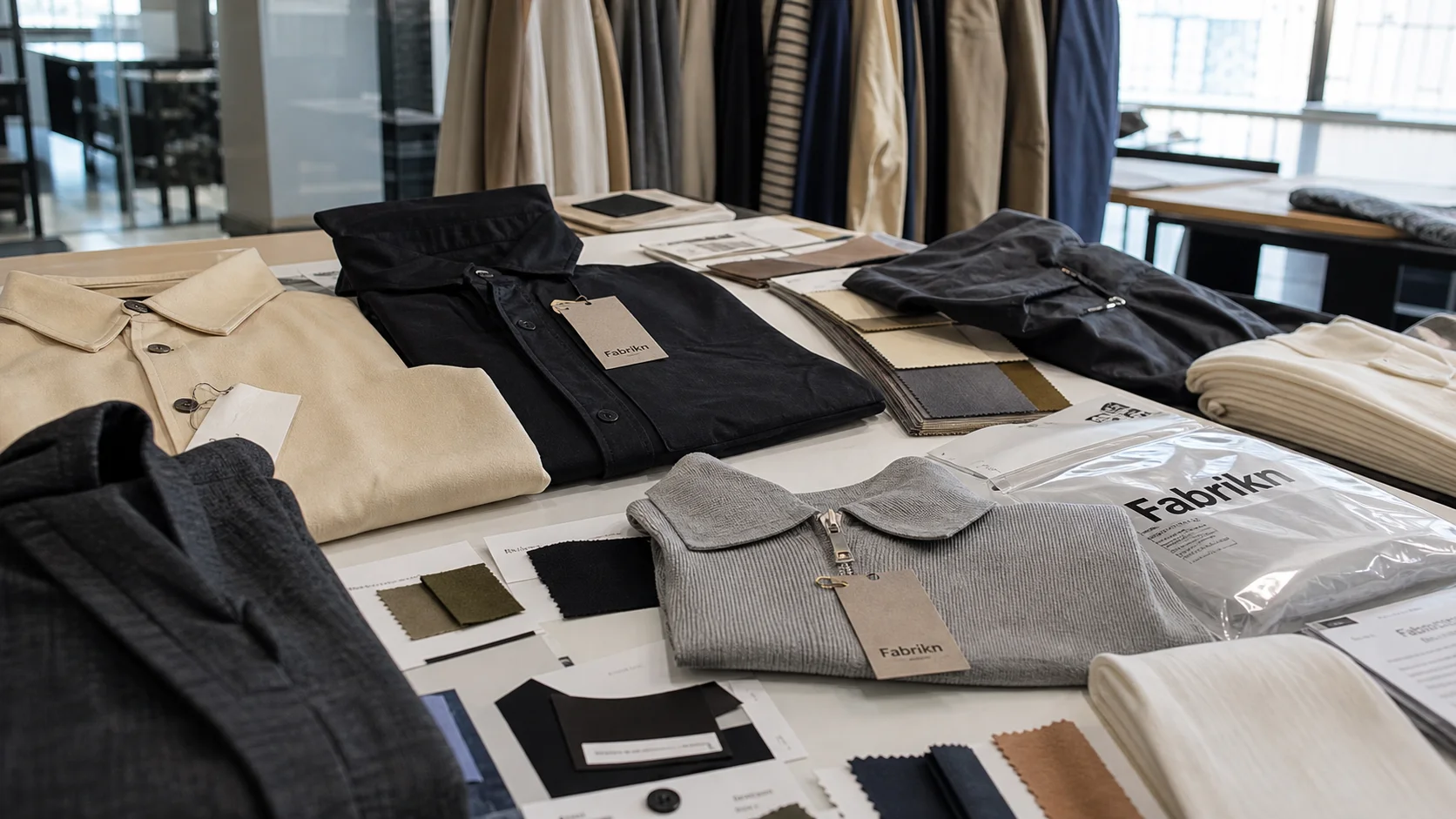
Assess Clothing Manufacturer Lead Times for Wholesale compared by sample evidence, fabric or trim specs, MOQ, AQL terms, cost lines, delivery timing, and...
Fast answer: Assess Clothing Manufacturer Lead Times for Wholesale: Sample Evidence, MOQ, Capacity, and Rework Terms should be judged by production evidence, not by a generic sourcing promise. The buyer needs sample proof, cost breakdowns, QC checkpoints, and delivery buffers in writing.
Ask for recent sample photos, measurement tolerances, fabric or print test assumptions, decoration test notes, packing examples, and a named inspection checkpoint. These details show whether the team can repeat an approved sample at bulk volume.
Separate garment cost, decoration, labels, packaging, sampling, testing, freight, and rush charges. Clear cost lines make it easier to reduce colorways, adjust size depth, or reserve more time for sampling.
For wholesale buyers, lead times can make or break a product launch, seasonal collection, or replenishment cycle. If your clothing manufacturer delivers late, the impact can be immediate: missed retail windows, disappointed customers, lost revenue, and costly air freight to recover from delays. That is why understanding how to assess clothing manufacturer lead times for wholesale buyers is one of the most important parts of sourcing apparel.
Lead time is not just a number on a quote. It reflects the manufacturer’s workflow, capacity, communication, sourcing network, and ability to handle real-world disruptions. The best buyers do not simply ask, “How long will it take?” They ask, “What exactly is included, what can affect it, and how reliable is that estimate?”
In this article, we will break down how clothing manufacturer lead times work, what influences them, and how wholesale buyers can evaluate suppliers more accurately. Whether you are sourcing private label basics, fashion collections, or custom uniforms, these practical tips will help you make smarter purchasing decisions and avoid expensive surprises.
Wholesale buying is a timing game. You are often working backward from a season, launch date, trade show, retailer deadline, or e-commerce campaign. If your stock does not arrive on schedule, the entire business plan can suffer.
Lead times matter because they affect:
For wholesale buyers, a manufacturer with fast but unreliable lead times may be worse than one with slightly longer but consistent delivery windows. Predictability is often more valuable than speed alone.
One of the biggest mistakes wholesale buyers make is assuming lead time means only production time. In reality, total lead time usually includes several stages.
When a manufacturer gives you a lead time, clarify whether it starts at order confirmation, deposit receipt, approved sample, or final material availability. The starting point changes everything. A “30-day lead time” may not be 30 days from when you place the order; it may be 30 days after sample approval and material confirmation.
Clothing manufacturer lead times vary widely depending on the product, order volume, and factory conditions. Wholesale buyers should understand the most common factors that influence timelines.
Simple garments like basic T-shirts, hoodies, or joggers usually move faster than highly constructed items such as tailored jackets, dresses with multiple panels, or garments with complex embellishments. More sewing steps, more components, and more finishing details mean longer production times.
If the manufacturer sources fabric after the order is placed, lead time depends on supplier stock and dyeing schedules. Custom-dyed fabrics, specialty knits, and imported materials can add days or weeks.
Large wholesale orders often take longer because they require more cutting, sewing, and packing. However, some factories batch large orders efficiently, so quantity does not always scale linearly. Ask how the factory handles capacity for your order size.
Many delays happen before production even begins. If fit samples, lab dips, trims, or design corrections need multiple rounds of revision, the total timeline can expand significantly.
Factories are often busiest before peak retail seasons. If you place an order during a busy period, lead times may stretch because capacity is already committed. A factory that is efficient in off-season may be slower during high-demand months.
Higher-quality standards usually require more checks and potentially more rework. This is especially relevant for wholesale buyers supplying premium boutiques or major retailers with strict defect tolerances.
Air freight can shorten delivery time but increases cost. Sea freight is more economical for large wholesale orders but adds weeks to the total timeline. Always assess lead time together with logistics, not production alone.
Slow responses from either party can create avoidable delays. A manufacturer may be ready to proceed, but if approvals or decisions are pending, the clock keeps running. Efficient communication is part of lead-time performance.
To assess clothing manufacturer lead times for wholesale buyers effectively, use a structured approach rather than relying on a single quoted number.
Request a breakdown of the entire process from pre-production to final shipment. Ask for estimated dates for sample completion, material sourcing, production start, production finish, quality inspection, packing, and dispatch. A full timeline gives you better visibility and helps you spot bottlenecks.
Some factories count from deposit payment. Others count from sample approval or fabric receipt. Make sure you know the exact trigger date. If you are comparing suppliers, standardize this point so you are comparing the same thing.
Production lead time and transit time are different. A factory in another country may have a short production schedule but a long shipping window. Always calculate the total time to warehouse arrival, not just factory completion.
Ask how many pieces the manufacturer produces per week or month in your product category. A supplier may be excellent but still unable to scale beyond a certain volume quickly. Capacity matters as much as craftsmanship.
Reliable manufacturers should be able to speak to on-time delivery rates, average turnaround times, and how they handle rush orders. Even if they do not share formal metrics, their answers should reflect experience and consistency.
A standard blank garment order will usually move faster than a fully custom private label program. If your order includes custom fabric, special washes, embroidery, printing, packaging, or labeling, expect the timeline to grow.
How quickly does the manufacturer answer questions, update samples, and revise details? Communication behavior during sourcing often predicts production communication later. Slow quoting can be an early warning sign of future delays.
Ask what happens if a fabric is out of stock, a machine breaks down, or quality issues appear during production. Good manufacturers have backup plans and escalation procedures. This is a key indicator of professionalism and timeline control.
A supplier that specializes in activewear will likely produce athletic garments more efficiently than a general factory that handles many categories. Product specialization often results in more stable lead times because processes are refined.
If possible, begin with a pilot order before committing to a large wholesale run. A smaller order reveals the manufacturer’s real timeline performance, communication quality, and production consistency with lower risk.
The right questions can reveal whether a manufacturer’s lead time is realistic or overly optimistic. Use the questions below when vetting suppliers.
If you want to explore a manufacturer’s broader capabilities before asking detailed timeline questions, review their services to understand whether they offer sampling, sourcing, production, and logistics support. That can help you determine whether lead times are being managed in-house or through multiple third parties.
Some lead-time problems are unavoidable, but others are visible early if you know what to look for. These warning signs suggest a manufacturer may not deliver on schedule.
Another major red flag is when a supplier focuses only on the fastest possible delivery and ignores quality control. A shortened timeline that increases defect rates is not a real advantage for wholesale buyers.
Wholesale buyers can often reduce lead times by improving planning and simplifying the production process. The goal is not to pressure the manufacturer into cutting corners. It is to remove unnecessary delays.
If you are in the early stages of supplier selection, consider contacting the factory directly to discuss timelines, volume requirements, and production planning. You can start the conversation through contact us to request more information, clarify lead times, and discuss your wholesale needs.
Even the best clothing manufacturer lead times can be affected by external factors such as shipping delays, customs checks, raw material shortages, or unexpected design revisions. That is why wholesale buyers should always build buffer time into their planning.
A practical buffer can protect your business from surprises. For seasonal products, this might mean placing orders several weeks earlier than the last possible deadline. For ongoing replenishment, it may mean maintaining safety stock to cover short-term delays.
Buffer time also gives you flexibility if sales outperform expectations. If your inventory sells faster than expected, having a production cushion makes it easier to reorder without stockouts. In wholesale, timing is not just about avoiding problems; it is also about creating opportunity.
At Fabrikn, we understand that wholesale buyers need dependable lead times, clear communication, and production planning that supports business growth. Our approach is built around transparency, process control, and long-term partnership.
From early-stage product development to manufacturing execution, we work to help buyers understand the real timeline behind each order. That includes clarifying what is required for sampling, which materials are needed, how production is scheduled, and how quality checks are handled before dispatch.
If you want to learn more about our company and how we support brands, visit our about us page. Whether you are launching a new collection or managing repeat wholesale orders, having the right manufacturing partner can make lead-time assessment much easier.
Get a free quote from Fabrikn — your trusted B2B clothing manufacturer with 10+ years of experience. MOQ as low as 200 pieces.
Get a Free Quote →Normal lead times vary by product type, order size, and customization level. Basic garments may take a few weeks, while custom or complex apparel can take several months when sampling, material sourcing, and shipping are included.
Compare the quoted timeline with the product’s complexity, available materials, factory capacity, and your required customization. Realistic lead times are usually supported by a clear process breakdown and written milestones.
Not always. The fastest manufacturer is not necessarily the most reliable. Wholesale buyers should prioritize consistency, communication, quality, and the ability to meet deadlines over speed alone.
The most common delays come from fabric shortages, repeated sample revisions, unclear approvals, high factory workload, and shipping disruptions. Poor communication can also add unnecessary time to the process.
Yes. Repeat orders are often faster because the design, patterns, and specifications already exist. If materials are also in stock, the turnaround can be significantly reduced.
You can explore our services, read more about our team on the about us page, or reach out directly through contact us.