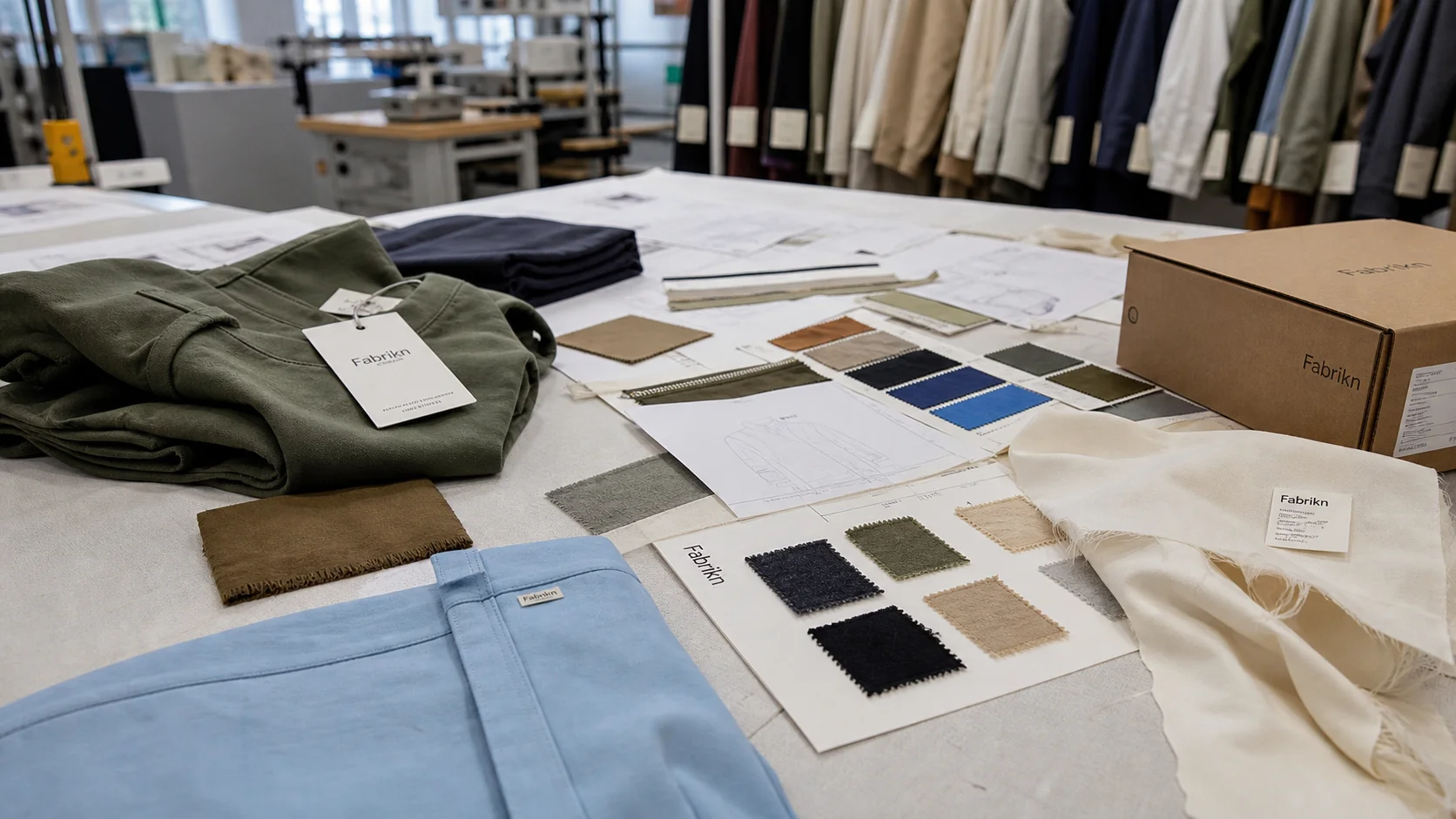
B2B Clothing Manufacturing Compliance Checklist with checks for samples, fit, MOQ, QC evidence, pricing terms, and delivery risk.
Buyer Fit Snapshot
Best fitb2b clothing manufacturing compliance checklist for apparel buyers comparing samples, material specs, QC ownership, landed cost, lead time, and supplier risk where fit consistency, decoration durability, and delivery dates decide the vendor choice.
Files to prepareTech pack, size run, color list, artwork, label and packing notes, target quantity, inspection level, and required delivery window.
Sample gateApprove fabric handfeel, shrinkage, measurements, logo placement, wash result, packing method, and every change log before bulk cutting.
Quote riskLow unit prices can hide trim substitutions, rushed sampling, weak AQL rules, or unclear rework responsibility.
Fast answer: B2B Clothing Manufacturing Compliance Checklist should be judged by production evidence, not by a generic sourcing promise. The buyer needs sample proof, cost breakdowns, QC checkpoints, and delivery buffers in writing.
Production evidence to request before a deposit
Ask for recent sample photos, measurement tolerances, fabric or print test assumptions, decoration test notes, packing examples, and a named inspection checkpoint. These details show whether the team can repeat an approved sample at bulk volume.
How to make the quote easier to compare
Separate garment cost, decoration, labels, packaging, sampling, testing, freight, and rush charges. When every cost line is visible, it becomes easier to reduce colorways, adjust size depth, or reserve more time for sampling.
Table of Contents
Introduction to B2B Clothing Manufacturing Compliance
Successfully importing clothing into the United States requires more than just sourcing stylish garments. B2B clothing manufacturers and importers must navigate a complex web of regulations, certifications, and standards to keep shipments moving through customs and into retail channels without delays or penalties. A well-structured B2B clothing manufacturing compliance checklist is indispensable for US importers to systematically address each regulatory obligation. This detailed guide outlines the compliance checkpoints across the supply chain, ensuring that every production phase aligns with US laws, industry best practices, and Fabrikn’s commitment to quality and transparency.
Compliance is not a one-time effort but an ongoing commitment covering labor, safety, environmental, and customs frameworks. Whether you are a seasoned importer or scaling your product line, instituting an aggressive checklist enables you to mitigate risks, reduce costs associated with non-compliance, and build stronger partnerships with manufacturers. This guide draws on Fabrikn’s decades of experience in B2B manufacturing to share practical strategies specific to the needs of US importers, empowering you to stay ahead of evolving requirements while delivering exceptional clothing products to market.
Understanding the Regulatory Landscape for US Importers
Before importing apparel into the United States, it is critical to understand the regulatory authorities and statutes that govern textile and clothing products. The Federal Trade Commission (FTC), the Customs and Border Protection (CBP), the Consumer Product Safety Commission (CPSC), and other agencies oversee various aspects from labeling, content disclosure, restricted substances, safety testing, and import documentation. Compliance with these bodies is non-negotiable.
The primary statutes and standards include:
- Textile Fiber Products Identification Act (TFPIA): Requires accurate fiber content labeling, manufacturer identification, and country of origin declarations on apparel.
- Flammable Fabrics Act (FFA): Ensures garments meet flammability requirements, particularly for sleepwear and children’s clothing.
- Consumer Product Safety Improvement Act (CPSIA): Pertains to restricted substances, lead and phthalate limits, especially in items for children.
- Customs Modernization Act (Mod Act): Emphasizes importer responsibility in ensuring accurate customs declarations.
- Customs-Trade Partnership Against Terrorism (CTPAT): Encourages secure supply chains and may provide import advantages for compliant businesses.
Beyond federal regulations, importers must also consider state-level requirements, industry-specific certifications (such as OEKO-TEX or GOTS), and applicable trade agreements. Integrating these into your checklist ensures you avoid costly detentions, seizures, or forced recalls.
Key Regulatory Agencies
- U.S. Customs and Border Protection (CBP): Oversees importation, ensures tariff classification, valuation, and country-of-origin marking compliance.
- Federal Trade Commission (FTC): Enforces labeling obligations, deceptive marketing, and consumer protection statutes.
- Consumer Product Safety Commission (CPSC): Manages product safety standards related to children's wear, small parts, and flammability.
- Environmental Protection Agency (EPA): Regulates chemicals, dyes, and wastewater discharge that may affect apparel supply chains.
Pre-Production Compliance Checklist
Compliance begins long before the first stitch is sewn. Rigorous vetting of suppliers, materials, and sampling protocols forms the foundation of a compliant apparel supply chain. The following pre-production checklist ensures every piece you import meets US standards:
- Supplier Qualification: Document factory certifications, audit scores, and factory profiles. Ensure suppliers agree to compliance expectations in writing.
- Material and Trim Approval: Source textiles, dyes, buttons, and trims that meet chemical safety and flammability standards. Request SDS (Safety Data Sheets) for any hazardous materials.
- Color and Performance Testing: Confirm fabrics pass colorfastness, shrinkage, and performance ratings relevant to intended use.
- Labeling Specifications: Pre-design care labels, country-of-origin tags, and fiber content disclosures according to TFPIA. Include bilingual labels where required.
- Sample Review: Use a multi-stage sampling process—proto, fit, pre-production—to validate construction, fit, and labeling before bulk production.
- Regulatory Risk Assessment: Analyze any risks tied to regulatory changes, tariff updates, or geopolitical disruptions.
Material Compliance Validation
US importers must demonstrate that materials comply with restricted substance lists, such as those under CPSIA or California Proposition 65. Fabrics should be tested in accredited laboratories with documentation confirming limits for heavy metals, phthalates, and azo dyes. Also, flammability testing for sleepwear and children’s apparel should align with CPSC standards 16 CFR Part 1615 and 1616.
Pre-Production Agreements
Well-drafted purchase agreements and compliance addenda help facilitate transparency. These documents should outline the importer’s right to audit factories, requirement for corrective action plans, and expectations around subcontracting. Including penalties for non-compliance or delayed deliveries instills accountability and protects the importer’s reputation.
Production and Quality Control Compliance
During production, maintaining oversight ensures the final garments remain consistent with approved samples and regulatory expectations. This phase includes monitoring workmanship, implementing quality assurance protocols, and verifying compliance documentation.
- In-Process Inspections: Conduct inline quality checks to verify stitching, seam integrity, and dimensional accuracy.
- Final Random Inspections: Check finished goods for defects, correct labeling, and packaging compliance.
- Worker Rights and Labor Compliance: Ensure the factory adheres to minimum wage laws, working hours, and worker safety protocols—particularly relevant under agreements like the US MSA (Myanmar) or Bangladesh Accord.
- Safety and Fire Prevention: Verify that manufacturing facilities maintain fire exits, evacuation plans, and compliant electrical systems.
- Corrective Action: Document root causes of defects and implement corrective actions swiftly to prevent recurrence.
Quality Assurance Tools
Implement measurement standards with tools like AQL (Acceptable Quality Limit) to quantify acceptable defect rates. Share AQL expectations with manufacturers and inspect each lot. Tracking quality data over time supports continuous improvement and helps justify compliance decisions during CBP audits.
Worker Welfare Verification
For B2B importers, adhering to labor compliance reduces reputational risk and ensures uninterrupted supply. Engage third-party auditors or use Fabrikn’s compliance teams to assess living wages, grievance mechanisms, and environmental health programs. Transparent factory profiles also accelerate CBP verifications in case of suspicion.
Logistics and Shipping Compliance
Managing shipping logistics with compliance in mind prevents customs delays and penalties. Ensure all information provided to carriers and customs brokers is accurate and complete.
- Harmonized System (HS) Codes: Use precise HS codes for each garment category to ensure proper duties and classification. Avoid overgeneralizing product categories.
- Country of Origin Declaration: Properly mark garments with the country where the last substantial transformation occurred. This is typically where cutting, sewing, and finishing take place.
- Shipment Value Accuracy: Declare landed cost inclusive of FOB value, commissions, and other adjustments. Be prepared to support valuations with invoices and contractual agreements.
- Customs Bond and Importer Security Filing (ISF): For ocean shipments, submit ISF at least 24 hours before loading. Maintain customs bonds proportionate to annual import volume.
- Trade Agreements and Preferential Tariffs: Track rules of origin for agreements like USMCA or AGOA and maintain certificates proving eligibility.
Documentation for Transit
Ensure each shipment includes compliant bills of lading, packing lists, commercial invoices, and Certificates of Origin where applicable. Retain digital copies for at least five years, as required by CBP.
Logistics Partner Collaboration
Work with freight forwarders and customs brokers who understand apparel-specific compliance needs. Review their audit reports and ensure proper separation between logistics and compliance teams to safeguard data and intellectual property.
Documentation and Recordkeeping
Record retention is foundational for CBP audits and risk mitigation. Inadequate documentation can lead to penalties, delays, and even import bans.
- Compliance Logs: Maintain logs showing inspection dates, audit results, and corrective actions taken. This demonstrates due diligence during CBP inquiries.
- Test Reports: Archive lab reports referencing the specific lot or SKU, date of test, and testing body. Correlate with batches to simplify audits.
- Vendor Management Files: Keep copies of supplier certifications, audit scorecards, and factory visit reports.
- Tariff and Duty Records: Document how duties are calculated, including references to trade rulings or binding rulings if applicable.
- Communication Records: Save email exchanges outlining compliance requests, approvals, or discussions related to customs or regulatory matters.
Digital Recordkeeping Systems
Adopt cloud-based compliance management platforms to centralize documentation. Such systems streamline audits, expedite information retrieval, and enable real-time collaboration between internal compliance teams and vendors. Fabrikn integrates technology solutions that sync with importer requirements, providing transparency across the lifecycle.
Retention Requirements
CBP generally requires importers to retain records for five years after entry, though certain circumstances may extend this period. Maintain backups and conduct periodic internal reviews to ensure records remain accessible and complete.
Technology Solutions to Support Compliance
Modern technology greatly enhances the ability of B2B clothing manufacturers to remain compliant. Consider these tools when building your checklist:
- Supply Chain Visibility Platforms: Use platforms that track raw material sourcing, production status, and shipment milestones. Real-time data reduces the risk of missed compliance deadlines.
- Automated Labeling Tools: Implement software that automatically populates care labels, fiber content disclosures, and compliance statements based on SKU details.
- Labor Management Dashboards: Monitor factory labor hours, overtime figures, and worker training completion through dashboards that flag anomalies.
- Document Management Systems: Digitize customs forms, test reports, and certifications, ensuring searchable and audit-ready files.
- Risk Scoring Models: Apply scoring models that weigh factors like factory audit scores, country risk, and past compliance issues.
Integrating Technology with Fabrikn
Fabrikn’s platform integration capabilities allow importers to centralize compliance records with production status updates. When you partner with Fabrikn, you gain access to dashboards that track quality inspections, labeling progress, and shipping milestones simultaneously. This consolidation minimizes manual tracking and accelerates decision-making.
Continuous Improvement and Monitoring
Compliance is dynamic. Regulations evolve, and supply chains shift. A continuous improvement approach ensures your compliance checklist matures with your business.
- Regulatory Watch: Subscribe to CBP updates, industry associations, and trade alerts. Adjust your checklist whenever a rule or tariff changes.
- Audit Frequency: Plan routine onsite or virtual audits based on risk. High-risk factories may need quarterly reviews, while established partners can be assessed semi-annually.
- Supplier Scorecards: Quantify compliance performance with scorecards. Track metrics like audit results, corrective action closure, and delivery timeliness.
- Training Programs: Provide compliance training for procurement, quality, and logistics teams. Empower them to identify red flags early.
- Supplier Innovation: Incentivize factories to adopt sustainability practices that align with compliance obligations and brand values.
Incident Response Playbooks
Develop playbooks to manage compliance incidents—such as failing a lab test or facing detention. These guides should outline immediate steps, communication protocols, and remediation timelines.
Partnering with Fabrikn for Compliance Success
Fabrikn is your trusted partner in mitigating compliance risk throughout the B2B clothing manufacturing lifecycle. Our experienced teams not only oversee production but also embed compliance checkpoints at every stage—from sourcing to shipping. With access to our services, importers benefit from:
- Collaborative Compliance Strategy: We help map out compliance requirements that align with your brand, sourcing strategy, and regulatory landscape.
- On-the-Ground Oversight: Fabrikn maintains local teams that interface with factories, ensuring audits, inspections, and corrective actions remain timely.
- Technology Integration: Leverage our platforms to centralize documentation, track testing, and ensure transparency across stakeholders.
- Proactive Risk Management: We monitor regulatory changes, trade policy shifts, and geopolitical factors that impact compliance.
Ready to improve your compliance program? Explore how Fabrikn can strengthen your manufacturing standards by visiting our Services page. Need to discuss specific compliance challenges or schedule an audit? Reach out through our Contact Us form. To learn more about our mission and capabilities, visit the About Us section.
Ready to Start Your Custom Clothing Project?
Get a free quote from Fabrikn — your trusted B2B clothing manufacturer with 10+ years of experience. MOQ as low as 200 pieces.
Get a Free Quote →
Comparison table for b2b clothing manufacturing compliance checklist
Supplier optionBest fitWhat to verifyDecision signal
Cut-and-sew factoryCustom silhouettes, private-label capsules, and fit-sensitive programsPattern capability, size-set process, sewing-line capacity, and QC checkpointsThe factory can explain how samples move into bulk without guesswork
Decoration specialistEmbroidery, screen print, heat transfer, sublimation, and branded trimsArtwork limits, wash testing, color tolerance, and reject handlingThey show production proofs and test results before bulk approval
Full-package partnerTeams that need sourcing, development, packaging, and export supportMOQ, lead time, material sourcing, compliance documents, and communication rhythmYou get one accountable timeline instead of several disconnected vendors
Decision checklist before committing
- Define the target product, audience, order quantity, and selling channel before discussing price.
- Ask whether the supplier can document material source, sample revisions, bulk inspection, and export packing.
- Request a clear quote split between product cost, decoration, packaging, testing, and freight assumptions.
- Set approval points for artwork, trims, fit sample, pre-production sample, and final inspection.
- Keep one change log so the factory, brand team, and logistics contact work from the same version.
Frequently Asked Questions
What are the most common compliance issues for US clothing importers?
The most frequent compliance challenges include inaccurate country-of-origin markings, missing or incorrect fiber content labels, incomplete customs documentation, and failure to meet CPSIA or flammability requirements. Keeping a proactive checklist that covers labeling, testing, and documentation reduces these risks.
How often should I update my compliance checklist?
Review your compliance checklist at least semi-annually, or more frequently if regulations change, you add new product categories, or source from new regions. Conduct a compliance audit whenever you onboard a new supplier or introduce a new apparel line.
Can technology improve compliance tracking?
Absolutely. Digital platforms help aggregate inspection reports, testing results, and shipping documentation. Fabrikn’s systems offer visibility into each production phase, enabling compliance and operations teams to collaborate seamlessly.
Do I need third-party audits for labor compliance?
Yes, third-party audits provide objective proof of labor compliance, especially when sourcing from high-risk regions. Many US importers also participate in initiatives such as CTPAT or the Fair Labor Association, which require independent assessments.
What happens if a shipment is detained for non-compliance?
If CBP detains a shipment, you must respond with documentation showing compliance, such as test reports or accurate labeling. The Fibakn team can assist in gathering evidence and working with customs brokers to resolve the issue swiftly.