
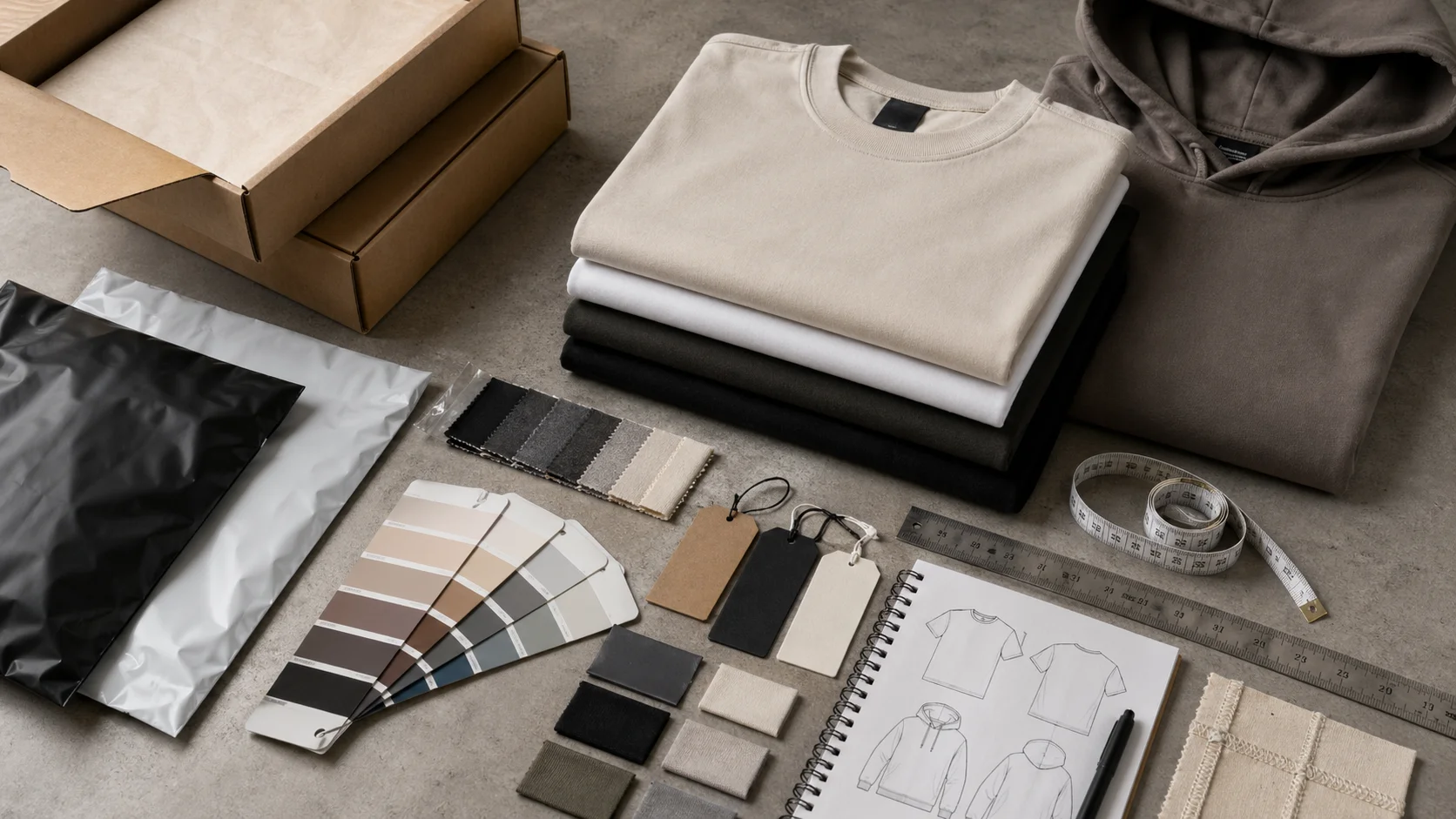
B2B Clothing Manufacturing Supplier Evaluation Checklist with checks for samples, fit, MOQ, QC evidence, pricing terms, and delivery risk.
Fast answer: B2B Clothing Manufacturing Supplier Evaluation Checklist: should be judged by production evidence, not by a generic sourcing promise. The buyer needs sample proof, cost breakdowns, QC checkpoints, and delivery buffers in writing.
Ask for recent sample photos, measurement tolerances, fabric or print test assumptions, decoration test notes, packing examples, and a named inspection checkpoint. These details show whether the team can repeat an approved sample at bulk volume.
Separate garment cost, decoration, labels, packaging, sampling, testing, freight, and rush charges. When every cost line is visible, it becomes easier to reduce colorways, adjust size depth, or reserve more time for sampling.
Choosing the right B2B clothing manufacturing supplier is one of the most important decisions a fashion brand, retailer, startup, or private label business can make. The supplier you select affects product quality, pricing, lead times, compliance, communication, and ultimately your customer satisfaction and profit margins. A weak supplier relationship can lead to delayed launches, inconsistent sizing, rejected shipments, and unnecessary costs. A strong one can help you scale with confidence, reduce risk, and bring better products to market faster.
This practical review is designed to help business buyers evaluate clothing manufacturing suppliers with a practical, step-by-step checklist. Whether you are sourcing custom apparel, private label garments, uniforms, or a seasonal collection, this B2B clothing manufacturing supplier evaluation checklist will help you compare options objectively and make a smarter purchasing decision.
Not all clothing manufacturing suppliers are the same. Some specialize in basic cut-and-sew production, while others focus on technical apparel, luxury garments, activewear, or sustainable textiles. Some are excellent with small-batch orders, while others are better suited for high-volume production. Evaluating suppliers carefully helps you avoid mismatches that can cost time and money.
A structured evaluation process also reduces risk. Instead of choosing the cheapest supplier or the one who responds fastest, you can compare manufacturers on the factors that truly matter to your business: product quality, scalability, reliability, compliance, and service.
If you want to learn more about how a professional apparel partner can support your business, you can explore our services page.
The first step in any supplier evaluation checklist is to define exactly what you need. A supplier can only be a good fit if your requirements are clear.
When you know your requirements, it becomes much easier to ask the right questions and filter out suppliers that are not capable of meeting your needs.
One of the most important parts of evaluating a B2B clothing manufacturing supplier is understanding what they can actually produce. A polished website does not always reflect real production strength.
A manufacturer with strong capabilities should be able to explain its production process clearly. If the supplier cannot describe how it handles your category of garment, that is a warning sign.
Quality is not just about how a sample looks when it arrives. It includes stitching accuracy, fabric consistency, color matching, fit, durability, and finish.
Ask the supplier about its quality control process. A reliable clothing manufacturer should have inspection checkpoints before, during, and after production. The best suppliers can explain how they catch defects early and maintain consistency across large orders.
Experience matters, but not all experience is equally useful. A manufacturer may have been in business for years, yet still not be a strong fit for your specific product category.
If you are a brand looking for a long-term production partner, ask whether the supplier has handled repeat orders and scaling challenges. If they have experience with businesses similar to yours, they are more likely to understand your operational needs.
You can also learn more about our company background on the about us page.
Compliance is essential, especially if your brand sells into regulated markets or works with large retailers. A trustworthy supplier should be able to provide proof of standards, certifications, and ethical production practices when required.
If your business values sustainability or social responsibility, ask specific questions about sourcing, waste management, working conditions, and audit history. Compliance should be verified, not assumed.
Price matters, but the lowest quote is not always the best deal. A cheaper supplier may cut corners on quality, service, or reliability. Instead of focusing only on unit cost, evaluate the full commercial picture.
Ask for a detailed quote so you can compare suppliers fairly. A transparent supplier will clearly break down costs rather than hiding fees inside broad estimates.
Production speed is critical for seasonal launches, promotions, and replenishment orders. A supplier may offer excellent prices and quality, but if it cannot deliver on time, your business can suffer.
Always ask how the supplier handles delays, supply shortages, and schedule changes. A dependable manufacturer should be able to explain its contingency plans and production planning process.
Communication quality often predicts the success of the entire relationship. Even a highly capable manufacturer can become difficult to work with if it does not respond clearly or on time.
During the evaluation stage, note whether the supplier asks smart questions about your project. Good suppliers think proactively and help identify issues before they become problems.
Sampling is one of the most valuable ways to test a supplier before committing to bulk production. A sample shows how the manufacturer interprets your design, handles materials, and manages finishing details.
A strong development process is especially important for custom apparel brands. If a supplier can translate your concept into a reliable sample, that is a strong sign of technical capability and attention to detail.
Once production is complete, the supplier still needs to get your order delivered correctly. Logistics can affect landed cost, delivery timing, and customer satisfaction.
Ask whether the supplier works with freight partners or whether you need to arrange transportation independently. Good logistics support can save significant time and reduce costly errors.
References and case studies help validate a supplier’s claims. They show real-world experience rather than just marketing language.
If a supplier is unwilling to share references or examples, be cautious. Reputable manufacturers are typically proud of their work and happy to provide proof of performance.
Supplier risk is often overlooked until something goes wrong. A clothing manufacturer that looks great on paper may still be unstable due to cash flow issues, weak planning, or poor internal controls.
For larger or ongoing production programs, stability matters as much as capability. You want a supplier that can support your business not just today, but over multiple seasons and growth phases.
Once you have evaluated a few suppliers, use a scorecard to compare them consistently. This makes it easier to make a decision based on facts rather than instinct alone.
Score each supplier from 1 to 5 in every category, then compare totals. You can also assign higher weight to the categories that matter most to your business. For example, a startup may prioritize flexibility and communication, while a large retailer may prioritize compliance and production capacity.
Here is a simple checklist you can use when reviewing clothing manufacturing suppliers:
Use this checklist during calls, email exchanges, sample reviews, and quotation analysis. It will help you make a more informed sourcing decision.
Many buyers make the same mistakes when selecting a clothing manufacturer. Avoiding these errors can save you from expensive setbacks.
The best suppliers do more than produce garments. They act as partners who help you improve product quality, streamline production, and deliver consistently to your customers.
At Fabrikn, we understand that B2B buyers need more than a factory. They need a reliable manufacturing partner who can support product development, production planning, quality control, and scalable delivery. Our approach is designed to help businesses source clothing with confidence and clarity.
If you are currently evaluating suppliers or planning your next production run, we invite you to explore our services or reach out through our contact us page to discuss your requirements. A clear conversation at the beginning can save significant time and cost later in the process.
Selecting the right B2B clothing manufacturing supplier is not just a procurement task. It is a strategic business decision that impacts your brand reputation, margins, and ability to grow. By using a structured evaluation process, you can compare suppliers more effectively and choose a partner that aligns with your product goals, timeline, and quality expectations.
This B2B clothing manufacturing supplier evaluation checklist gives you a practical framework to assess capability, quality, pricing, compliance, communication, logistics, and risk. When you apply it consistently, you significantly improve your chances of finding a supplier that can support your business long term.
Take your time, ask the right questions, and compare suppliers with a clear scorecard. The right manufacturing partner is out there, and the best way to find them is through a disciplined evaluation process.
Get a free quote from Fabrikn — your trusted B2B clothing manufacturer with 10+ years of experience. MOQ as low as 200 pieces.
Get a Free Quote →It is a structured list of criteria used by business buyers to assess and compare clothing manufacturers. The checklist usually covers quality, pricing, lead times, compliance, communication, production capability, and logistics.
Supplier evaluation helps businesses reduce risk, improve product quality, control costs, and choose a manufacturing partner that can meet long-term production needs.
You should ask about product capability, sample development, quality control, pricing, lead time, payment terms, compliance, shipping support, and references from similar clients.
Use a scorecard to rate each supplier in categories such as quality, experience, pricing, communication, compliance, and capacity. This makes the comparison more objective and easier to review.
Yes. A sample is one of the best ways to evaluate workmanship, fit, material quality, and finishing before committing to a larger order.
One of the biggest mistakes is choosing the lowest price without checking quality, communication, reliability, or compliance. This often leads to hidden costs and production problems later.
Fabrikn supports business buyers with professional manufacturing services, clear communication, and production solutions tailored to B2B apparel needs. You can learn more on our services page or contact us directly through contact us.