
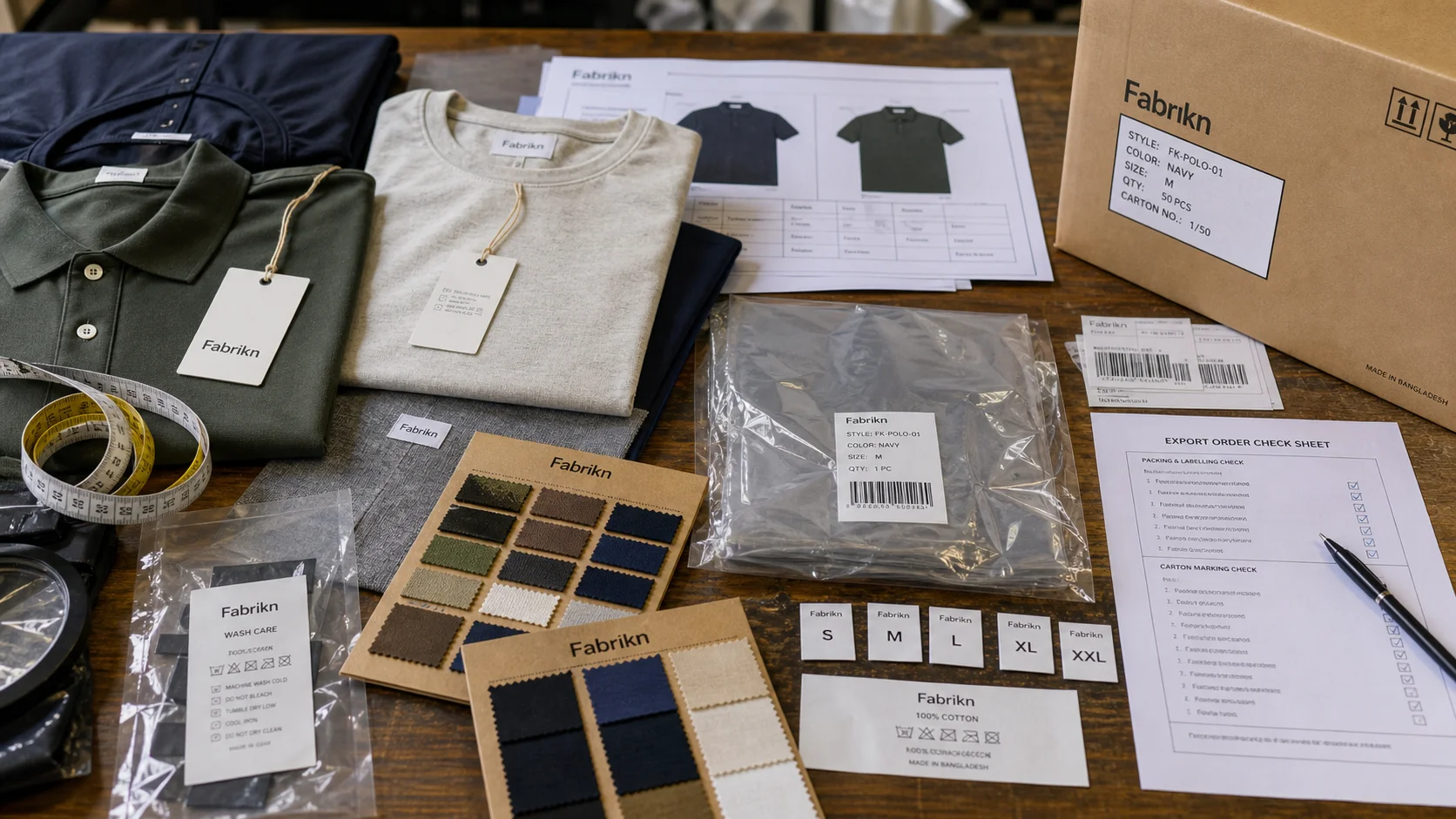
B2b Clothing Sourcing Practices with checks for samples, fit, MOQ, QC evidence, pricing terms, and delivery risk.
Fast answer: B2b Clothing Sourcing Practices: Samples, MOQ, QC, and Lead Time should be judged by production evidence, not by a generic sourcing promise. The buyer needs sample proof, cost breakdowns, QC checkpoints, and delivery buffers in writing.
Ask for recent sample photos, measurement tolerances, fabric or print test assumptions, decoration test notes, packing examples, and a named inspection checkpoint. These details show whether the team can repeat an approved sample at bulk volume.
Separate garment cost, decoration, labels, packaging, sampling, testing, freight, and rush charges. When every cost line is visible, it becomes easier to reduce colorways, adjust size depth, or reserve more time for sampling.
In the fast-moving arena of private label apparel, every business decision counts. Professional private label brands rely on efficient, transparent, and future-oriented B2B clothing sourcing to keep pace with shifting consumer preferences, seasonal demand swings, and sustainability mandates. This article draws on decades of industry experience to arm brand founders, product managers, and sourcing leaders with actionable business tips and best practices. Whether you are launching a capsule collection or scaling a regional fashion line, the practices outlined here will guide you through the sourcing journey from strategic planning to measurable outcomes.
B2B clothing sourcing for private label brands is not a transactional activity; it is a partnership-driven process that balances creativity, cost, compliance, and capability. The sections that follow look at frameworks for selecting the right partners, optimizing product development cycles, safeguarding quality, and boosting performance through technology and data. You will also find guidance on aligning sourcing strategies with your brand values and growth targets while maintaining agility in a turbulent marketplace.
As you read, consider how these best practices can integrate with your broader operations and how you might collaborate with partners who share your commitment to excellence. Fabrikn brings together sourcing, manufacturing, and advisory services tailored to private label visionaries, and we invite you to explore our collaborative services if you are ready to improve your sourcing capabilities.
Private label sourcing means brands design and market garments under their own name while relying on third parties to manufacture those products. Unlike wholesale purchasing, the private label model demands deep involvement in design, materials, fit, and quality, as the brand assumes responsibility for the entire customer experience. The sourcing function, therefore, becomes the backbone of brand identity and competitive differentiation.
Private label sourcing is also inherently collaborative. Brands must work with suppliers to turn concepts into reality—whether they are introducing performance-ready athleisure, elevated basics, or limited-edition capsule drops. This collaboration spans product development, materials sourcing, finishing, packaging, and logistics. Ensuring alignment across each stakeholder and stage requires a proactive sourcing strategy that anticipates challenges and fosters innovation.
As such, private label sourcing is as much about selecting the right partners as it is about managing the flow of information, transparency, and mutual accountability. The best practices discussed below are designed to help private label brands move beyond reactive, ad-hoc production relationships toward structured, strategic sourcing systems that deliver consistent quality and cost predictability.
Successful B2B clothing sourcing begins with an overarching strategy. Your sourcing framework should align with brand goals, seasonality, marketing priorities, and long-term business plans. This involves defining sourcing objectives, documenting product requirements, and setting key performance indicators (KPIs) to monitor supplier performance over time.
Start by identifying your core value proposition. Are you focused on premium sustainable fabrics, rapid trend responsiveness, price-competitive basics, or a combination of these elements? Knowing the essence of your brand guides your sourcing decisions, because you will seek partners with the right capabilities—technical, ethical, and operational—to deliver on that promise.
Next, map your sourcing footprint. Establish whether you are centralized, nearshore, or global in orientation, and quantify lead times for design iterations, sampling, production, and shipping. A robust timeline helps you anticipate bottlenecks and define milestones for seasonal planning. Include procurement processes for trims, labels, packaging, and hangtags within this timeline to ensure cohesive delivery.
Integrate a demand planning loop that includes merchandising, buying, and data analytics. Accurate forecasting minimizes overstocks and under-deliveries. Use historical sales data, wholesale and retail pipeline updates, and marketing calendars to inform production plans. Brands should also maintain a flexible safety stock mechanism to absorb spikes in demand without eroding margins.
Another aspect of strategic sourcing is portfolio diversification. Relying on a single supplier introduces risk. Develop a tiered partner ecosystem where you have primary, secondary, and backup suppliers. Build relationships with facilities capable of handling different styles and tech packs. This ecosystem allows you to route production based on capacity, lead times, and specialty skills while avoiding disruptions when a facility experiences challenges.
Selecting the right manufacturing partner is foundational. A thorough evaluation process ensures alignment on quality, lead times, compliance, and values. Begin with a detailed Request for Information (RFI) followed by a Request for Proposal (RFP) that outlines product specifics, projected volumes, desired timelines, and reporting expectations.
Key criteria include technical expertise, capacity, financial stability, and communication practices. Look for partners with experience in your product category, whether that is apparel, outerwear, resort wear, or intimates. Their technical teams should demonstrate proficiency in pattern making, grading, pattern adjustments, and fabric behavior. Ask for case studies or references that spotlight their ability to solve complex fit or construction challenges.
Evaluate potential partners through site visits, audits, and sample reviews. On-site visits enable you to assess the facility’s infrastructure, machinery, and quality control processes. You can also gauge cultural fit and the clarity of the supplier’s organizational structure—both of which affect communication and collaboration.
Develop scorecards to assess partners on metrics such as on-time delivery, defect rates, responsiveness to revision requests, and adherence to sustainability standards. Scorecards foster transparency and allow you to compare vendors objectively. As part of this process, consider the supplier’s willingness to invest in joint improvement initiatives, whether that means technology upgrades, worker training, or lean manufacturing programs.
When pairing with long-term partners, cultivate open communication channels. Establish regular check-ins, joint planning sessions, and escalation protocols. Brands that treat suppliers as co-creators rather than vendors achieve better results and faster innovation cycles.
Great private label garments start with precise technical packs and fruitful design collaboration. The technical pack, or tech pack, translates design intent into actionable instructions for makers. It includes sketches, detailed measurements, construction notes, material specs, trims, labels, and colorways. The clearer and more comprehensive the tech pack, the faster the prototyping phase and the fewer revisions required.
Collaborate with your supplier’s design and development teams to refine prototypes and ensure fit, fabric performance, and construction meet expectations. This collaboration can take the form of virtual meetings, physical sampling sessions, and shared digital platforms. Encourage open dialogue and joint ideation to solve challenges such as fabric drape, seam finishes, and attachment points for embellishments.
Prioritize materials sourcing in parallel with design development. Fabric and trim availability can impact cost, lead time, and quality. Establish relationships with textile mills and trim vendors as part of your sourcing ecosystem. Some brands find it advantageous to work with a sourcing partner that oversees material procurement, ensuring consistency and negotiating better rates through consolidated purchasing.
Be intentional about fit protocols—define your fit model(s), measurement standards, and grading rules early on. Use virtual fit tools, when possible, to simulate proportions and reduce reliance on physical fittings, especially for remote sourcing relationships. Ensure all fit markdowns, pattern adjustments, and fit comments are documented within the tech pack iteration history.
Incorporate a clear revision control process so that changes to designs or specs do not get lost between teams. Version control, dated updates, and signoffs prevent costly missteps during production. A well-maintained tech pack is a living document that evolves with every sample and approval.
Production planning is the moment when sourcing strategy meets execution. Effective planning includes capacity alignment, production calendars, sample approvals, and quality checkpoints. Use a production tracker that aligns bulk orders with target ship dates, inspection windows, and logistic commitments.
Quality control should be embedded into every production phase rather than treated as a final step. Implement inline inspections to identify issues during cutting, sewing, or finishing stages. This proactive stance prevents large-scale defects and helps maintain consistent performance across bulk runs. Many private label brands schedule third-party quality inspections for critical milestones, such as pre-shipment checks and final audits.
Leverage quality standards like AQL (Acceptable Quality Level) to set objective thresholds for defects. Communicate these standards with suppliers and make sure they are trained on visual standards, measurement tolerances, and packaging requirements. Use digital tools or shared templates to capture inspection results and track corrective actions.
Plan for contingencies. Outline what to do if a production run falls behind schedule, if fabric yields are lower than anticipated, or if quality issues are discovered late. This includes having a communication matrix that names decision-makers, establishes approval authorities, and lists corrective action timeframes.
Establish production KPIs to evaluate supplier performance, such as yield percentages, defect rates, and adherence to schedule. Use these KPIs in regular reviews to celebrate successes and identify improvement areas. Partners appreciate transparent metrics tied to continuous improvement rather than punitive measures.
Logistics and inventory management are crucial to ensuring your private label collections reach retail shelves or digital storefronts on time. Sourcing decisions should factor in transportation lead times, customs processes, warehousing costs, and fulfillment capabilities.
Develop a logistics plan with timelines for each shipment stage. This includes sea freight, air freight, or inland transport segments. Integrate your logistics partners early in the planning phase so they can advise on packaging dimensions, palletization, and compliance documents, which reduces risk of delays or penalties at ports.
Invest in inventory planning tools that link procurement, production, and sales data. This helps brands identify slow-moving SKUs, prioritize replenishment for high-performing items, and minimize carrying costs. Implement a perpetual inventory system to maintain up-to-date stock levels across all distribution points.
Private label brands often benefit from flex inventory models such as vendor-managed inventory (VMI) or consignment agreements, especially when launching seasonal capsules. These agreements allow suppliers to maintain inventory on behalf of the brand, reducing working capital strain while ensuring rapid replenishment.
Another best practice is to build buffer stock for key items with predictable demand and reduced risk of obsolescence. Balance this with strategies for excess inventory such as multi-channel clearance or off-price partnerships. Effective inventory management also includes packaging and labeling protocols that keep shipments compliant with retailer or marketplace standards.
Today’s buyers expect brands to uphold environmental and social standards. Private label sourcing must integrate sustainability considerations to safeguard the brand’s reputation and comply with evolving regulations. This includes transparent traceability, responsible material sourcing, and ethical labor practices.
Start by demanding transparency from suppliers. Ask for documentation such as certifications (e.g., GOTS, OEKO-TEX, Bluesign, WRAP) and factory audit reports. Request visibility into supply chains so you understand where raw materials originate and how chemicals, dyes, and finishes are handled.
Design with sustainability in mind by choosing materials with a lower environmental footprint and planning for circularity where possible. For example, select recycled or regenerated fibers, implement fabric efficiency (to reduce waste during cutting), and standardize trims to diminish inventory complexity.
Implement worker welfare protocols by ensuring fair wages, humane working hours, and safe conditions. Partner with suppliers who are committed to continuous improvement in these areas and who welcome third-party audits. As a private label brand, your ethical stance becomes part of your brand story, so weave transparency and accountability into your communications with customers and wholesale partners alike.
Consider carbon footprint tracking for your sourcing operations. Collaborate with suppliers to measure emissions linked to production and logistics, then identify reduction opportunities. A clear sustainability strategy not only meets regulatory expectations but also appeals to conscious consumers and differentiates your brand in a crowded marketplace.
Technology unlocks visibility, speed, and collaboration in B2B clothing sourcing. Brands are adopting digital platforms to manage technical packs, track production, monitor quality, and coordinate logistics. An integrated sourcing technology stack ensures the right information flows to the right stakeholders at the right time.
Centralize sourcing data using cloud-based product lifecycle management (PLM) or enterprise resource planning (ERP) tools. These systems store tech packs, specs, grading, costing, and approvals, preventing version confusion and ensuring consistency across departments. When linked to your suppliers, these platforms can automatically notify teams of updates, sample requests, or approval changes.
Utilize digital sampling tools such as 3D prototyping to reduce physical sample iterations. Virtual sampling accelerates decision-making, especially when working with remote or international partners. It also conserves fabric and travel costs.
Adopt communication tools that support multilingual collaboration, including translation features for tech packs, live chat within sourcing portals, and shared document repositories. Workflow automation features—like approval routing, deadline reminders, and change logs—help keep everyone accountable without endless email threads.
Leverage data analytics to track sourcing performance. Collect insights on delivery adherence, cost variance, quality trends, and supplier responsiveness. Visual dashboards help teams spot issues such as repeated defects or unavoidable delays, so leaders can take preventive actions or explore alternative partners.
The apparel industry faces risks ranging from geopolitical disruptions and raw material volatility to compliance violations and labor disputes. Implementing a robust risk management framework protects both brand reputation and bottom-line results.
Develop a risk register to catalog potential issues, their likelihood, and mitigation strategies. Include scenarios such as supplier insolvency, climate-induced supply chain interruptions, tariff changes, and factory shutdowns. Each risk should have corresponding actions—like maintaining alternate suppliers, insuring shipments, or increasing inventory cushions.
Ensure compliance with trade regulations, customs requirements, and import/export documentation. Private label brands often move garments across borders, so keep your compliance team apprised of tariff classifications, labeling mandates, and documentation protocols. Train your sourcing partners to provide accurate declarations to prevent penalties.
Embed quality checkpoints to catch compliance issues early. For instance, ensure that chemical compliance reports accompany shipments to meet REACH or CPSIA standards depending on the market. Document every inspection, testing result, and corrective action to demonstrate due diligence.
Establish crisis communication protocols for timely stakeholder updates in the event of delays or recalls. Transparent communication builds trust with wholesale partners, retailers, and consumers, particularly when you transparently explain the root cause and corrective steps being taken.
Applying these best practices is only part of the journey. Private label brands must continuously measure sourcing performance to refine operations. Define KPIs that map to your strategic goals, such as reduced time-to-market, improved quality scores, cost savings per unit, or more sustainable material adoption.
Regularly review supplier scorecards, discussing successes and areas for enhancement in quarterly business reviews. Celebrate improvements while collaboratively addressing recurring issues. Use root cause analysis to understand why defects occur and implement corrective action plans with clear owners and due dates.
Collect feedback from internal stakeholders such as design, merchandising, and sales teams, as well as from suppliers. Gauge satisfaction with communication, predictability, and responsiveness. Surveys and structured interviews can reveal process friction points that are hard to see from the production floor.
Iterate your sourcing playbook based on lessons learned. Adjust timelines, revise tech pack templates, and update risk protocols as the market shifts. This ongoing refinement process ensures your brand remains competitive and poised for consistent growth.
Finally, stay committed to innovation. Attend industry events, explore emerging materials, and monitor technological advancements. Private label sourcing that embraces curiosity and adaptability will be best positioned to respond to customer expectations and global shifts.
B2B clothing sourcing for private label brands requires a sophisticated balance of strategy, partnership, and adaptability. By building a structured sourcing framework, selecting the right partners, prioritizing design collaboration, managing production and logistics meticulously, and integrating technology, brands can create a resilient supply chain that supports their long-term growth. Embedding sustainability, managing risk, and measuring performance ensures you deliver on your brand promise while remaining nimble in a dynamic retail landscape.
As you refine your sourcing practices, rely on trusted collaborators that bring both operational excellence and a commitment to your brand’s values. Fabrikn supports private label brands with end-to-end guidance across sourcing, manufacturing, and logistics, helping teams innovate with confidence. When you are ready to explore a partner-centric approach to apparel sourcing, reach out through our contact form to start the conversation.
Private label success is built on best practices, transparency, and purposeful action. Use this guide as your reference point for sourcing excellence, and keep iterating toward a more agile, efficient, and customer-driven supply chain.
For more insight into our journey and capabilities, visit our about us page to understand how Fabrikn supports brands across every stage of the apparel lifecycle.
Get a free quote from Fabrikn — your trusted B2B clothing manufacturer with 10+ years of experience. MOQ as low as 200 pieces.
Get a Free Quote →What are the key components of a private label sourcing strategy?
A private label sourcing strategy should include brand clarity, supplier ecosystem mapping, demand forecasting, quality control protocols, sustainability requirements, technology integration, and risk management. These components work together to ensure reliable delivery of products that reflect your brand vision.
How do I choose the right manufacturing partners for my private label brand?
Select partners through a defined RFI/RFP process, assess technical expertise, quality systems, capacity, compliance practices, and cultural alignment. Scorecards and site visits provide objective evaluation, while trial runs or pilot programs help test the relationship before scaling volumes.
What technology tools support better B2B clothing sourcing?
Cloud-based PLM/ERP systems, digital sampling platforms like 3D design tools, communication portals with version control, and data analytics dashboards all raise visibility and collaboration. Choose tools that integrate with your suppliers to ensure seamless data exchange and accelerate decision-making.
How can private label brands maintain sustainability in sourcing?
Implement sustainability by selecting certified materials, tracking traceability, enforcing ethical labor standards, reducing waste, and measuring carbon footprints. Collaborate with suppliers committed to transparency and continuous improvement in environmental and social governance.
Why is continuous improvement important in sourcing?
Continuous improvement ensures your sourcing operations evolve with market dynamics and internal learnings. Regular reviews, KPI tracking, supplier feedback, and process updates help you stay responsive, reduce errors, and enhance overall supply chain performance.