
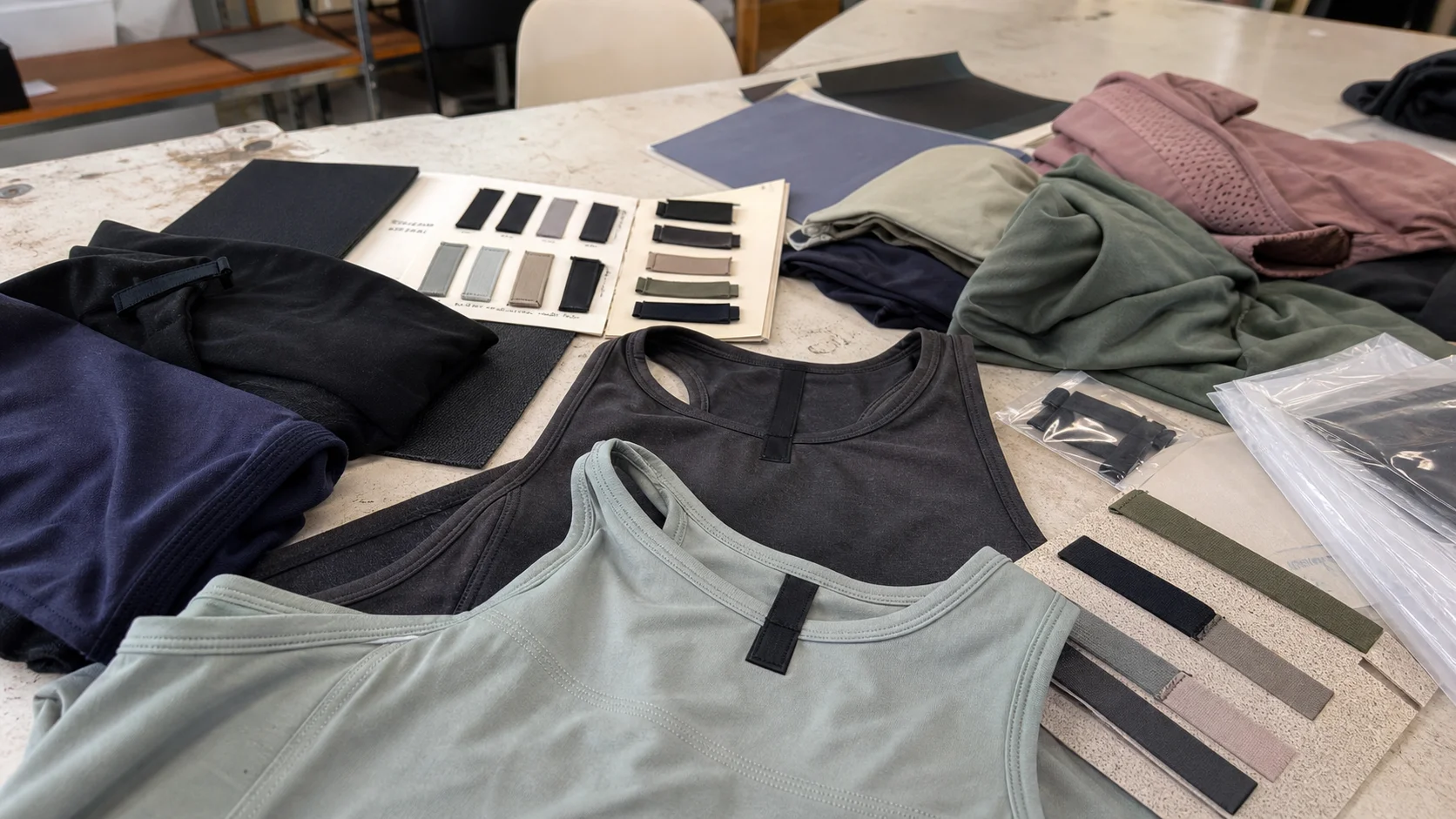
A practical compliance checklist for gym program buyers sourcing back neck tabs, covering factory documentation, decoration specs, wash performance, and...
Category: Decoration & Printing
For gym apparel buyers, the back neck tab is a small detail with an outsized sourcing risk. It sits close to the skin, carries brand identity, and often moves through the same factory line as woven labels, heat transfers, or printed care marks. If the tab is wrong, the garment can fail on comfort, durability, appearance, or compliance. That is why a back neck tab factory should be judged with the same discipline used for main fabric, trims, and packaging.
This checklist is written for program buyers managing repeat orders, private label activewear, team kits, or retail gym ranges. It focuses on practical compliance checks: artwork control, materials, construction, testing, approval flow, and inspection points. It also covers the tradeoffs that matter in sourcing. A factory with a low quote but weak traceability can become expensive fast once rework, delayed approvals, or rejection at final inspection enter the picture.
For buyers evaluating a new supplier or tightening an existing one, it helps to review the factory’s broader service scope first. Useful starting points include services, about us, and contact us if more direct sourcing support is needed.
Back Neck Tab Factory Compliance Checklist for Gym Buyers - Decoration & Printing manufacturing guide
A back neck tab is the branding or functional trim placed at the inside back neck of a garment. In gym wear, it may be a woven tab, satin label, printed heat transfer, silicone mark, folded fabric loop, or small external decorative tab depending on the brand direction. Some programs use it as a simple identity marker. Others treat it as part of the product’s premium finish.
For activewear buyers, the back neck area matters because athletes and gym users notice friction quickly. A stiff edge, poor stitch density, rough backing adhesive, or thick folded label can irritate the skin during movement. That makes material choice and finishing quality part of compliance, not just aesthetics.
The factory must understand whether the tab is decorative only, functional, or both. A tab that is only branding can usually use lighter construction. A tab that needs to survive repeated washing, sweating, and stretching needs a more controlled specification and tighter process control.
Compliance is not just a legal word. In sourcing terms, it means the factory can deliver the same tab, at the same quality, in the same position, across the full order and across future replenishment runs. That includes material safety, label accuracy, wash durability, color stability, and reliable recordkeeping.
Gym buyers face a few common risks:
A supplier can quote attractive unit pricing and still create avoidable cost through weak compliance discipline. The best factories do not just produce samples. They document them, measure them, and hold them against a signed standard through bulk production.
If a factory cannot explain its approval flow in plain terms, it is not ready for repeat gym programs. The buyer should expect a controlled sample sign-off, a written spec, and a clear escalation path for any trim substitution.
Start with the format. A back neck tab can be woven, printed, heat transferred, embroidered, silicone, rubberized, or made as a folded fabric loop. Each type has different compliance risks. Woven tabs are usually more stable for branding. Printed options can be softer but may crack or fade if the ink system is weak. Silicone and rubberized marks can add premium feel, yet they must be checked for weight, stiffness, and odor.
Ask whether the tab will be used on compression tops, hoodies, sports bras, training tees, or jackets. The use case determines the acceptable hand feel, wash performance, and positioning. A tab that works on a fleece hoodie may be a poor choice for a thin, stretch-knit training top. A good factory will adjust materials and attachment method to suit the garment rather than offering a one-size-fits-all solution.
Artwork should be supplied in a clean format with Pantone references, vector files, size measurements, and approved font outlines. The factory should return a pre-production proof showing scale, colors, border width, and stitch or print direction. Buyers should not rely on verbal approval alone. A missing logo line or a wrong shade on a small back neck tab can still trigger a rejection if the brand standard is strict.
Request a clear description of the tab material, backing material, adhesive, thread, ink, or coating. For gym buyers, material safety and wash performance matter more than decorative claims. If the tab is woven, request yarn composition. If it is printed, ask for ink type and curing method. If it includes silicone or synthetic coating, ask for odor control and surface stability. The factory should be able to state whether the materials comply with your target market requirements.
The attachment method should be suitable for stretch performance and comfort. A sewn tab needs controlled stitch count, tension, and needle choice to avoid puckering or seam damage. A heat-applied tab needs proper temperature, dwell time, and pressure. A glued or bonded trim should be evaluated carefully because adhesive failure often appears after washing or high-sweat use. Gym buyers should prefer methods that remain stable through laundering cycles rather than methods that only look good at first inspection.
At minimum, request evidence for colorfastness, wash durability, and adhesion if applicable. The exact test standard depends on market, fabric, and product category. What matters from a buyer perspective is whether the factory can show repeatable test results, not a one-off claim. If the supplier cannot produce test records for the actual material or a close equivalent, the risk increases. For programs with stricter retail or export requirements, request third-party testing instead of internal-only claims.
Placement is often overlooked because the tab is small. That is a mistake. On a back neck seam, even a few millimeters off-center can look sloppy or affect comfort. The factory should define acceptable tolerance for position, rotation, and top-to-bottom placement. The buyer should also know whether the tab is fixed into the seam, topstitched on, or applied after garment assembly. Each method changes the tolerance band.
If the tab includes size, origin, fiber content, or care data, check the local labeling requirements for the destination market. A decorative tab is not a substitute for a legal care label when one is required. Many buyers treat the back neck tab as a branding device and the care label as a compliance device. That separation is usually safer. If the factory combines both into one piece, the approval burden rises sharply.
The approved sample should be labeled and stored as the quality reference for bulk production. The factory should understand which sample rules apply: photo approval, seal sample, or signed gold sample. A production line that does not have access to a clear reference can drift in size, color, or stitch density. For repeat programs, the reference sample matters as much as the tech pack.
Tabs can be damaged in transit before they ever reach the sewing line. Excess heat, pressure, moisture, or folding can distort print quality or adhesive performance. Buyers should check how the factory stores trims, whether cartons are labeled by lot, and how leftovers are quarantined after approval changes. Good trim control reduces the chance that old stock is pulled into a new production run by mistake.
Checklist Item What Buyer Should See Main Risk If Missing Tab type confirmed Woven, printed, heat transfer, silicone, or sewn loop named in the spec Wrong feel, poor durability, or branding mismatch Artwork approved Vector proof with size, color, and placement marked Logo errors and rework Material declared Fiber, ink, adhesive, or coating description Unknown wash or skin-contact risk Test evidence provided Wash, colorfastness, and adhesion results Late failure after bulk production Placement tolerance set Measured position and allowable deviation Visual inconsistency at final inspection Gold sample retained Signed reference sample on file Spec drift across repeat ordersStrong sourcing starts with simple, measurable specs. Back neck tabs are small, so buyers sometimes accept vague language. That is a mistake. The spec needs to be written down in a way the factory can execute and inspect against.
For gym wear, the safest direction is usually the least aggressive one that still meets the brand standard. A light woven tab with soft edges may outperform a thick molded piece if the garment is close-fitting. A premium gym line can still use silicone or embossed details, but the buyer should demand proof that the material remains comfortable after repeated use and wash cycles.
Trims should also be reviewed against the main fabric. A hard tab attached to a very soft brushed knit can create a noticeable contrast in feel. A stretch body fabric needs a tab that does not restrict movement or pull the seam. The factory should advise on compatibility instead of simply accepting the buyer’s design in isolation.
Sample approval is where most avoidable problems can be stopped. The process should be staged and documented.
The sample should be judged under realistic conditions. Check it under daylight and indoor lighting. Pull it slightly to see how it behaves on stretch fabric. Rub the surface to test roughness. If the label sits directly on the skin, the hand feel matters as much as the visual appearance. Buyers who approve from a flat photo alone tend to catch problems later in production.
Lead times also depend on sample complexity. A simple woven tab can move quickly. A custom molded or multi-layer structure may require more development cycles. If a factory promises unusually fast sampling without discussing construction, it may be relying on existing stock rather than a true custom build.
MOQ varies by material, construction, and print method. For simple woven or printed back neck tabs, a practical MOQ often sits in the low thousands per design, though some factories will offer lower thresholds for standard materials or shared production runs. Custom silicone, embossed, or multi-color trims usually require higher minimums because tooling, setup, or color control cost more.
Lead time is not just a factory scheduling question. It depends on artwork approval, raw material availability, testing needs, and whether the trim is made in-house or outsourced. A buyer should break lead time into stages:
When the program has multiple colors or sizes, timing becomes more fragile. Each added variant multiplies the chance of mix-up. Buyers should ask whether the factory uses line clearance, lot segregation, and shade segregation for trims. These are basic controls, but they are often the difference between a controlled bulk run and a costly sorting exercise.
Small trims fail in ways that large components do not. The usual visual defects are easy to spot, but the hidden problems appear later.
Final inspection should include both visual and functional checks. Do not inspect only one garment from the top of a carton. Pull units from different cartons and different production times. A back neck tab can look correct on the first dozen pieces and drift later if the machine operator changes tension, temperature, or positioning.
For gym buyers, wash testing is especially relevant. Sweat, movement, and frequent laundering are part of the use case. A trim that survives a fashion photo sample may still fail in practice if its adhesive weakens, its print dulls, or its edge curls after repeated use.
Good suppliers answer clearly and without hand-waving. Use direct questions and require direct responses.
If the answers are vague, the risk is usually not limited to the tab itself. A weak trim process often reflects a weak overall production system. In that case, it is worth comparing the factory’s broader capability against other services and production categories before assigning a program to it. Suppliers who can manage repeat development, not just one-off sampling, are usually the safer choice for gym programs.
Not every back neck tab needs a premium finish. The right answer depends on the brand position, target margin, and garment price point. For entry-level gym basics, a clean woven or printed tab with soft edges may be enough. For premium training wear, a more refined tab with better color control and stronger wash performance can justify the added cost.
Where to spend:
Where to save:
The lowest landed cost is not always the best choice. A tab that is slightly more expensive but passes inspection, survives wash, and supports repeat orders is often the better commercial decision. Buyers should evaluate the supplier on its ability to hold specification across time, not only on the first sample.
For gym buyers, a back neck tab factory should be treated as a controlled trim supplier, not a casual decoration vendor. The minimum standard is clear artwork, declared materials, an approved sample, measurable tolerances, and evidence of durability. The more stretch, sweat, and wash exposure the garment sees, the more important these controls become.
Strong compliance does not require overengineering. It requires discipline. The buyer should insist on a written spec, a verified sample, and a production process that can repeat the same result without guesswork. That is the practical test for any factory handling back neck tabs on gym programs.
For suppliers, production support, and broader trim or decoration sourcing discussions, the most useful next steps are usually a direct review of the factory’s services page, a closer look at the team on about us, or an inquiry through contact us.
Get a free quote from Fabrikn — your trusted B2B clothing manufacturer with 10+ years of experience. MOQ as low as 200 pieces.
Get a Free Quote →A back neck tab is a small branding or functional trim placed at the inside back neck of a garment. In gym wear, it may be woven, printed, heat transferred, silicone, or sewn as a fabric loop. The main concerns are comfort, durability, and correct branding.
MOQ depends on the construction and customization level. Simple woven or printed tabs often start in the low thousands per design, while molded, multi-layer, or highly customized versions can require higher minimums. Buyers should confirm MOQ before approving artwork.
The approved sample should confirm size, placement, color, hand feel, and attachment method. If the tab has durability requirements, it should also be evaluated for wash performance, edge stability, and visual consistency under normal lighting.
The main risks are incorrect artwork, poor color match, rough hand feel, insecure adhesive or stitching, and inconsistent placement. Mixed lots and weak trim traceability also create problems during inspection and reorders.
Usually no. A decorative back neck tab and a legal care label serve different functions. The care label should be treated as a compliance item unless the destination market and product category allow a combined format.
Use a written spec, keep a signed gold sample, require pre-production approval, and inspect random units from different cartons and production stages. For gym wear, include wash and comfort checks because the tab sits near the skin and faces repeated laundering.