
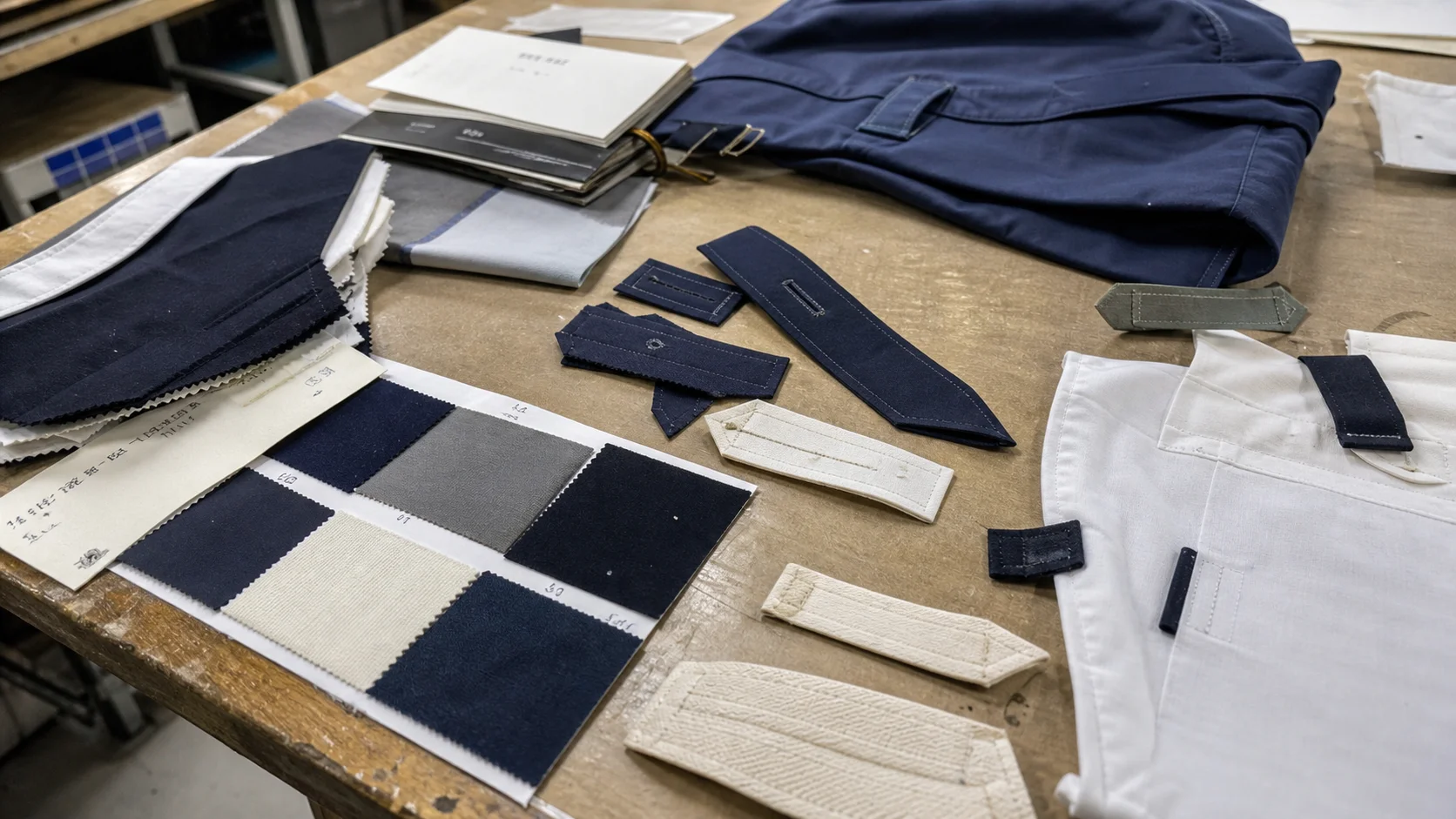
A marina operator’s SEO-focused review framework for sourcing back neck tabs with accurate size grading, durable decoration, and production-ready specs for...
For marina operators, back neck tabs are a small detail with an outsized effect. They sit in a visible, high-contact area of uniforms, promotional apparel, and staff wear, so the size, placement, stitch quality, and decoration method all matter. A back neck tab that looks neat on a size M may distort on an XXL if the grading is not controlled. In marine environments, where garments face sun, salt air, frequent washing, and repeated wear, poor tab sizing becomes a quality issue fast.
This review looks at back neck tab size grading from the point of view of marina operators buying decorated apparel from a supplier. The focus is practical: how size grading should be handled, what the supplier should confirm before production, which decoration methods work best, and where inspection problems usually appear. If you are sourcing uniforms, resort-style staffwear, promotional polos, or retail apparel for a marina brand, the back neck tab deserves the same review discipline as the main garment.
Back Neck Tab Size Grading Review for Marinas - Decoration & Printing manufacturing guide
A back neck tab is the small label, woven strip, printed loop, or decorative brand element placed at the inside or outside back neck of a garment. In marina apparel, it often appears on polos, tees, technical tops, fleece, caps, and casual staff uniforms. Some brands use it as a subtle identifier. Others use it as a branding anchor that sits alongside the main neck label or replaces it entirely.
For marina operators, the back neck tab has three practical jobs. First, it carries brand recognition. Second, it helps create a cleaner retail or uniform presentation. Third, it can support garment identification across sizes or product families. The catch is that this feature must remain consistent across the full size run. A tab that is too wide, too long, or placed too close to the collar seam can look fine on one size and awkward on another.
That is why size grading review is not a minor design task. It is part of quality control and brand consistency.
Size grading is the process of scaling garment dimensions across the size range while keeping proportion and function intact. A back neck tab can be affected in two ways. Its physical size may remain fixed, or it may be graded proportionally. The correct choice depends on the garment type, the decoration method, and the visual standard the marina wants to maintain.
In many cases, a back neck tab is not graded in the same way as the full garment body. Some brands keep the tab size constant across sizes because the branding element needs to remain recognizable and production simpler. That works best when the tab is small, centered, and supported by stable construction. If the garment sizes vary widely, though, a fixed tab can look oversized on small sizes and underwhelming on larger sizes.
A more refined approach is to establish a controlled grading rule. For example, the tab may remain the same width while height changes slightly, or the stitched area may be adjusted to preserve balance at the neckline. This is especially relevant for premium marina merchandise, where appearance matters as much as utility.
Practical rule: if the back neck tab is visible from the outside, it should be reviewed on at least three sample sizes, not just one development size. A design that passes on medium can still fail visually on extra-small or double-extra-large.
Grading also affects sewing stability. A longer tab can create bulk at the back neck, especially on lightweight fabrics. On stretch fabrics, an oversized tab may pucker after washing. On heavier fleece or pique, the issue may be less about distortion and more about stiffness and comfort.
There is no universal standard for back neck tabs, but there are typical sourcing ranges that help avoid avoidable mistakes. For marina programs, where garments often need to look polished but withstand repeated use, the safest approach is to keep the tab modest in size and tightly controlled in placement.
Spec Area Typical Practical Range Purchasing Notes Tab width 10 mm to 25 mm Smaller widths suit minimal branding; wider tabs need better alignment control. Tab height / drop 8 mm to 20 mm Too much height can create bulk and neck discomfort. Placement Centered at back neck seam or slightly below it Placement should be fixed in the tech pack with seam allowance clear. Material Woven polyester, satin polyester, cotton twill, silicone, or printed heat-transfer film Choose based on wash durability and brand image. Attachment Inserted in seam, topstitched, folded, heat-applied Inserted-in-seam usually gives the cleanest result.For fabric choice, woven polyester remains common because it is stable, cost-effective, and resistant to fraying when properly finished. Satin gives a smoother, more premium look but can show wear more easily. Cotton twill can fit a more heritage or coastal lifestyle brand, though it may shrink or soften differently after wash. Silicone or rubber-style branding can suit sporty marina gear, but it adds cost and can feel heavy if overused.
For marinas, the final choice should reflect usage. Staff polos and boat-side uniforms often benefit from a woven or printed tab with good wash resistance. Retail souvenir garments may justify a more decorative finish. High-end clubwear may need a softer label experience and a better finish at the seam edge.
Stitching matters as much as the tab material. The supplier should confirm thread type, stitch density, and edge finishing. Loose stitches, exposed cut edges, or poor heat-seal trimming will show up quickly after laundering. Garments used around water and sun are not forgiving.
Back neck tabs sit within the broader Decoration & Printing category, but the method used on a tab is not the same as a chest logo or sleeve print. A supplier should distinguish between decorative labeling and functional branding. The wrong choice can create discomfort, poor wash performance, or visual clutter.
Woven tabs are a strong option for marina operators who want a neat, durable, low-gloss brand marker. The design should be simplified so the weave remains readable. Very fine text, narrow borders, or complicated gradients usually do not translate well at small sizes.
Printed tabs can carry more detail than woven labels, but print durability must be checked. If the tab is exposed to frequent abrasion, repeated washing, or sunscreen contact, print adhesion becomes a concern. Printed tabs are best used where the brand wants a cleaner graphic style and accepts some performance risk in exchange for lower cost or sharper detail.
Heat-transfer decoration can be useful for certain soft-hand applications. It works best when the design is simple and the substrate is compatible. The risk is peeling or edge lift after washing, especially if the garment fabric is textured or highly elastic. For marina uniforms, heat transfer should be tested against wash cycles before bulk release.
These create a premium, modern effect and can support outdoor or sports-inspired marina programs. They are visually strong, but not always ideal for lightweight neck areas. The supplier should test thickness, flex, and stitch integrity to avoid a stiff or bulky feel at the neckline.
When comparing options, a purchasing team should weigh visual impact against production risk. A more sophisticated tab means more tooling, tighter QC, and often higher MOQ. Simple woven or printed solutions are usually safer for large marina rollouts.
A back neck tab supplier should be evaluated on more than price. The supplier’s ability to handle size grading, decoration consistency, and repeat production is what protects your program. If the supplier only quotes a tab size but cannot explain how it behaves across the full size run, that is a warning sign.
Good suppliers should also be clear about what is standard and what is custom. A custom woven tab with specialty yarns will usually require longer development than a simple printed neck label. If the supplier cannot distinguish between those two, the risk is confusion in production planning.
For additional background on manufacturing support and service scope, it can help to review the supplier’s general capabilities. See fabrikn.com/services/ for a broader view of production services, and fabrikn.com/about-us/ if you need to understand how the supplier positions its development and quality approach. For project inquiries, use fabrikn.com/contact-us/.
MOQ for back neck tabs varies with material, decoration type, and whether the tab is integrated into the garment manufacturing process or supplied as a separate trim. For a basic woven or printed tab, a common practical MOQ may start around 500 to 1,000 pieces per design, though some suppliers may require more if custom yarns, special finishing, or multiple colorways are involved. If the tab is part of a full garment program, the MOQ may be driven by garment fabric order quantity rather than the tab alone.
Sampling should be treated as a structured approval chain, not a quick formality. A strong workflow usually looks like this:
The most common sourcing mistake is approving a single sample size and assuming the rest of the size range will behave the same way. That is not a safe assumption for neck branding. Even a small change in body length, collar depth, or neckline elasticity can change how a tab sits.
Marina operators should also clarify whether the sample is made from exact production materials or from a close substitute. A sample that looks right but uses different backing or thread can mislead the team and cause trouble in bulk production.
Lead time for back neck tabs depends on complexity. A simple woven tab with existing yarn colors may be quick to develop once artwork is approved. A custom silicone tab or a tab with special metallic yarns can take much longer because tooling, color matching, and process trials may be needed.
Typical lead-time drivers include:
For marina programs tied to seasonal launches, lead time should be planned conservatively. If the collection depends on coordinated polos, outerwear, and retail apparel, the back neck tab should not become the bottleneck. Small trims often sit low in the buying plan, yet they can stop the final approval if the artwork or material differs from what was signed off.
Planning risk increases when the supplier sources the tab externally. In that case, delivery timing depends not only on the garment factory but also on the trim maker. Procurement teams should ask whether the tab is in-house produced or subcontracted, because that affects schedule visibility and defect ownership.
Back neck tabs should be checked during pre-production, in-line inspection, and final random inspection if the order is large enough to justify it. The key inspection point is consistency across the full size range. Marina apparel is often judged quickly by staff and customers, so defects are visible even when the garment is otherwise acceptable.
Common defects include:
One risk worth calling out is neckline distortion. If the tab is stitched into a stretch or lightly structured neck, poor attachment can cause puckering. On delicate fabrics, an overly stiff tab can also create a visible hump at the back neck. That is not a cosmetic issue only; it can affect wearer comfort and garment acceptance.
Inspection criteria should be written into the purchase order or tech pack. A supplier should know the acceptable tolerance for placement, size, and print registration before production begins. If tolerances are not specified, the factory may work to its own standard, which may not suit a polished marina brand.
For marina operators, the right purchasing decision is rarely the cheapest tab. It is the one that survives laundering, stays visually balanced across sizes, and fits the garment’s brand position. A low-cost printed label might save money up front, but if it peels or shifts after washing, the whole uniform program looks weak.
In practice, the best buying priorities are:
There is also a branding tradeoff. A visible back neck tab can strengthen identity, but it can also clash with a main neck label or internal care label if the layout is not planned properly. The back neck area has limited real estate. Each added element reduces the space available for comfort and clarity.
For that reason, marina buyers should ask whether the tab is serving a real brand or functional need. If it is only decorative, keep it modest. If it is meant to be a signature feature, invest in better materials and tighter sampling.
Purchasing rule of thumb: choose the simplest back neck tab that still supports the brand standard. Complexity should be earned, not assumed.
Back neck tab issues are easy to miss during early development and difficult to fix after bulk production starts. A structured supplier review reduces that risk. It also helps the buying team compare suppliers on more than headline price. One supplier may quote a lower piece cost but require a higher MOQ, longer lead time, or weaker approval control. Another may charge more but provide cleaner size grading and better consistency across the run.
That is the real decision point for marina operators. The objective is not just to buy a tab. It is to keep the garment line coherent, wearable, and aligned with the brand’s standard at sea, on the dock, and in the retail environment.
Get a free quote from Fabrikn — your trusted B2B clothing manufacturer with 10+ years of experience. MOQ as low as 200 pieces.
Get a Free Quote →There is no single best size, but many programs stay in the 10 mm to 25 mm width range and keep height modest. The best size is the one that looks balanced on the smallest and largest approved garment sizes.
It depends on the design. Some suppliers keep the tab fixed across all sizes, while others apply limited grading. If the garment has a wide size range, reviewing the tab on multiple sizes is the safer approach.
Woven polyester is often the most practical choice because it is durable and stable. Satin, cotton twill, silicone, and printed options can work too, but each needs testing for comfort, wash performance, and brand fit.
For simple custom tabs, a typical working MOQ may start around 500 to 1,000 pieces per design. Special materials, multiple colors, or custom molding can push that higher.
Artwork, exact dimensions, placement, material, color, attachment method, and a size-set sample should all be approved before bulk release. A single sample size is not enough for a full grading review.
Off-center placement, poor stitch security, curling edges, print cracking, and neckline puckering are the most common issues. These problems become more visible after wash and wear, especially in marine conditions.
Yes. They are common in both categories. Retail items may justify a more decorative finish, while staff uniforms usually need stronger wash durability and simpler construction.
If you are reviewing a new marina apparel program, the best next step is to align the tab spec with the garment construction and confirm the supplier’s approval process early. That is the difference between a neat branding detail and a recurring quality complaint.